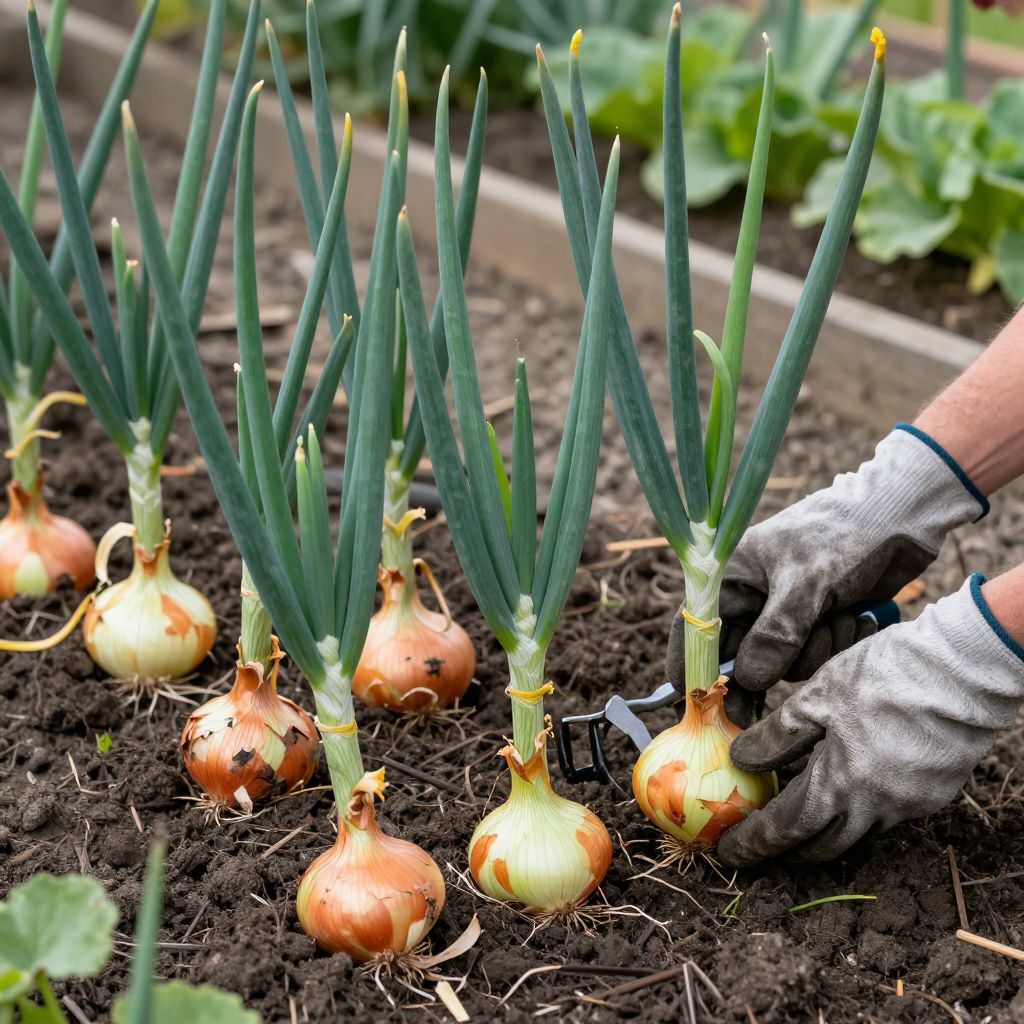
When do you harvest onions? The best time is when the tops naturally start to yellow, soften, and fall over, and the bulbs have reached a usable size. For most onions, that means harvesting in late summer or early fall, but the exact timing depends on your variety, planting date, and local weather.
Picking too early can leave you with small bulbs that don’t store well. Waiting too long can increase the risk of rot, splitting, or regrowth, so it helps to know the signs that your onions are truly ready.
When do you harvest onions?
Harvest onions when about half to three-quarters of the tops have fallen over and begun to dry naturally, and the necks feel soft rather than rigid. The bulbs should be well formed with papery outer skins starting to dry. If you harvest too soon, the bulbs may be immature; if you wait too long, storage quality can decline.
How to tell onions are ready to pull
Onions give you several visible clues when they are approaching maturity. The leaves stop growing strongly, the necks weaken, and the plant starts shifting energy into bulb ripening.
Look for these signs
- Tops yellowing from the tip downward.
- Leaves flopping over naturally, not because of wind damage alone.
- Necks softening near the bulb.
- Bulbs pushing up from the soil surface.
- Outer skins drying and turning papery.
If only a few tops have fallen over, the crop may still be sizing up. If most of the patch is down, it is usually time to begin harvest planning.
Use bulb size as a guide
For storage onions, size matters, but bigger is not always better. A mature bulb should feel firm and full for its type, with a dry outer layer beginning to form. If you are growing spring onions or bunching onions, you can harvest earlier for a milder flavor and tender texture.
Seasonal timing: spring onions, maincrop onions, and storage onions
Harvest timing varies by onion type and how you planted it. Climate also changes the calendar, so use plant maturity rather than a fixed date whenever possible.
Short-season and spring-planted onions
In many gardens, onions planted in early spring are ready in mid to late summer. Faster-maturing varieties may finish sooner, especially in warm regions or in a long, sunny growing season.
Fall-planted or overwintered onions
In mild climates, overwintered onions can mature earlier than spring-planted crops. They often begin bulbing as days lengthen, then are harvested once tops begin to decline in early to midsummer.
Green onions and scallions
These are usually harvested young, before bulb formation becomes the main goal. You can pull them once they are pencil-thick or larger, depending on your preference.
What to do before harvesting onions
A little preparation helps onions cure well and store longer. The goal is to let the bulbs finish ripening, then move them into dry, airy conditions as quickly as possible.
- Stop watering once most tops start to fall over, especially if the weather is dry.
- Check the soil around bulbs for looseness and drainage problems.
- Gently brush away loose soil, but do not wash the bulbs.
- Choose a dry day if possible for lifting the crop.
Reducing moisture near harvest helps the outer skins dry properly. If you keep watering heavily right up to harvest, the bulbs may stay too wet and be more likely to rot in storage.
How to harvest onions step by step
Harvesting onions is simple, but handling them carefully makes a big difference in storage life. The bulbs bruise easily, and damaged necks can invite decay.
- Loosen the soil with a garden fork if needed, especially in heavier soil.
- Lift the onions gently by hand or with the fork, avoiding cuts to the bulb.
- Shake off loose soil rather than scraping the skins.
- Lay the onions in a single layer in a dry, shaded, well-ventilated spot.
- Leave the tops attached during curing unless they are badly damaged.
If the soil is compacted, do not yank hard on the tops. That can snap the necks or tear the bulb. Instead, loosen the ground first so the onions come up cleanly.
Curing onions for storage
Curing is the drying period that helps onions store well. It allows the necks to seal and the outer skins to become papery and protective.
Where to cure them
Choose a place with good air movement, low humidity, and no direct sun. A covered porch, open shed, garage with ventilation, or screened area often works well if temperatures are not too hot and the space stays dry.
How long curing takes
Curing usually takes one to three weeks, depending on weather, airflow, and bulb size. The onions are ready when the necks are fully dry and tight, and the outer skins rustle when you handle them.
After curing
- Trim tops to about 1 to 2 inches, if storing bulbs.
- Cut roots close to the bulb base.
- Brush off loose dried soil.
- Sort out any damaged, soft, or thick-necked bulbs for immediate use.
Do not store onions that still have thick, moist necks. Those bulbs are more likely to spoil first.
How to store harvested onions
Proper storage keeps onions usable for weeks or months, depending on variety and conditions. Storage success depends on dryness, airflow, and selecting only sound bulbs.
Best storage conditions
- Cool temperatures
- Dry air
- Good ventilation
- Dark or dim storage
Mesh bags, slatted crates, or hanging bundles can work well because they allow air to circulate. Avoid sealed plastic bags, which trap moisture and encourage rot.
Which onions store best?
Generally, onions grown for storage keep better than sweet onions, which tend to have higher water content and a shorter shelf life. If your variety is meant for fresh eating, plan to use it sooner even if curing goes well.
Common mistakes when deciding when to harvest onions
Many onion problems come from harvesting at the wrong stage or handling the crop too roughly. A few simple corrections can improve both flavor and storage life.
Harvesting too early
Immature onions may taste mild and pleasant, but they often lack fully developed skins and do not store well. If you need larger bulbs, give the crop more time as long as the tops are still mostly green and upright.
Waiting too long
Overripe onions can split, re-sprout, or start to decay if wet weather arrives. If the tops are fully down and the bulbs are mature, do not delay harvest just to chase a slightly larger size.
Harvesting after heavy rain
Wet soil and damp bulbs are harder to cure. If possible, wait for a dry window. If you must harvest in wet weather, be extra careful to dry the bulbs quickly in a sheltered, airy place.
Bruising or cutting bulbs
Nicked bulbs often spoil first. Use a fork carefully and avoid tossing onions into buckets or piles. Gentle handling matters more than speed.
Problems that can affect harvest timing
Not every onion bed matures evenly. Weather, soil, spacing, and pests can all change how and when your crop finishes.
Bulbs stay small
If onions are not sizing up, the cause may be too much shade, overcrowding, poor soil, or drought stress. Onions need full sun and steady growth to bulb well.
Tops fall over too early
Early collapse can happen from onion maggots, neck rot, fungal disease, or strong wind. Check whether the bulbs are actually mature or whether the tops are failing for another reason.
Plants bolt
Bolting means the onion sends up a flower stalk. This often happens after cold stress or sudden weather swings. Bolted onions are usually best harvested promptly and used soon, since storage quality is reduced.
Mushy or rotten necks
This often points to excess moisture or disease. Improve drainage, avoid overhead watering late in the season, and remove affected bulbs from storage immediately.
Growing conditions that help onions mature on time
Good harvest timing starts long before the bulbs are ready. Healthy growth during the season leads to more reliable ripening later.
- Sunlight: Full sun is best for strong bulb development.
- Soil: Loose, fertile, well-drained soil helps bulbs expand evenly.
- Compost: A modest amount of well-rotted compost supports growth without making the soil overly rich.
- Spacing: Crowded onions compete for light, water, and nutrients.
- Watering: Keep moisture even early on, then reduce watering as harvest approaches.
Onions generally do best when they can grow steadily without long dry spells or waterlogged soil. Stress during bulbing can lead to smaller harvests and weaker storage quality.
Can you harvest onions in stages?
Yes. You do not have to pull the entire bed at once. If some bulbs are large and ready while others are still sizing up, harvest the mature ones first and leave the rest for a little longer.
For green onions, staged harvesting is especially easy. Pull a few as needed and leave the rest to continue growing.
What to do after harvest
Once the onions are cured and sorted, store the best bulbs in a cool, dry place and check them regularly. Use any soft, split, or thick-necked onions first, since they will not keep as long.
If you want to improve next season’s crop, note which variety matured well, how long it took, and whether your onions were planted in the right light and soil. That record makes it easier to judge when do you harvest onions in your own garden next year.
For more practical garden timing and crop care, you may also want to read related guides on how to know when vegetables are ready to harvest and improving soil drainage in raised beds.