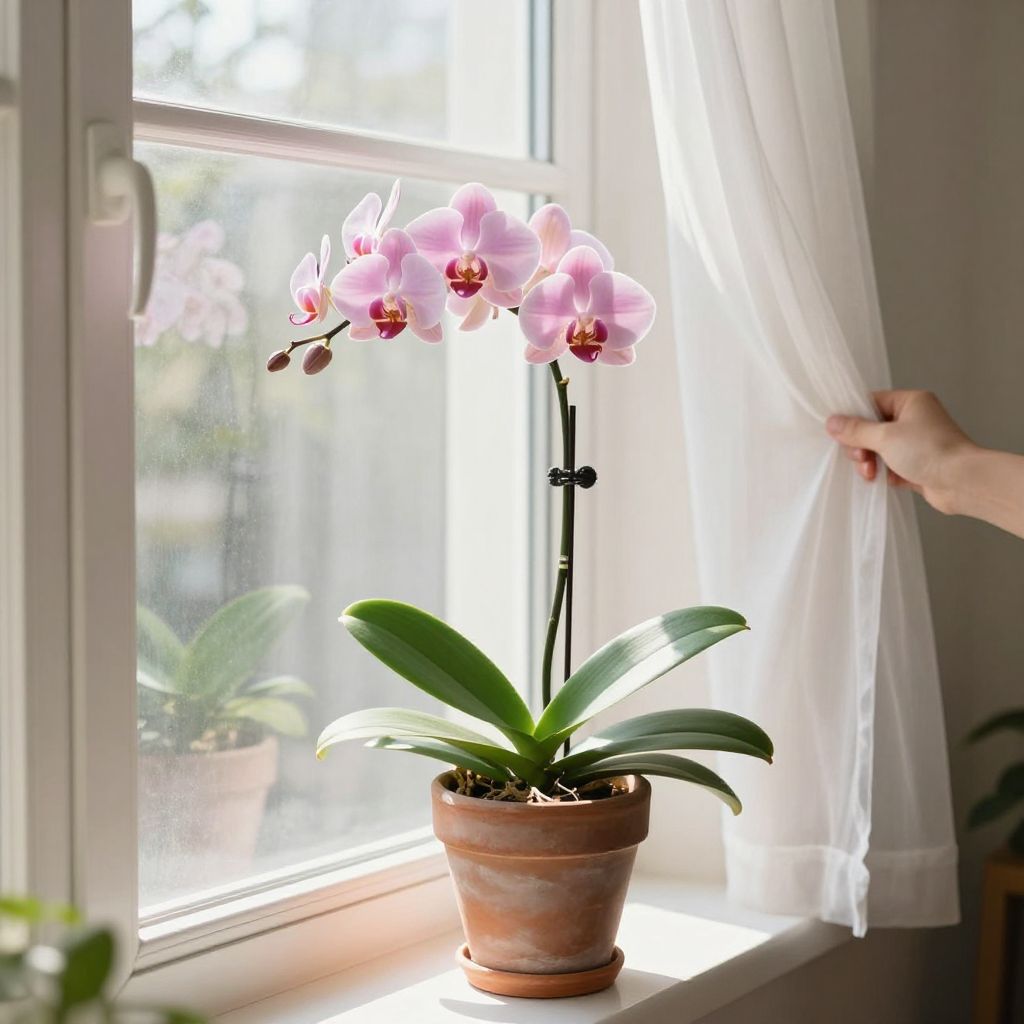
Do orchids need direct sunlight? Usually, no. Most popular houseplant orchids grow best in bright, indirect light rather than harsh direct sun, which can scorch their leaves. The right light level depends on the orchid type, but for many common orchids, a bright windowsill with filtered light is ideal.
If your orchid is not blooming, has pale leaves, or is stretching toward the window, light may be the issue. The good news is that orchid light needs are easy to manage once you know what to look for and how to adjust for your home or climate.
Do orchids need direct sunlight?
Most orchids do not need direct sunlight. In fact, many common orchids, such as Phalaenopsis and Cattleya, prefer bright, filtered light and can be damaged by strong midday sun. The goal is enough light for healthy growth and flowering without leaf scorch.
How much light orchids actually need
Orchids are a broad plant group, so light needs vary. Some orchids tolerate brighter conditions, while others prefer softer light, but nearly all need more light than a dark room and less than prolonged hot sun.
Common orchid light preferences
- Phalaenopsis (moth orchids): bright, indirect light; avoid direct afternoon sun.
- Paphiopedilum (slipper orchids): lower to moderate light; too much sun can burn leaves quickly.
- Cattleya: brighter light than Phalaenopsis, but still usually filtered rather than harsh direct sun.
- Dendrobium: many types like bright light; some can take gentler morning sun.
If you do not know the orchid type, start with bright indirect light and adjust slowly. It is safer to increase light gradually than to move an orchid into strong sun all at once.
What “bright, indirect light” means
Think of a spot where the room is bright enough to read comfortably without turning on a lamp, but the sun is not beating directly onto the leaves for long periods. A sheer curtain, a few feet back from a sunny window, or a bright east-facing window often works well.
Best places to grow orchids indoors
Indoor orchids usually do best near windows that provide strong light without intense heat. Window direction matters, and the best choice depends on your climate, season, and the strength of your sun exposure.
Window-by-window guide
- East-facing window: often ideal for many orchids because it gives gentle morning sun and bright light for the rest of the day.
- South-facing window: can be excellent if filtered with a sheer curtain or placed a few feet back from the glass.
- West-facing window: may be too hot in the afternoon, especially in summer; use caution.
- North-facing window: usually too dim for many orchids unless the room is very bright overall or you supplement with grow lights.
Leaves should be a healthy medium green for many orchids. Very dark green often suggests the plant is not getting enough light, while yellowing, bleached, or reddish leaves can signal too much sun.
Using sheer curtains and distance
A sheer curtain can soften intense sunlight without making the room dark. You can also move the orchid farther from the window during the hottest months and closer in winter when the sun is weaker.
Can orchids ever take direct sun?
Some orchids can handle limited direct sun, especially early morning sun or weak winter sun. The key is timing, intensity, and acclimation. Direct sun that is gentle for one orchid may be damaging for another.
When direct sun may be acceptable
- Early morning sun through an east-facing window.
- Filtered direct sun through a sheer curtain.
- Weak winter sun in cooler climates.
- Outdoor placement under shade cloth or dappled shade in warm weather.
Even orchids that like brighter light can scorch if moved suddenly into full sun. Acclimate them over one to two weeks by increasing exposure a little at a time.
Signs direct sun is too strong
- Yellow or bleached patches on leaves
- Brown, dry, crispy spots
- Leaves that feel hot in the afternoon
- Sudden drooping after sun exposure
Sunburned orchid leaves do not recover, but the plant can still grow well if you move it to a better location and protect new leaves.
How to tell if your orchid is getting the right light
Orchid light problems often show up slowly. Watching leaf color, growth, and flowering gives you the best clues. A healthy orchid should keep steady growth and, in season, produce blooms without looking stretched or scorched.
Too little light
- Leaves are very dark green
- No flowers, or poor flowering
- Weak, floppy growth
- Roots and leaves may grow slowly
Too much light
- Leaves turn yellow, red, or pale
- Brown burn spots appear
- Leaf tips dry out
- Plant looks stressed during hot afternoons
For many orchids, the sweet spot is bright enough to encourage blooming but gentle enough that the leaves stay evenly colored and unburned.
Outdoor orchid care: shade, not harsh sun
If you move orchids outdoors for summer, treat them as shade plants. Outdoor light is much stronger than indoor light, so even a spot that looks “not too sunny” can be intense enough to damage leaves.
Safe outdoor placement
- Place orchids in dappled shade under trees or a covered patio.
- Use 50% to 70% shade cloth if growing in a greenhouse or bright outdoor area.
- Keep them out of midday and afternoon sun.
- Watch for wind, which can dry plants quickly and increase stress.
Outdoor orchids also need careful watering because pots dry faster in heat and wind. Check moisture often, but do not let water sit around the roots for long periods.
Light and watering work together
Light affects how quickly an orchid uses water. A plant in brighter conditions usually dries faster than one in lower light, so your watering routine should change with the light level and season.
Why this matters
An orchid in strong light may need more frequent checking, while an orchid in lower light may stay wet longer and be more prone to root rot. Always base watering on the potting mix and root condition, not just the calendar.
- Water when the mix is approaching dryness, not when it is still soggy.
- Use a pot with drainage holes.
- Choose an airy orchid mix rather than regular garden soil.
- Make sure excess water can drain away completely.
Good light will not fix poor drainage, and perfect drainage will not make up for a plant kept in a dark corner. Orchids need both the right light and the right root environment.
How to adjust light through the seasons
Seasonal changes matter, especially indoors. Sun angles shift, daylight length changes, and window intensity can vary a lot from summer to winter.
Seasonal adjustments to try
- In spring: move orchids gradually toward brighter light as days lengthen.
- In summer: protect them from hot afternoon sun and check for leaf scorch.
- In fall: keep them in bright light as outdoor conditions soften.
- In winter: move them closer to a bright window if natural light is weaker.
If you use grow lights, keep the fixture at the proper distance for the bulb type and watch the leaves for signs of stress. Artificial light can be very helpful in dim homes, especially during short winter days.
Common orchid mistakes to avoid
Most orchid problems come from trying to treat them like typical houseplants. Avoid these common errors to keep your plant healthy and blooming.
- Putting orchids in hot direct sun without acclimation.
- Leaving them in a dark room and expecting blooms.
- Placing them right against a hot window in summer.
- Ignoring leaf color changes that signal light stress.
- Moving them too quickly from shade to bright sun.
If you are unsure, start with slightly less light than you think the orchid needs, then increase exposure gradually. It is easier to add light than to repair sunburn.
Simple troubleshooting guide
If your orchid is not thriving, use these quick checks to narrow down the problem.
No blooms
- Move the plant to brighter indirect light.
- Check whether the orchid is getting enough day length.
- Make sure it is healthy overall, with firm roots and fresh potting mix.
Yellow or scorched leaves
- Pull the orchid back from the window.
- Use a curtain or shade cloth.
- Remove only fully dead tissue; do not cut healthy leaf tissue.
Leggy or weak growth
- Increase light gradually.
- Rotate the pot every week or two so growth stays balanced.
- Check that the plant is not crowded in old, broken-down mix.
Practical care tips for healthier orchids
Once you have the light right, a few basic habits will help your orchid stay strong. Healthy roots, good airflow, and clean pots all support better growth and flowering.
- Use a potting mix made for orchids, not standard garden soil.
- Repot when the mix breaks down or roots outgrow the container.
- Keep leaves clean so they can absorb light efficiently.
- Provide gentle airflow to reduce disease risk.
- Inspect regularly for pests such as mealybugs, scale, and spider mites.
Orchids grown in the right light are often less prone to stress, which means fewer pest and disease problems over time.
Conclusion: the right light is bright, not brutal
So, do orchids need direct sunlight? Most do best without it. Give your orchid bright, indirect light, watch the leaves for feedback, and adjust slowly with the seasons. If you want a quick next step, check your orchid’s current window spot today and move it only if the leaves show signs of too much or too little light.
For more practical orchid care, you may also want to read about how to repot orchids the right way and common orchid watering mistakes to avoid.