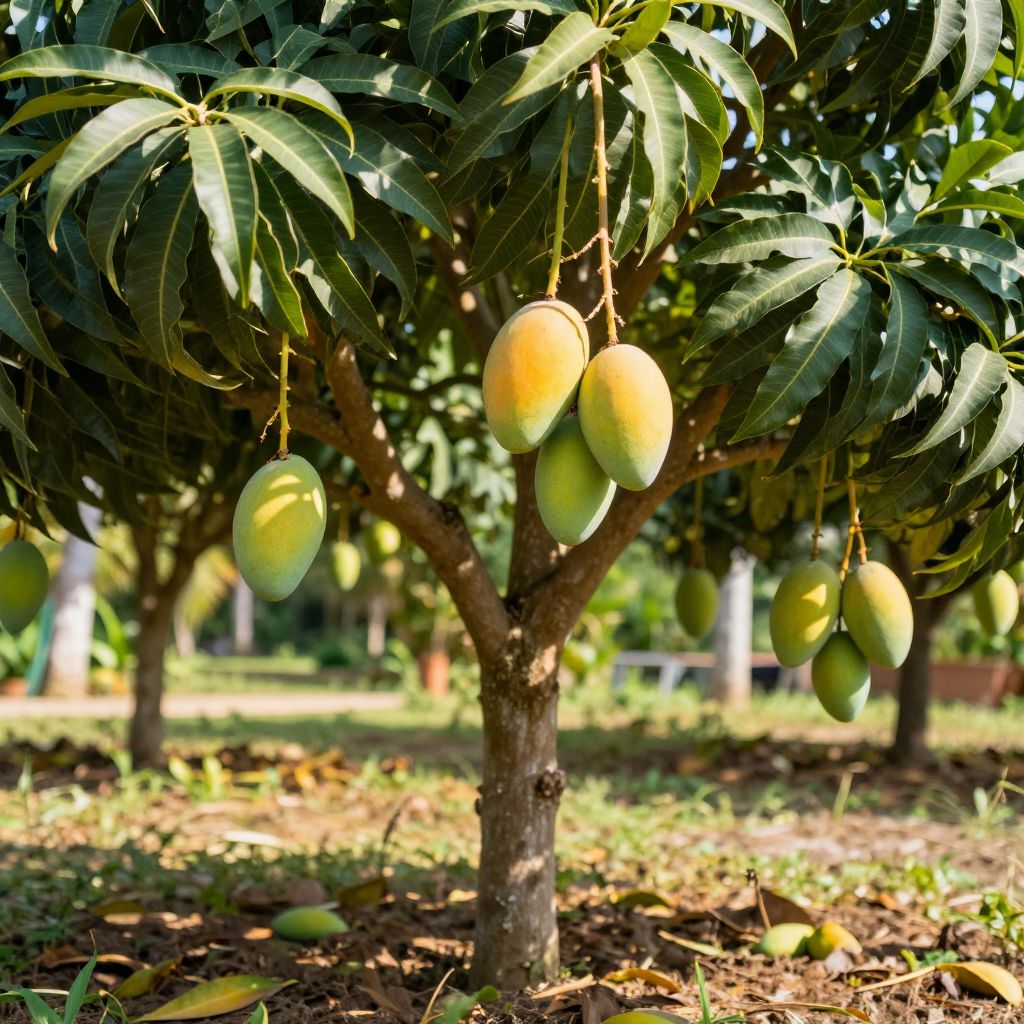
Do mangoes grow on trees? Yes—mangoes grow on evergreen tropical trees, Mangifera indica, not on vines or shrubs. If you want fruit, the tree needs warm temperatures, full sun, well-drained soil, and enough room to grow. In the right climate, mango trees can be productive and long-lived.
Growing mangoes is very rewarding, but they are not a casual backyard fruit in every region. Success depends on choosing the right site, protecting the tree from cold, and managing watering, pruning, and pests carefully.
Do mangoes grow on trees?
Yes. Mangoes grow on large evergreen trees that can reach substantial size in warm climates. The fruit develops in clusters from flower panicles after pollination, then matures over several months. A healthy mango tree needs heat, bright sun, and excellent drainage to flower and set fruit well.
What a mango tree needs to thrive
Mango trees are tropical to subtropical plants that perform best where winters are mild and frost is rare. They can be grown in the ground in suitable climates or in large containers where winters are colder, but container trees usually stay smaller and need more attentive care.
Sunlight and warmth
- Full sun is essential for strong growth and fruiting.
- Choose the warmest, brightest part of your garden.
- Protect young trees from cold snaps, frost, and strong winds.
Mango trees dislike prolonged cool weather. If your area gets regular frost, consider growing a dwarf mango in a pot that can be moved indoors or into a greenhouse during cold weather.
Soil and drainage
- Use loose, well-drained soil.
- Avoid heavy clay that stays wet after rain.
- Raised beds or mounds can help in poorly drained sites.
Good drainage matters more than rich soil. Mango roots can struggle in waterlogged conditions, which increases the risk of root rot and weak growth.
pH and soil improvement
Mangoes are adaptable, but they do best in soil that is slightly acidic to neutral. Before planting, work in mature compost if your soil is poor, but do not overdo it. Too much rich organic matter can hold excess moisture around the roots.
How to plant a mango tree
Planting correctly gives your mango tree the best start. The main goal is to establish the tree without burying the trunk too deeply or trapping water around the roots.
- Choose a sunny, sheltered location with room for the mature canopy.
- Dig a hole only as deep as the root ball and wider than it is deep.
- Set the tree so the root flare sits at or slightly above soil level.
- Backfill with native soil unless it is extremely poor or compacted.
- Water thoroughly to settle the soil, then mulch lightly.
Keep mulch a few inches away from the trunk. Piling mulch against the bark can invite rot and pests.
Spacing and size
Standard mango trees can become very large, so spacing matters. If you are planting more than one tree, allow plenty of room for airflow and future pruning access. Dwarf or semi-dwarf trees are better for smaller gardens and containers.
Growing mangoes in containers
Container growing is a practical option if you live outside mango-friendly climates. It also helps if you want a smaller tree or need to move it for winter protection.
Best container setup
- Use a large pot with drainage holes.
- Select a free-draining potting mix, not garden soil.
- Choose a container that can support root growth for several years.
Container mangoes dry out faster than in-ground trees, so check moisture regularly. Water when the top layer of mix begins to dry, but do not let the pot sit in standing water.
Indoor care for potted mangoes
Indoors, mango trees need the brightest possible light. A sunny window may help, but in many homes supplemental grow lights are useful. Good airflow also helps reduce pest problems such as spider mites and scale.
Watering mango trees the right way
Young mango trees need regular moisture while they establish roots, but mature trees prefer a more measured approach. Overwatering is one of the most common mistakes gardeners make.
- Water deeply after planting.
- Allow the upper soil to dry slightly between waterings.
- Reduce watering during cool or rainy periods.
- Increase attention during hot, dry weather and fruit development.
If leaves yellow, drop, or look limp, check both moisture and drainage. These symptoms can come from underwatering, but they can also signal soggy roots.
Pruning and training mango trees
Pruning helps keep mango trees manageable, improves light penetration, and makes harvesting easier. Young trees especially benefit from early shaping.
When to prune
Light pruning is usually best after harvest or during a mild period when the tree is actively growing but not stressed by extreme heat or cold. Avoid heavy pruning right before flowering if you want fruit.
What to remove
- Dead, damaged, or crossing branches
- Low branches that interfere with movement or airflow
- Dense interior growth that shades the center of the tree
Use clean, sharp tools to make smooth cuts. Sanitize pruners if you are removing diseased wood to avoid spreading problems from one branch to another.
Fertilizing mango trees
Mango trees do not need constant heavy feeding. In fact, too much nitrogen can encourage leafy growth at the expense of flowers and fruit.
What to aim for
- Use compost sparingly to improve soil structure.
- Feed lightly during active growth if the tree shows slow growth or pale leaves.
- Avoid overfertilizing, especially near flowering time.
If your soil is already fertile, a mature mango may need little extra feeding beyond occasional compost and good mulch management. Always adjust to your soil test results and the tree’s growth response.
Flowering, pollination, and fruit set
Mango trees produce large flower clusters, and not every flower becomes fruit. Weather, pollinators, and tree health all affect the harvest.
Why flowers drop
It is normal for many flowers and tiny fruitlets to fall. Mango trees often set more flowers than they can mature. However, poor pollination, excessive heat, cold stress, or nutrient imbalance can reduce fruit set further.
How to support fruiting
- Keep the tree healthy and stress-free.
- Maintain good airflow around the canopy.
- Avoid heavy pruning just before bloom.
- Do not overwater during flowering.
Common pests and diseases
Mango trees can face several pests and diseases, especially in humid climates or crowded plantings. Early detection is the easiest way to limit damage.
Common pests
- Scale insects
- Mealybugs
- Spider mites
- Fruit flies in some regions
Inspect leaf undersides, stems, and new growth regularly. Sticky residue, sooty mold, distorted leaves, or fine webbing are signs to investigate.
Common diseases
- Anthracnose
- Powdery mildew
- Root rot in wet soils
Good spacing, drainage, and sanitation go a long way. Remove fallen leaves and infected plant debris, and avoid overhead watering late in the day if fungal disease is a concern.
Propagation: can you grow mangoes from seed?
You can grow a mango tree from seed, but seed-grown trees may not produce fruit like the parent plant, and they can take many years to mature. For reliable fruit quality, grafted trees are usually the better choice for home gardeners.
Seed-grown vs. grafted trees
- Seed-grown trees are useful for experimentation and rootstock, but fruit quality is uncertain.
- Grafted trees are preferred for predictable fruiting and earlier harvests.
If you start from seed, use a fresh mango seed and keep it warm and evenly moist. Even then, be patient; mango seedlings are not quick fruiting plants.
Harvesting mangoes
Mangoes are usually harvested when they have reached mature size and begin to show color changes, depending on the variety. They often ripen best off the tree rather than fully softening on the branch.
Signs fruit is ready
- Full mature size for the variety
- Color shift from green to yellow, orange, red, or a mix
- A slight aroma near the stem end
- Fruit that separates with a gentle twist or clip
Pick carefully to avoid bruising. If you are unsure, harvest one fruit and let it finish ripening indoors before collecting the rest.
Problems to watch for and how to fix them
Tree is growing but not flowering
This can happen if the tree is too young, shaded, overfed with nitrogen, or pruned at the wrong time. Increase sun exposure where possible, reduce heavy feeding, and wait for the tree to mature.
Leaves are yellowing
Yellow leaves may signal poor drainage, overwatering, nutrient imbalance, or cold stress. Check the soil first. If it stays wet for a long time, improve drainage before adding fertilizer.
Fruit drops early
Early fruit drop can be caused by stress, heat, drought, poor pollination, or natural thinning. Keep the tree evenly watered, avoid sudden changes in care, and maintain healthy canopy growth.
Simple care checklist for healthy mango trees
- Plant in full sun.
- Use well-drained soil.
- Water deeply, but do not overwater.
- Mulch lightly, away from the trunk.
- Prune to open the canopy and control size.
- Watch for pests and fungal issues early.
- Choose grafted trees if you want faster, more reliable fruiting.
Conclusion
So, do mangoes grow on trees? Absolutely—and with the right warmth, sun, drainage, and care, a mango tree can become a productive feature in your garden or patio. Start by matching the tree to your climate, then focus on steady care rather than heavy feeding or frequent watering.
If you want to keep learning about fruit tree care, look for more guidance on planting and pruning fruit trees and growing tropical fruit in containers.