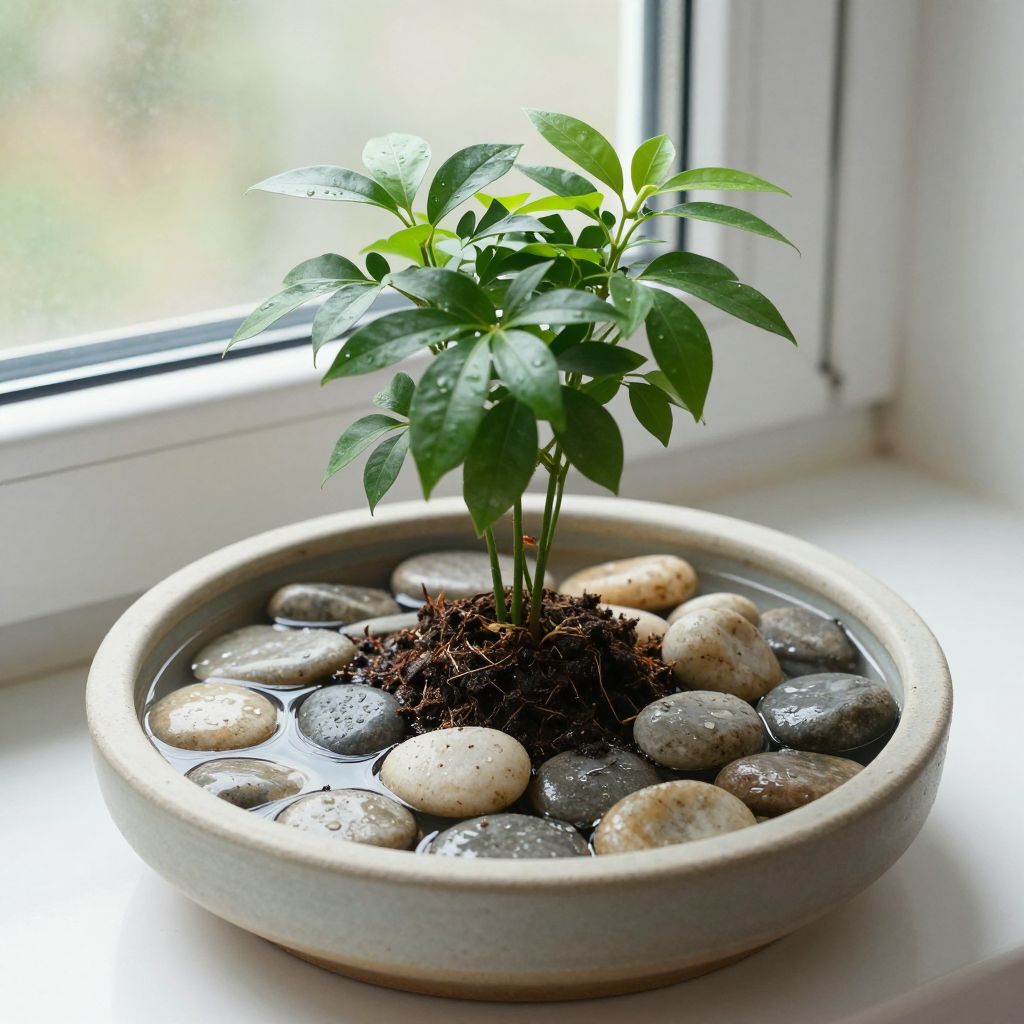
What is a pebble tray for plants, and does it really help? If you’ve seen one under a houseplant and wondered whether it’s just decorative, the short answer is that it can raise local humidity around the plant without wetting the potting mix.
Used correctly, a pebble tray is a simple indoor gardening tool for moisture-loving plants, especially in dry homes, heated rooms, or air-conditioned spaces. It is not a cure-all, but it can support healthier foliage when your plant’s main needs—light, watering, and drainage—are already being met.
What is a pebble tray for plants?
A pebble tray is a shallow tray filled with pebbles or small stones and water, with the plant pot sitting on top of the stones above the waterline. As the water evaporates, it slightly increases humidity immediately around the plant. It works best for indoor plants that prefer moderate to higher humidity, but it does not replace proper watering or good air circulation.
How a pebble tray works
The idea is simple: water in the tray evaporates, creating a more humid microclimate around the plant. Because the pot sits on stones rather than directly in water, the roots are less likely to sit wet and rot.
This is most useful in homes where indoor air becomes dry from heating, cooling, or winter weather. The effect is localized, so a pebble tray helps the plant sitting above it, not the entire room.
What a pebble tray can and cannot do
- Can: add a little humidity around the plant.
- Can: keep the pot elevated above standing water.
- Can: reduce leaf-edge browning on some humidity-loving houseplants.
- Cannot: fix overwatering, poor light, root rot, or pest problems.
- Cannot: create tropical greenhouse humidity in a normal home.
Which plants benefit from a pebble tray?
Plants that naturally prefer more humid air are the best candidates. Many common houseplants appreciate the extra moisture, especially in winter or in very dry rooms.
Good candidates
- Ferns
- Calatheas and prayer plants
- Peace lilies
- Some orchids
- Fittonia
- Begonias grown indoors
- Many tropical foliage plants
Plants that usually do not need one
- Cacti and most succulents
- Snake plant
- ZZ plant
- Pothos in average indoor conditions
- Most drought-tolerant plants
If you are unsure, look at the plant’s natural habitat and leaf behavior. Thin, soft, or large leaves often lose moisture faster than leathery leaves, so they are more likely to appreciate extra humidity.
How to make a pebble tray
You do not need special equipment. A shallow waterproof tray, a layer of pebbles, and clean water are enough.
- Choose a tray that is wider than the plant pot.
- Add a 1 to 2 inch layer of pebbles, gravel, or small stones.
- Pour in water until it sits just below the top of the stones.
- Set the pot on the stones, not directly in the water.
- Check the water level regularly and top up as needed.
The pot should never sit in standing water. If the drainage holes are submerged, the potting mix can become waterlogged and roots may suffocate.
Best tray size and placement
Use a tray that extends a little beyond the pot’s footprint so evaporating moisture can surround the plant. Place it where the plant already gets suitable light, since humidity alone will not compensate for poor growing conditions.
For indoor use, keep the tray on a stable surface and away from places where spills could damage furniture. If your plant is large, a wider tray or plant saucer system may be easier to manage.
When a pebble tray helps most
Pebble trays are most useful in dry indoor conditions, especially during heating season. They can also help in rooms with strong air conditioning, near vents, or in homes with low overall humidity.
They are less effective if the room is already humid, if there is poor airflow, or if the plant is far from the tray. In those cases, you may see little difference.
Signs your plant may appreciate more humidity
- Leaf edges turning brown and crispy
- New leaves unfurling poorly
- Leaves curling or drooping in dry air
- Repeatedly dry-looking foliage despite correct watering
These symptoms can also come from underwatering, too much sun, salt buildup, or root problems, so check the whole plant care routine before assuming humidity is the issue.
Common mistakes to avoid
Many pebble trays fail because they are used in ways that create more problems than benefits. A few simple adjustments make them much more effective.
- Letting the pot sit in water: this can cause root rot.
- Using too little water: if the tray dries completely, humidity benefits are minimal.
- Expecting room-wide humidity: the effect is local and modest.
- Forgetting to clean the tray: stale water can smell and attract algae or fungus gnats.
- Using it for dry-loving plants: succulents generally do better without extra humidity.
How to keep the tray clean
Empty and rinse the tray periodically, especially if you notice algae, mineral crust, or cloudy water. If your tap water is hard, mineral deposits may build up on stones and trays over time.
Clean stones and trays with mild soap and water, then rinse well before refilling. This helps prevent odors and keeps the setup looking tidy.
Does a pebble tray replace other humidity methods?
Not usually. A pebble tray is one of the simplest low-cost options, but it is not the strongest one. For plants that truly need high humidity, grouping plants together, using a humidifier, or placing them in a more naturally humid room may work better.
Comparing common humidity options
- Pebble tray: easy, inexpensive, modest effect.
- Grouping plants: helps create a slightly more humid pocket around foliage.
- Humidifier: best for consistent humidity needs in dry homes.
- Misting: usually short-lived and not a reliable humidity solution.
For most home gardeners, a pebble tray is best viewed as a supportive tool, not a primary fix. If your plant is struggling, review light, watering, potting mix, and drainage first.
Indoor growing conditions that matter more than humidity
Even a perfect pebble tray cannot make up for poor plant care. The most important factors are still the basics: light, water, drainage, and the right potting mix.
Check these first
- Light: Is the plant getting the right amount for its species?
- Watering: Are you watering based on soil dryness, not a fixed schedule?
- Drainage: Does the pot have drainage holes?
- Soil: Is the mix appropriate for the plant, with enough aeration?
- Air movement: Is the plant in a stagnant corner or directly in a draft?
If the plant is overwatered, a pebble tray can make conditions worse by keeping the surrounding area damp while the roots remain stressed. If the plant is underwatered, the tray may help a little with leaf comfort, but it will not substitute for proper watering.
Troubleshooting pebble tray problems
If your plant does not seem to improve, use the symptoms to guide your next step.
Problem: Leaves still look dry
The room may be too dry for the tray to make much difference, or the plant may be too far from the water source. Try moving the plant closer, grouping it with other plants, or using a humidifier if the species is especially humidity-sensitive.
Problem: Soil stays wet too long
The issue is likely watering or drainage, not the pebble tray itself. Make sure excess water can drain freely and that the pot is not sitting in the tray water.
Problem: Algae or fungus gnats appear
Standing water and organic debris can encourage pests. Clean the tray, refresh the pebbles, and let the top of the potting mix dry to the level your plant prefers.
Problem: White crust on the stones
This is often mineral buildup from hard water. Rinse the tray and stones regularly, or switch to cleaner water if buildup is persistent.
Should you use a pebble tray outdoors?
Usually, no. Outdoor plants already experience natural humidity shifts, airflow, and rainfall, so a pebble tray is rarely useful outside. It is mainly an indoor gardening tool for controlled environments.
If you are growing plants in a greenhouse, sunroom, or enclosed porch, a tray may help a little, but ventilation and overall climate control matter more than the tray itself.
Conclusion
A pebble tray for plants is a simple way to add a little humidity around indoor plants without wetting the roots. It works best for humidity-loving houseplants in dry homes, but it should support good care, not replace it. Try one with a suitable plant, watch the foliage, and adjust based on what the plant tells you.
For more practical houseplant care, you may also want to read about how to choose the right potting mix for houseplants and how to tell when indoor plants need watering.