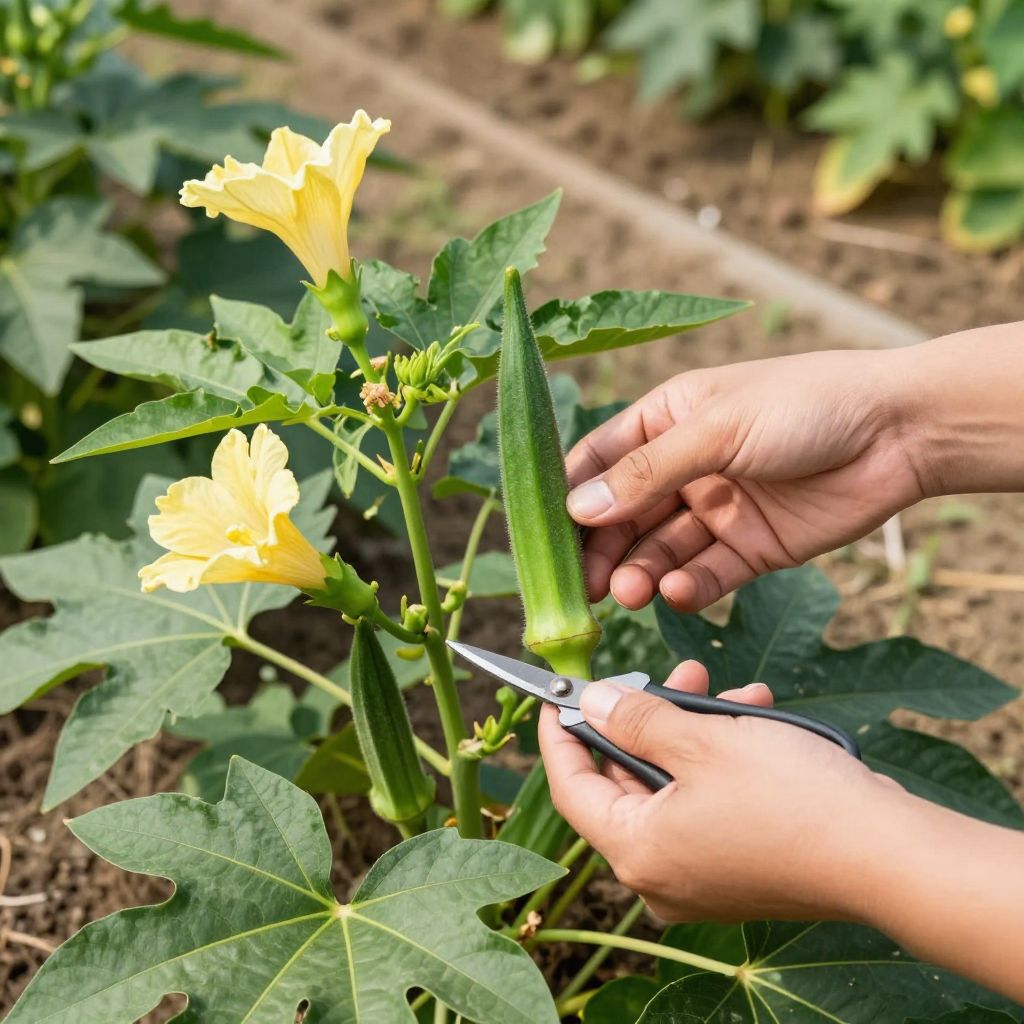
Wondering when to harvest okra so the pods stay tender instead of turning tough and woody? The best picking window is usually just a few days after flowering, when pods are young, straight, and easy to snap or cut. Harvesting often and at the right size keeps the plant producing longer.
Okra is one of those crops that rewards close attention. If you wait too long, even a beautiful pod can become fibrous quickly, so knowing what to look for matters more than counting days alone.
When To Harvest Okra?
Harvest okra when pods are young, tender, and usually 2 to 4 inches long, depending on the variety. Pick them before they become hard, ridged, or difficult to cut. In warm weather, pods can reach harvest size very quickly, so check plants every day or two during peak production.
How To Tell Okra Is Ready To Pick
Size is the easiest clue, but it is not the only one. A ready pod should feel firm yet still tender, with a smooth, bright look and no signs of drying or thickening.
Signs a pod is ready
- Length: Most varieties are best at 2 to 4 inches long.
- Texture: The pod should still feel tender, not leathery.
- Color: It should look fresh and vibrant for its variety.
- Seeds: Seeds inside should be small and soft, not large and hard.
- Ease of cutting: The stem should slice cleanly with pruners or a knife.
If you are unsure, pick one pod and test it. If it bends easily and the seeds are barely noticeable, you are in the right harvest window. If it resists cutting or feels fibrous, it waited too long.
Why timing matters so much
Okra pods can go from tender to tough surprisingly fast, especially in hot weather. Once they overmature, they become stringy and less pleasant to eat, and leaving them on the plant can slow new pod formation.
How Often Should You Harvest Okra?
During peak season, harvest every 1 to 2 days. In very warm weather, some gardeners even check daily. Frequent picking encourages the plant to keep flowering and producing more pods.
If you let pods stay on the plant too long, the plant often shifts energy into seed development instead of making tender new pods. Regular harvesting is one of the simplest ways to improve your total crop.
Best time of day to harvest
Morning is usually the best time to pick okra. Pods are often crisp and cool, and the plant has not been stressed by afternoon heat yet. That said, if a pod is ready, it is better to harvest it than leave it until the next day.
Step-By-Step: How To Harvest Okra Without Damaging the Plant
Okra pods are easy to damage if you pull too hard. Use a clean cutting tool and handle the plant gently so you do not break stems or bruise nearby buds.
- Inspect the plant and look for pods at the right size.
- Use clean pruners, garden scissors, or a sharp knife.
- Hold the pod steady and cut the stem just above the cap.
- Place harvested pods in a basket or container right away.
- Check the plant again in a day or two for new pods.
Wear gloves and long sleeves if your variety has spines or irritating hairs. Some okra plants are smoother than others, but many can still scratch your skin during harvest.
Can you twist okra off by hand?
You can sometimes snap very tender pods by hand, but cutting is safer for the plant and cleaner for the pod. Pulling too hard may tear the stem or damage nearby flower buds, especially on younger plants.
What Happens If You Harvest Okra Too Late?
Late-picked okra usually becomes tough, fibrous, and less useful for cooking. The pod may still be edible if very young, but once it gets large and woody, the texture changes quickly.
Overmature pods can also reduce the plant’s productivity. If a plant is allowed to set and mature too many pods, it may slow down flowering and new pod formation.
How to spot overmature pods
- Pods are longer than the recommended size for your variety.
- The skin looks dull, hard, or dry.
- The pod feels stiff and does not bend easily.
- Seeds inside are large and hard.
- The pod resists cutting and may sound hollow or woody.
If you find overmature pods, remove them anyway. Taking them off the plant helps redirect energy to younger pods that are still worth harvesting.
Does Variety Change Harvest Size?
Yes. Different okra varieties can be best at slightly different lengths, so seed packet guidance is useful. Some cultivars stay tender a little longer than others, while others need very frequent picking once they start producing.
If you do not know the variety, use the general rule of thumb: pick when pods are small, tender, and easy to cut. When in doubt, harvest earlier rather than later.
Growing Conditions That Affect Harvest Timing
Weather, soil, and plant vigor all influence how fast okra reaches harvest size. Warm temperatures and strong sunlight speed growth, while cool weather slows it down.
Sunlight and heat
Okra grows best in full sun. In hot, sunny conditions, pods can size up very quickly, which means you may need to harvest more often. In cooler periods, pods may take longer to reach picking size.
Soil and drainage
Okra prefers well-drained soil. Heavy, soggy soil can slow growth and weaken plants, which may reduce pod production. If your garden soil stays wet, improve it with compost and consider raised beds or mounded rows.
Watering and plant stress
Consistent watering helps plants keep producing, especially when flowering and setting pods. Dry stress can make pods smaller or reduce yield, while overly wet soil can create root problems. The goal is even moisture, not constant saturation.
Fertility
Rich soil with added compost supports steady growth. Too much nitrogen, however, can push leafy growth at the expense of flowers and pods. Balanced soil usually works better than heavy feeding.
Common Harvesting Mistakes To Avoid
Most okra harvest problems come from waiting too long or checking too infrequently. A few simple habits can make a big difference.
- Waiting for pods to get large: Bigger is not better with okra.
- Harvesting too infrequently: Missed pods become woody fast.
- Pulling pods off roughly: This can damage stems and buds.
- Ignoring hidden pods: Okra can hide behind leaves and grow past prime size quickly.
- Using dull tools: Clean cuts are easier on the plant and on you.
A good habit is to walk the row slowly and check all sides of each plant. Pods can be easy to miss because they grow upright or at odd angles near the stem.
What To Do With Okra After Harvest
Freshly picked okra keeps best when handled gently. Place pods in a cool spot soon after harvest, and avoid crushing them in a deep container.
If you are not using them right away, store them in the refrigerator and use them soon for the best texture. Very young pods are usually the most tender, so prompt handling helps preserve quality.
Harvesting Tips For Continuous Production
Okra can keep producing for a long time if you stay ahead of the pods. Regular picking is the simplest way to extend harvests.
- Check plants every day or two in warm weather.
- Pick pods before they become long and hard.
- Remove any missed overmature pods.
- Keep plants watered during dry spells.
- Watch for pests that may damage buds or pods.
Pests and disease issues that can affect harvest
Aphids, stink bugs, and other insects may feed on okra buds or pods, while leaf spot and other diseases can weaken the plant. Healthy spacing, good airflow, and prompt cleanup of damaged plant material can help reduce problems.
If a plant is stressed by pests or disease, pod production may slow. Even then, continue checking regularly, because some pods may still be ready before the plant declines further.
Quick Harvest Checklist
Use this simple checklist when deciding whether to pick okra:
- Pods are about 2 to 4 inches long, or within the variety’s ideal range.
- The pod is firm but still tender.
- Seeds inside are small and soft.
- The stem cuts cleanly.
- The pod has not become hard, dry, or woody.
If most of these signs are true, it is time to harvest. If not, check again soon, because okra can mature quickly.
Final Thoughts
Knowing when to harvest okra comes down to watching pod size and tenderness closely. Pick early, pick often, and use a clean cutting tool so the plant keeps producing. If you are unsure, harvest a little sooner rather than risk a tough pod.
For more practical garden guidance, you may also want to read about how to grow okra and when to harvest green beans.