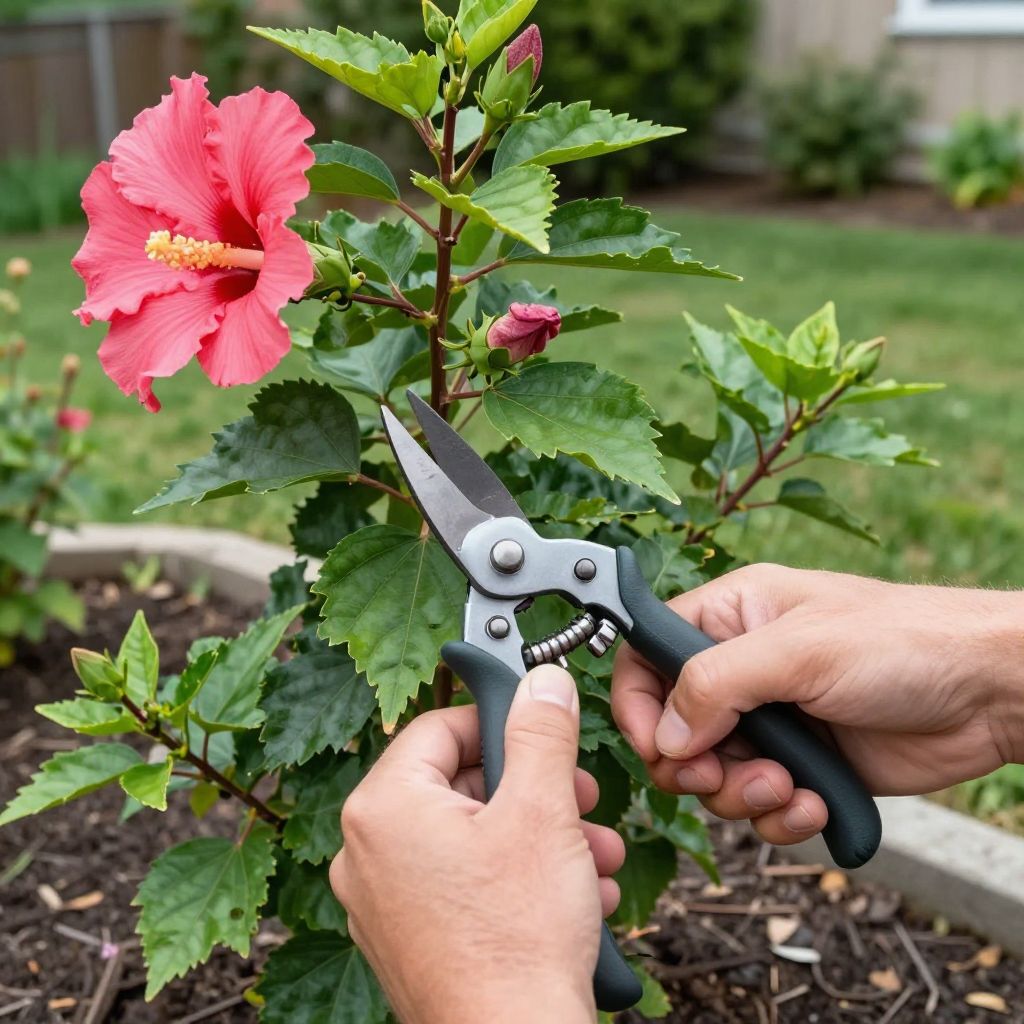
Wondering when to prune hibiscus without cutting off blooms or stressing the plant? The right timing depends on whether you grow tropical hibiscus, hardy hibiscus, or a potted plant that moves indoors for winter.
Pruning at the right time helps hibiscus stay compact, branch well, and flower more reliably. The main rule is simple: prune after the plant’s main flowering flush or in late winter to early spring, depending on the type and your climate.
When to prune hibiscus?
The best time to prune hibiscus is usually after flowering for light shaping and late winter to early spring for stronger structural pruning. Tropical hibiscus are often trimmed in spring as new growth begins, while hardy hibiscus are cut back in late winter or early spring before fresh shoots emerge.
Know which hibiscus you have first
Pruning timing changes depending on the plant. If you prune the wrong type at the wrong time, you may remove buds or delay growth.
Tropical hibiscus (Hibiscus rosa-sinensis)
Tropical hibiscus is frost-tender and often grown in warm climates or in containers. It blooms on new growth, so pruning in late winter or early spring usually gives the plant time to branch before the main flowering season.
Hardy hibiscus
Hardy hibiscus dies back in cold weather and regrows from the base. Because it flowers on new stems, you can cut it back hard in late winter or early spring, once the worst frosts have passed and before new shoots are well underway.
Potted hibiscus indoors or overwintered inside
If your hibiscus spends part of the year indoors, prune lightly after the winter rest period or just before moving it back outside. Avoid heavy pruning while it is adjusting to lower light indoors, since that can slow recovery.
Best pruning windows by season
Late winter to early spring
This is the main pruning window for most hibiscus plants. The plant is usually dormant or just waking up, so cuts are less disruptive and new growth can fill in quickly.
- Best for shaping overgrown plants
- Best for removing winter damage
- Best for encouraging branching before growth accelerates
After a flush of blooms
Light pruning after flowering works well if you want to tidy the plant without sacrificing too many buds. This is especially useful for tropical hibiscus that bloom repeatedly through warm weather.
- Remove spent flower stems
- Shorten leggy shoots by a small amount
- Thin crowded growth to improve airflow
Avoid pruning during cold snaps or extreme heat
Fresh cuts are more vulnerable when the plant is stressed. If your area has late frosts, wait until the risk of hard cold is past. In very hot climates, avoid major pruning right before a heatwave.
How much should you prune?
The amount depends on the plant’s condition and your goal. A healthy hibiscus usually responds well to moderate pruning, but it is better to do less than to remove too much at once.
Light pruning
Light pruning means removing dead tips, crossing branches, and a few inches from overly long stems. This is the safest option for regular maintenance and for plants that are already blooming well.
Moderate pruning
Moderate pruning can reduce a leggy hibiscus by about one-third. This is useful when the plant has become too tall, sparse, or uneven, but still has plenty of healthy stems.
Hard pruning
Hard pruning is more severe and is usually reserved for rejuvenating an overgrown plant or cutting back hardy hibiscus in spring. If you do this, make sure the plant is vigorous, well rooted, and not already stressed from drought, transplanting, or disease.
Tip: Never remove so much growth that the plant is left with almost no healthy leaves or buds unless you are correcting serious damage and the plant is known to tolerate it.
Step-by-step: how to prune hibiscus correctly
- Inspect the plant first. Look for dead stems, weak growth, crossing branches, and any winter damage.
- Clean your tools. Use sharp bypass pruners for stems up to pencil thickness. Wipe blades with rubbing alcohol or a disinfectant between plants if disease is present.
- Remove dead or damaged wood. Cut back to healthy tissue. Dead stems are often brittle, brown, or dry inside.
- Make shaping cuts above a node. Cut just above a leaf node or outward-facing bud to encourage branching in the direction you want.
- Thin crowded areas. Remove a few stems from the center if the plant is dense, so air and light can move through it.
- Step back often. Check the overall shape as you work. Hibiscus looks best with a balanced, open form rather than a flat “haircut.”
Where to cut
Make each cut just above a node, usually about 1/4 inch above it. Cutting too far above the node leaves a stub that can die back; cutting too close can damage the bud.
What to prune off first
If you are unsure where to begin, start with the problem growth. That makes the job easier and helps you avoid overpruning healthy parts of the plant.
- Dead, broken, or diseased stems
- Branches rubbing against each other
- Spindly shoots with little leaf growth
- Stems growing inward and crowding the center
- Any growth damaged by frost or wind
Common pruning mistakes to avoid
Pruning too early
If you prune before the danger of frost has passed, new growth can be damaged by cold. In cooler climates, wait until spring is settled before making major cuts.
Pruning too late
Heavy pruning late in the season can remove buds and reduce flowering. For most hibiscus, avoid major cuts when the plant is already setting many flowers for the season.
Cutting too much at once
Removing too much foliage can shock the plant, especially if it is young, recently repotted, or already struggling. If needed, spread major pruning over two sessions a few weeks apart.
Using dull or dirty tools
Ragged cuts heal more slowly and can invite disease. Sharp, clean pruners make smoother cuts and reduce stress on the plant.
How pruning affects flowering
Hibiscus flowers are produced on new growth, so pruning can actually improve bloom display when done at the right time. The goal is to create more branching, which means more stems and more places for buds to form.
That said, if you prune just before a flowering flush, you may temporarily reduce blooms. This is why timing matters: prune when the plant has time to replace the growth you remove.
Aftercare following pruning
Pruning is only part of the job. Good aftercare helps the plant recover quickly and push out healthy new shoots.
- Water consistently. Keep the soil evenly moist, but not soggy, while the plant regrows.
- Give bright light. Hibiscus needs plenty of sun to support new growth and flowering.
- Feed lightly if appropriate. After new growth starts, a balanced fertilizer can support recovery, but avoid overfeeding a stressed plant.
- Watch for pests. Tender new growth can attract aphids, whiteflies, spider mites, and mealybugs.
Signs your hibiscus is recovering well
Healthy recovery usually shows up as swelling buds, fresh leaves, and steady branching near the cuts. If the plant looks limp for more than a short period, check watering, root health, and light exposure.
Pruning hibiscus in containers
Potted hibiscus often need more frequent shaping because container growth can become crowded or leggy. The timing is similar, but container plants are more sensitive to stress, so avoid aggressive pruning if the root ball is dry, rootbound, or recently repotted.
- Prune after winter rest or after a bloom cycle
- Check drainage before and after pruning
- Move the pot to a bright, sheltered spot while it regrows
Pruning hibiscus in the landscape
Outdoor hibiscus planted in the ground often recover faster than container plants because their roots have more room. Still, local climate matters. In warm regions, light shaping can be done more often; in colder regions, wait until spring and avoid cutting into wood that may still be needed for winter protection.
If your hibiscus is part of a hedge, mixed border, or foundation planting, prune to maintain airflow and keep it from crowding nearby plants.
What if your hibiscus is overgrown or neglected?
An overgrown hibiscus can usually be brought back, but do it gradually if the plant is weak. Start by removing dead wood and a few of the oldest stems, then reshape the rest after new growth appears.
If the plant has suffered from poor light, compacted soil, or root problems, fix those issues too. Pruning alone will not solve a plant that is struggling below ground.
Quick pruning checklist
- Identify whether your hibiscus is tropical or hardy
- Prune in late winter to early spring or after flowering
- Remove dead, damaged, and crowded stems first
- Cut just above a node
- Never remove more than the plant can comfortably replace
- Water, light, and monitor for pests after pruning
Conclusion
When to prune hibiscus comes down to plant type, climate, and the plant’s growth stage. For most gardeners, the safest approach is light shaping after blooms fade and stronger pruning in late winter to early spring. If you want better branching and more flowers, choose the right season, make clean cuts, and let the plant regrow with steady care.
For more practical care tips, you may also want to read about how to prune flowering shrubs and container plant care.