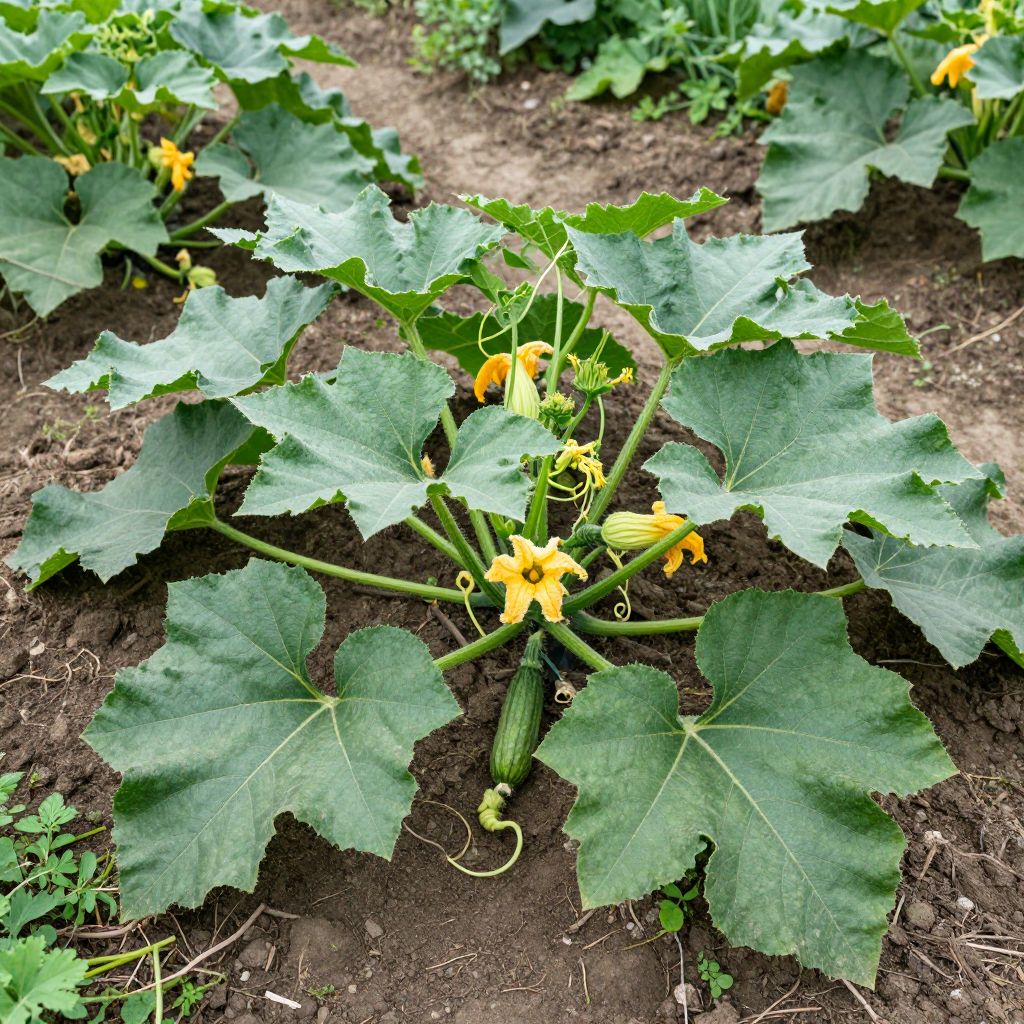
If you’re wondering, “What does a pumpkin plant look like?” you’re usually trying to tell it apart from other squash plants or figure out whether your vine is healthy. Pumpkin plants are sprawling, fast-growing annual vines with large, rough leaves, thick hollow stems, yellow flowers, and curling tendrils that help them climb or spread.
They can look messy at first glance, but that vigorous growth is normal. Once you know the leaf shape, vine habit, and flower structure, it becomes much easier to identify a pumpkin plant and care for it properly in the garden.
What does a pumpkin plant look like?
A pumpkin plant is a warm-season cucurbit with a long trailing vine, broad lobed leaves, and large yellow flowers. The stems are thick and slightly prickly, the leaves are rough to the touch, and the plant often spreads several feet in every direction as it matures.
Key features of a pumpkin plant
Leaves
Pumpkin leaves are usually large, rounded, and deeply lobed, often with a rough, sandpapery texture. They are medium to dark green and can grow quite broad as the plant matures.
Stems and vines
The vines are thick, green, and hollow-looking, with noticeable nodes where leaves, tendrils, and flowers emerge. You may also see small prickles on the stems and petioles, which is normal for many pumpkin varieties.
Tendrils
Look for thin, curling tendrils near the leaf joints. These help the vine anchor itself to nearby supports or spread across the ground.
Flowers
Pumpkin plants produce bright yellow, funnel-shaped flowers. Male flowers usually appear first, followed by female flowers, which have a small swollen ovary at the base that resembles a tiny pumpkin.
Fruit
The fruit starts as a small green swelling behind the female flower and enlarges over time. Depending on the variety, mature pumpkins may be round, flattened, ribbed, orange, white, tan, or even striped.
How to tell pumpkin plants apart from other squash
Many squash and pumpkin plants look similar, especially when they are young. The safest way to identify them is to compare the leaf shape, vine growth, and fruit form rather than relying on one feature alone.
- Leaves: Pumpkin leaves are usually broad and lobed, but so are many squash leaves.
- Growth habit: Most pumpkins are vigorous vines that spread widely across the soil.
- Flowers: Yellow flowers are common to many cucurbits, so they are helpful but not definitive.
- Fruit: The developing fruit shape is often the clearest clue for identifying the plant.
If you are unsure, wait until the plant flowers and sets fruit. At that stage, the differences between pumpkins, summer squash, and winter squash are usually easier to see.
What a healthy pumpkin plant should look like
A healthy pumpkin plant has strong green vines, upright or spreading leaves, and steady new growth at the tips. The foliage should look full rather than wilted, and the plant should produce both male and female flowers as it matures.
- Leaves are firm and evenly colored.
- Stems are thick and not collapsing at the base.
- New growth appears at the vine tips.
- Flowers open normally in warm weather.
- Fruit develops evenly without major yellowing or rot.
Some leaf yellowing on older growth can happen naturally later in the season, but widespread yellowing, spotting, or wilting usually signals a problem with water, nutrients, pests, or disease.
Growing conditions pumpkin plants prefer
Pumpkins grow best in full sun, warm temperatures, and rich, well-drained soil. They are heavy feeders and need plenty of room, so cramped beds or poor soil often lead to weak vines and small fruit.
Sunlight
Give pumpkin plants at least 6 to 8 hours of direct sun each day. More sun usually means stronger growth and better flowering, especially in cooler climates.
Soil
Pumpkins prefer fertile soil with plenty of organic matter and good drainage. Before planting, work in compost to improve soil structure and moisture retention without making the bed soggy.
Drainage
Good drainage matters because pumpkin roots dislike sitting in wet soil. If your garden holds water after rain, consider raised beds, mounded rows, or improved soil structure before planting.
Space
These vines need room to spread. Give them plenty of open ground, or train them carefully if you are growing a smaller variety in a compact garden.
How to plant and care for pumpkin vines
Whether you start from seed or transplant young plants, pumpkins do best when the soil is warm and the danger of cold weather has passed in your area. Local conditions matter, so use soil temperature and seasonal cues rather than a fixed calendar date.
- Choose a sunny site with loose, fertile soil.
- Mix in compost before planting.
- Sow seeds or set transplants at the recommended spacing for your variety.
- Water deeply after planting.
- Mulch lightly once the soil has warmed to help hold moisture and reduce weeds.
Keep the soil evenly moist while the plant is establishing, especially during flowering and fruit set. Avoid frequent shallow watering, which encourages weak roots near the surface.
Watering tips
Water at the base of the plant rather than over the leaves when possible. Wet foliage can increase disease pressure, especially in humid weather or crowded plantings.
Feeding
Compost is often enough for many home gardens, but very poor soil may need additional balanced nutrition based on a soil test. Avoid overfeeding with too much nitrogen, which can produce lots of leaves and fewer pumpkins.
Pruning, training, and maintenance
Pumpkin plants do not need heavy pruning, but light maintenance can improve airflow and make the plant easier to manage. If vines are sprawling into paths or neighboring beds, gently redirect them early while stems are still flexible.
- Remove only damaged, diseased, or clearly declining leaves.
- Keep vines from being crushed or repeatedly moved once fruit is forming.
- Use straw or another dry mulch under developing fruit to reduce rot.
- Check under leaves regularly for pests and disease symptoms.
If you are growing large-fruited pumpkins, limit unnecessary vine disturbance. The plant needs its leaves to feed the fruit, so avoid stripping foliage unless there is a clear reason.
Common pests and diseases to watch for
Pumpkin plants are attractive to several common garden pests and can also develop fungal or bacterial problems, especially in wet or crowded conditions. Early detection is the best way to limit damage.
Common pests
- Squash bugs: These insects feed on stems and leaves, causing wilting and decline.
- Cucumber beetles: They chew foliage and can spread disease.
- Aphids: Small clusters may gather on tender growth and flower stems.
- Spider mites: More common in hot, dry conditions; they cause stippling and leaf bronzing.
Common diseases
- Powdery mildew: White, dusty patches on leaves, often later in the season.
- Downy mildew: Yellow or pale patches with fuzzy growth on leaf undersides in humid weather.
- Blight and leaf spots: These can spread quickly when leaves stay wet.
- Fruit rot: Often caused by fruit sitting on damp soil or damaged skin.
To reduce problems, rotate crops if possible, keep weeds down, water at soil level, and give plants enough space for air movement. Remove badly diseased leaves promptly and dispose of them according to local garden guidance.
How to tell if your pumpkin plant is stressed
Stress often shows up in the leaves and vines before it affects the fruit. If your pumpkin plant looks weak, compare its symptoms with recent weather, watering habits, and any pest activity you’ve noticed.
- Wilting in hot sun: May mean the plant needs deeper watering, but check the soil first.
- Yellowing leaves: Can point to nutrient issues, overwatering, or natural aging.
- Few flowers: Often linked to low light, excess nitrogen, or plant immaturity.
- Small or misshapen fruit: May result from poor pollination, stress, or limited resources.
If the soil feels soggy, hold off on watering and improve drainage. If the soil is dry several inches down, water more deeply and less often.
Pollination and fruit development
Pumpkins depend on pollinators to move pollen from male flowers to female flowers. Without good pollination, fruit may abort, grow oddly shaped, or fail to enlarge properly.
Female flowers are easy to spot because they have a small swelling behind the bloom. If bees are scarce in your garden, you may need to hand-pollinate in the morning using a small brush or by transferring pollen from a male flower to a female flower.
Harvesting pumpkins at the right stage
Harvest timing depends on the variety, but mature pumpkins usually have firm skin, a deep mature color, and a hard stem that begins to dry. Do not pick fruit too early if you want it to store well.
- Use clean pruners or a sharp knife.
- Leave a short stem attached if possible.
- Handle fruit carefully to avoid bruising.
- Keep harvested pumpkins dry and out of standing moisture.
If frost is forecast and fruit is nearly mature, harvest before hard freeze damage can ruin the skin and shorten storage life.
Quick identification checklist
If you are still asking what does a pumpkin plant look like, use this simple checklist in the garden:
- Large, rough, lobed leaves
- Long, spreading vine habit
- Thick green stems with nodes
- Curling tendrils
- Yellow male and female flowers
- Small swelling behind female flowers
- Fruit that enlarges from that swelling
Conclusion
A pumpkin plant is easy to recognize once you know the main signs: broad rough leaves, sprawling vines, yellow flowers, and fruit that starts as a swelling behind the female bloom. If yours matches that description, focus on sun, rich soil, steady moisture, and good airflow to keep it growing well.
For more help with vine crops and garden care, you may also want to read related guides on growing squash in the home garden and how to improve garden soil with compost.