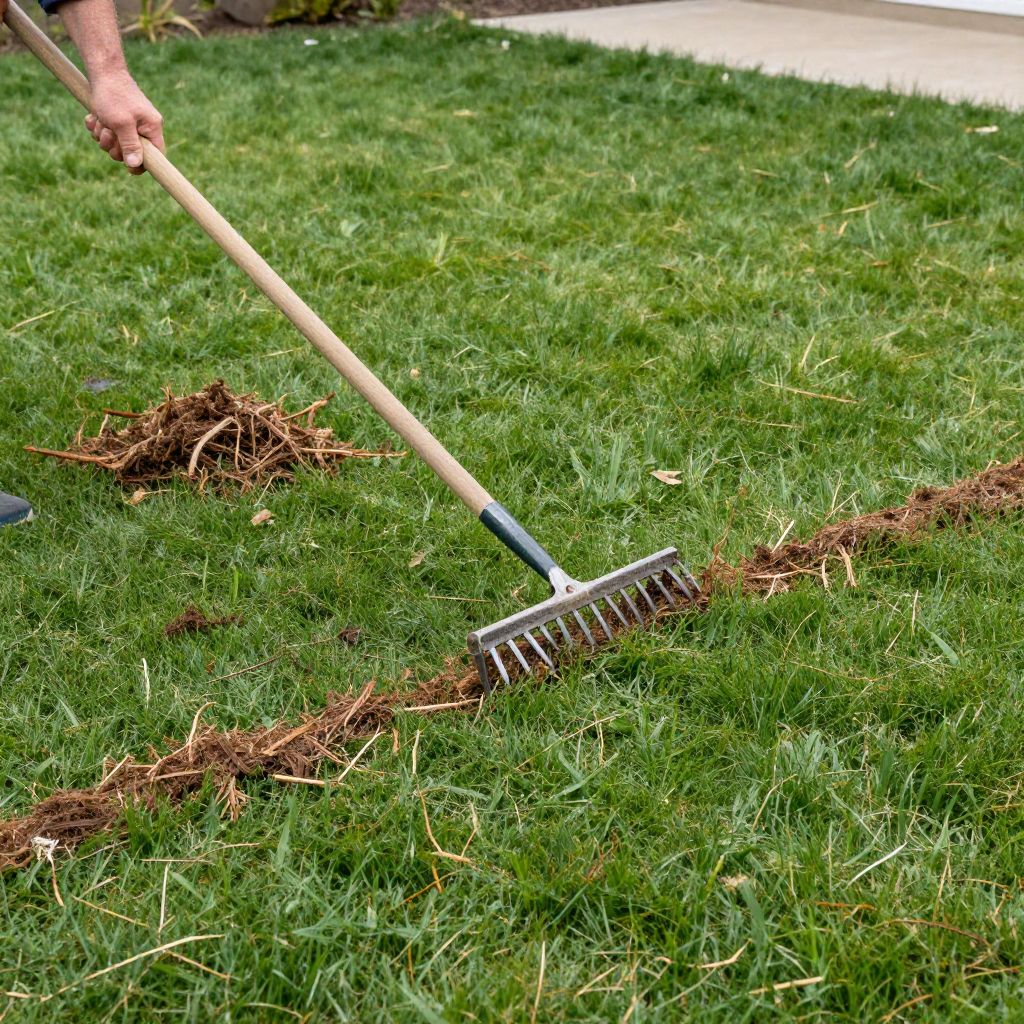
When should you dethatch your lawn? The best time is when your grass is actively growing and can recover quickly, usually in the same season you would normally do major lawn care. For most cool-season lawns, that means early fall or early spring; for warm-season lawns, late spring to early summer is usually best.
Timing matters because dethatching is stressful. If you do it when grass is dormant, heat-stressed, drought-stressed, or already thin, you can make the lawn look worse before it gets better.
When should you dethatch your lawn?
Dethatch your lawn only when the grass is actively growing, the soil is moderately moist, and the lawn has a thatch layer thick enough to interfere with water, air, and root growth. In general, cool-season grasses recover best in early fall or early spring, while warm-season grasses recover best in late spring or early summer.
What thatch is, and when it becomes a problem
Thatch is the layer of dead and living stems, roots, and runners that builds up between the grass blades and the soil surface. A thin layer is normal and can help cushion foot traffic, but too much thatch blocks water and nutrients from reaching the roots.
How much thatch is too much?
A small amount of thatch is usually fine. The problem starts when the layer becomes thick enough that you can feel a spongy mat underfoot or see water puddling and running off instead of soaking in.
- About 0.5 inch or less: usually manageable.
- More than 0.5 inch: often worth addressing.
- More than 1 inch: likely causing real lawn stress.
You can check by cutting out a small wedge of turf with a spade and measuring the brown spongy layer above the soil. If you are unsure, inspect several spots because thatch is often uneven.
Best seasons for dethatching by grass type
Cool-season grasses
For cool-season lawns such as Kentucky bluegrass, perennial ryegrass, and tall fescue, the best dethatching window is usually early fall. Spring can also work if you time it before hot weather arrives, but fall is often easier because temperatures are cooler and weeds are less aggressive.
Early fall gives the lawn time to regrow roots and fill in thin areas before winter. Avoid dethatching during summer heat, when cool-season grass is already under stress.
Warm-season grasses
For warm-season lawns such as bermudagrass, zoysiagrass, St. Augustinegrass, and centipedegrass, late spring to early summer is usually the safest time. Wait until the grass is fully green and growing strongly, because warm-season turf needs warmth to recover well.
Do not dethatch warm-season lawns too early in spring. If the grass is still slow, patchy, or partly dormant, the lawn may not bounce back well.
Signs your lawn may need dethatching
Not every lawn needs dethatching. In fact, over-dethatching can damage healthy turf. Look for clear signs before you decide to do it.
- Water beads up or runs off instead of soaking in.
- The lawn feels springy or spongy underfoot.
- Grass looks thin even with proper watering and mowing.
- Roots seem shallow when you lift a small section of turf.
- Thatch is visibly thicker than about half an inch.
Also consider the lawn’s history. Lawns that receive heavy nitrogen fertilization, frequent shallow watering, or very little soil contact are more prone to thatch buildup.
When not to dethatch your lawn
Some timing mistakes can set your lawn back for months. Avoid dethatching when the grass is already struggling.
Skip dethatching if the lawn is under stress
- During drought or water restrictions
- During extreme summer heat
- When the lawn is dormant
- Right after seeding or newly laying sod
- When the soil is waterlogged or muddy
If your lawn has a lot of weeds, bare spots, or pest damage, fix those issues first or at the same time. Dethatching alone will not solve poor soil, compaction, or disease problems.
How to dethatch correctly
Use the right method for the size of the lawn and the thickness of the thatch. Light thatch can sometimes be handled with a spring-tine rake, while heavier buildup may need a power dethatcher or vertical mower.
Step-by-step dethatching process
- Mow the lawn slightly shorter than usual, but do not scalp it.
- Water lightly a day or two before dethatching if the soil is dry, so the turf is less brittle.
- Use a dethatching rake or machine and work in one direction first.
- Make a second pass at a right angle if needed, but only if the lawn can handle it.
- Rake up and remove loosened debris so it does not smother the grass.
- Water the lawn afterward and monitor recovery closely.
For small lawns, a manual dethatching rake gives you more control. For larger areas, a machine can save time, but it is easier to overdo it, so set the blades or tines conservatively.
How aggressive should you be?
Less is usually better. You want to remove the thick thatch layer, not tear up healthy crowns and roots. If the lawn looks shredded or bare after one pass, stop and let it recover.
What to do after dethatching
Aftercare is just as important as the dethatching itself. The lawn needs moisture, protection, and time to regrow.
- Water deeply enough to keep the root zone from drying out.
- Keep foot traffic light for a couple of weeks.
- Rake off debris so sunlight reaches the soil surface.
- Overseed thin areas if your grass type and season allow it.
- Topdress lightly with compost only if your turf and soil conditions make sense for it.
If you overseed, choose a time that matches your grass type and local climate. Overseeding works best when soil temperatures and air temperatures support quick germination and steady growth.
Common mistakes to avoid
Most dethatching problems come from bad timing or doing too much at once. A cautious approach protects the lawn and still improves airflow and water penetration.
- Dethatching at the wrong season: the lawn may not recover well.
- Confusing thatch with soil compaction: compacted soil needs aeration, not just dethatching.
- Removing too much at once: this can expose crowns and create bare patches.
- Ignoring the cause: overfertilizing and shallow watering can keep thatch coming back.
- Using a dull or poorly adjusted machine: this can tear the turf instead of lifting thatch.
Thatch vs. compaction: know the difference
Thatch and compaction often happen together, but they are not the same. Thatch is a surface layer of organic debris. Compaction is a soil problem that limits air and water movement below the surface.
If a lawn is hard and dense, with poor drainage and shallow roots, aeration may be more helpful than dethatching. In many lawns, the best long-term fix is a combination of better mowing, smarter watering, and periodic aeration rather than repeated dethatching.
How to reduce thatch buildup in the future
Once you have corrected a thatch problem, adjust your lawn care routine so it does not return quickly.
- Mow at the correct height for your grass type.
- Leave clippings on the lawn if they are light and finely chopped.
- Avoid heavy, frequent nitrogen applications unless your lawn truly needs them.
- Water deeply and less often instead of frequent shallow sprinkling.
- Improve drainage where water tends to sit.
- Aerate compacted areas when appropriate for your turf.
Healthy grass with deep roots usually produces less problematic thatch than stressed grass that is pushed with too much fertilizer and too little water management.
Quick answer for busy gardeners
If you are wondering when should you dethatch your lawn, the safest rule is simple: do it only when the grass is actively growing and can recover quickly. For cool-season grass, choose early fall or early spring; for warm-season grass, choose late spring to early summer.
Check the thatch first, avoid extreme weather, and keep the process gentle. If you want more lawn-care help, it can also be useful to read aboutproper lawn aeration andhow to mow grass at the right height so you can prevent thatch from building up again.