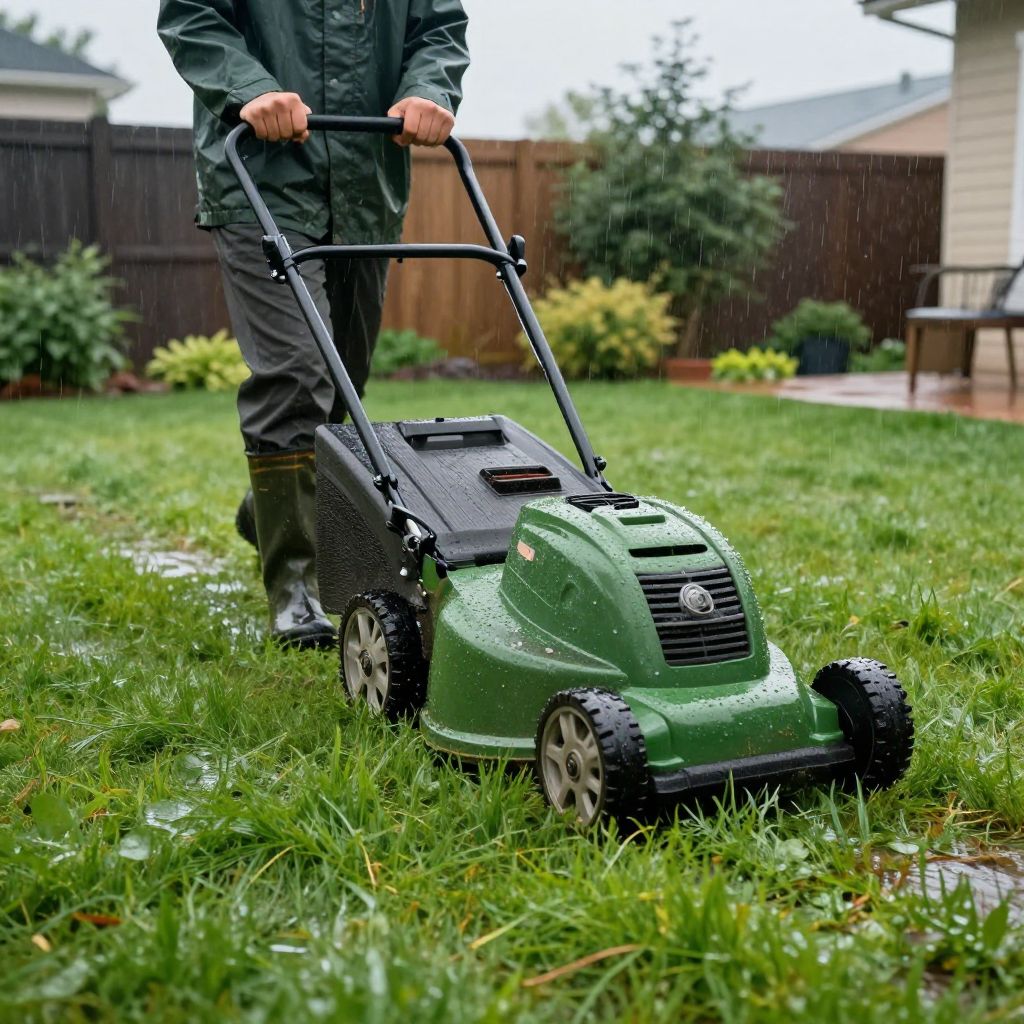
Can you cut grass in the rain? It’s a common lawn-care question, especially when the weather turns wet and your mowing schedule gets interrupted. The short answer is that you usually should avoid mowing when grass is wet, and you should never mow if the lawn is soggy, slippery, or stormy.
Wet grass can tear instead of cut cleanly, clog your mower, and compact the soil under your feet and wheels. If you want a healthier lawn and safer mowing routine, it helps to know when a little moisture is acceptable and when it’s better to wait.
Can you cut grass in the rain?
You can physically mow wet grass, but it is usually a bad idea. Light surface moisture may be manageable in some cases, yet mowing during steady rain, on saturated soil, or when visibility and footing are poor can damage the lawn, strain your mower, and increase the risk of slipping or electrical hazards.
Why mowing wet grass causes problems
Grass blades are softer and heavier when wet, so the mower blade often bends them rather than slicing them cleanly. That leaves ragged tips, which can make the lawn look uneven and may stress the turf.
Wet clippings also clump together. Those clumps can smother patches of grass, block sunlight, and create a messy layer that is harder to rake or mulch back into the lawn.
Common risks of mowing in wet conditions
- Uneven cuts: Wet blades fold over, so the mower misses some grass.
- Soil compaction: Wheels and foot traffic press into soft ground, especially on clay soil.
- Ruts and turf damage: Heavy mowers can leave tracks in saturated lawns.
- Clogged mower decks: Wet grass sticks to the underside of the deck and discharge chute.
- Safety hazards: Slippery surfaces increase the chance of falls.
When it may be okay to mow damp grass
If the lawn is only lightly damp from dew or a brief mist, and the soil is firm underfoot, mowing can sometimes be done carefully. The key is that the grass should not be dripping, and the ground should not feel soft, squishy, or leave footprints.
Even then, mow conservatively. Raise the cutting height a little, move slowly, and stop if the mower begins to clog or the wheels sink into the lawn.
Signs the lawn is too wet to mow
- Water is still beading on the blades of grass.
- Your shoes leave deep prints in the turf.
- The mower leaves dark, flattened tracks.
- Clippings stick to the deck instead of dispersing.
- You can hear the engine labor or the blade bog down.
How long should you wait after rain?
There is no single waiting time that works everywhere. A sandy, well-drained lawn may dry enough in a few hours, while a clay-heavy or shaded yard may stay wet for a day or more after rain.
Instead of using the clock, use the lawn itself as your guide. Walk across it, press the soil with your shoe, and check whether the top layer feels firm. If the soil sticks to your shoes or compresses easily, wait longer.
Factors that affect drying time
- Soil type: Clay holds water longer than sand.
- Slope: Sloped lawns shed water faster than flat areas.
- Sunlight: Full sun dries turf more quickly than shade.
- Air movement: Wind and open space help grass dry.
- Thatch and compaction: Thick thatch or compacted soil slows drainage.
Best mowing practices if you must cut wet grass
If you have no choice and the lawn needs attention, take steps to reduce damage. The goal is to make one careful pass, not force the mower through saturated turf.
- Wait for the rain to stop completely if possible.
- Check that the lawn is damp, not soaked.
- Raise the cutting height slightly to reduce stress on the turf.
- Mow when the grass is as dry as possible, often later in the day.
- Use a sharp blade so the mower cuts cleanly.
- Move slowly and avoid sharp turns that tear the sod.
- Stop if clumps build up or the mower starts slipping.
What not to do
- Do not mow in standing water.
- Do not mow on steep, slick slopes.
- Do not use a dull blade on wet grass.
- Do not bag every clump if the lawn is only slightly damp; frequent stops can make the job worse.
- Do not mow if you are using an electric mower and the area is wet enough to create a shock hazard.
How wet mowing affects lawn health
Most turf grasses recover from an occasional damp mow, but repeated mowing in poor conditions can weaken the lawn over time. The biggest issues are torn leaf tips, compacted soil, and damaged crowns where new growth emerges.
Those problems can invite stress and make the lawn more vulnerable to weeds, thinning, and disease. A healthy lawn is easier to maintain when mowing happens on dry or nearly dry turf.
Why clean cuts matter
A sharp blade trims grass cleanly. A torn blade dries out at the tip, which can leave the lawn looking brownish or frayed for a few days. This is especially noticeable on fine-textured turf and freshly cut lawns.
Wet grass and lawn disease
Mowing wet grass does not automatically cause disease, but it can help spread fungal problems if they are already present. Moist conditions favor many turf diseases, and mower blades or wheels can move infected debris across the lawn.
If you already see spots, patches, or unusual discoloration, avoid mowing until the grass dries and the problem is assessed. Cutting through a stressed lawn can make recovery harder.
Watch for these warning signs
- Small circular patches or expanding brown areas
- Fuzzy growth on blades or thatch
- Grass that looks water-soaked or slimy
- Uneven thinning after repeated wet mowing
How to care for the lawn after mowing in damp conditions
If you had to mow while the lawn was still a little wet, give the turf a chance to recover. Avoid extra traffic for a day or two, especially if the soil is soft.
Rake up heavy clumps if they are sitting on the grass. If the clippings are light and evenly distributed, they can usually be left in place to decompose.
Simple recovery steps
- Let the lawn dry before walking on it again.
- Remove thick clumps of clippings from shaded or low spots.
- Check for ruts and gently lift flattened grass if needed.
- Water only if the lawn actually needs it; do not add more moisture after rain.
How to keep mowing delays from becoming a problem
Rainy weather can throw off your mowing routine, but you can still keep the lawn in good shape by adjusting your schedule. The main goal is to mow often enough that you never need to remove too much grass at once.
When grass gets too tall, you may be tempted to mow even if it is wet. That usually causes more damage than simply waiting a little longer.
Helpful lawn-maintenance habits
- Mow regularly so you remove only a small amount each time.
- Keep the mower blade sharp throughout the growing season.
- Improve drainage in low spots with grading, aeration, or soil amendments where appropriate.
- Reduce shade and thatch buildup if your lawn stays wet for long periods.
Special note on mower type and safety
Different mowers behave differently in wet conditions, but none are ideal for soaking-wet turf. Gas and battery mowers can clog, while corded electric mowers add extra safety concerns around moisture.
Always read your mower’s manual and follow the manufacturer’s safety guidance. If the lawn is slippery enough that you would hesitate to walk quickly across it, it is too wet to mow safely.
Bottom line
So, can you cut grass in the rain? In most cases, it is better to wait. Light dampness may be manageable, but wet, soggy, or stormy conditions are a poor time to mow.
For the best lawn care, let the grass dry, use a sharp blade, and mow only when the soil is firm. If you want to keep learning about healthier mowing and lawn maintenance, look for more practical guides on lawn care, drainage, and turf recovery.