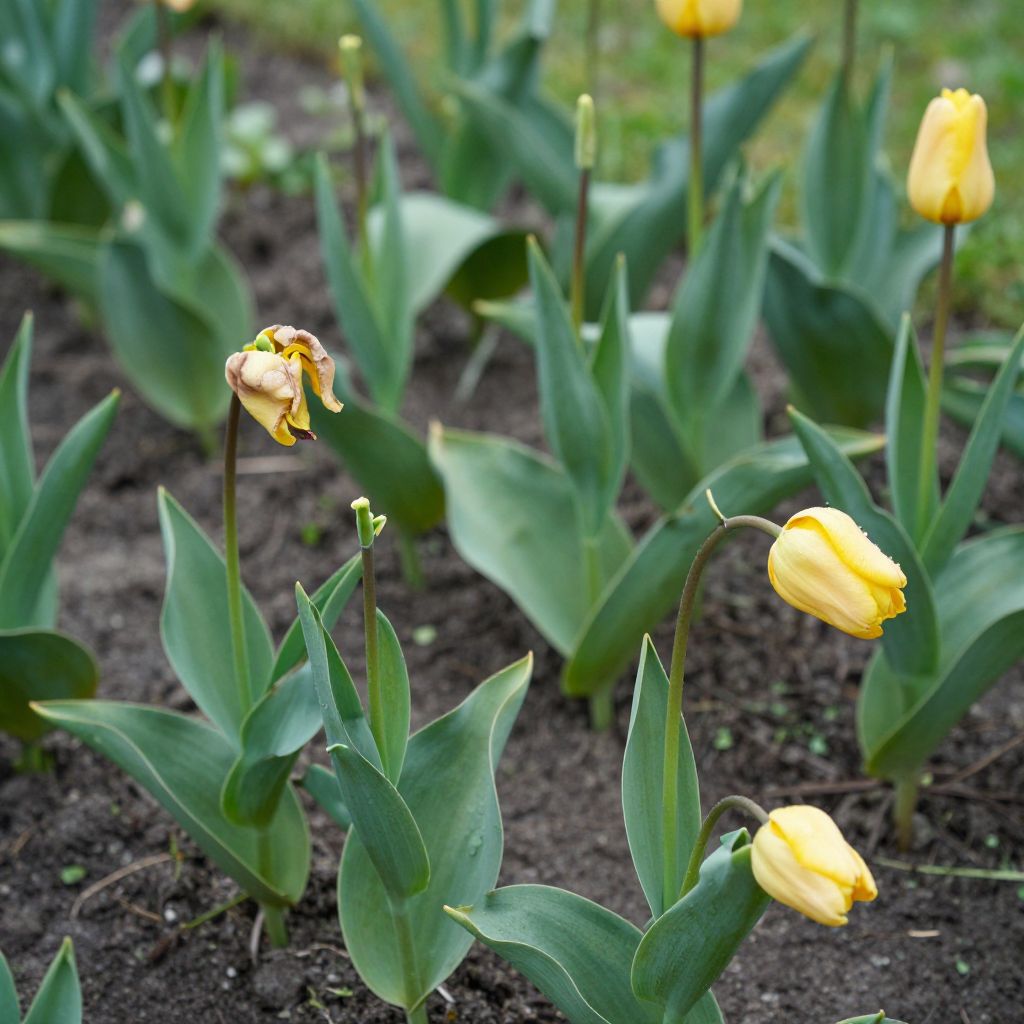
Why are my tulips drooping? In many cases, it’s a normal part of the bloom cycle, but drooping can also signal heat stress, weak stems, poor drainage, or a bulb problem. The key is to tell the difference between a temporary slump and a fixable growing issue.
With a few quick checks, you can usually figure out whether your tulips need support, better care, or replacement in fall. Below, you’ll find the most common causes and the practical steps that help tulips stand straighter and bloom better next season.
Why are my tulips drooping?
Tulips droop when their stems can’t support the flowers, often because of heat, too much shade, soft growth from excess nitrogen, shallow planting, or waterlogged soil. Sometimes drooping is natural as blooms age. Check whether the flowers are fresh, the stems are bent, or the whole plant is collapsing to narrow down the cause.
Normal tulip drooping vs. a real problem
Not every drooping tulip is unhealthy. Tulips naturally lean or nod as blooms mature, especially in warm weather or after rain.
When drooping is normal
- The flower is fully open and starting to fade.
- The stem is still firm, not mushy.
- Only the bloom head is nodding, not the whole plant.
When drooping points to a problem
- Stems flop over while the flower is still fresh.
- Leaves are yellowing early or collapsing.
- The plant looks stretched, weak, or pale.
- Several tulips in the same area are leaning badly.
Common causes of drooping tulips and how to fix them
1. Heat makes tulips collapse quickly
Tulips prefer cool spring weather. Once temperatures climb, blooms can open too fast and stems may soften or bend.
What to do: If your tulips are in containers or a hot, exposed bed, move or shade them during warm spells if possible. Cut flowers for indoor display when they are just opening, before the heat shortens the show.
2. Too little sunlight causes weak stems
Tulips need full sun in spring for sturdy growth. In too much shade, stems stretch toward light and become floppy.
What to do: Plant tulips where they get at least 6 hours of sun while they are actively growing. If nearby shrubs or trees leaf out early, that shade can still reduce bulb performance even if the bed looks sunny later in the year.
3. Overwatering or poor drainage can rot bulbs
Tulips dislike soggy soil. If the bulb or roots stay wet, the plant may droop because the bulb is stressed or starting to rot.
Warning signs: soft stems, yellowing leaves, moldy soil, or a bulb that feels mushy when lifted.
What to do: Improve drainage by planting in loose soil, raised beds, or containers with drainage holes. If the soil stays wet after rain, avoid watering unless the top few inches have dried.
4. Shallow planting makes stems less stable
Bulbs planted too close to the surface are more likely to lean, especially after rain or wind. They can also warm up too quickly.
What to do: Replant bulbs in fall at a depth about three times the bulb’s height, usually around 6 to 8 inches deep for many garden tulips, depending on bulb size and soil type. In very loose soil, planting a little deeper can help anchor them.
5. Rich nitrogen growth can make tulips floppy
Too much nitrogen encourages lush leaves and soft stems instead of sturdy flowers. This is common if tulips are planted in heavily fertilized beds or near lawn fertilizer runoff.
What to do: Avoid high-nitrogen lawn feeds near tulip beds. If you fertilize bulbs, use a balanced bulb fertilizer lightly and only according to label directions, or rely on compost mixed into the soil at planting time.
6. Wind and rain can physically bend the stems
Strong spring storms can knock tulips over, especially tall varieties or those with large blooms. Once bent, stems may not fully recover.
What to do: Plant tulips in a sheltered spot or among lower-supporting plants that help block wind. For valuable displays, use discreet stakes or ring supports before the flowers open.
7. Pests and diseases can weaken the plant
Bulb rot, gray mold, and other fungal problems can weaken stems and cause drooping. Squirrels, rodents, and some insects may also disturb bulbs underground.
Look for:
- Spots, mold, or soft tissue on leaves and stems
- Bulbs that are damaged, hollowed, or missing
- Plants that collapse suddenly rather than gradually
What to do: Remove badly affected plants and discard infected material in the trash, not the compost pile. Replant only healthy bulbs in clean, well-drained soil.
How to tell what your tulips need right now
If you’re standing in the garden wondering why are my tulips drooping, use this quick check.
- Look at the bloom stage. If the flowers are old and fading, the droop may be natural.
- Feel the stem. Firm stems usually mean temporary stress; mushy stems suggest rot.
- Check the soil. Dry soil may point to heat or drought; wet soil suggests drainage trouble.
- Inspect the leaves. Pale, stretched leaves often mean too little sun.
- Look around the bed. Wind, shade from trees, or fertilizer spillover can explain repeated problems.
What to do if your tulips are drooping after blooming
Once tulips finish flowering, the leaves need time to feed the bulb for next year. Don’t cut them down too early, even if the bloom has collapsed.
After-bloom care
- Deadhead spent flowers so the plant doesn’t waste energy making seed.
- Leave the foliage until it turns yellow and dies back naturally.
- Water only if the soil is very dry and the weather is unusually dry.
- Avoid braiding or tying leaves, which reduces energy storage.
If the whole plant is drooping because the bulb is failing, you can remove it after the foliage fades and inspect the bulb. Healthy bulbs are firm; rotten ones should be discarded.
How to prevent drooping tulips next season
Choose the right site
Plant tulips in a sunny spot with well-drained soil. If your garden has heavy clay, improve it with compost and consider raised beds for better drainage.
Plant at the right depth
Set bulbs deep enough to anchor the stems. In most gardens, a planting depth of 6 to 8 inches works well for many tulips, but adjust for bulb size and soil texture.
Avoid overfeeding
Use compost or a low-to-moderate fertilizer approach rather than heavy nitrogen. Strong foliage is not the goal if it comes at the expense of sturdy blooms.
Water carefully
Tulips usually need moisture after planting and during active spring growth if rainfall is lacking. They do not like constantly wet soil, so let the top layer dry a bit between waterings.
Support tall varieties if needed
Some tulips naturally have longer stems and larger flowers. In windy gardens, plant them in groups so they support each other, or add a subtle support ring before buds open.
Should you lift and replant drooping tulip bulbs?
Sometimes yes, especially if the problem is poor drainage, shallow planting, or overcrowding. But don’t rush to dig them up while they are still in active bloom.
Wait until the foliage has yellowed and the bulb has had time to recharge. Then lift bulbs if the site is too wet, too shady, or repeatedly produces weak flowers. Replant healthy bulbs in fall in a better location.
When to replace tulips
Some tulips perform best for one strong season, especially in warm climates or difficult soil. If your bulbs keep drooping year after year despite good care, it may be simpler to treat them as short-lived and replant fresh bulbs each fall.
For longer-lasting displays, choose a site with excellent drainage, full spring sun, and protection from strong wind. That combination gives tulips the best chance of staying upright and blooming well.
Quick troubleshooting checklist
- Fading bloom? The droop may be normal.
- Hot weather? Heat is likely the cause.
- Wet soil? Check for drainage or rot.
- Long, weak stems? Look for too much shade or excess nitrogen.
- Plants falling over after storms? Wind or rain damage is likely.
If you want to keep tulips upright and healthy, start by checking sun, soil moisture, and planting depth, then adjust your care next season. For more bulb-growing advice, you may also find tulip bulb care tips and spring bulb planting guide helpful.