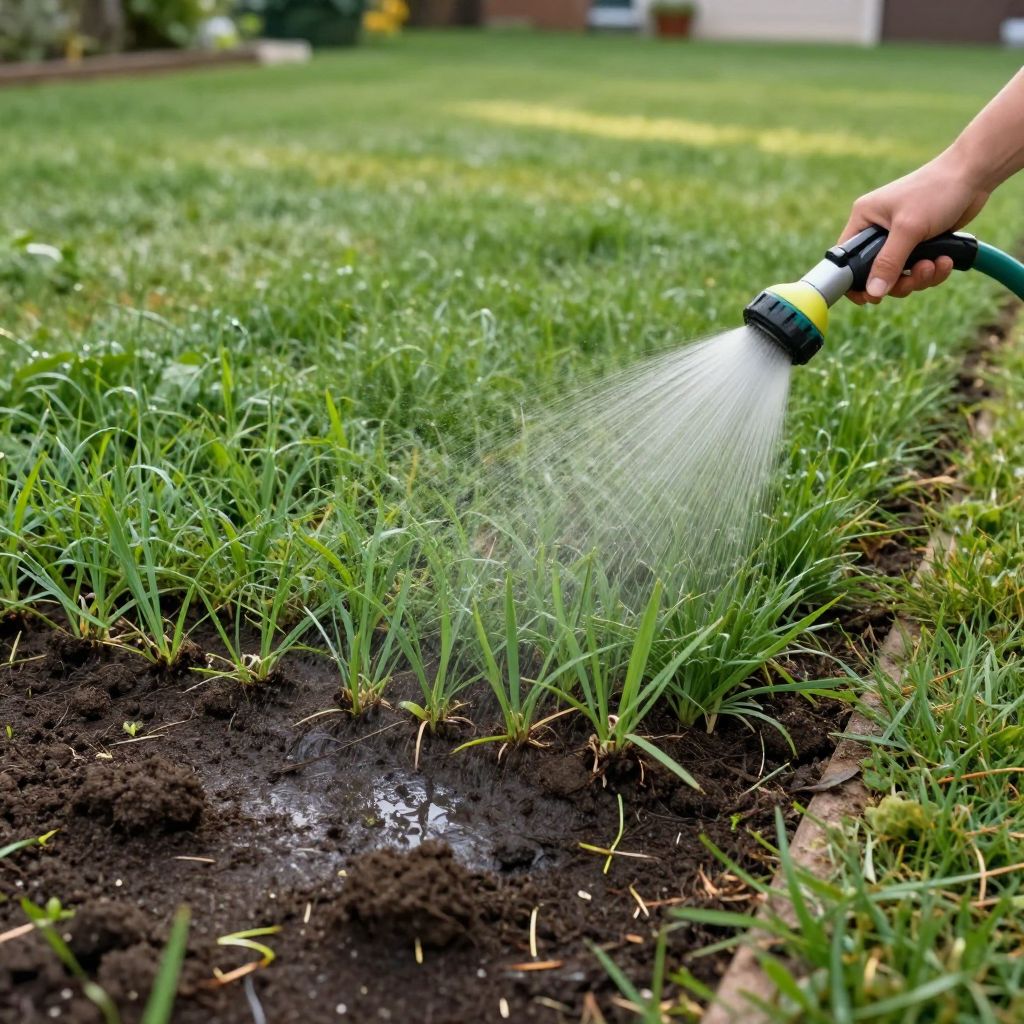
Wondering when to stop watering new grass seed? The short answer is: keep the seedbed evenly moist until the grass has germinated and the young seedlings have rooted into the soil, then gradually reduce watering. The exact timing depends on grass type, weather, soil, and how quickly the lawn dries out.
If you stop too soon, the seed can dry out and die. If you keep watering heavily for too long, you can encourage shallow roots, disease, and washed-out seed. The goal is steady moisture at first, then a smooth transition to deeper, less frequent watering.
When to stop watering new grass seed?
Stop frequent watering once most seedlings have sprouted, reached about 2 to 3 inches tall, and can no longer be easily lifted by a gentle tug. At that point, shift from keeping the surface constantly damp to watering less often but more deeply, so roots grow downward instead of staying near the top.
How long new grass seed needs regular watering
New grass seed usually needs consistent moisture from sowing until germination and early establishment. That period can be short or long depending on the grass species and conditions.
What affects the timeline?
- Grass type: Some cool-season grasses germinate faster than warm-season grasses.
- Temperature: Warm soil speeds germination; cool soil slows it down.
- Sun and wind: Hot, windy sites dry out much faster.
- Soil texture: Sandy soil drains quickly; clay holds water longer.
- Seedbed preparation: Good seed-to-soil contact helps moisture reach the seed evenly.
In practice, many lawns need frequent light watering for the first 1 to 3 weeks, then a gradual change as seedlings become established. Some areas may need longer, especially if the weather is hot and dry.
Signs the seed still needs frequent watering
- The top layer dries out within hours.
- Seedlings wilt or look bluish-gray in the heat.
- Soil crusts over or becomes dusty on the surface.
- Sprouts are uneven because some patches dry faster than others.
How to tell it’s time to reduce watering
You can begin tapering off watering when the grass has moved beyond the fragile sprout stage. The best clue is not the calendar, but the plant itself.
Use these practical checks
- Check height: Seedlings are usually around 2 to 3 inches tall.
- Check rooting: Gently tug a few seedlings. If they resist, roots are developing well.
- Check soil moisture: The surface can start to dry slightly between waterings, but the root zone should not fully dry out.
- Check color and posture: Healthy seedlings stand upright and stay evenly green, not limp or straw-colored.
Once the seedlings are established enough to anchor in the soil, you can stop the constant light misting and move toward a normal lawn watering pattern. That usually means fewer watering events, but more water each time.
Seasonal timing: spring, summer, and fall
The season you seed in has a big effect on when to stop watering new grass seed. Weather can change the schedule more than the calendar does.
Spring seeding
Spring often brings cool nights and moderate rainfall, which can help young grass. But warming temperatures and spring winds can also dry the surface quickly, so monitor moisture closely.
- Expect frequent watering early on.
- Reduce watering once growth is steady and the soil stays moist longer after each irrigation.
- Watch for weeds, which often compete strongly with spring seedlings.
Summer seeding
Summer is the hardest time for new grass seed because heat and evaporation are high. In many climates, you may need to water more often for longer than you would in cooler seasons.
- Water early in the morning to reduce evaporation.
- Avoid letting the seedbed dry out even once during germination.
- Be careful not to overwater and create runoff or puddling.
Fall seeding
Fall is often the easiest time to establish grass because soil stays warm while air temperatures cool. That usually means less evaporation and fewer watering problems.
- Frequent watering is still important at first.
- You may be able to stop the daily light watering sooner than in summer.
- Keep an eye on early frosts, which can slow growth and stretch the establishment period.
How to water new grass seed the right way
New seed needs moisture near the surface, but it does not need to be soaked. The best method is usually light, even watering that keeps the top layer damp without washing seed away.
Early stage: before and during germination
- Water lightly enough to moisten the top layer of soil.
- Do not create puddles or runoff.
- Water more than once a day if the surface dries quickly.
On hot or windy days, a newly seeded area may need several short watering sessions. The goal is to prevent the seed from drying out between waterings.
Later stage: after sprouting
- Begin watering less often, but apply more water each time.
- Encourage moisture to move deeper into the soil.
- Let the surface dry slightly between waterings once roots are established.
This change helps grass develop a stronger root system and prepares it for normal lawn care.
Common mistakes when watering new grass seed
Most problems come from watering too much, too little, or at the wrong time of day. A few simple adjustments can save the seedbed.
1. Letting the seedbed dry out
Even a short dry spell can interrupt germination. If the top layer dries repeatedly, some seeds may fail to sprout at all.
2. Overwatering until the soil stays soggy
Constant saturation can reduce oxygen in the soil and encourage fungal problems. Seedlings need moisture, but they also need air around the roots.
3. Watering with too much force
Strong spray can move seed, expose it, or create uneven patches. Use a gentle sprinkler pattern or fine mist during the early stage.
4. Stopping too soon because some grass has appeared
Germination is uneven. If you stop watering as soon as the first sprouts show, later-germinating seed may dry out before it establishes.
5. Relying only on a fixed schedule
Weather changes quickly. A cloudy, cool week may need less watering than a hot, windy stretch, even if the lawn was seeded on the same day.
How to transition from seed watering to normal lawn care
Once your new grass is established, the goal is to train the roots to grow deeper. That means fewer watering events and a little more patience between them.
Step-by-step transition
- Wait until seedlings are well rooted and no longer easy to pull up.
- Reduce watering frequency gradually, not all at once.
- Increase the amount of water per session so it reaches deeper into the soil.
- Watch for stress during hot weather and adjust if the grass starts to wilt.
- Move fully to a normal lawn watering routine once the lawn can handle brief surface drying.
A healthy established lawn usually benefits more from deeper, less frequent watering than from daily shallow watering. That approach supports stronger roots and better drought tolerance.
Soil, drainage, and mulch considerations
Watering decisions are easier when the soil drains well. Poor drainage can make new grass seed struggle even if you are watering carefully.
If your soil is sandy
Sandy soil drains quickly, so the seedbed may dry out fast. You may need shorter but more frequent watering early on.
If your soil is clay-heavy
Clay holds moisture longer, but it can also become compacted or waterlogged. Water more slowly and watch for puddles or runoff.
If the site has slopes
Sloped areas can shed water before it soaks in. Short watering cycles with pauses between them often work better than one long soak.
If you used a light mulch such as straw, it can help hold moisture and protect seed from drying wind. Just make sure it is thin enough that seedlings can still emerge easily.
Troubleshooting: what if the grass is not coming in evenly?
Uneven germination is common, and it does not always mean the seed failed. Often the issue is inconsistent moisture, not bad seed.
Patchy sprouting
- Check whether some areas dry faster because of sun, wind, or slope.
- Look for compacted spots where water runs off instead of soaking in.
- Keep patchy areas moist a little longer before reducing watering overall.
Yellow or thin seedlings
- They may be getting too much water or not enough light.
- They may also be stressed by heat, poor drainage, or foot traffic.
- Adjust watering before assuming the seed is the problem.
Seed washing away
- Use gentler watering.
- Apply water in shorter cycles.
- Improve seed-to-soil contact before reseeding bare spots.
When to mow after new grass seed
Mowing is not the same as watering, but it is part of the establishment process. Do not mow until the grass is tall enough and rooted well enough to handle it.
As a general rule, wait until the new grass is several inches tall and firmly rooted. Avoid cutting too short, because young grass is still building energy reserves and root strength.
Simple rule of thumb
If you want one easy guideline, use this: keep new grass seed consistently moist until it has germinated and the seedlings are rooted, then begin watering less often but more deeply. Do not stop watering just because the first sprouts appear.
If you are unsure, err on the side of slightly moist rather than dry during the early stage. Then ease off gradually as the lawn thickens and the roots take hold. For more lawn-care guidance, you may also find it helpful to read about basic lawn care practices and choosing and planting grass seed.