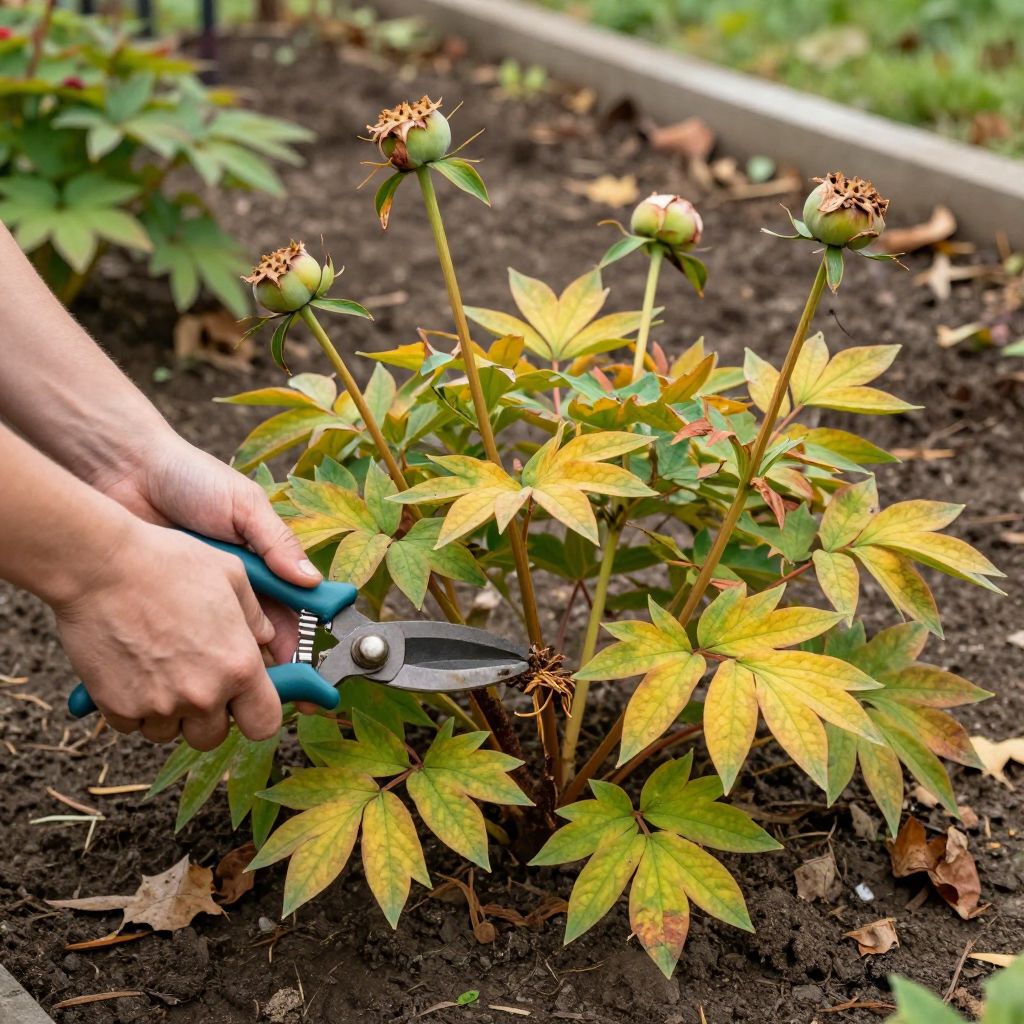
Wondering when to prune peonies so you don’t cut off next year’s flowers? The timing matters more than the cutting itself. With peonies, the best pruning is usually light during the growing season, followed by a full cutback only after frost has finished the foliage for the year.
Done at the right time, pruning helps reduce disease, tidy the plant, and protect the crown and buds. Done too early, it can weaken the plant and reduce bloom the following season.
When to prune peonies?
Prune peonies after the foliage has yellowed and died back in fall, or very early in spring before new growth emerges if you missed fall cleanup. During the growing season, remove only spent flowers and damaged stems. For tree peonies, prune lightly and differently than herbaceous peonies.
Understand the type of peony you have
Before you prune, identify whether you’re growing an herbaceous peony, tree peony, or intersectional peony (Itoh). The right timing depends on the plant type because they grow and regrow differently.
Herbaceous peonies
These are the classic garden peonies that die back to the ground each winter. They are the ones most people mean when asking when to prune peonies.
Tree peonies
Tree peonies keep woody stems above ground through winter. They need only light pruning, mostly for shaping and removing dead wood.
Intersectional peonies
These hybrids die back like herbaceous peonies but have stronger stems and a more shrubby habit. Pruning is usually similar to herbaceous peonies, with a few extra cleanup considerations.
Why timing matters so much
Peonies store energy in their thick roots and crown. After flowering, the leaves keep working all summer and early fall, feeding the plant for next year’s buds. If you cut the foliage back too soon, you may reduce bloom quality and plant vigor the following season.
The golden rule: leave healthy green foliage in place as long as possible. Only remove leaves early if they are badly diseased or damaged.
Best time to prune herbaceous peonies
The ideal time to cut herbaceous peonies back is after the first hard frost, when the leaves have naturally yellowed, browned, or collapsed. In many climates this is late fall. If you live in a warmer area, wait until the plant has clearly entered dormancy rather than pruning by calendar date.
What to do in summer
- Deadhead spent blooms by cutting just below the faded flower.
- Remove broken stems after storms.
- Leave the foliage intact unless disease is spreading.
What to do in fall
- Wait until foliage has died back naturally.
- Cut all stems down to about 1 to 2 inches above the soil.
- Collect and discard all cut foliage if disease has been present.
- Clean up fallen leaves around the plant.
Best time to prune tree peonies
Tree peonies are pruned much less often than herbaceous types. The best time for major pruning is usually right after flowering, when you can see the plant’s shape and avoid removing next year’s flower buds. Light cleanup of dead or broken wood can be done anytime.
How to prune tree peonies safely
- Remove dead, damaged, or crossing stems.
- Trim back only as needed to shape the plant.
- Do not cut the woody framework to the ground.
- Make cuts just above healthy buds or branching points.
If a tree peony becomes too large, reduce it gradually over several seasons rather than cutting it hard all at once.
How to prune intersectional peonies
Intersectional peonies usually die back in winter, so you can treat them like herbaceous peonies for cleanup. Cut stems down after frost once the foliage has declined. During the season, deadhead spent flowers and remove weak or damaged stems as needed.
Because Itoh peonies often produce strong, upright stems, they may need less support and less corrective pruning than older herbaceous varieties.
Step-by-step: how to prune peonies correctly
Use sharp, clean pruners or garden snips. Clean tools make neater cuts and reduce the chance of spreading disease from one plant to another.
- Inspect the plant first. Look for dead stems, disease, and any parts that need removal.
- Remove spent blooms. Cut faded flowers off just above the first healthy leaf set.
- Cut back diseased or damaged stems. Remove them promptly, even before fall, if needed.
- Wait for dormancy on herbaceous types. After frost, cut stems down to 1 to 2 inches.
- Dispose of debris properly. Do not compost diseased foliage unless your compost system reaches high enough temperatures to break it down safely.
Common pruning mistakes to avoid
- Cutting peonies back too early while leaves are still green.
- Leaving diseased foliage on the plant through winter.
- Cutting tree peonies to the ground, which removes the woody framework.
- Using dull or dirty tools that crush stems and spread problems.
- Removing too much healthy growth during the growing season.
What if your peonies have disease?
Peonies can develop fungal issues such as botrytis blight or leaf spots, especially in damp, crowded, or shaded gardens. If you see blackened stems, gray mold, or heavily spotted foliage, remove the affected parts as soon as possible.
How to handle diseased peony foliage
- Cut out infected stems below the damaged area if possible.
- Bag and discard diseased material rather than leaving it on the ground.
- Disinfect pruners after cutting sick plants.
- Improve airflow by spacing plants well and clearing debris.
Good sanitation is especially important in wet springs and humid climates, where fungal disease can linger in fallen leaves and stems.
Should you prune peonies after flowering?
You can deadhead peonies after flowering, but that is not the same as full pruning. Deadheading helps the plant look tidy and prevents it from putting energy into seed production. It does not replace the main fall cleanup for herbaceous peonies.
If you want seed pods for propagation or breeding, leave a few flowers uncut. Otherwise, deadhead spent blooms to keep the plant neat.
How pruning fits with overall peony care
Pruning works best when the plant is already growing in the right conditions. Peonies bloom best in full sun or very light shade, with well-drained soil and enough space for air movement. Crowded, soggy sites often lead to weak growth and disease.
Helpful care basics
- Plant in soil that drains well and does not stay waterlogged.
- Give peonies enough room so foliage dries quickly after rain.
- Avoid burying the crown too deeply, which can reduce flowering.
- Water during dry spells, especially for young plants, but do not keep the soil constantly wet.
If your peony struggles to bloom, pruning is usually not the main issue. Planting depth, sunlight, and drainage are often more important.
When to divide or move peonies
Division is different from pruning, but many gardeners ask about both at the same time. If a mature herbaceous peony must be moved or divided, the best time is usually in early fall after the plant is dormant or nearly dormant. Avoid dividing in hot weather or during active growth unless absolutely necessary.
Peonies can resent disturbance, so divide only when needed. Each division should have several healthy buds and a strong root section.
Quick seasonal guide for pruning peonies
- Spring: Remove winter-damaged stems and watch for new growth.
- After flowering: Deadhead spent blooms; lightly shape tree peonies if needed.
- Summer: Leave healthy foliage in place to feed the roots.
- Fall after frost: Cut herbaceous and intersectional peonies back to 1 to 2 inches.
- Winter: Keep the crown mulched lightly if your climate needs it, but avoid burying the buds too deeply.
Tools that make peony pruning easier
You do not need special equipment, but the right tools make the job cleaner and faster.
- Bypass pruners for stems and deadheading
- Small loppers for thicker tree peony stems
- Gloves if stems are stiff or you are removing diseased growth
- A bucket or bag for collecting debris
Keep blades sharp and clean. A clean cut heals better than a torn stem.
Conclusion: the best pruning habit for healthy peonies
If you remember one thing about when to prune peonies, make it this: deadhead lightly after bloom, but wait until fall or dormancy for the main cutback on herbaceous and intersectional peonies. Tree peonies need only selective pruning, usually after flowering. Check your plant type, clean up diseased material, and keep healthy foliage on the plant as long as possible.
For more seasonal care tips, you may also want to read about how to support peonies and how to divide peonies when the time comes.