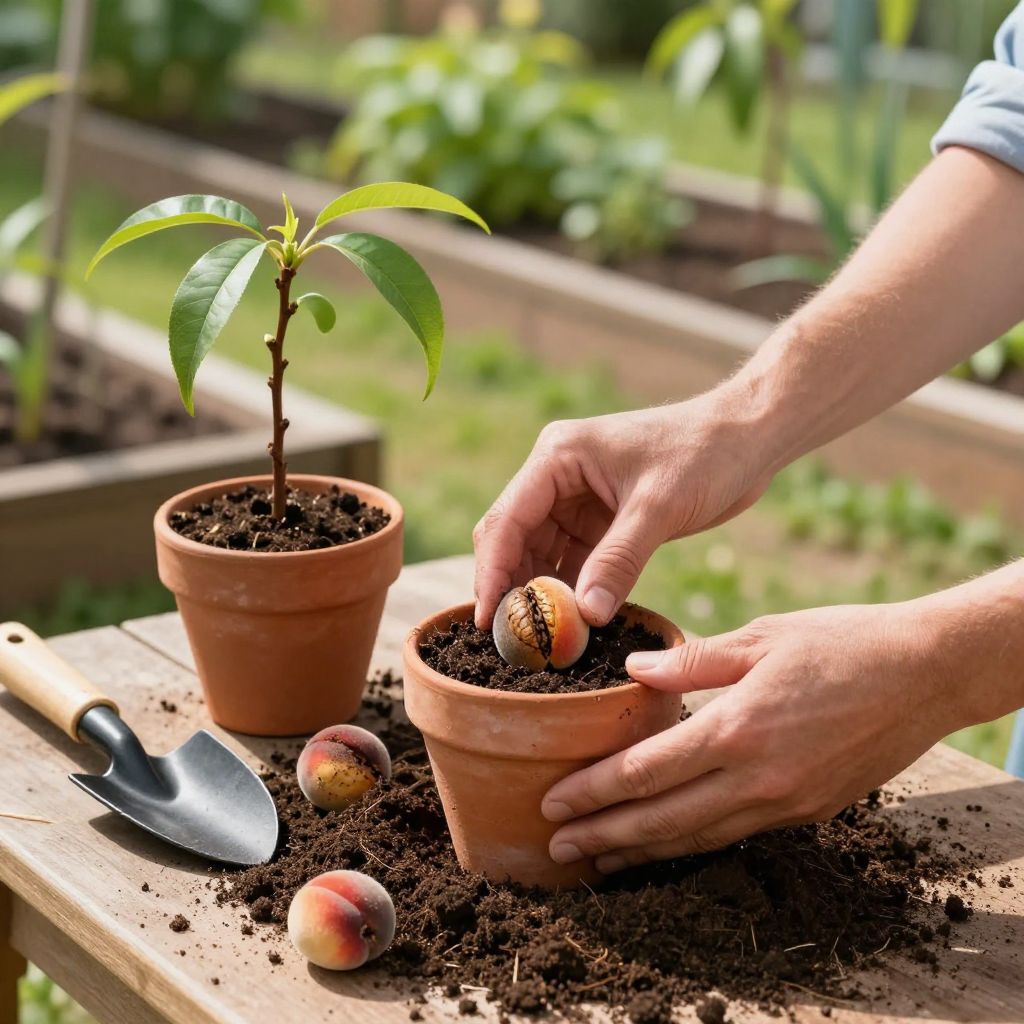
Can you grow a peach tree from a pit? Yes—you can germinate a peach pit and grow a tree from it, but the result will not be an exact copy of the parent peach. Seed-grown peaches are unpredictable, often slower to bear, and sometimes less reliable than grafted trees. Still, it’s a fun and very doable project if you want to try growing your own tree from seed.
The key is understanding what a pit can and cannot give you. If you want a specific peach variety with dependable fruit quality, buy a grafted tree. If you want the experience of starting from seed and don’t mind surprises, a peach pit can be a rewarding experiment.
Can you grow a peach tree from a pit?
Yes, a peach pit can sprout and grow into a peach tree, provided the seed inside is viable and gets the cold, moist period it needs to break dormancy. The new tree may produce fruit in 3 to 6 years, but the peaches may differ in flavor, size, ripening time, and disease resistance from the parent tree.
What to know before you start
Peach trees grown from pits are not true-to-type. That means the seedling inherits a mix of traits, so the fruit may be excellent, mediocre, or sometimes disappointing. In addition, seedlings often need more time to mature than grafted nursery trees.
That said, seed-grown trees can still be useful for home orchards, wildlife plantings, or as a rootstock experiment. If your goal is dependable harvests, a named cultivar from a nursery is usually the better choice.
Best expectations for a pit-grown peach
- Germination is possible, but not guaranteed.
- The tree may take several years to flower and fruit.
- Fruit quality can vary widely.
- Cold requirements matter for successful sprouting.
- Young trees need full sun, good drainage, and regular care.
How to prepare a peach pit for planting
Start with a ripe peach from a healthy tree if possible. Clean the pit thoroughly so no fruit flesh remains, because leftover pulp can mold during storage or stratification.
- Remove the pit from the fruit and rinse it well.
- Let it dry for a day or two in a shaded, airy spot.
- Crack the outer shell carefully if you want to remove the seed inside, but this is optional and should be done gently to avoid damaging the seed.
- Prepare for cold stratification, which mimics winter conditions.
Do not plant a fresh peach pit straight into warm soil and expect fast sprouting. Most peach seeds need a cold period first to wake up from dormancy.
How to stratify a peach pit
Stratification is the most important step in growing a peach tree from a pit. The seed usually needs several weeks of moist chilling before it will germinate.
Simple refrigerator method
- Place the cleaned pit or seed in a slightly damp paper towel or a handful of moist peat-free seed-starting mix.
- Seal it in a plastic bag or container with a little air space.
- Store it in the refrigerator, not the freezer.
- Check every week for mold and moisture.
- When the seed begins to split or show a root, plant it promptly.
The exact chilling time depends on the seed and your local climate, but many peach seeds need roughly 6 to 12 weeks of cold, moist conditions. Keep the medium damp, not soggy, because excess moisture can rot the seed.
Common stratification mistakes
- Letting the seed dry out completely
- Using a soaking-wet medium
- Storing it too warm
- Ignoring mold growth
- Planting before the seed has actually broken dormancy
How to plant a sprouted peach pit
Once the seed cracks and a root appears, plant it in a container or directly outdoors if conditions are suitable. A pot is often easier for beginners because you can protect the young seedling and control moisture more closely.
Container planting steps
- Use a pot at least 8 to 12 inches deep with drainage holes.
- Fill it with a well-draining seed-starting or potting mix.
- Plant the seed about 1 to 2 inches deep, with the root pointing downward if visible.
- Water lightly to settle the soil.
- Place the pot in a bright, warm location with strong light.
If you are planting outdoors, wait until the danger of hard frost has passed and the soil is workable. In colder climates, many gardeners prefer to start the seed indoors and transplant later.
Outdoor planting conditions
- Sunlight: Full sun is best, with at least 6 to 8 hours daily.
- Soil: Loose, fertile, and well drained.
- pH: Slightly acidic to neutral soil is generally suitable.
- Drainage: Avoid heavy clay or waterlogged low spots.
What kind of soil does a peach tree need?
Peach trees grow best in soil that drains well and does not stay wet after rain or irrigation. Roots need oxygen, and poor drainage is a common reason young trees fail.
Mix compost into poor soil if needed, but avoid overdoing it. A modest amount of well-rotted compost improves structure and fertility without making the soil too rich or too wet. If your native soil is heavy clay, consider planting on a raised bed or mound.
Good soil practices
- Work compost into the top layer, not just the planting hole.
- Keep mulch a few inches away from the trunk.
- Do not plant in standing water areas.
- Test drainage before planting if you are unsure.
How to care for a young peach tree
Young peach trees need steady moisture, strong light, and protection from stress. The first year is about root establishment, not heavy fruiting.
Watering
Water deeply when the top inch or two of soil begins to dry, especially during warm weather. Container-grown seedlings dry out faster than in-ground trees, so check them often.
Try to keep the soil evenly moist, not saturated. Irregular watering can slow growth and make the tree more vulnerable to stress and disease.
Sunlight and warmth
Peaches are sun-loving trees. A shaded location can produce weak growth, fewer flowers, and poor fruiting. Indoors, use the brightest window you have or supplemental grow lights if you are starting the seed in a pot.
Mulching
Apply 2 to 4 inches of organic mulch around the root zone, but keep it a few inches back from the trunk. Mulch helps conserve moisture, moderate soil temperature, and reduce weeds.
When should you transplant a peach seedling?
Transplant a peach seedling when it has several sets of true leaves and a sturdy root system, or when the roots begin circling the pot. Move it carefully to avoid disturbing the roots too much.
If transplanting outdoors, choose a mild day and water the seedling well afterward. Protect it from strong wind, intense afternoon sun, and sudden cold snaps while it settles in.
Pruning and training a young peach tree
Pruning helps peach trees develop a strong structure and better light penetration. Even a seed-grown tree benefits from early shaping, though you should keep pruning light while it is still small.
Basic pruning goals
- Remove broken, crossing, or weak branches
- Encourage an open center for airflow and light
- Prevent the tree from becoming crowded
- Keep the framework strong for future fruiting
For a home orchard, many gardeners train peaches to an open-center form. If you are unsure how to prune, start conservatively and remove only obvious problems until the tree is more established.
Common pests and diseases to watch for
Peach trees can be affected by insects and fungal diseases, especially in humid or crowded conditions. Good spacing, sunlight, and sanitation go a long way toward prevention.
Common problems
- Peach leaf curl: Distorted, reddened leaves in cool, wet spring weather
- Aphids: Clusters of small insects on new growth
- Scale insects: Small bumps on stems and branches
- Brown rot: Fruit rot that worsens in damp conditions
- Root rot: Often linked to poor drainage or overwatering
Remove fallen leaves and fruit, keep the canopy open, and avoid overhead watering when possible. If your tree shows repeated disease problems, local extension advice can help you match treatment to your climate and pest pressure.
How long until a peach tree grown from a pit bears fruit?
A peach tree grown from a pit often takes several years to flower and fruit, and some seedlings take longer than others. The timeline depends on climate, vigor, pruning, and overall care.
Do not expect a fast harvest. A seed-grown peach is a long-term project, and the fruit quality may not be known until the tree matures. If you want quicker, predictable results, a grafted tree is the better option.
Should you grow a peach tree from a pit or buy a grafted tree?
If you want a dependable crop of known fruit quality, buy a grafted peach tree from a reputable nursery. If you want the fun of experimenting and don’t mind uncertainty, growing from a pit is a worthwhile project.
Here is a simple comparison:
- From a pit: inexpensive, educational, unpredictable, slower to fruit
- Grafted tree: more expensive, faster to fruit, more reliable, true to variety
Troubleshooting a peach pit that will not sprout
If your seed has not germinated, the issue is usually dormancy, moisture, temperature, or seed viability. Not every pit contains a healthy seed, and some simply fail.
Check these points
- Was the seed kept cold long enough?
- Did it stay moist, not dry or soggy?
- Was the seed old, damaged, or moldy?
- Was the temperature too warm during stratification?
- Was the seed planted too deeply?
If the seed has rotted, discard it and start again with a fresh pit. If it is firm but inactive, give it more time in cool, moist conditions before assuming it has failed.
Conclusion
Yes, you can grow a peach tree from a pit, and the process is straightforward once you understand stratification, drainage, and young-tree care. The biggest thing to remember is that a pit-grown peach will not be identical to the parent tree, so treat it as an experiment with a possible bonus harvest.
If you want to keep learning about fruit trees, look for more guidance on pruning, soil preparation, and choosing the right peach variety for your climate before you plant.