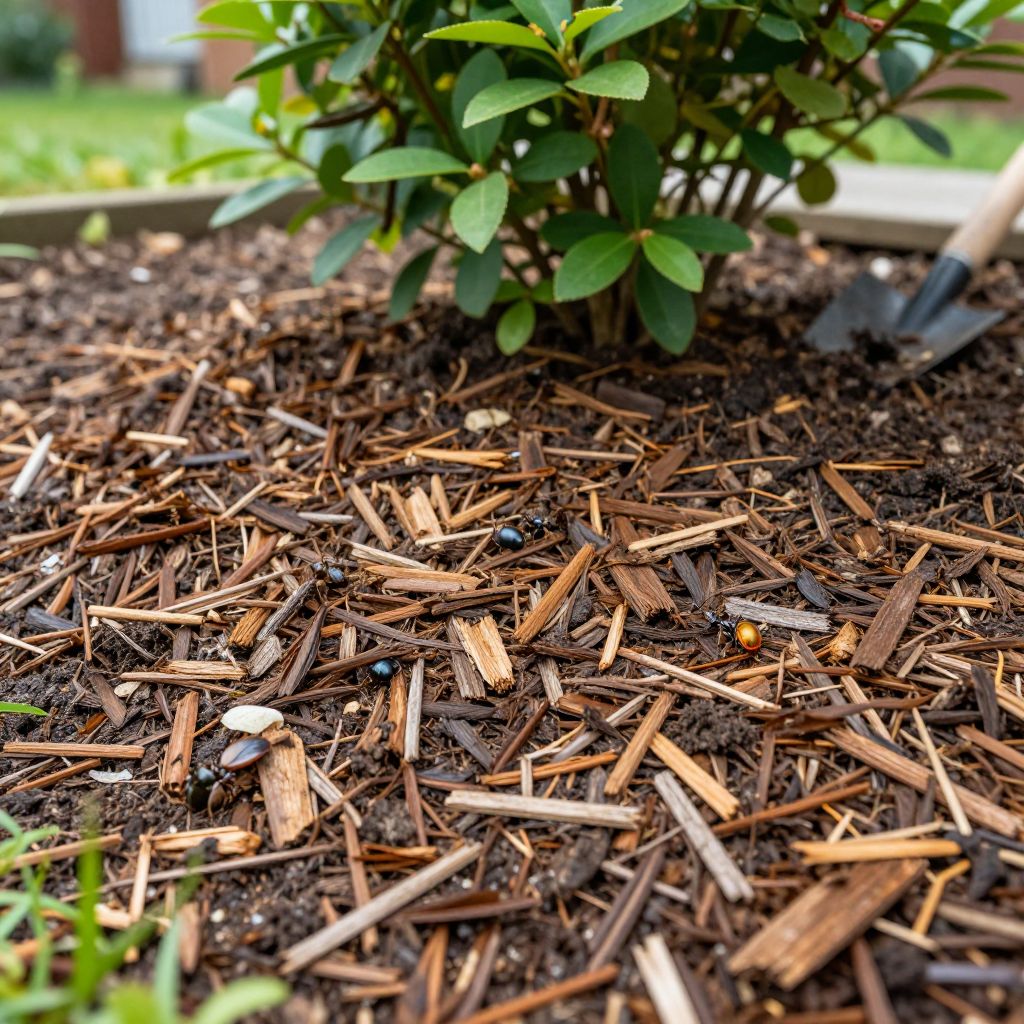
Does mulch attract bugs? Sometimes it can, but not in the way many gardeners fear. Mulch itself is not “bug food”; it becomes attractive when it stays too wet, is piled too deep, or is made from fresh organic material that insects, slugs, or rodents can shelter in.
Used correctly, mulch is still one of the best tools for healthier soil, steadier moisture, and fewer weeds. The key is choosing the right type, applying it at the right depth, and keeping it away from conditions that invite pests.
Does mulch attract bugs?
Yes, mulch can attract some insects and other pests, especially when it is damp, decomposing, or touching plant stems and foundations. But most of the time, mulch mainly provides shelter, not a pest problem. Properly applied mulch usually supports plant health and can even reduce pest pressure by improving soil conditions.
Why mulch sometimes seems to bring bugs
Many bugs are already present in your landscape. Mulch simply gives them a place to hide, breed, or feed if the environment suits them. That does not mean mulch is the cause of an infestation.
Common reasons mulch becomes a bug magnet
- Too much moisture: Constantly wet mulch can encourage fungus gnats, sowbugs, earwigs, slugs, and some ants.
- Excess depth: Deep mulch holds moisture and creates cool hiding spots for pests.
- Mulch against stems or trunks: This can trap moisture and invite rot, insects, and rodents.
- Fresh, uncomposted organic mulch: New wood chips or bark may temporarily attract decomposers as they break down.
- Nearby food sources: Fallen fruit, pet food, compost scraps, or dense weeds can draw pests into the area.
Which bugs are most often associated with mulch?
Different mulch materials and garden conditions can favor different pests. The most common ones gardeners notice include:
- Ants: Often nesting in dry, loose mulch or under stones and edging.
- Earwigs: Prefer moist, sheltered mulch and may feed on tender seedlings or soft plant tissue.
- Slugs and snails: Thrive in cool, damp mulch near host plants.
- Sowbugs and pillbugs: Usually harmless decomposers, but they may nibble seedlings in very wet conditions.
- Termites: More likely around wood in contact with structures than in garden beds, but wood mulch near a foundation can be a concern if other conditions are favorable.
When mulch is helpful instead of harmful
Most gardens benefit from mulch when it is used as a protective layer, not a thick blanket. Mulch helps moderate soil temperature, reduce evaporation, suppress weeds, and protect roots from splash-up that can spread soil-borne disease.
Benefits that outweigh pest concerns
- Reduces weed competition around ornamentals, shrubs, and vegetables.
- Helps soil stay evenly moist between waterings.
- Buffers roots from heat and cold swings.
- Improves soil structure over time as organic mulch breaks down.
- Can reduce mud splash on leaves, which helps limit some foliar diseases.
The goal is not to avoid mulch. The goal is to use it in a way that supports plants without creating a pest shelter.
Choosing the right mulch to reduce bugs
Not all mulches behave the same. Some are more likely to hold moisture, attract decomposers, or create hiding places than others.
Organic mulch options
- Shredded bark or bark chips: Good for ornamental beds and shrubs; breaks down slowly.
- Wood chips: Excellent for pathways and established beds; can be very effective when applied correctly.
- Compost: Best used as a thin top-dressing or soil amendment, not a deep mulch layer.
- Straw: Useful in vegetable gardens, but can harbor pests if kept too wet or weedy.
- Leaf mulch: Valuable and affordable, though it decomposes quickly and may need refreshing.
Inorganic mulch options
- Gravel or stone: Low in organic matter, so it does not feed decomposers, but it can still trap heat and make weeding harder.
- Landscape fabric with mulch on top: Can reduce weeds short-term, but may also trap moisture and create maintenance issues if installed poorly.
If bugs are a recurring issue, choose a mulch that fits the bed’s moisture level and your maintenance habits. In wet shade, a thinner layer and better drainage matter more than the material itself.
How to apply mulch so it does not invite pests
Correct installation is the biggest factor in preventing bug problems. A well-applied mulch layer protects plants without becoming a damp refuge for pests.
Step-by-step mulch application
- Clear the bed first: Remove weeds, fallen fruit, dead plant material, and old mulch that has compacted into a mat.
- Check drainage: If water pools after rain, fix the drainage before mulching. Mulch cannot solve a soggy site.
- Water the soil first if needed: Apply mulch to moist soil, not waterlogged soil.
- Spread the right depth: Use about 2 to 3 inches for most organic mulches in beds. Use less in very damp or shady areas.
- Keep mulch back from stems and trunks: Leave a gap of a few inches around perennials, shrubs, and tree trunks.
- Fluff compacted mulch: If the surface mats down, loosen it so air can move through.
Depth matters more than many gardeners realize
Too much mulch can create the exact conditions pests like: cool, moist, hidden, and undisturbed. A 2- to 3-inch layer is usually enough for beds. Around trees, avoid piling mulch into a cone or “volcano” shape.
Never bury the crown of a plant or the base of a tree trunk. That can lead to rot, bark damage, and pest habitat.
How to tell if mulch is causing a pest problem
Not every bug in mulch is a problem. Many insects are decomposers or occasional visitors. The question is whether the mulch is creating conditions that damage plants or structures.
Signs to watch for
- Chewed seedlings or soft new growth near the soil line.
- Slimy trails, especially after rain or in shaded beds.
- Ant trails entering mulch beds or moving toward structures.
- Foul, sour, or anaerobic smell from mulch that stays too wet.
- Visible nesting or tunneling in overly deep mulch.
- Declining plant vigor despite normal watering.
What is normal?
A few beetles, spiders, centipedes, or pillbugs are usually part of a healthy garden ecosystem. These creatures often help break down organic matter or prey on other pests. The issue is imbalance, not the mere presence of insects.
How to fix bug problems in mulched beds
If you suspect mulch is contributing to pests, make changes gradually and check whether the problem improves. You do not always need to remove all the mulch.
Practical fixes
- Reduce mulch depth: Thin it to the recommended range if it has become too thick.
- Pull mulch away from plants: Create a clear ring around stems and trunks.
- Let the surface dry a bit: Avoid frequent shallow watering that keeps the top layer constantly damp.
- Improve airflow: Prune dense lower growth if shade and humidity are excessive.
- Remove decaying debris: Clean up rotting fruit, old vegetables, and dead leaves that pests feed on.
- Replace sour mulch: If mulch smells rotten or has gone slimy, remove and refresh it.
For slugs and snails
These pests love moist mulch. To reduce them, water early in the day, avoid overmulching, and keep mulch pulled back from tender seedlings. Hand-picking, traps, and habitat cleanup are often more effective than trying to eliminate every slug with one treatment.
For ants
Ants often move into dry mulch, especially if nearby soil is compacted or disturbed. Check whether they are simply nesting or whether they are protecting aphids on nearby plants. Improving soil moisture balance and reducing shelter near structures can help.
For earwigs and sowbugs
These usually appear where mulch stays damp for long periods. Allow the top layer to dry slightly between waterings, thin the mulch if needed, and remove nearby hiding places such as boards, pots, and debris piles.
Mulch around vegetables, flowers, shrubs, and trees
The best mulch strategy depends on what you are growing. A vegetable garden, a perennial border, and a young tree all have different moisture and airflow needs.
Vegetable gardens
Vegetables often benefit from lighter, cleaner mulch such as straw, shredded leaves, or composted material. Keep mulch away from tiny seedlings until they are established, and watch closely for slugs and cutworms in cool, damp weather.
Flower beds and perennials
Most flowering beds do well with bark mulch, shredded leaves, or wood chips. Avoid burying crowns, and refresh the mulch only when the layer thins or weeds begin to break through.
Shrubs and trees
Mulch around shrubs and trees should be broad but shallow enough to avoid trunk contact. A wider ring is better than a deep mound. This helps roots benefit from moisture retention without trapping pests at the base.
Seasonal considerations that affect bugs in mulch
Bug activity changes with weather, temperature, and rainfall. What looks like a mulch problem in spring may be a moisture problem in summer or a shelter problem in fall.
Spring
As temperatures rise, overwintered insects become active. Fresh mulch can be helpful, but avoid applying it too early to cold, saturated soil. Wait until beds are workable and drainage is adequate.
Summer
Hot weather can dry mulch quickly, but shaded beds may stay damp underneath. Check for slugs, earwigs, and fungal growth if the top layer remains cool and wet after watering.
Fall
Leaves and organic debris can build up in mulch beds, creating shelter for pests. Rake or fluff the surface and remove excess debris before winter sets in.
Winter
Mulch can protect roots from freeze-thaw cycles. Just avoid piling it too deeply, especially around woody plants, where it can hold moisture against bark and invite damage.
Common mistakes to avoid
Most mulch-related bug problems come from a few avoidable habits. Fixing these usually improves the situation quickly.
- Applying mulch too thickly: More is not better.
- Leaving mulch touching stems or trunks: This traps moisture and invites problems.
- Mulching over weeds or debris: Pests can thrive under the hidden layer.
- Ignoring drainage: Waterlogged beds will keep attracting moisture-loving pests.
- Using fresh mulch in a problem area without monitoring: New organic material may temporarily increase insect activity.
- Assuming every bug is harmful: Many are harmless or beneficial.
Conclusion: mulch wisely, not fearfully
Does mulch attract bugs? It can, but usually only when the bed is too wet, too deep, or poorly maintained. With the right mulch type, proper depth, and a little cleanup around plants and structures, mulch remains a smart, garden-friendly tool rather than a pest problem.
If you want to keep your beds healthy, start by checking mulch depth, pulling it back from stems, and improving drainage where needed. For more practical garden care, look for related reading on mulching basics and pest management in beds.