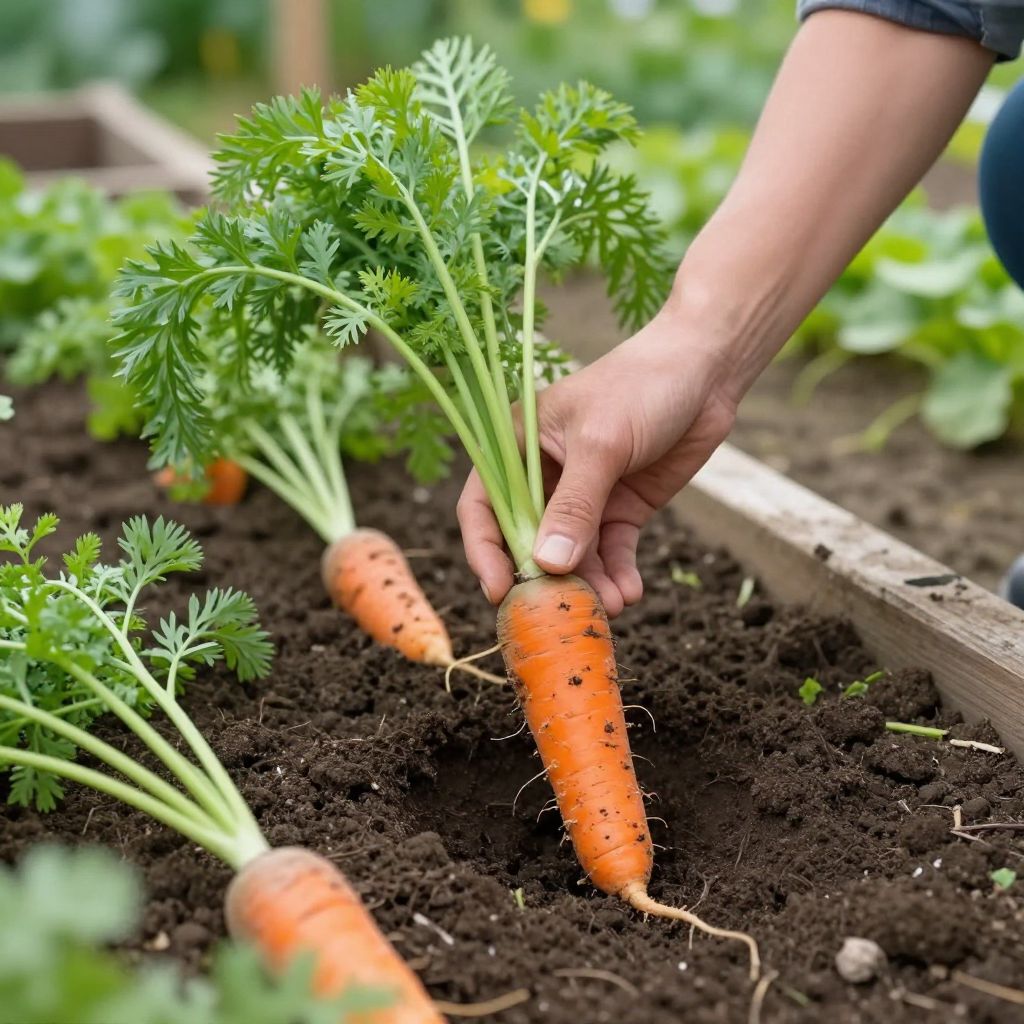
Wondering when to pick carrots so they’re sweet, crisp, and not woody? The best harvest time depends on the variety, your soil, and how fast the roots are growing. In most gardens, carrots are ready when the shoulder of the root is visible at the soil line and the top is the right size for the type you planted.
Pick them too early and they may be small and mild; leave them too long and they can become tough, split, or lose flavor. The good news is that carrots are easy to judge once you know what to look for, and a quick test pull can tell you exactly when to harvest.
When to pick carrots?
Pick carrots when the roots have reached usable size, the shoulders are visible, and the flavor is sweet and full. Most garden carrots are ready about 50 to 80 days after sowing, but timing varies by variety, temperature, and growing conditions. Don’t rely on the calendar alone—check root size and taste.
How to tell carrots are ready to harvest
The easiest sign is the top of the carrot root pushing slightly above the soil. Gently brush away soil around the crown and look at the shoulder size.
Signs your carrots are ready
- The shoulder is the expected width for the variety.
- The foliage looks full and healthy, though tops can stay green even after the root is ready.
- A test carrot tastes sweet and has a smooth texture.
- The root feels firm when you tug gently at the crown.
What ready carrots look like by type
- Baby carrots: usually harvested small, when roots are still slender and tender.
- Maincrop carrots: harvested once roots are full-sized and well colored.
- Long storage carrots: left in the ground until fully developed, but not overmature.
If you are unsure, pull one carrot from the row and compare it with the rest. That single test harvest is often the most reliable way to judge the whole crop.
How long carrots take to mature
Carrot maturity depends on the cultivar and growing conditions. Many varieties are ready in 60 to 75 days, while some quick types can be harvested earlier and larger storage types may need longer. Cool weather often improves flavor, while heat can speed growth but reduce sweetness.
Why timing varies
- Soil texture: loose, stone-free soil helps roots size up more evenly.
- Temperature: cool conditions usually support better flavor.
- Moisture: steady watering helps roots grow smoothly.
- Spacing: crowded carrots may stay thin or become misshapen.
Because of these differences, seed packet days-to-maturity are a guide, not a guarantee. In cooler regions or during a cool spring, carrots may take longer than expected.
Best seasonal timing for harvesting carrots
Carrots can be harvested in spring, summer, or fall depending on when you sow them. In many gardens, the sweetest roots are often pulled in cool weather, especially after the weather starts to moderate in late summer or fall.
Spring-sown carrots
Spring sowings are usually ready in early to midsummer. Harvest when roots are large enough to eat, before hot weather makes them overly fibrous or prone to splitting.
Summer-sown carrots
Summer sowings often mature in fall. These crops can be especially useful because cooler autumn temperatures often improve flavor and texture.
Overwintered carrots
In mild climates, carrots can sometimes stay in the ground into winter. Cold weather can make them sweeter, but you should harvest before the soil freezes hard or before pests damage them.
How to harvest carrots without damaging them
Carrots are easy to break if you pull them from dry, compacted soil. Water the bed lightly a day before harvest if the soil is very dry, then loosen the ground before lifting the roots.
- Grasp the foliage close to the crown.
- Loosen the soil with a hand fork or trowel beside the row.
- Rock the carrot gently to break the suction in the soil.
- Pull straight up while supporting the crown.
- Brush off loose soil and trim the tops if storing.
If the soil is heavy clay or compacted, do not yank hard on the tops. That often snaps the foliage and leaves the root behind. Loosening first saves time and prevents damage.
What happens if you leave carrots in the ground too long?
Overmature carrots can become woody, pithy, or split. Some varieties also develop a stronger, less pleasant flavor if they sit too long in warm soil. In wet conditions, roots may crack or rot, especially if drainage is poor.
Common problems from late harvesting
- Woody texture: often from overmaturity or hot weather stress.
- Splitting: usually caused by uneven watering after dry spells.
- Forked roots: often linked to rocks, clods, or compacted soil.
- Insect damage: roots left too long may be more exposed to pests.
That said, carrots do not all need to be harvested at once. You can pull them gradually as they reach the size you want, especially if the weather is cool and the soil stays workable.
How soil and watering affect harvest timing
Carrots grow best in loose, deep, well-drained soil. In ideal conditions, roots size up evenly and are easier to harvest at the right stage. Poor soil can delay maturity or produce misshapen roots that are harder to judge by size alone.
Soil conditions that help carrots mature well
- Fine, stone-free soil to a depth of at least 8 to 12 inches.
- Good drainage so roots do not sit in soggy ground.
- Moderate fertility rather than very rich, fresh manure-heavy soil.
- Even moisture through the growing season.
Uneven watering is one of the most common reasons carrots split. If the bed dries out and then gets soaked, the roots may crack as they suddenly swell.
Should you use compost?
Compost is helpful if it is well finished and worked into the soil before planting. It improves structure and drainage, which supports better root growth. Avoid fresh manure or very coarse organic matter that can cause forked or twisted carrots.
How to check carrots before pulling the whole row
A test harvest is the safest way to decide when to pick carrots. It tells you more than the tops do, because foliage can look vigorous even when roots are already ready.
- Choose one carrot near the edge of the row.
- Brush soil away from the crown.
- Pull it gently and inspect the size, color, and texture.
- Taste a small piece if you want to check sweetness.
- If it is too small, wait several more days and test again.
This method is especially useful for beginners because it removes the guesswork. Once one carrot is ready, many others in the same sowing will be close behind.
Harvesting carrots in different climates
Your local climate matters more than a fixed date. In cool regions, carrots may mature more slowly and can often stay in the ground longer. In warm climates, roots may size up quickly but lose quality sooner if temperatures stay high.
Adjust harvest timing to your weather
- Cool climates: expect slower growth and a longer harvest window.
- Warm climates: harvest promptly once roots reach size, before heat affects flavor.
- Wet areas: harvest before prolonged rain if the soil tends to stay saturated.
- Dry areas: keep moisture even to prevent splitting and toughness.
If you are growing carrots in a container, they may mature a little faster or slower depending on pot depth, temperature, and how quickly the mix dries out. Check them often, because container-grown roots can become crowded sooner than garden-grown ones.
Common mistakes to avoid when deciding when to pick carrots
- Waiting only for the tops to look large instead of checking the roots.
- Pulling carrots during a dry spell without loosening the soil first.
- Leaving mature carrots in hot weather too long.
- Harvesting too early and expecting full flavor from undersized roots.
- Ignoring split or forked roots that may signal growing problems.
Remember that size is not the only goal. A slightly smaller carrot can taste better than an oversized one that has gone woody.
Storing carrots after harvest
If you do not plan to eat carrots right away, remove the tops soon after harvest. The greens draw moisture from the roots, which can make carrots limp faster.
Short-term storage
Store unwashed carrots in the refrigerator in a perforated bag or loosely wrapped container. Keep them cool and humid, and they should stay crisp for a reasonable period.
Longer storage
For longer keeping, harvest fully mature roots, trim the tops, and store them in a cool, dark, humid place if your climate and setup allow it. Only store undamaged carrots, since bruises and cracks shorten storage life.
Quick answer: the best time to pick carrots
Pick carrots when the root shoulders are visible, the roots have reached the size you want, and a test carrot tastes sweet and crisp. Most are ready about 50 to 80 days after sowing, but the exact timing depends on variety, temperature, soil, and moisture. Check the roots, not just the calendar.
If you want to improve your next harvest, read more about how to grow carrots in loose soil and common vegetable garden harvest timing tips so you can time future sowings with more confidence.