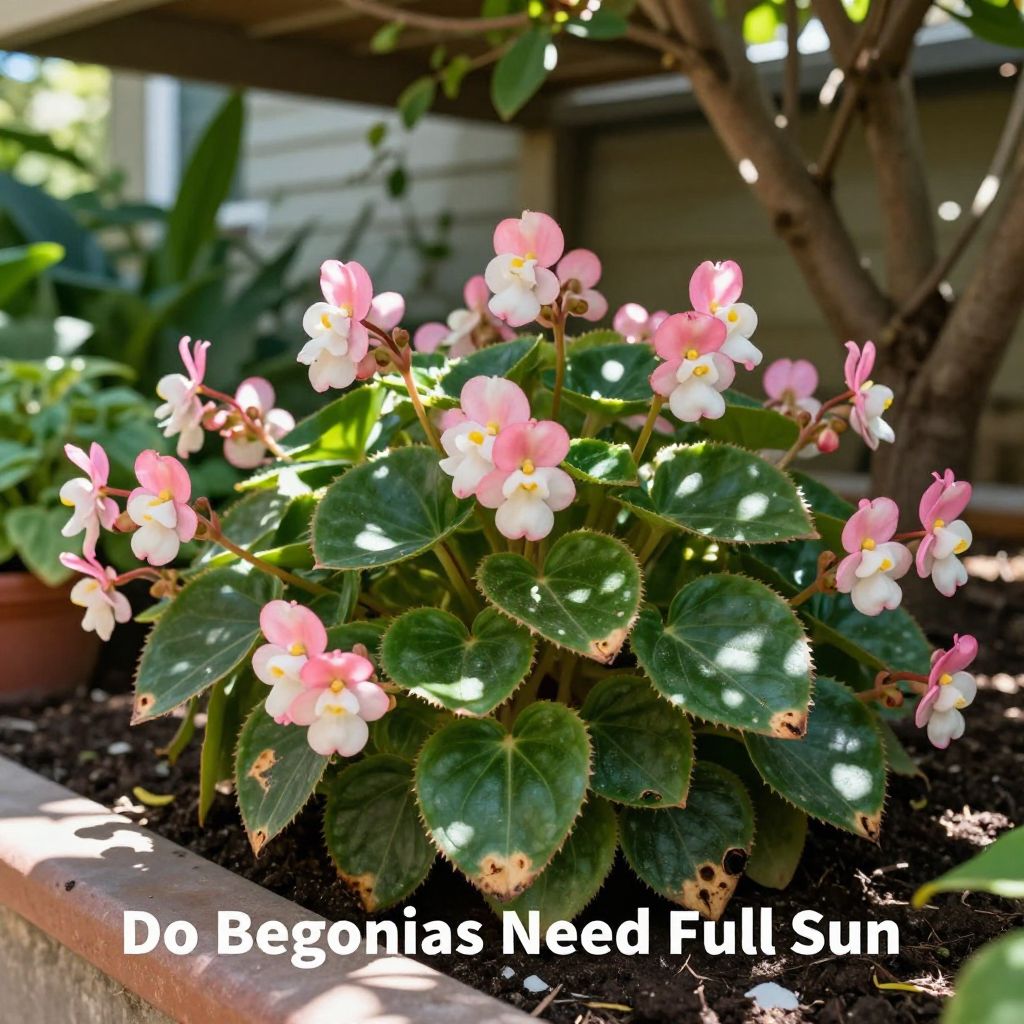
Do begonias need full sun? Usually, no. Most begonias grow best in bright shade or filtered light, where they get enough light to bloom without scorching their leaves. A few types can take more sun than others, but strong afternoon sun often causes stress, faded foliage, and dry, crispy edges.
The right light depends on the begonia type, your climate, and whether the plant is in the ground, a container, or indoors. If you match the light to the variety, begonias are easy, colorful plants that can flower for a long season.
Do begonias need full sun?
Most begonias do not need full sun. In fact, many perform best with morning sun and afternoon shade, or bright indirect light indoors. Too much direct sun can bleach leaves, reduce flowering, and dry the plant out quickly, especially in hot climates or reflective locations.
How much sun begonias really need
Begonias are a broad group, so light needs vary. The safest rule is to give them bright light without harsh midday exposure, then adjust based on the plant’s response.
General light guide
- Tuberous begonias: Prefer shade to part shade and dislike hot sun.
- Wax begonias (Begonia semperflorens group): Tolerate more sun than many begonias, especially in cooler regions.
- Angel wing and cane begonias: Like bright, filtered light and can scorch in direct afternoon sun.
- Rex begonias: Need bright, indirect light and are especially sensitive to strong sun.
If you are unsure which begonia you have, start with partial shade. It is easier to increase light later than to repair sunburned foliage.
What “full sun” means for begonias
Full sun usually means 6 or more hours of direct sunlight a day. For begonias, that is often too intense unless the climate is mild and the plant is a sun-tolerant type. In hot summer areas, even morning sun can become too much if the plant is exposed to reflected heat from walls, pavement, or light-colored fences.
Which begonias can handle more sun?
Some begonias are more sun-tolerant than others, but “sun-tolerant” does not mean “sun-loving.” The best performers in brighter spots are usually wax begonias and some newer landscape hybrids.
Sun-tolerant begonias
- Wax begonias: Often do well with morning sun and light afternoon shade.
- Landscape begonias: Bred for bedding displays and may flower well in brighter conditions.
- Plants in cooler climates: Can often take more direct light than the same plant in a hot southern exposure.
Begonias that prefer shade
- Rex begonias: Best in bright, indirect light.
- Tuberous begonias: Best protected from hot sun and wind.
- Most indoor begonias: Need bright light, but not direct sun through a hot window.
A useful test: if the plant’s leaves look washed out, curled, or crispy by midday, the light is too strong. If stems stretch and flowering drops off, it may need a little more light.
Best light conditions for healthy begonias
Begonias usually do best in bright, filtered light. Outdoors, that often means dappled shade under a tree, east-facing exposure, or a spot with gentle morning sun. Indoors, a bright window with sheer curtain protection often works well.
Outdoors
- Choose morning sun and afternoon shade in warm climates.
- Use filtered light under open shade trees or pergolas.
- Avoid hot south- or west-facing exposures unless the plant is a known sun-tolerant type.
Indoors
- Place begonias near an east window or a bright north window.
- Use a sheer curtain if the sun is intense.
- Rotate the pot every week or two so growth stays even.
Indoor begonias often need more light than people expect, but not direct sun that heats the leaves. A bright room is better than a dim corner.
Signs your begonia is getting too much sun
Sun stress usually shows up quickly, especially during hot weather. Watch for changes in color, texture, and watering needs.
Common symptoms of excess sun
- Leaves look bleached, pale, or faded
- Brown, crispy edges or spots appear on foliage
- Flowers fade faster than normal
- Soil dries out very quickly
- Leaves curl, droop, or feel thin and stressed
If you see these signs, move the plant to gentler light right away. A stressed begonia can recover, but damaged leaves will not turn green again.
Signs your begonia needs more light
Too little light causes a different set of problems. The plant may survive, but it usually looks weak and blooms poorly.
Common symptoms of low light
- Long, leggy stems
- Fewer flowers
- Small leaves spaced far apart
- Slow growth
- Loss of leaf color in patterned varieties
If your begonia is stretching toward the window, move it to a brighter location gradually. Sudden shifts from low light to strong sun can shock the plant.
How to plant begonias for the right light
Good placement matters as much as soil. A begonia planted in the wrong exposure will struggle even if you water it well.
Step-by-step planting tips
- Pick the right spot: Choose bright shade or morning sun, depending on the type.
- Check heat exposure: Avoid places that reflect heat from walls, patios, or driveways.
- Improve drainage: Use loose, well-draining soil or a quality potting mix.
- Plant at the right depth: Keep the crown level with the soil surface unless the specific type needs otherwise.
- Mulch lightly outdoors: A thin layer helps keep roots cooler and steadier.
In containers, begonias often do best because you can move them as light changes through the season. That flexibility is especially helpful in hot summers.
Soil, watering, and sunlight work together
Light affects how fast soil dries, so begonias in brighter spots usually need closer attention. They like evenly moist soil, but they do not tolerate soggy conditions.
Watering basics
- Water when the top inch of soil feels dry for most potted begonias.
- In the ground, water deeply when the soil begins to dry, especially during warm spells.
- Always make sure pots have drainage holes.
More sun means faster drying, but do not respond by overwatering on a fixed schedule. Check the soil first, then water according to current conditions.
Soil and compost
- Use rich, loose soil that drains well.
- Mix in compost if your garden soil is poor or heavy, but avoid making it dense or waterlogged.
- For pots, use a quality potting mix rather than garden soil.
Healthy roots help begonias cope with light stress. A plant in compacted, wet soil will struggle even in the right amount of shade.
How to protect begonias from harsh sun
If your only available space gets strong sun, you may still be able to grow begonias with a few adjustments.
Practical shade solutions
- Use a shade cloth or garden fabric to soften midday light.
- Place pots where they receive morning sun only.
- Move containers under a tree canopy or porch edge during heat waves.
- Use taller plants nearby to create filtered light, but do not crowd begonias.
In very hot regions, even “partial sun” can be too much in midsummer. Watch the plant, not just the label, and be ready to shift it to a cooler location.
Pruning, grooming, and maintenance
Begonias benefit from light grooming, especially when they are growing in bright conditions and producing fast new growth.
Simple maintenance tasks
- Remove spent flowers to encourage continued blooming.
- Pinch leggy stems to promote bushier growth.
- Trim damaged leaves if they are badly sunburned or diseased.
- Keep the plant clean so pests are easier to spot.
Use clean, sharp scissors or pruners. Good airflow around the plant helps reduce disease, especially when humidity is high.
Common pests and diseases linked to light stress
Begonias that are too stressed by sun or drought are more likely to run into pest and disease problems. Healthy light exposure helps, but it should be balanced with good watering and airflow.
Watch for these problems
- Powdery mildew: More common when plants are crowded or poorly ventilated.
- Root rot: Often caused by soggy soil, not sun, but worsens when plants are stressed.
- Aphids and mealybugs: May attack tender growth, especially indoors.
- Spider mites: More likely in hot, dry, bright conditions.
If pests appear, isolate the plant if possible and treat early. A stressed begonia is easier to damage than a well-sited one.
Can begonias grow in full sun in cool climates?
Sometimes, yes, but only with caution. In cool coastal areas or mild summers, some wax begonias and landscape types can take more direct sun than they would in hotter regions. Even then, afternoon heat, reflected light, and dry soil can still cause problems.
Use these clues to decide
- If daytime temperatures stay moderate, sun tolerance improves.
- If the site gets hot pavement reflection, reduce exposure.
- If leaves scorch by midday, the plant needs more shade.
The same begonia that thrives in one yard may burn in another. Local climate matters more than a simple sun label.
Quick answer: best begonia light by situation
- Outdoor containers: Morning sun, afternoon shade
- Garden beds: Bright shade or dappled light
- Indoor pots: Bright indirect light near a window
- Hot climates: More shade is usually safer
- Cool climates: Some types can take more sun
Conclusion
So, do begonias need full sun? For most begonias, the answer is no. Give them bright shade, gentle morning light, or filtered sun, and they will usually grow better, bloom longer, and keep healthier foliage. If you are unsure, start with less sun and watch how the plant responds.
Next, observe your begonia for a week: if the leaves stay fresh and the growth is compact, the light is probably right. If you want more plant care guidance, look for related articles on begonia watering, potting mix, and pruning.