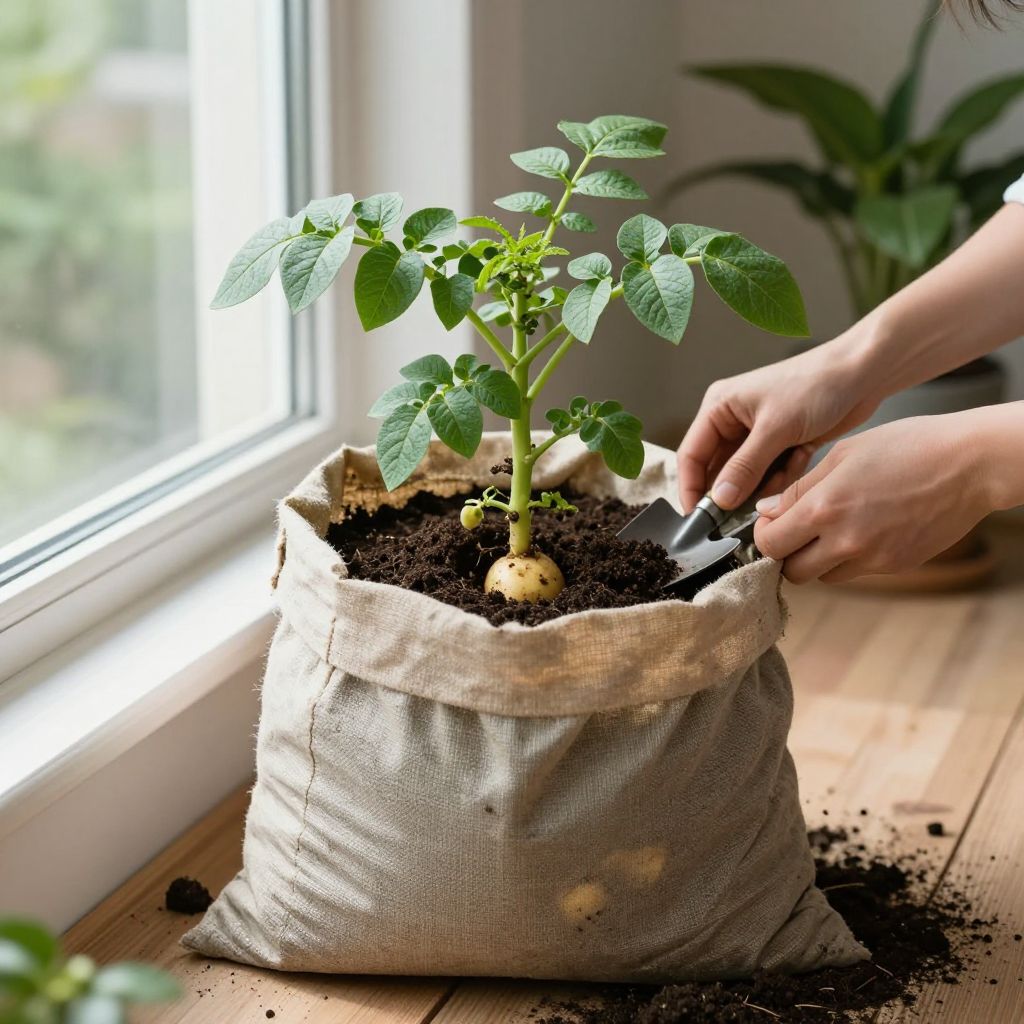
Can you grow potatoes indoors? Yes, you can, as long as you give them enough light, room for tubers to form, and a container that drains well. Indoor potatoes are usually grown in pots, grow bags, buckets, or bins rather than in open soil.
The biggest challenge is not getting the plant to sprout, but helping it make usable tubers inside a home. With the right setup, you can grow a modest harvest for fun, freshness, or year-round gardening practice.
Can you grow potatoes indoors?
Yes, potatoes can be grown indoors in a bright, cool spot with a deep container, loose soil, and strong light. The plant needs at least several hours of direct sun or a powerful grow light, plus room to “hill” soil as stems grow. Indoor harvests are usually smaller than outdoor ones, but still worthwhile.
How indoor potatoes grow
Potatoes are grown from seed potatoes, which are pieces of tuber with at least one healthy “eye.” After sprouting, the plant grows leafy stems above the soil and forms new tubers below the surface.
For indoor growing, the goal is to mimic the plant’s natural needs without letting it become crowded, too wet, or too dark. If any of those conditions are off, you may get lots of foliage and very few potatoes.
What makes indoor growing different
- Light is usually the limiting factor indoors.
- Containers must be deep enough for tuber development.
- Airflow matters because indoor plants can stay damp longer.
- Soil needs to drain well to prevent rot.
Best containers for growing potatoes indoors
Choose a container that is at least 10 to 15 gallons for a small indoor crop, or roughly 12 to 16 inches deep and wide. Deeper containers can hold more soil, which gives tubers more room to form and makes hilling easier.
Good options include large nursery pots, fabric grow bags, clean buckets with drainage holes, or storage totes modified for drainage. Fabric bags are especially useful because they drain well and help prevent soggy roots.
Container checklist
- Drainage holes in the bottom
- Enough depth for root and tuber growth
- A saucer or tray to protect floors, but not one that traps standing water
- Sturdy sides if you plan to add soil gradually
Soil, compost, and drainage
Potatoes prefer a loose, airy growing mix that drains quickly but still holds some moisture. A quality potting mix blended with compost is usually a better choice indoors than heavy garden soil, which can compact and stay too wet.
A simple mix is potting soil plus a moderate amount of compost and a drainage amendment such as perlite. The exact ratio can vary, but the finished mix should feel light and crumbly, not sticky or dense.
Avoid these soil mistakes
- Using dense backyard soil in a pot
- Overloading the mix with fresh manure
- Letting water collect in the bottom of the container
- Using a pot without drainage holes
How to plant potatoes indoors
Start with certified seed potatoes whenever possible, since grocery-store potatoes may be treated to reduce sprouting or may carry disease. If a seed potato is large, cut it into pieces with at least one eye per piece and let the cut surfaces dry for a day or two before planting.
- Fill the container with 4 to 6 inches of moist potting mix.
- Place seed potato pieces on the surface with the eyes facing up.
- Cover with 2 to 4 inches of soil.
- Water lightly to settle the mix.
- Set the container in a bright, warm location for sprouting.
When shoots are several inches tall, add more soil around the stems, leaving the top leaves exposed. This process, called hilling, encourages more tubers to form along buried stems.
How much to plant
Do not overcrowd the container. One to three seed potato pieces are usually enough for a medium indoor pot, depending on its size. Too many plants in one container compete for light, water, and root space.
Light and temperature indoors
Potatoes need strong light to grow well. A south-facing window may work in some homes, but many indoor gardeners get better results with a grow light because window light is often too weak or uneven.
Keep the plant in a cool-to-moderate room rather than a hot one. Potatoes generally perform better when temperatures stay on the cooler side of comfortable indoor conditions. Excess heat can reduce tuber formation and stress the plant.
Signs the plant needs more light
- Long, thin, floppy stems
- Pale leaves
- Leaves leaning strongly toward the window
- Slow growth with little foliage
If you use a grow light, place it close enough to be effective without scorching the leaves. Follow the light manufacturer’s guidance, and adjust based on plant response.
Watering indoor potatoes
Water when the top inch or two of soil feels dry, but do not let the container dry out completely for long. At the same time, avoid keeping the mix constantly wet, since potatoes are prone to rot in soggy conditions.
The best approach is steady, moderate moisture. Water thoroughly until excess drains out, then empty the saucer if water collects underneath.
Common watering problems
- Too much water: yellow leaves, soft stems, sour-smelling soil, or rot
- Too little water: wilting, dry soil, and stunted tubers
- Uneven watering: cracked or misshapen tubers
Feeding and ongoing care
Potatoes grown in containers use up nutrients faster than plants in the ground, so they may benefit from mild feeding during the season. A balanced, gentle fertilizer or compost top-up can support growth, but avoid overfeeding with high nitrogen, which can push leafy growth at the expense of tubers.
As the plant grows, keep adding soil around the stems until the container is nearly full. This also helps protect developing tubers from light, which can turn them green and inedible.
Maintenance tips
- Rotate the container if the plant leans toward light.
- Remove yellowing lower leaves if they are aging naturally.
- Check drainage after each watering.
- Keep the area around the pot clean to discourage pests.
Pests and diseases indoors
Indoor potatoes can still attract pests, especially if houseplants are nearby. Watch for aphids, fungus gnats, and spider mites. Poor airflow and overwatering can also encourage disease problems such as rot or mildew.
Inspect leaves regularly, including undersides and stems. Catching problems early is much easier than correcting a full infestation indoors.
Practical prevention
- Use clean pots and fresh potting mix.
- Do not reuse soil from diseased plants.
- Keep foliage dry when possible.
- Provide airflow around the container.
- Remove heavily damaged leaves promptly.
When and how to harvest indoor potatoes
You can harvest “new potatoes” after the plant flowers or once tubers are large enough to use, but full-size potatoes usually need more time. Harvest timing depends on the variety, growing conditions, and how much light the plant received indoors.
For a full harvest, wait until the foliage yellows and dies back naturally. Then stop watering for a short period and tip out the container carefully, sifting through the soil for tubers.
Harvesting tips
- Use your hands first to avoid cutting tubers with a tool.
- Harvest on a dry day if possible.
- Handle tubers gently to prevent bruising.
- Let them dry briefly before storing.
If you want a few small potatoes earlier, you can harvest selectively from the edges of the container while leaving the rest to grow. This is a good way to extend the harvest from a single pot.
Common mistakes to avoid
Most indoor potato failures come from a handful of predictable issues. If you avoid these, your chances of success improve a lot.
- Using weak light: leads to leggy plants and poor tuber production.
- Choosing a shallow container: limits root space and harvest size.
- Overwatering: causes rot and fungus problems.
- Skipping hilling: exposes tubers to light and reduces yield.
- Planting grocery-store potatoes: may introduce disease or poor sprouting.
Is growing potatoes indoors worth it?
If you want a large harvest, outdoor growing is usually easier and more productive. But if you want fresh potatoes in a small space, enjoy experimenting, or want to garden through the colder months, indoor potatoes can be a satisfying project.
The key is to treat them like a container crop: give them light, drainage, room to grow, and steady care. If you can provide those basics, you can absolutely grow potatoes indoors.
If you enjoy compact edible gardening projects, you may also want to read about growing strawberries indoors for another space-saving crop.