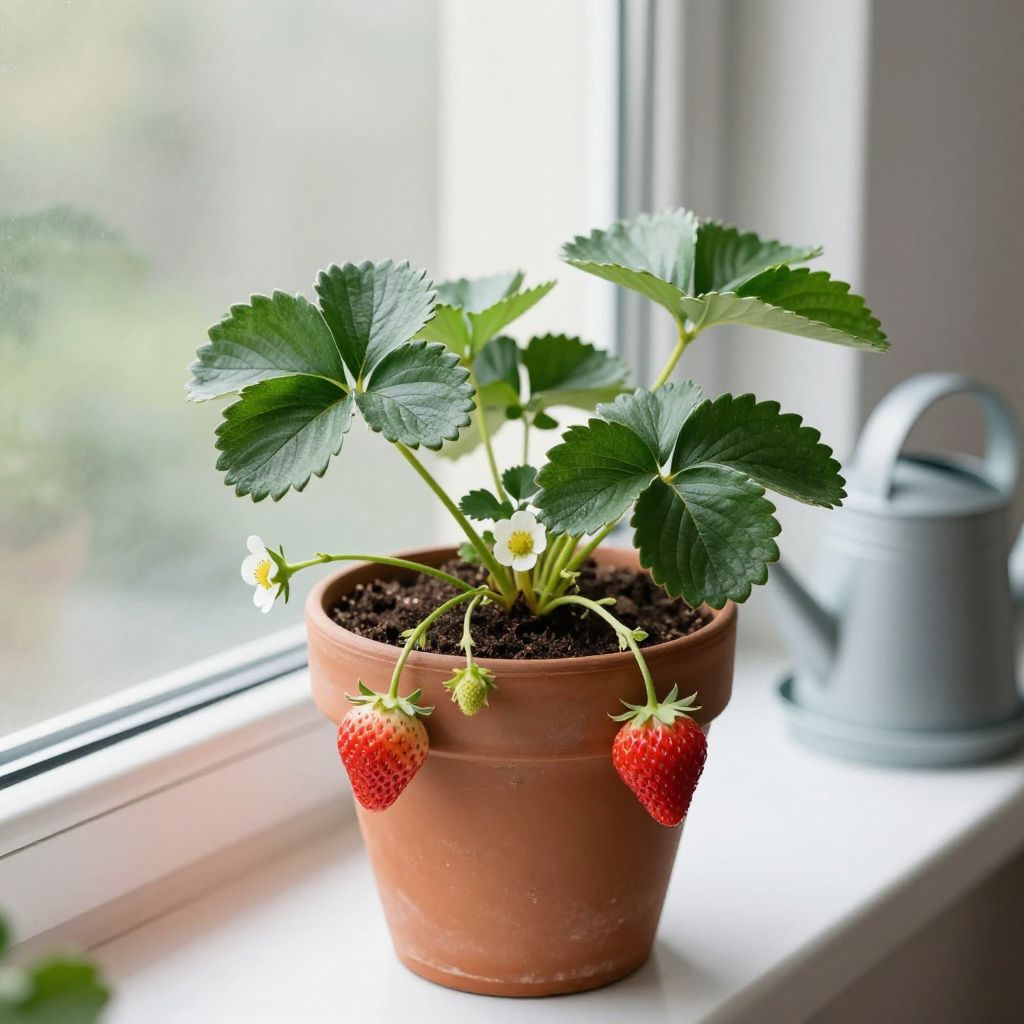
Can you grow strawberries indoors? Yes—you can, and with the right light, container, and care, indoor strawberries can produce sweet fruit on a windowsill, shelf, or under grow lights. The biggest challenge is not whether they will grow, but whether you can give them enough light and steady conditions to flower and set fruit.
Indoor growing works best when you treat strawberries as a long-term container crop, not a “plant and forget” houseplant. If you match their needs for light, drainage, airflow, and pollination, you can keep plants healthy and harvest berries at home.
Can you grow strawberries indoors?
Yes, strawberries can be grown indoors successfully if you provide bright light, a free-draining potting mix, consistent moisture, and some help with pollination. They usually perform best in containers rather than garden soil, and they do not need winter dormancy in the same way outdoors, though fruiting may slow if light levels are too low.
What strawberries need indoors
Strawberries are compact perennials, but they are still sun-loving fruiting plants. Indoors, they need conditions that mimic a bright outdoor spot as closely as possible.
Light
Light is the most important factor. A very bright south- or west-facing window may work in some homes, but many indoor setups need a grow light to keep plants compact and productive.
- Give plants as much direct light as possible.
- If using grow lights, keep them close enough to prevent stretching, but not so close that leaves scorch.
- Rotate pots every few days if plants lean toward the window.
Temperature
Strawberries generally do well in cool to moderate indoor temperatures. Very warm rooms can reduce flowering and encourage weak, leggy growth.
- Cooler nights are often helpful.
- Avoid placing pots near heat vents, radiators, or hot appliances.
- Stable temperatures are better than big swings.
Airflow
Good air movement helps prevent fungal problems and keeps foliage dry after watering. A small fan on a gentle setting can help in rooms with still air.
Choosing the right strawberry plants
Not every strawberry type behaves the same indoors. For home growers, compact, fruiting types are usually easier to manage than large, spreading plants.
Best plant types for indoor growing
- Everbearing or day-neutral strawberries are often the easiest for indoor containers because they can flower over a longer period when conditions are good.
- June-bearing types can grow indoors, but they usually produce one main crop and may be less convenient in a small space.
- Small-fruited alpine strawberries can also be a good choice for containers and windowsills.
If you are buying plants, choose healthy crowns with firm leaves and no signs of pests or disease. Bare-root plants can be started indoors, but potted nursery plants are often easier for beginners.
Best containers and soil for indoor strawberries
Container choice matters because strawberries dislike soggy roots. Indoors, the pot must drain well and give the roots enough room without staying wet for too long.
Container tips
- Use a pot with drainage holes.
- A container about 8 to 12 inches wide works well for a single plant, depending on the variety and root system.
- Shallow strawberry planters can work, but they dry out faster and need more attention.
Soil mix
Use a light, well-draining potting mix rather than garden soil. Garden soil is usually too heavy for containers and can compact around the roots.
- Choose a quality indoor or container potting mix.
- Mix in compost if the base mix is poor, but keep it loose and airy.
- Avoid heavy mixes that stay wet for long periods.
Drainage is non-negotiable. Strawberries are prone to root problems if water sits in the pot.
How to plant strawberries indoors
Planting correctly helps the crown stay healthy. The crown is the short, thick growing point where leaves and roots meet, and it should not be buried too deeply.
- Fill the container with moist potting mix, leaving room at the top for watering.
- Set the plant so the crown sits just above the soil surface.
- Firm the mix gently around the roots without packing it hard.
- Water thoroughly until excess drains out.
- Place the pot in bright light right away.
If you are starting from bare-root plants, spread the roots out gently before covering them. If the crown is buried, it can rot; if it sits too high, roots may dry out.
Watering indoor strawberries
Indoor strawberries need even moisture, but not constant wetness. The goal is to keep the root zone lightly moist and let the top layer dry slightly between waterings.
How to tell when to water
- Check the top inch of soil with your finger.
- Water when the surface feels dry but the mix below is still slightly moist.
- Water deeply enough that excess drains from the bottom, then empty any saucer.
Under warm grow lights, pots may dry faster than you expect. In cooler, dimmer rooms, they may stay wet longer, so adjust rather than following a fixed schedule.
Common watering mistakes
- Overwatering: causes root stress, yellowing leaves, and fungal issues.
- Underwatering: leads to wilted leaves, poor flowering, and small fruit.
- Watering the crown: can encourage rot; water the soil, not the center of the plant.
How much light do indoor strawberries need?
Strawberries need strong light to flower and fruit well. A bright window may be enough in some homes, but many indoor growers get better results with supplemental lighting.
Using windows
If you rely on natural light, place the plant in the brightest window you have. Watch for signs of insufficient light, such as long stems, pale leaves, and few flowers.
Using grow lights
Grow lights are often the most reliable option indoors, especially in winter or in homes with limited sun. Keep the light on long enough to support healthy growth, and adjust the height as plants grow.
- Keep the light centered over the plant.
- Raise or lower it as needed to maintain strong, compact growth.
- Combine light with good airflow to reduce disease risk.
Pollination indoors: how to get fruit
Indoor strawberries often need a little help with pollination because there are no bees or wind to move pollen around. Without pollination, flowers may drop or form misshapen berries.
Simple hand-pollination methods
- Use a small soft paintbrush to gently touch the center of each open flower.
- Alternatively, lightly shake the plant or tap the flower stems to move pollen.
- Repeat every couple of days while flowers are open.
Good pollination often shows up as more even fruit shape and fuller berries. If fruit is lumpy or poorly formed, pollination may have been incomplete.
Feeding indoor strawberries
Container-grown strawberries use up nutrients over time, so they may need light feeding during active growth. The key is to avoid overdoing it, especially with nitrogen-heavy fertilizer that pushes leaves instead of flowers.
What to look for
- A balanced fertilizer or one formulated for fruiting plants can be appropriate.
- Use a gentle feeding approach and follow the product label.
- If plants are lush but not flowering, too much nitrogen may be part of the problem.
Compost can improve potting mix, but it should not replace a proper container blend. In a pot, too much rich material can hold excess moisture and reduce aeration.
Pruning and maintenance
Indoor strawberries stay healthier when you remove old growth and direct the plant’s energy into fruiting. Regular maintenance also helps prevent pests from hiding in crowded foliage.
What to remove
- Yellow, damaged, or diseased leaves.
- Spent flower stems after fruiting.
- Runners, unless you want to root new plants.
Runners are long stems that make new baby plants. Indoors, they usually drain energy from fruit production, so many growers remove them to keep the plant compact.
Pests and diseases to watch for
Even indoors, strawberries can get pest problems. Catching them early is easier than dealing with an infestation later.
Common indoor pests
- Aphids: small soft-bodied insects that cluster on new growth.
- Spider mites: tiny pests that cause speckled leaves and fine webbing in dry air.
- Fungus gnats: often linked to overly wet potting mix.
Common disease issues
- Root rot from poor drainage or overwatering.
- Powdery mildew in stagnant air or crowded foliage.
- Gray mold on fruit if humidity is high and airflow is poor.
To reduce problems, keep foliage dry, improve airflow, remove damaged leaves, and avoid letting pots sit in water. If pests appear, isolate the plant before treating it so the problem does not spread.
How to propagate indoor strawberries
You can propagate strawberries from runners, which is a simple way to replace older plants or expand your collection. This works best when the parent plant is healthy and already growing well indoors.
Runner propagation basics
- Choose a healthy runner with a small plantlet forming at the end.
- Set the plantlet on moist potting mix in a small pot.
- Pin it in place lightly until roots develop.
- Once established, cut the runner from the parent plant.
Not every indoor plant will produce runners freely, especially if you remove them to encourage fruiting. That is normal.
Harvesting strawberries indoors
Harvest berries when they are fully colored and fragrant. Strawberries do not continue to ripen much after picking, so wait until they look ready.
- Pick fruit with a short stem attached if possible.
- Harvest gently to avoid bruising the berry.
- Check plants often, because ripe fruit can soften quickly indoors.
If berries are small, pale, or bland, the most likely causes are insufficient light, poor pollination, or inconsistent watering. These are usually fixable with better conditions.
Common problems and quick fixes
Most indoor strawberry problems are caused by light, water, or airflow issues. Start by checking those three things before assuming the plant is failing.
Problem: Lots of leaves, few flowers
- Increase light.
- Reduce excess nitrogen.
- Make sure the plant is not too warm.
Problem: Yellowing leaves
- Check for soggy soil and poor drainage.
- Look for nutrient depletion in an older container mix.
- Remove damaged leaves and adjust watering.
Problem: Flowers but no fruit
- Hand-pollinate open flowers.
- Improve light intensity.
- Check for stress from heat, dryness, or pests.
Problem: Mold or soft fruit
- Increase airflow.
- Remove rotting fruit promptly.
- Keep foliage and fruit dry when watering.
Indoor strawberries versus outdoor strawberries
Outdoor strawberries usually get stronger light, better airflow, and natural pollination, so they often produce more fruit. Indoors, you have more control, but you also have to supply those missing pieces yourself.
That said, indoor growing is useful if you have limited space, want fresh fruit year-round, or need to protect plants from harsh weather. It is especially practical for patios, apartments, and sunny rooms with room for containers.
Conclusion
So, can you grow strawberries indoors? Absolutely—if you give them strong light, well-drained soil, regular moisture, and help with pollination. Start with one healthy plant in a draining container, place it in the brightest spot you have, and watch how it responds before expanding your setup.
If you want to keep learning about container growing and fruiting plants, look for more guidance on indoor light levels, potting mixes, and small-space gardening so you can fine-tune your strawberry setup.