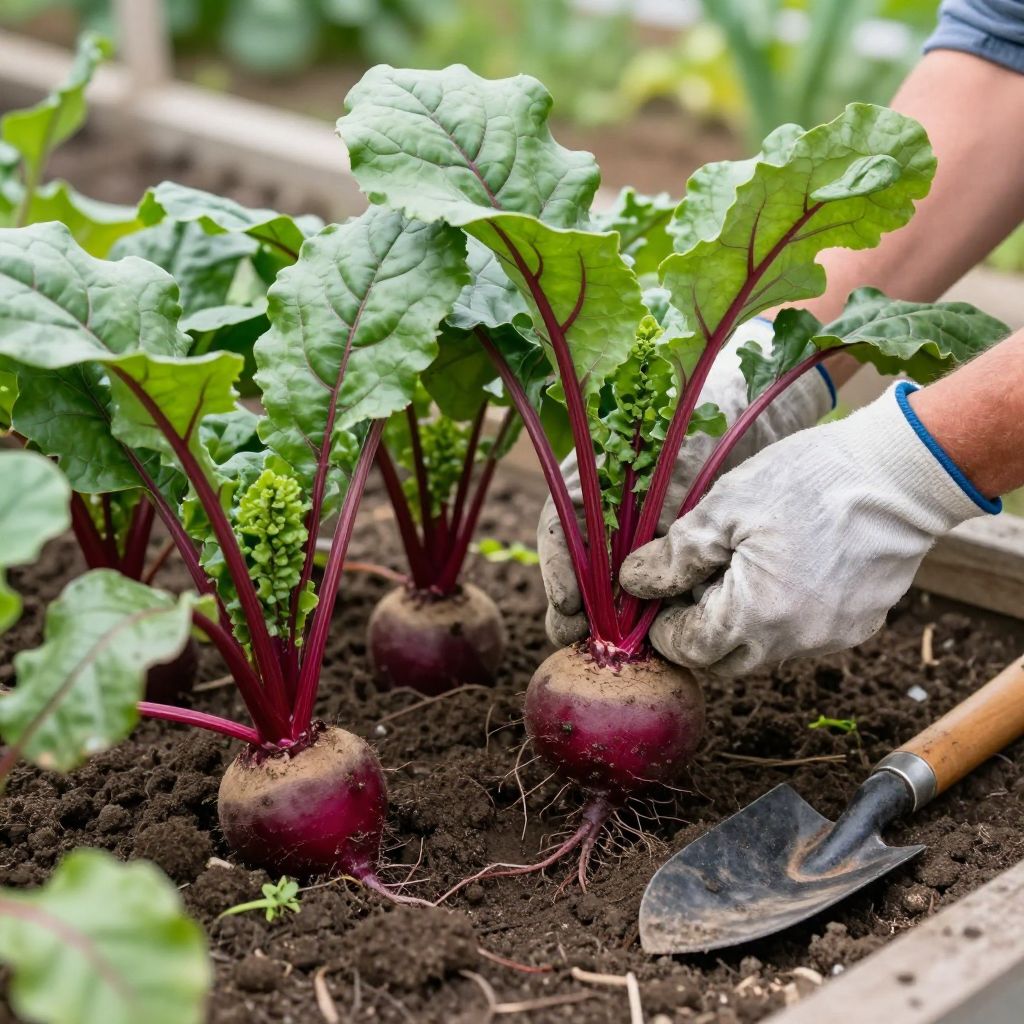
Wondering when are beets ready to harvest? The answer depends on the variety, growing conditions, and how you like to eat them. Beets can be harvested as baby roots for tender flavor or left to size up for fuller roots, but waiting too long can make them woody and less sweet.
The good news is that beets are easy to judge once you know what to look for. With a few simple checks, you can harvest at the right moment and keep both the roots and greens at their best.
When are beets ready to harvest?
Beets are usually ready to harvest when the roots are about 1.5 to 3 inches wide, depending on the variety and your preference. Many types mature in 50 to 70 days, but the safest way to tell is to look at root size, leaf growth, and the visible shoulders at soil level.
How to tell beet roots are mature
Do not rely only on the seed packet timeline. Weather, soil texture, and watering can speed up or slow down growth, so use the plant itself as your guide.
Check the shoulder above the soil
The top of the beet root often pushes slightly above the soil when it is nearing harvest. If the shoulder looks plump and is roughly the size you want, it is probably ready.
Use size as your main clue
- Baby beets: about 1 to 1.5 inches across
- Standard harvest size: about 1.5 to 3 inches across
- Oversized beets: larger than 3 inches, often tougher and more fibrous
Smaller beets are usually sweeter and more tender. Larger beets can still be usable, but they are more likely to have a woody core.
Look at the leaves, but do not depend on them alone
Healthy beet greens are a good sign that the plant is still actively growing, but large leaves do not always mean large roots. Some varieties produce abundant foliage before the root fills out.
How long do beets take to mature?
Most beets are ready in 50 to 70 days from sowing, though some baby beet varieties can be harvested earlier and some storage types may take longer. Cooler weather often slows growth, while rich soil and steady moisture can help roots size up more evenly.
What affects timing
- Temperature: cool conditions usually slow growth
- Soil quality: loose, fertile soil helps roots develop smoothly
- Watering consistency: uneven moisture can lead to tough or cracked roots
- Spacing: crowded plants often stay small
Best time of day to harvest beets
Harvest beets in the morning or during the coolest part of the day if possible. Roots are crisper, and the greens stay fresher after pulling. If the soil is very dry, water the bed lightly the day before to make harvesting easier.
How to harvest beets without damaging them
Beets are easy to harvest, but rough pulling can snap the greens or bruise the roots. A gentle approach keeps them in better condition for storage or kitchen use.
- Loosen the soil around the root with a hand fork or trowel.
- Grasp the base of the greens close to the crown.
- Pull steadily while supporting the soil with your other hand if needed.
- Shake off loose soil gently.
- Trim the tops, leaving about 1 to 2 inches of stem attached if storing the roots.
Do not twist hard on the leaves alone. If the tops break off, the roots are still usable, but harvesting becomes messier and storage quality may suffer.
Can you harvest beet greens before the roots?
Yes. Beet greens can be harvested while the roots continue growing, as long as you do not remove too many leaves from each plant. Take a few outer leaves at a time and leave the center growth intact so the beet can keep producing energy for root development.
Best practice for leaf harvest
- Pick outer leaves only
- Leave several healthy inner leaves on each plant
- Avoid stripping the plant bare
- Use young leaves for the most tender texture
What happens if you harvest beets too late?
Overmature beets often become woody, pithy, or less sweet. The skin may thicken, and the center can develop tough fibers. In hot weather or dry soil, beets may also become more prone to cracking or bolting, especially if they are left too long.
Signs you waited too long
- Roots are very large and rough-skinned
- The flesh feels hard or fibrous
- Flavor is earthy but less sweet
- Roots may split or crack
How soil and watering affect harvest readiness
Beets grow best in loose, well-drained soil that allows roots to expand evenly. Heavy clay, rocks, or compacted beds can distort roots and make it harder to judge maturity by size alone.
Growing conditions that help beets size up well
- Sunlight: full sun is ideal, though light shade can help in hot climates
- Soil: loose, crumbly soil with good drainage
- Organic matter: compost improves structure and moisture retention
- Moisture: steady watering helps roots stay tender
Irregular watering can cause uneven growth, cracking, or a strong flavor. If your soil dries out quickly, mulch lightly around the plants to help hold moisture.
Harvesting beets in stages
You do not need to harvest all your beets at once. Staggered harvesting lets you enjoy tender roots over a longer period and gives remaining plants more room to size up.
Simple harvest strategy
- Start by pulling the largest beets first.
- Leave smaller roots to grow for another 1 to 2 weeks.
- Check the bed every few days once roots begin sizing up.
- Harvest before roots become oversized or the weather turns hot.
Common mistakes to avoid
Most beet harvest problems come from waiting too long, pulling too aggressively, or letting plants grow under poor conditions. A few small adjustments can make a big difference.
- Harvesting only by calendar date: always check root size
- Ignoring spacing: crowded beets stay small and uneven
- Letting soil dry out completely: this can reduce quality
- Pulling without loosening soil: this can break roots
- Leaving mature beets too long: they may become woody
What to do after harvesting
After pulling beets, brush off excess soil and remove the greens if you are storing the roots. The tops draw moisture from the root, so trimming them helps the beets keep longer.
Short-term storage tips
- Store unwashed roots in a cool, humid place
- Keep them in a perforated bag or damp sand if needed
- Use tender greens quickly, since they wilt faster than the roots
- Do not store damaged or split roots for long
Quick harvest checklist
If you are still unsure when are beets ready to harvest, use this simple checklist before pulling them.
- The roots are about 1.5 to 3 inches wide, or the size you prefer
- The shoulders are visible at the soil surface
- The leaves look healthy and the plant has stopped sizing up quickly
- The roots are not getting oversized or cracked
- The soil is slightly moist, making harvest easier
Conclusion
Beets are ready to harvest when the roots reach the size you want, usually before they become oversized and tough. Check the shoulders, loosen the soil gently, and pull a few at a time so you can enjoy them at their best. If you are growing more than one row, start with the largest roots today and see how the rest develop.
For more practical vegetable-growing guidance, you may also want to read about how to grow beets in the home garden and when to harvest other root vegetables if those topics are available in your gardening library.