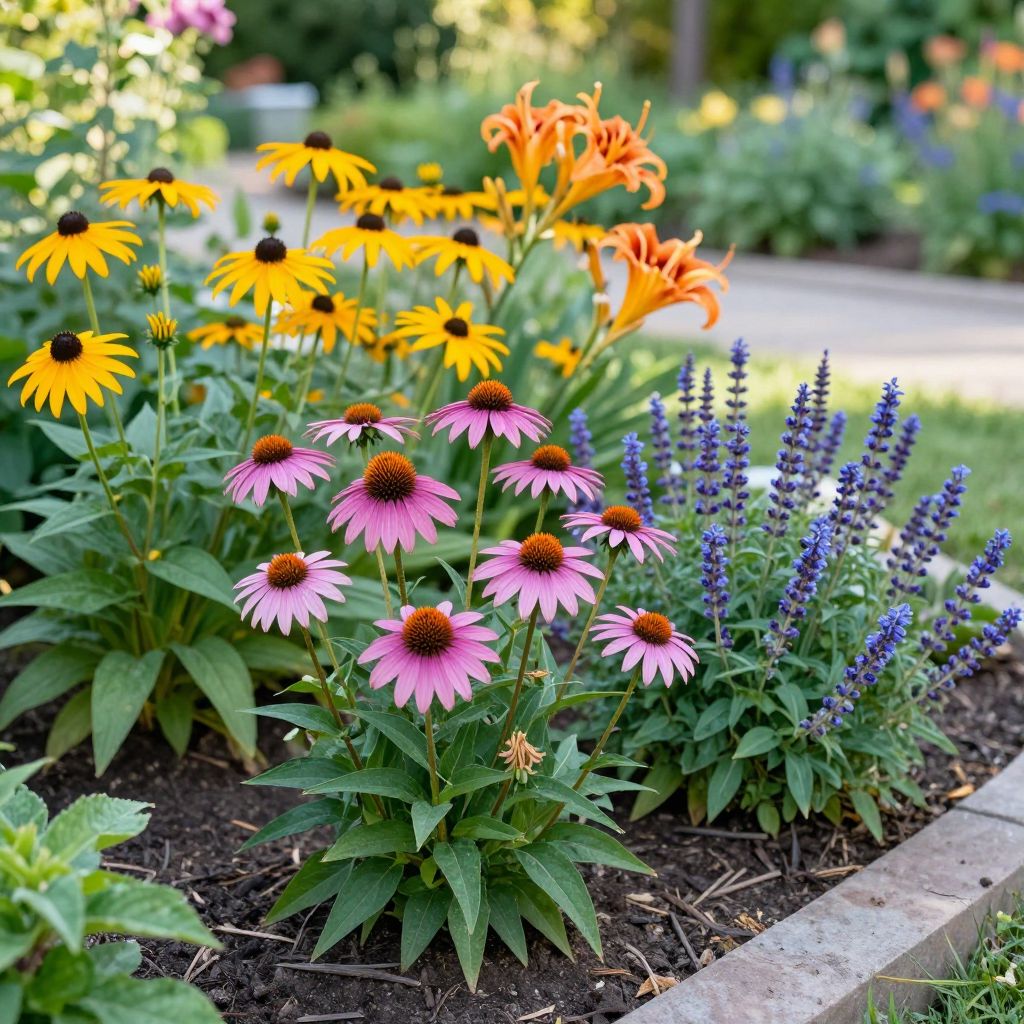
Wondering what perennials bloom all summer and still look good with ordinary garden care? The best choices are long-blooming perennials that flower in waves from early summer into fall, especially when you deadhead, water wisely, and give them enough sun.
No perennial blooms nonstop in every climate, but several can keep flowering for months with the right conditions. The key is choosing plants that naturally rebloom, then matching them to your soil, sunlight, and maintenance style.
What perennials bloom all summer?
Perennials that bloom all summer include coneflowers, black-eyed Susans, daylilies, coreopsis, salvia, catmint, Shasta daisy, yarrow, gaillardia, and hardy geraniums. Most flower longest in full sun, well-drained soil, and with regular deadheading or light trimming to encourage new buds.
Best long-blooming perennials for summer color
If you want reliable color, start with perennials known for repeat bloom or a long flowering season. These are some of the most dependable choices for many home gardens.
Sun-loving favorites
- Black-eyed Susan (Rudbeckia hirta and related species) — bright yellow blooms that often last from midsummer into fall.
- Purple coneflower (Echinacea purpurea) — tough, drought-tolerant, and attractive to pollinators.
- Coreopsis (Coreopsis spp.) — many varieties flower for a long stretch if deadheaded.
- Gaillardia or blanket flower (Gaillardia spp.) — heat-tolerant and good in lean, well-drained soil.
- Yarrow (Achillea millefolium) — flat flower clusters that can bloom for weeks in sunny beds.
- Shasta daisy (Leucanthemum x superbum) — classic white flowers, often with a second flush after deadheading.
Perennials that rebloom with care
- Salvia (Salvia nemorosa and similar types) — many varieties rebloom after the first flower spikes are cut back.
- Catmint (Nepeta spp.) — long flowering, low maintenance, and excellent for edging.
- Hardy geranium (Geranium spp.) — some types bloom in waves through summer if trimmed lightly.
- Daylily (Hemerocallis spp.) — individual flowers last one day, but many cultivars bloom over several weeks and some rebloom.
- Tickseed (Coreopsis spp.) — especially useful where you want a long, airy display.
Partial-shade options
- Astilbe (Astilbe spp.) — feathery plumes for moist, part-shade spots, though not usually all-summer bloom.
- Hardy geraniums — among the best long-blooming choices for light shade.
- Some daylilies — perform well with morning sun and afternoon shade in hotter regions.
How to get perennials to bloom longer
Long bloom is not just about the plant label. You usually get the best flowering by giving the plant enough light, avoiding overly rich soil, and removing spent blooms before they set seed.
1. Plant in the right light
Most summer-blooming perennials need at least 6 hours of direct sun to flower heavily. In very hot climates, some plants appreciate morning sun and light afternoon shade, especially if the soil dries quickly.
2. Use well-drained soil
Many of the best summer bloomers dislike soggy roots. If your soil stays wet after rain, improve drainage with compost and, if needed, raised beds or mounded planting areas.
3. Water deeply, not constantly
Newly planted perennials need regular moisture while they establish. After that, most long-blooming types do better with deep watering when the top few inches of soil dry out, rather than frequent shallow watering.
4. Deadhead faded flowers
Removing old blooms often tells the plant to produce more flowers instead of seeds. This is especially useful for coreopsis, salvia, catmint, Shasta daisy, and many daylilies.
5. Cut back tired growth
Some perennials bloom again after a light shearing. If a plant looks ragged in midsummer, trim it back by about one-third after the first flush of flowers. Water afterward and watch for fresh growth.
Choosing the right perennial for your garden
The “best” perennial depends on your site. A plant that blooms all summer in a sunny, dry border may struggle in a shady, wet bed, and vice versa.
For hot, dry spots
- Gaillardia
- Yarrow
- Catmint
- Coreopsis
- Coneflower
For average garden soil
- Black-eyed Susan
- Shasta daisy
- Salvia
- Hardy geranium
- Daylily
For pollinator-friendly planting
- Coneflower
- Salvia
- Catmint
- Yarrow
- Coreopsis
Tip: If you want the longest display, mix several perennials with different bloom habits. That way, one plant can take over as another slows down.
Planting and spacing tips
Good spacing matters because crowded plants bloom less and are more prone to mildew and weak stems. Read the plant tag for mature width, then give each plant enough room to reach that size without overlapping too tightly.
- Prepare the bed by loosening soil and mixing in compost if it is poor or compacted.
- Set plants at the same depth they were growing in the pot.
- Water thoroughly after planting to settle the soil around the roots.
- Mulch lightly, keeping mulch a few inches away from crowns and stems.
- Check moisture regularly during the first growing season.
Overcrowding is a common reason summer bloomers underperform. Plants may survive, but they often flower less when they compete for light, water, and nutrients.
Pruning, deadheading, and maintenance
Maintenance is usually simple, but timing matters. A little attention during summer can extend bloom and keep the planting neat.
Deadheading basics
- Snip faded flowers just above a healthy leaf or side bud.
- Remove entire flower stalks when most blooms on that stem are finished.
- For plants with many small flowers, shear lightly instead of picking each bloom individually.
When to cut back
After the first big flush, some perennials respond well to a light trim. This is especially useful for catmint, salvia, and some coreopsis types. Avoid cutting back too hard during extreme heat or drought unless the plant is clearly spent and you can water it afterward.
Fertilizer: less is often better
Too much nitrogen can produce lush leaves and fewer flowers. If your soil is already fertile, a modest top-dressing of compost in spring is often enough. In rich soil, extra fertilizer may not help and can reduce bloom.
Common problems that reduce summer bloom
Too much shade
If a perennial is healthy but not flowering, lack of sun is often the reason. Move it to a brighter site in the future or thin nearby shrubs and tree branches if possible.
Wet feet
Root stress from poor drainage can cause weak growth, yellowing leaves, and poor bloom. Improve the bed or choose species better suited to moist soil.
Plants are too young
Many perennials bloom better in their second year after roots are established. First-year plants may flower lightly while they focus on growth.
Spent blooms left on the plant
If flowers are allowed to set seed, the plant may slow down. Deadheading can make a noticeable difference in repeat bloomers.
Pests and diseases
Aphids, leaf spot, powdery mildew, and Japanese beetles can weaken flowering plants. Good spacing, morning watering at the soil line, and prompt cleanup of diseased foliage help reduce problems.
How to keep the display going from early to late summer
For a bed that looks good all season, combine early, mid, and late bloomers. This creates overlap, so the garden never looks empty when one plant pauses.
- Use early summer bloomers such as hardy geraniums and some salvia.
- Fill the middle of the season with coneflowers, coreopsis, and Shasta daisies.
- Carry color into late summer with black-eyed Susans, yarrow, and reblooming daylilies.
Adding ornamental grasses, foliage plants, or annuals can also keep the bed attractive between bloom cycles. Flowers are important, but good structure makes the whole planting look fuller.
Propagation and dividing
Some long-blooming perennials benefit from division every few years. Dividing keeps clumps vigorous, improves airflow, and can increase flowering.
- Divide in spring or early fall, depending on the plant and your climate.
- Replant only healthy outer sections with strong roots and shoots.
- Water divisions well until they re-establish.
Not every perennial needs frequent division, so check the growth habit first. Some, like yarrow and catmint, can become woody or open in the center if left too long without renewal.
Simple summer care checklist
- Give the plant enough sun for its needs.
- Water deeply during dry spells, especially in the first year.
- Deadhead regularly to encourage more blooms.
- Trim back tired stems after a flush of flowers.
- Watch for mildew, aphids, and poor drainage.
- Divide crowded clumps when flowering declines.
Conclusion
If you want to know what perennials bloom all summer, choose reliable long-blooming plants like coneflower, coreopsis, salvia, catmint, black-eyed Susan, and yarrow, then give them sun, drainage, and a little deadheading. Start by picking one sunny bed and adding two or three of these plants for a longer, easier season of color.
For more practical garden planning, you may also want to read about designing a perennial garden for continuous bloom and how to deadhead flowers for more blooms.