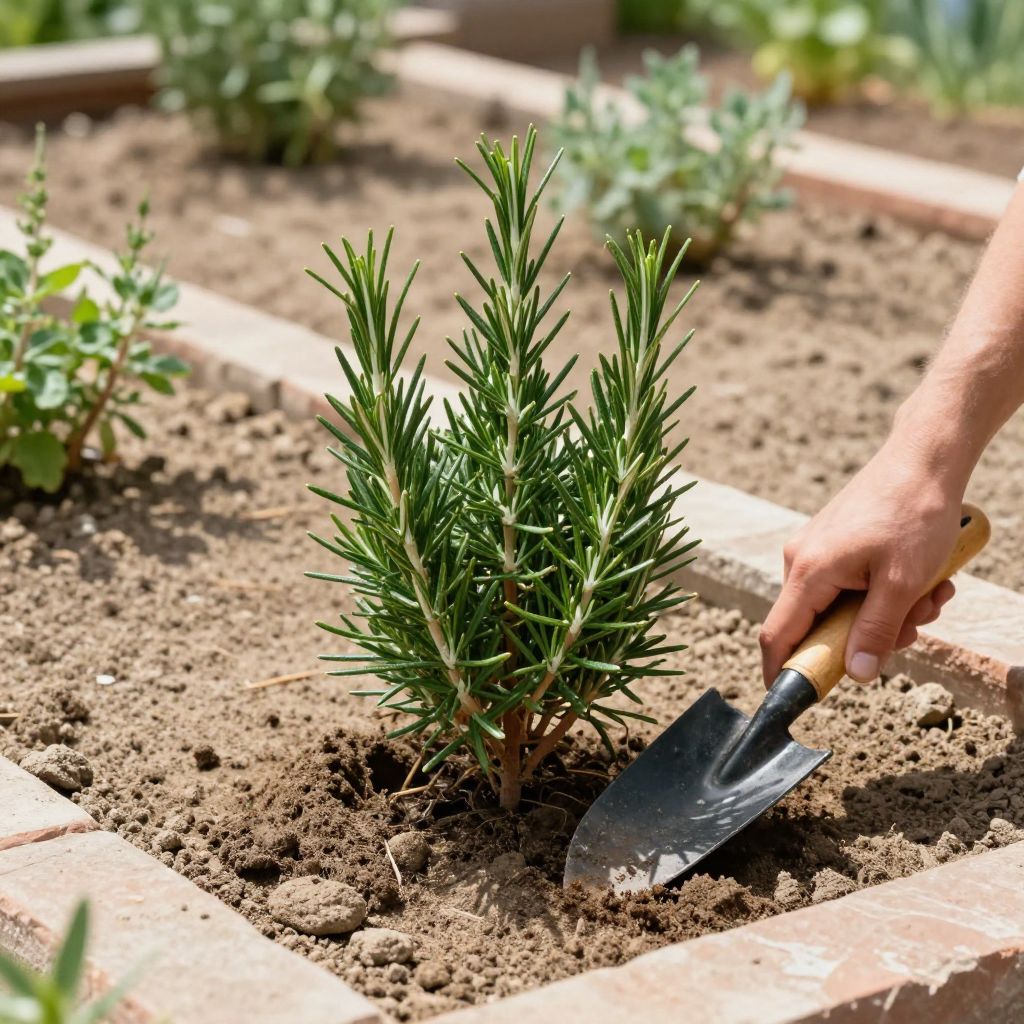
Where should you plant rosemary so it stays healthy, fragrant, and productive? The short answer is: give it the sunniest, driest, best-drained spot you have, and avoid heavy, soggy soil. Rosemary is far more likely to fail from too much moisture than from a bit of neglect.
If you match the plant’s natural preference for warmth, air circulation, and lean soil, rosemary can become a long-lived shrub or container herb. The right location matters as much as watering, pruning, or feeding.
Where to plant rosemary?
Plant rosemary in full sun, in sharply drained soil, and in a spot with good air movement. Outdoors, the best place is often a south- or west-facing border, raised bed, slope, or container. Indoors, place it in the brightest window you have, ideally with several hours of direct sun.
Best growing conditions for rosemary
Rosemary (Salvia rosmarinus) is a Mediterranean herb, so it prefers conditions that are dry, bright, and airy rather than rich and damp. If you can provide those basics, the plant will usually do much better.
Sunlight
Choose a location with at least 6 to 8 hours of direct sun each day. More sun usually means denser growth, stronger flavor, and better flowering.
If your garden is partly shaded, rosemary may survive, but it often becomes leggy, sparse, and more prone to rot. In very hot climates, a little afternoon shade can help, but the plant still needs strong morning sun.
Drainage
Drainage is the most important factor. Rosemary roots dislike sitting in wet soil, especially in cool weather.
- Plant in sandy, gritty, or loamy soil rather than heavy clay.
- Use raised beds or mounded planting areas if your soil stays wet.
- Avoid low spots where water collects after rain.
- In pots, use containers with large drainage holes.
Soil type
Rosemary grows best in soil that is moderately fertile to lean, with a slightly acidic to neutral pH. It does not need rich compost-heavy soil to thrive.
If your soil is dense or clay-based, improve structure with coarse grit, sand that is suitable for gardening, or by planting in a raised bed. Avoid overloading the planting hole with compost, which can hold too much moisture around the roots.
Air circulation
Good airflow helps rosemary dry quickly after rain and reduces disease risk. Space plants where they are not crowded by taller shrubs or dense perennials.
In humid climates, this matters even more. A breezy, open site is usually better than a sheltered corner with stagnant air.
Best places in the garden for rosemary
Rosemary fits well in several garden spots, as long as the site is sunny and well drained. The plant can be useful both as an herb and as an ornamental shrub.
Raised beds
Raised beds are one of the best choices if your native soil is heavy or poorly drained. They warm up faster in spring and shed excess water more easily than ground-level beds.
Plant rosemary near the edge of the bed where it will not be shaded by taller crops or flowers.
Herb gardens
Rosemary works well in a dedicated herb garden alongside other sun-loving herbs with similar needs, such as thyme and oregano. Keep it separate from moisture-loving herbs that prefer richer soil and more frequent watering.
Containers and pots
Containers are ideal if your soil is unsuitable or if you want to move the plant to a sheltered spot in winter. Use a pot that is at least 12 inches wide for a young plant, and larger as it matures.
- Choose a pot with drainage holes.
- Use a free-draining potting mix, not garden soil.
- Place the container in full sun outdoors.
- Raise the pot slightly on feet or bricks so water can escape freely.
Rock gardens and slopes
Rosemary is a strong choice for rock gardens, dry borders, and slopes because these sites naturally drain well. A slight slope can be especially helpful in wetter climates.
Near paths or entrances
Rosemary can be planted near a path, patio, or doorway where you can brush past it and enjoy the scent. Just make sure the site is not shaded by walls, fences, or overhanging trees.
Where not to plant rosemary
Some locations look convenient but cause problems later. Avoid sites that stay damp, cold, or crowded.
- Heavy clay soil without drainage improvement.
- Low-lying areas where water pools after rain.
- Deep shade or dappled shade for most of the day.
- Overly rich beds that are fertilized heavily for vegetables.
- Wind tunnels or exposed sites if the plant is in a pot that dries too fast.
One common mistake is planting rosemary where it looks “protected” but actually stays too moist. Shelter from harsh wind is useful, but not if it comes at the cost of drainage and sun.
How to plant rosemary in the right spot
Once you’ve chosen a location, planting it correctly helps the roots establish without sitting in excess moisture.
- Dig a hole only as deep as the root ball and slightly wider.
- Check that the planting site drains well by watering it and seeing how quickly the water disappears.
- If needed, improve the area with grit or create a raised mound.
- Set the plant so the top of the root ball is level with or slightly above the surrounding soil.
- Backfill gently and firm lightly to remove air pockets.
- Water once to settle the soil, then let the surface dry before watering again.
If you are planting in a container, use a potting mix designed for herbs or cacti and succulents, or blend a standard mix with extra drainage material if needed. The goal is a mix that drains quickly but still holds enough moisture for roots to take up water.
Indoor vs outdoor placement
Rosemary can be grown indoors, but indoor placement is much more demanding because light levels are usually lower and air is less moving.
Indoor location
Put rosemary in the brightest south- or west-facing window you have. If natural light is limited, a grow light can help, especially in winter.
- Keep it away from cold drafts and heating vents.
- Rotate the pot regularly so growth stays even.
- Water only when the top inch or two of mix feels dry.
Indoors, rosemary often declines from too little light and too much water. If the plant becomes pale, stretched, or drops leaves, the location is usually the first thing to fix.
Outdoor location
Outdoors, rosemary usually performs best in full sun and open air. In cooler regions, a south-facing wall can help provide warmth, but make sure the soil does not stay wet against the foundation.
Seasonal considerations
The best place for rosemary can change with the season and your climate. A site that works in summer may not be ideal in winter if the plant is exposed to freezing wet soil or harsh winds.
In cool or wet climates
Choose the driest, warmest, most sheltered sunny spot you can find. Raised beds and containers are often safer than low ground.
If winter rain is a problem, the plant may do better in a pot that can be moved under cover while still receiving light.
In hot, dry climates
Rosemary still needs full sun, but a little afternoon shade can help reduce stress during extreme heat. Even then, the soil should remain well drained rather than constantly moist.
In winter
Cold damage is more likely when rosemary is in wet soil. If your climate has freezing winters, prioritize drainage and avoid planting in spots where snowmelt or runoff collects.
Watering and feeding after planting
Rosemary prefers a light touch. Once established, it is more drought-tolerant than many herbs, but new plants still need careful watering while roots settle in.
Watering
Water deeply after planting, then wait until the soil begins to dry before watering again. For established plants, water only when the soil is dry several inches down, especially in cooler weather.
Frequent shallow watering encourages weak roots and can lead to rot. It is better to water thoroughly and less often than to keep the soil damp all the time.
Fertilizing
Rosemary usually needs little fertilizer. Too much nitrogen can produce soft, weak growth with less flavor and more pest problems.
If growth is poor in a container, a light feeding with a balanced, diluted fertilizer during active growth may help, but avoid overfeeding. In the ground, modest compost at planting time is usually enough if the soil is already reasonable.
Pruning and maintenance in the chosen site
Once rosemary is planted in the right location, regular light pruning helps keep it compact and healthy. Trim after flowering or during active growth, but avoid cutting back into old, leafless wood unless you know the plant is still capable of resprouting.
- Remove dead or damaged stems promptly.
- Pinch soft tips to encourage bushier growth.
- Do not shear hard into woody stems all at once.
- Keep the base of the plant clear of debris so air can move freely.
Common problems caused by the wrong location
Many rosemary issues are location issues first and plant problems second. If the site is wrong, care adjustments only go so far.
Yellowing leaves
Yellow leaves can signal overwatering, poor drainage, or low light. Check the soil first. If it feels wet for long periods, move the plant or improve drainage.
Root rot
Soft, declining growth and a sour smell in the soil often point to root rot. This is usually caused by waterlogged conditions. Once advanced, it is difficult to reverse, so prevention is essential.
Leggy growth
If rosemary stretches toward the light, it is not getting enough sun. Move it to a brighter position or prune and replant in a sunnier location if possible.
Pests and mildew
Dense, shaded, humid sites can encourage aphids, spider mites, and fungal issues. Better airflow and more sun usually reduce these problems more effectively than repeated treatments.
Quick checklist for choosing the right spot
- Full sun for most of the day
- Fast-draining soil
- Open air circulation
- No standing water after rain
- Room for the plant to spread
- Container option if your soil is heavy
Conclusion
When deciding where to plant rosemary, pick the sunniest, driest, best-drained place you have. If your garden soil is heavy or wet, use a raised bed or container instead. That one choice will do more for rosemary’s health than almost any other care step.
If you want to plan the rest of your herb bed, you may also find it helpful to read about herb garden layout ideas and container herb gardening tips.