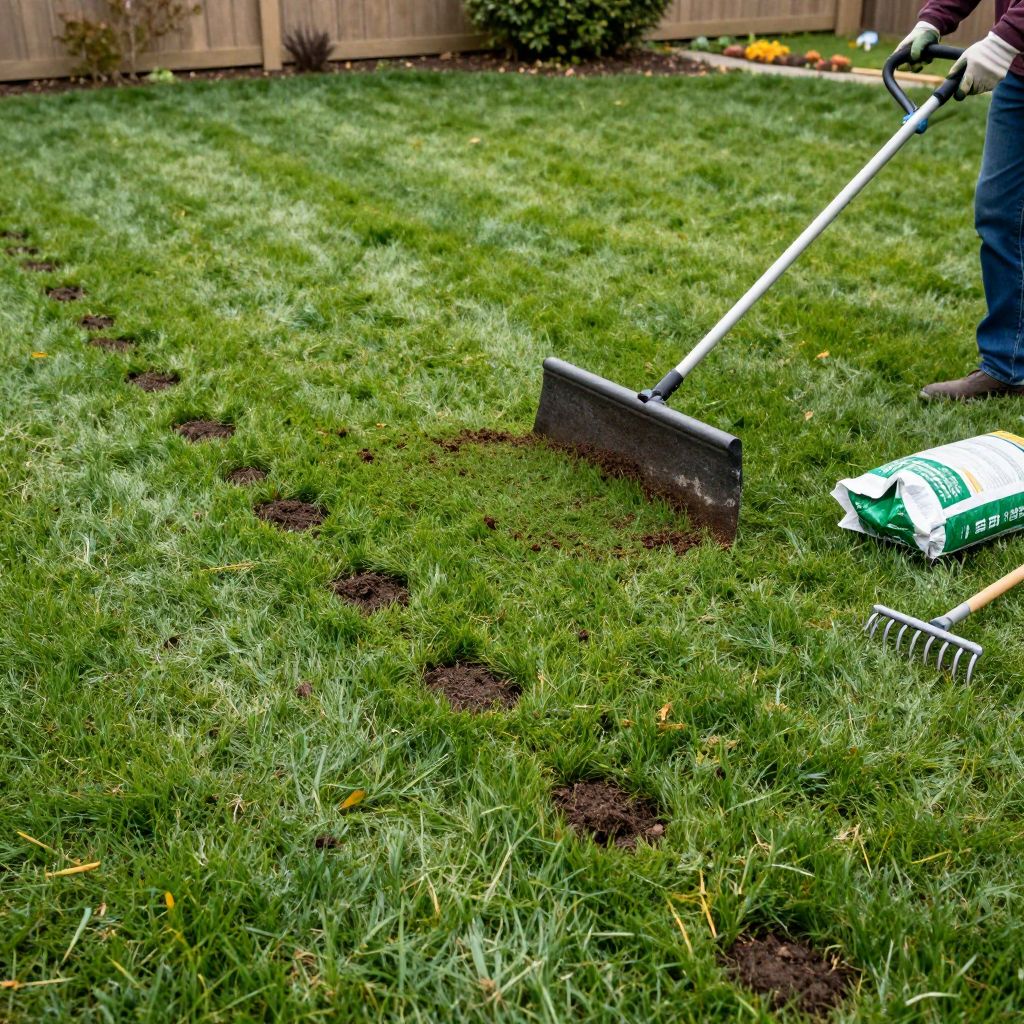
What should you do after aerating lawn? The short answer is to help the soil stay open, then give grass roots the best chance to recover and spread. Aeration creates holes that improve air, water, and nutrient movement, but the benefits are greatest when you follow up with the right lawn care steps.
What you do next depends on your grass type, soil condition, and the season in your area. In most cases, the best follow-up is to leave the soil plugs in place, water appropriately, overseed if needed, and avoid anything that would compact the lawn again.
What to do after aerating lawn?
After aerating lawn, leave the soil cores on the surface, water lightly, and keep foot traffic to a minimum for a few days. If your lawn needs thickening, overseed right away and apply a suitable topdressing or fertilizer only if your soil test or lawn condition calls for it. The goal is to protect the open soil and support new root growth.
Step-by-step: what to do right after aeration
1. Leave the soil plugs where they are
If you used a core aerator, the small soil plugs pulled from the ground should usually stay on the lawn. They break down naturally in a couple of weeks and return organic matter to the soil.
Do not rake them up unless they are creating a problem. Breaking them apart with a mower, leaf rake, or light watering helps them disappear faster.
2. Water the lawn properly
Water after aerating so moisture reaches deeper into the root zone. A thorough watering helps roots take advantage of the new channels in the soil.
- Water soon after aeration if the soil is dry.
- Moisten the top few inches of soil, but do not leave the lawn soggy.
- If you overseed, keep the surface consistently damp until germination.
How much water you need depends on weather, soil type, and whether you seeded. Sandy soils dry faster than clay soils, and cool, cloudy conditions reduce evaporation. Check the soil with your finger or a small trowel instead of following a fixed schedule.
3. Overseed if the lawn is thin or patchy
Aeration and overseeding work especially well together. The holes created by the aerator improve seed-to-soil contact, which can help grass seed germinate more evenly.
Use a grass seed mix suited to your climate, sun exposure, and existing lawn. For example, a shade-tolerant mix is better under trees, while a sun-loving blend suits open, exposed areas.
- Broadcast seed evenly over thin areas.
- Work seed into the holes with a rake or lawn roller only if needed and very lightly.
- Keep seed from drying out during germination.
If your lawn is already dense, overseeding may not be necessary. Focus instead on watering and recovery.
4. Apply a light topdressing if appropriate
Topdressing after aeration can improve soil structure, level minor unevenness, and support seedling establishment. Use a thin layer of screened compost or a soil blend that matches your lawn’s needs.
Keep topdressing light. A heavy layer can smother grass crowns and fill aeration holes too quickly. In most home lawns, a thin, even application is better than a thick one.
5. Fertilize only if it makes sense
Some lawns benefit from fertilizer after aeration, especially if you are overseeding or the grass looks weak. But fertilizer should be based on your lawn’s needs, not applied automatically.
If you have a soil test, follow its guidance. Without one, use caution. Overfertilizing can push weak, top-heavy growth and increase stress during heat or drought.
- Choose a product appropriate for your grass type and season.
- Avoid heavy nitrogen applications during extreme heat or drought stress.
- Do not fertilize a lawn that is already struggling from disease or severe dryness unless you know it needs it.
What not to do after aerating lawn
Avoid compacting the soil again
Freshly aerated soil is vulnerable to re-compaction. Try to keep children, pets, and heavy equipment off the lawn for several days, especially if the soil is moist.
If you must cross the lawn, use the same path each time to limit damage.
Don’t mow too soon or too aggressively
Wait until the grass has had a little time to settle, especially if you overseeded. Mowing too early can disturb seed, damage tender shoots, or pull up loosened soil plugs.
When you do mow, use a sharp blade and remove no more than one-third of the grass height at a time.
Don’t flood the lawn
More water is not always better. Saturated soil can slow root recovery, encourage fungal problems, and make the lawn vulnerable to rutting.
Water enough to support recovery, but let the soil breathe between irrigations.
Best timing after aeration: what matters most
The best follow-up depends on season and grass type. Cool-season grasses such as Kentucky bluegrass, perennial ryegrass, and tall fescue often respond well to aeration and overseeding in early fall, when temperatures are milder and weed pressure is lower.
Warm-season grasses such as Bermuda grass, zoysia, and St. Augustinegrass are often aerated during active growth, usually late spring through summer, when they can recover quickly. In any region, avoid stressing the lawn during extreme heat, drought, or frost.
If you are unsure about timing, choose a period when your grass is actively growing and the soil is moist but not waterlogged.
How to care for the lawn in the weeks after aeration
Keep moisture steady for new seed
If you overseeded, the top priority is consistent surface moisture. New seed can dry out quickly, especially in sun or wind.
- Water lightly and more often at first if needed for germination.
- Once seedlings emerge, gradually shift to deeper, less frequent watering.
- Do not let the seedbed crust over.
Watch for weeds, but be careful with herbicides
Aeration can disturb weed seeds and expose bare soil, which may invite weed growth. However, timing matters if you plan to use herbicides.
Many pre-emergent herbicides can interfere with grass seed germination, so avoid them if you have just overseeded unless the product label specifically allows it. If weeds are already present, choose a control method that matches your grass type and the weeds you are seeing.
Monitor drainage and low spots
Aeration can reveal drainage issues rather than solve them completely. If water still pools in certain areas after rain, the lawn may need repeated aeration, topdressing, or more serious grading improvements.
Persistent puddling can also signal compacted subsoil, thatch buildup, or poor slope. In those cases, aeration is helpful, but it may not be enough on its own.
Common mistakes after aerating lawn
- Raking up all the plugs instead of letting them decompose naturally.
- Overwatering and turning the lawn muddy or oxygen-poor.
- Mowing too soon, which can disturb seed and tender shoots.
- Using the wrong seed for shade, sun, or climate conditions.
- Applying fertilizer or herbicide at the wrong time, especially when overseeding.
- Ignoring severe compaction and expecting one aeration to fix everything.
Troubleshooting after aeration
The plugs are not breaking down
If the soil cores are slow to crumble, they may be too large or the weather may be too dry. Light watering and a few mowings usually help. You can also break them up gently with a rake if they are clumpy.
The lawn looks patchy after aeration
Patchiness is common if the grass was already thin or if the soil was compacted unevenly. Overseeding, topdressing, and proper watering can help fill in bare areas over time.
Seed is not germinating well
Check for drying soil, poor seed-to-soil contact, or planting at the wrong time of year. Seed that sits on the surface without moisture may fail, and some grass types need warmer or cooler conditions to sprout well.
The lawn seems stressed after aeration
Temporary stress can happen, especially in hot weather or on very compacted ground. Keep traffic off the lawn, water wisely, and avoid extra treatments until the grass begins to recover.
Simple aftercare checklist
- Leave the soil plugs on the lawn.
- Water lightly or thoroughly, depending on dryness and whether you seeded.
- Overseed thin areas if needed.
- Apply a thin topdressing only if it suits your lawn.
- Hold off on mowing until the lawn has settled.
- Keep traffic low for several days.
- Watch for weeds, puddling, and drying soil.
Conclusion
After aerating lawn, the best thing you can do is protect the openings you created and support steady recovery. Leave the plugs, water appropriately, overseed if needed, and avoid compacting the soil again. If you want the strongest results, pair aeration with the right seasonal care for your grass type and local climate.
For more practical lawn care guidance, you may also want to read about overseeding thin lawns and how to fertilize a lawn properly.