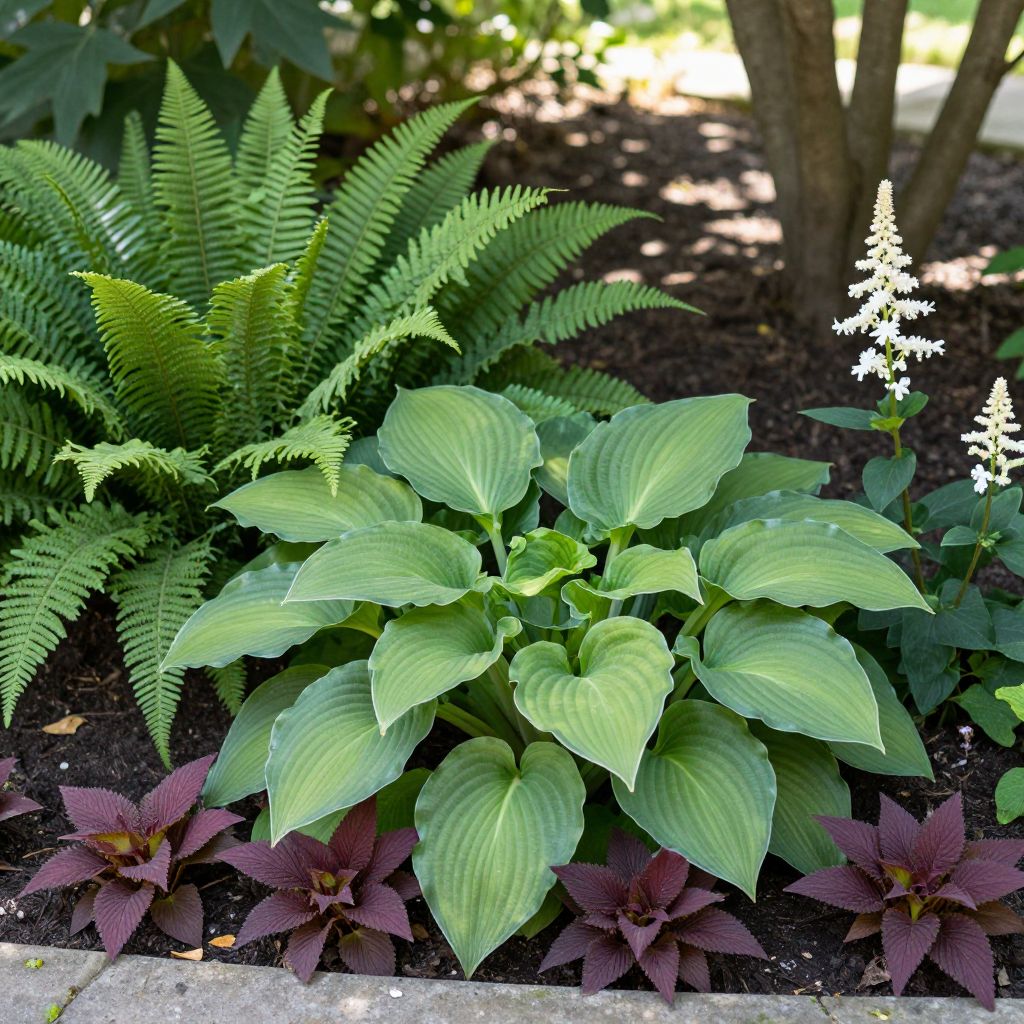
Wondering what to plant with hostas so your shade beds look fuller, healthier, and more interesting? The best companion plants for hostas are shade-tolerant species that match their moisture and soil needs, while adding contrast in color, texture, and bloom time.
Choose plants that won’t crowd the crown, handle partial to full shade, and help cover the bare ground around hostas. The right companions can also reduce weeds, soften edges, and keep a hosta border attractive from spring through fall.
What to plant with hostas?
Plant hostas with other shade-loving perennials and ground covers such as astilbe, ferns, heuchera, brunnera, hellebores, lungwort, and woodland sedges. These plants thrive in similar conditions, add contrast in leaf shape and color, and help create a layered, low-maintenance shade garden.
Best companion plants for hostas
Perennials that match hostas well
Look for plants that enjoy rich, evenly moist, well-drained soil and light that ranges from dappled shade to morning sun. These are some of the most reliable choices:
- Astilbe – Feathery summer flowers bring height and color above hosta foliage.
- Heuchera (coral bells) – Colorful leaves add contrast without overwhelming hostas.
- Brunnera macrophylla – Heart-shaped leaves and spring flowers pair beautifully with broad hosta leaves.
- Ferns – Japanese painted fern and lady fern create a soft, woodland look.
- Hellebores – Early bloomers that extend interest before hostas fully emerge.
- Lungwort (Pulmonaria) – Spotted foliage and spring flowers suit shady borders.
- Bleeding heart (Dicentra) – Arching stems add a delicate texture contrast in spring.
Ground covers that help fill bare soil
Hostas often leave open space around their base, especially when young. Low ground covers can suppress weeds and make the planting look finished.
- Lamium – Useful in shade, but keep it contained if it spreads aggressively in your area.
- Sweet woodruff (Galium odoratum) – A classic woodland ground cover for cooler, shaded sites.
- Ajuga – Tolerates shade and adds low color, though it may spread quickly.
- Woodland sedges (Carex spp.) – Grass-like texture works well in naturalistic shade gardens.
Plants to use with caution
Not every shade plant is a good hosta companion. Avoid aggressive spreaders that can smother hostas or compete too strongly for water and nutrients. Also avoid plants that need dry soil, very sharp drainage, or full sun unless your site truly provides those conditions.
- Thirsty sun perennials that dislike shade
- Fast-running ground covers that creep into hosta crowns
- Large shrubs that steal light and airflow
How to choose the right companion plants
The best answer to what to plant with hostas depends on your site. Before buying plants, check how much light, moisture, and root competition your bed actually has.
- Observe the light for a full day. Hostas usually do best in partial shade, though many tolerate more sun if the soil stays moist.
- Test drainage after rain or watering. Companions should not sit in soggy soil for long periods.
- Match moisture needs. Hostas like consistent moisture, so pair them with plants that do too.
- Think about texture. Use fine leaves, bold leaves, upright flowers, or airy stems to contrast the hosta’s broad foliage.
- Plan for mature size. A small plant may look sparse at first, but many perennials expand within a few seasons.
Designing for contrast
Hostas are valued for their foliage, so companions should either contrast with that foliage or complement it without disappearing. Good combinations often include:
- Bold leaves + fine texture such as hostas with ferns
- Blue-green foliage + burgundy foliage such as hostas with heuchera
- Low mounds + tall accents such as hostas with astilbe
- Spring bloomers + summer foliage such as hellebores with hostas
How to plant hostas with companions
When planting hostas with other perennials, give each plant enough room to grow without fighting for light or root space. Good spacing improves airflow and helps prevent slug and disease issues.
- Prepare the bed by removing weeds and loosening the soil to a depth of about 8 to 12 inches where possible.
- Work in compost if your soil is poor. Hostas and many shade companions appreciate organic matter that holds moisture but still drains well.
- Place taller plants first so you can see the structure of the bed.
- Set hostas slightly apart from aggressive neighbors. Leave enough room for mature spread, not just the nursery pot size.
- Mulch lightly with shredded leaves, compost, or fine bark to conserve moisture and reduce weeds.
Do not bury the hosta crown. Keep the crown at soil level so new shoots can emerge freely and the plant is less likely to rot.
Spacing tips
Spacing depends on the cultivar and the companion plant, but a practical rule is to leave enough room for mature leaves to overlap only slightly. If you want a lush look sooner, use more than one hosta or add low fillers rather than crowding a single plant too tightly.
Best companion combinations by garden style
Woodland shade garden
If your garden has dappled shade under trees, build a layered woodland look. Use hostas as the broad-leaf anchor, then add ferns, brunnera, hellebores, and spring bulbs for seasonal interest.
- Hosta + fern + brunnera
- Hosta + hellebore + sweet woodruff
- Hosta + astilbe + lungwort
Formal shade border
For a neater look, repeat a few plants in groups. Repetition makes hosta beds feel intentional and helps the eye move through the border.
- Hosta + heuchera + astilbe
- Hosta + Japanese painted fern + brunnera
- Hosta + low sedges + hellebores
Foundation planting
Along a house or fence, choose companions that stay tidy and do not block walkways. Use medium to large hostas with compact shade plants that won’t flop over paths or compete with shallow roots from nearby trees or shrubs.
Soil, watering, and mulch for mixed hosta plantings
Hostas and most of their companions prefer soil that is rich, moisture-retentive, and well drained. If your soil is sandy, compost helps it hold water. If it is heavy clay, compost and careful planting can improve structure and reduce waterlogging.
Watering the right way
New plantings need more attention than established beds. Water deeply after planting, then check the soil regularly during dry spells. Aim for evenly moist soil, not constant saturation.
- Water at the base of the plants, not over the leaves if possible.
- Check moisture a few inches below the surface before watering again.
- Increase watering during hot, windy weather or if the bed is under trees that steal moisture.
Mulching benefits
A 2- to 3-inch layer of mulch can help keep roots cooler and reduce weeds. Keep mulch a little away from the crown to prevent rot and avoid piling it against stems.
Common mistakes to avoid
Hosta beds can fail when the companions are chosen for looks only. A beautiful combination still needs compatible growing conditions.
- Planting sun-lovers in deep shade leads to weak growth and poor flowering.
- Overcrowding reduces airflow and makes slug damage harder to manage.
- Ignoring mature size can leave the bed congested within two seasons.
- Using dry-soil plants in a moisture-loving hosta bed creates uneven growth.
- Letting aggressive spreaders take over can smother young hostas.
Pests and problems in hosta companion beds
Mixed shade plantings can be attractive to slugs, snails, and sometimes deer. Hostas are often the first target, but nearby tender companions may also be affected.
Slug and snail pressure
Reduce hiding places by keeping the bed tidy, watering in the morning, and removing thick debris where slugs shelter. Hand-picking, traps, and other garden-safe controls may help, depending on your local conditions.
Deer and rabbit browsing
If browsing is common in your area, choose companions that are less tempting and consider physical protection. No plant is completely deer-proof, so local pressure matters more than plant labels.
Yellowing or scorched leaves
If hostas or companions yellow early, the bed may be too wet, too dry, or too sunny. If leaves scorch at the edges, increase moisture and check whether afternoon sun is stronger than expected.
Seasonal care for hosta combinations
Spring
Cut back old hosta leaves before new growth appears, and remove winter debris around companion plants. This is also a good time to divide crowded hostas or transplant small perennials before the bed fills in.
Summer
Watch for dry spells, especially in sunny or windy spots. Deadhead spent flowers if you want a tidier look, though some gardeners leave astilbe plumes and other seed heads for texture.
Fall
As hostas decline, companion plants with evergreen or semi-evergreen foliage become more important. Top up mulch after the soil cools, but do not smother crowns.
Propagation and dividing hostas in mixed beds
Hostas can be divided when they become too large or crowded. Division is often easiest when plants are dormant or just beginning to emerge, but timing should suit your climate and the plant’s condition.
- Dig around the clump carefully.
- Lift the root mass and separate it into sections with healthy buds and roots.
- Replant divisions at the same depth.
- Water well and keep the soil evenly moist while they re-establish.
If companion plants are close by, move them temporarily or divide the bed in sections so you do not damage neighboring roots.
Simple planting plan for a hosta border
If you want a quick, reliable design, use this formula: one or two larger hostas as anchors, one medium-height flowering perennial for vertical interest, and one low ground cover to knit the planting together.
- Anchor: a blue or variegated hosta
- Accent: astilbe, brunnera, or bleeding heart
- Filler: heuchera, fern, or woodland sedge
- Edge: sweet woodruff, lamium, or ajuga where appropriate
Start with a small group rather than trying to fill the entire bed at once. You can always add more plants later once you see how the light and moisture behave through a full season.
If you want to plan a fuller shade garden, you may also find it helpful to read more about shade garden design and dividing perennials for long-term maintenance and plant spacing.