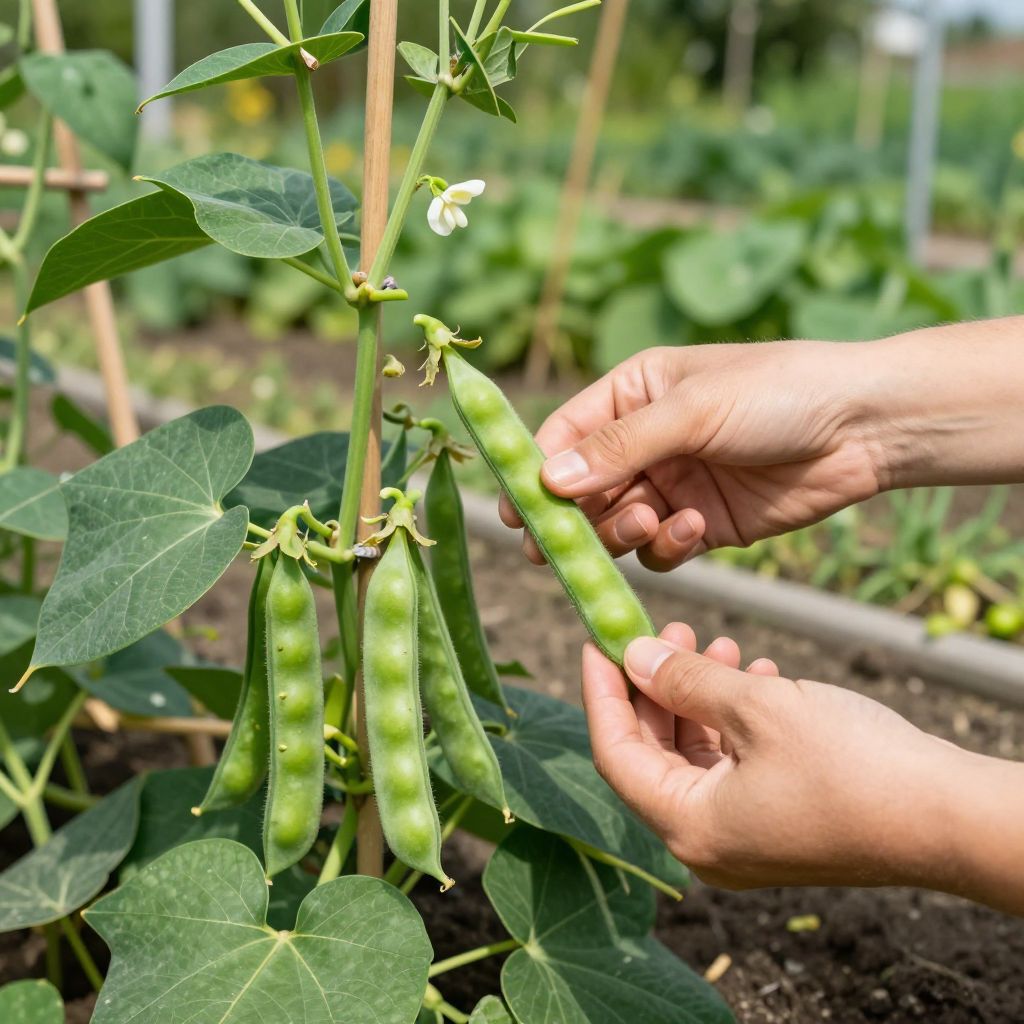
If you’re wondering when to pick green beans, the best answer is usually: harvest them young, tender, and before the seeds inside get large. Most snap beans taste best when the pods are firm, smooth, and still easy to bend, while the seeds are only barely visible.
Picking at the right stage keeps plants producing longer and gives you the best flavor and texture. The exact timing depends on the bean type, weather, and how fast your plants are growing, so a quick daily check during peak season is worth it.
When to pick green beans?
Pick green beans when the pods are full-sized for their variety but still slender, crisp, and snap easily. For most snap beans, that means before the seeds bulge and before the pod becomes tough or stringy. Check plants every 1 to 2 days once they start producing, because beans can go from perfect to overmature quickly in warm weather.
How to tell green beans are ready
Green beans are usually ready when they look firm and feel crisp, not limp. The pod should be smooth, well-colored, and easy to break with a clean snap.
Signs of harvest readiness
- Pod size: Reaches the mature length for the variety, but not swollen.
- Texture: Firm and crisp, not rubbery.
- Seeds: Small and only slightly noticeable through the pod.
- Snap test: The bean breaks cleanly instead of bending like a string.
- Color: Even green color, with no yellowing or browning.
If you have a packet or plant tag, use the listed pod length as a guide, but don’t wait for the exact number if the pods are already getting thick. In most cases, the best eating stage comes a little earlier than the “fully mature” stage.
What happens if you pick too late?
Overmature beans become tougher, less sweet, and more fibrous. The seeds enlarge, the pod walls thicken, and some varieties develop strings that need to be removed.
Late picking can also slow the plant down. Once pods are left to mature too long, many bean plants shift energy toward seed production instead of making new flowers and pods.
How often should you harvest green beans?
During peak harvest, pick green beans every 1 to 2 days. In cooler weather, every 2 to 3 days may be enough, but in hot weather pods can mature very quickly and need closer attention.
Frequent harvesting encourages more flowers and more pods. If you let even a few pods stay on the plant too long, production often slows.
Best time of day to pick
Morning is usually the easiest time to harvest because pods are cool and firm. That said, you can pick green beans any time of day as long as the plants are dry enough to avoid spreading disease.
Avoid harvesting when foliage is wet from rain or irrigation if you can help it. Wet leaves and pods can make it easier to move fungal problems from plant to plant.
How to harvest green beans without damaging the plant
Use one hand to hold the stem or vine and the other to remove the pod with a gentle twist. If the pod resists, use clean scissors or pruners rather than tugging hard on the plant.
- Look for pods that are full-sized but still slender.
- Hold the stem steady so you don’t pull the vine.
- Snap or cut the pod off at the stem end.
- Check nearby pods, because several may be ready at once.
- Harvest regularly to keep the plant producing.
For bush beans, the pods often cluster and can be harvested in a short session. For pole beans, you may need to search more carefully because pods can hide behind leaves and stems.
Green bean growing conditions that affect harvest timing
Bean harvest timing is closely tied to growing conditions. Warm weather, rich soil, and consistent moisture can speed up pod development, while cool temperatures may slow it down.
Sunlight and temperature
Green beans generally do best in full sun, which helps plants flower and set pods well. In very hot conditions, pods may mature faster and become tough sooner, so check them more often.
Cool spells can slow growth, which means pods may stay tender a little longer. Still, don’t rely on the calendar alone—use pod size and texture as your main guide.
Soil and moisture
Beans prefer well-drained soil that stays evenly moist, not soggy. Stress from drought can make pods smaller and tougher, while overly wet soil can weaken roots and reduce plant vigor.
If your soil is heavy clay or drains poorly, beans may grow more slowly and produce unevenly. In that case, raised beds or improved soil structure can help future crops perform better.
Planting and care basics that improve harvest quality
Healthy plants produce better pods, so good care earlier in the season matters. Beans are usually direct-sown because they dislike root disturbance, and they grow best when the soil is warm enough for quick germination.
Simple care checklist
- Plant in full sun.
- Use loose, well-drained soil.
- Water deeply when the top layer of soil begins to dry.
- Mulch lightly to help hold moisture and reduce weeds.
- Keep weeds down so they don’t compete for water and light.
- Provide support for pole beans early so vines can climb cleanly.
Too much nitrogen can lead to lush leaves and fewer pods, so avoid overfeeding with high-nitrogen fertilizer. Compost is usually a safer, steadier soil amendment than heavy feeding.
Different bean types and how harvest timing changes
“Green beans” can mean several kinds of edible-pod beans, and harvest timing varies a little by type. The main rule is still the same: pick when the pods are tender, not when the seeds are fully developed.
Snap beans
These are the classic green beans most gardeners grow. Harvest when pods are firm, smooth, and snap cleanly.
Wax beans
Yellow wax beans are harvested the same way as green snap beans. Color is not the clue; pod tenderness is.
Pole beans vs. bush beans
Bush beans often produce a large flush of pods over a shorter period, so you may harvest heavily for a few weeks. Pole beans usually keep producing longer if you keep picking regularly.
With pole beans, it’s especially important not to miss pods hidden in the foliage. One forgotten pod can signal the plant to slow down.
What to do if your beans are too big or tough
If a pod has become oversized, try snapping it open and checking the seeds. If the seeds are still fairly small, the pod may still be usable, though less tender than ideal.
If the pod is fibrous, stringy, or heavily bulging with seeds, it’s best to remove it from the plant so the plant can focus on new growth. Leaving old pods in place usually reduces future harvests.
How to keep production going
- Harvest often, even if you only get a handful.
- Remove overmature pods promptly.
- Keep plants watered during dry spells.
- Watch for pests that can reduce flowering and pod set.
Common pests and diseases that can affect harvest timing
Healthy leaves and stems help beans keep producing, so it’s worth checking for problems while you harvest. Early detection often means you can still save a good portion of the crop.
Common pests
- Bean beetles: Can chew leaves and scar pods.
- Aphids: Cluster on tender growth and weaken plants.
- Spider mites: More common in hot, dry conditions.
Common diseases
- Powdery mildew: White coating on leaves, often worse in crowded plantings.
- Bacterial blight: Can cause spotting and reduced vigor.
- Root rot: More likely in poorly drained soil.
If disease is present, avoid working through wet foliage and remove badly affected plants if needed. Good spacing, clean tools, and rotating bean crops to a different bed each season can help reduce repeat problems.
Storing green beans after harvest
Freshly picked beans keep best when cooled quickly. Store them unwashed in the refrigerator in a breathable bag or container, and use them soon for the best texture.
If you leave beans sitting in the sun or in a hot basket for too long, they can lose crispness fast. Harvesting into a shaded container helps preserve quality.
Quick mistakes to avoid
- Waiting for pods to become thick and seed-filled.
- Picking only once a week during peak production.
- Tugging hard and breaking stems.
- Ignoring hidden pods on pole beans.
- Letting drought stress slow pod development.
- Overfertilizing with nitrogen instead of supporting balanced growth.
Final takeaway
The best time to pick green beans is when the pods are young, firm, and crisp, before the seeds swell and the pod turns tough. Check plants often, harvest gently, and keep picking regularly to encourage more beans.
If you want to improve next season’s results, review your bean bed’s sun, drainage, and watering habits, then compare them with a guide to growing green beans successfully and common vegetable garden pest control.