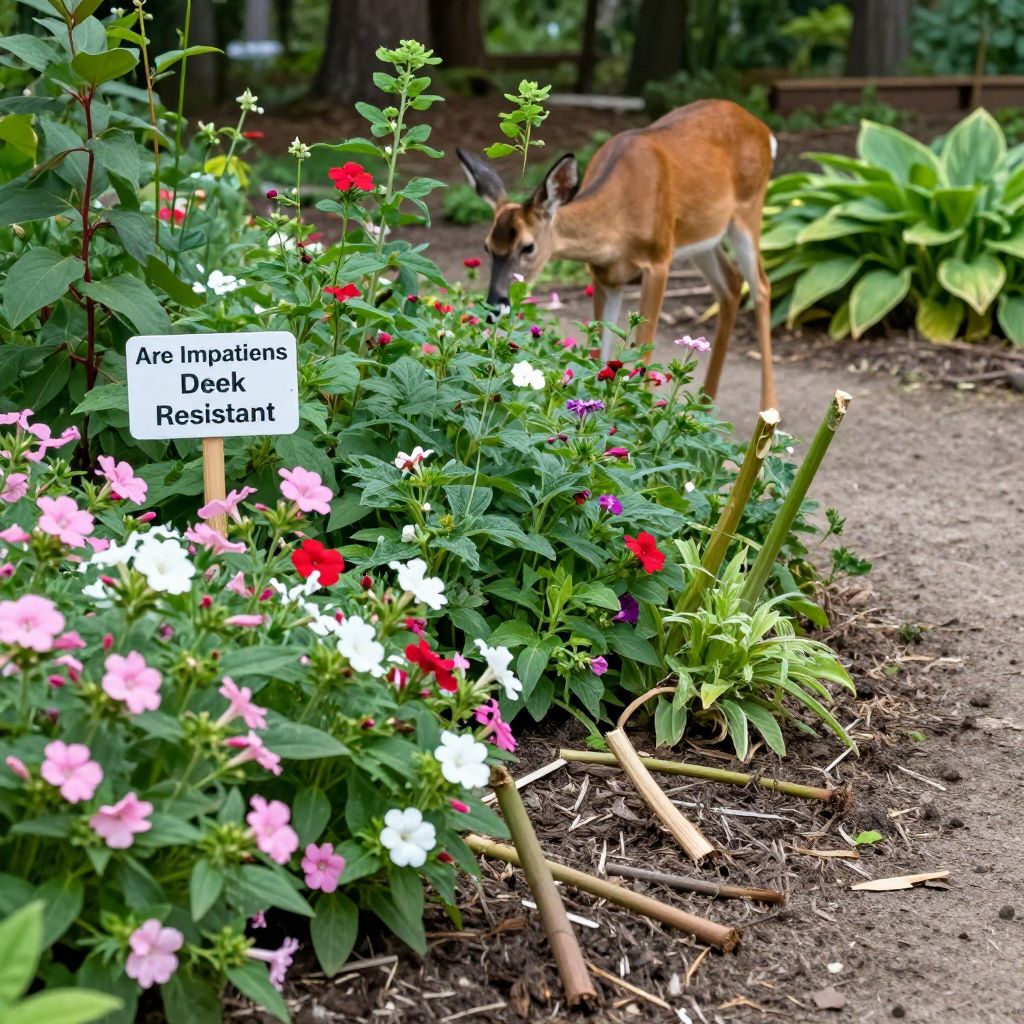
Are impatiens deer resistant? If deer regularly browse your garden, this is an important question before you plant a bed of these shade-loving annuals. The short answer is that impatiens are not reliably deer resistant; hungry deer may sample them, especially when other food is scarce.
That doesn’t mean you can’t grow them. With the right placement, companion plantings, and a few protection strategies, impatiens can still thrive in many gardens where deer are active.
Are Impatiens Deer Resistant?
Impatiens are generally considered deer susceptible rather than deer resistant. Deer may avoid them when plenty of preferred plants are available, but they will often nibble impatiens in spring, during drought, or when deer pressure is high. No plant is completely deer-proof, so think of impatiens as a target that may need protection.
Why Deer Sometimes Eat Impatiens
Deer choose plants based on availability, season, and local pressure. They tend to browse tender, moisture-rich growth first, which is exactly what makes impatiens attractive in a shade garden.
What makes impatiens appealing
- Soft stems and leaves that are easy to chew
- Succulent growth with high moisture content
- Fresh new growth after pruning or rain
- Flower beds near woods, hedges, or deer travel routes
If deer are hungry enough, they may eat even plants they normally ignore. That is why “deer resistant” should never be treated as a guarantee.
How to Grow Impatiens Successfully in Deer-Prone Gardens
When you want impatiens in a garden with deer, your goal is to make them one part of a broader planting strategy. Healthy, vigorous plants recover better from light browsing and are less likely to fail after stress.
Choose the right location
Impatiens perform best in partial to full shade, especially in afternoon shade. In hot climates, too much sun can stress them and make them more vulnerable to pests, drought, and browsing.
- Plant in light shade under trees, porches, or north-facing beds.
- Avoid hot, reflected heat from walls or paving.
- Give them shelter from strong wind, which dries foliage quickly.
Prepare soil for strong growth
Impatiens prefer soil that stays evenly moist but drains well. Before planting, work in compost to improve texture and water-holding capacity.
- Mix 2 to 3 inches of compost into the top layer of soil.
- Break up compacted ground so roots can spread easily.
- Make sure water does not pool after rain or irrigation.
Poor drainage can weaken impatiens fast, and stressed plants are less able to bounce back from deer damage.
Water consistently
Impatiens are shallow-rooted and wilt quickly when dry. Water deeply whenever the top inch of soil feels dry, adjusting for weather, container size, and soil type.
- Water at the base of the plant rather than overhead when possible.
- Keep soil evenly moist, not soggy.
- Containers may need more frequent watering than in-ground beds.
Mulch helps conserve moisture and keeps roots cooler. A 1- to 2-inch layer of shredded bark or leaf mulch works well, but keep mulch a little away from stems to reduce rot.
How to Protect Impatiens from Deer
If deer are a regular problem, protection matters more than plant choice. The most effective approach is usually a combination of barriers, plant placement, and deterrence.
Use physical barriers first
Fencing is the most dependable deer control method. Even a small decorative bed can be protected if you use the right barrier.
- Install a fence around the garden area if possible.
- Use netting or temporary fencing for seasonal beds.
- Protect containers on decks or patios with railings or deer barriers if deer can reach them.
In many gardens, a low fence may not be enough. Deer can jump surprisingly high when motivated, so barrier height and placement matter.
Try strategic planting
Place impatiens closer to the house, in courtyards, or in areas deer are less likely to enter. You can also surround them with plants deer dislike more strongly, though this is not foolproof.
- Keep impatiens near doors, walkways, or busy activity areas.
- Use them in containers on porches or raised planters.
- Mix them with more deer-tolerant shade plants to reduce visible damage.
Consider repellents carefully
Deer repellents can help, especially when applied early before feeding starts. They work best as part of a routine, not as a one-time fix.
- Apply according to the product label and reapply after rain if needed.
- Rotate products occasionally if deer become accustomed to one scent or taste.
- Use repellents on surrounding plants as well, not just impatiens.
Repellents are most effective when deer pressure is moderate. In heavy browsing areas, they often need backup from fencing or container placement.
Best Care Tips for Healthy Impatiens
Well-cared-for impatiens are more resilient, fuller, and better able to replace damaged growth. Good care also helps you spot deer damage before it becomes severe.
Plant spacing and airflow
Space plants so air can move around them. Crowded impatiens stay damp longer, which can encourage disease.
- Follow the spacing on the plant label or seed packet.
- Allow room for mature spread, not just the size of the starter plant.
- Thin or pinch lightly if plants become overly dense.
Pruning and deadheading
Many impatiens types benefit from light grooming. Remove spent flowers and damaged stems to encourage fresh growth and improve appearance.
- Pinch back leggy stems to promote bushier growth.
- Trim only what is necessary; avoid heavy cutting during stress periods.
- Remove deer-chewed stems cleanly so the plant can redirect energy.
Feeding and soil care
Use compost or a balanced, light feeding approach if your soil is poor. Overfertilizing can produce soft growth that is even more attractive to deer and more prone to disease.
- Start with healthy soil rather than relying on heavy fertilizer.
- Use a gentle, balanced plant food only if growth is weak and soil fertility is low.
- Avoid pushing lush growth during periods of intense deer browsing.
Common Problems That Look Like Deer Damage
Not every missing leaf is from deer. Before you blame browsing, check for other causes so you can treat the real problem.
Insect and disease issues
- Slugs and snails can chew holes in leaves, especially in damp shade.
- Downy mildew can cause yellowing, leaf drop, and decline in some impatiens types.
- Heat stress can make leaves wilt or scorch, which may look like browsing from a distance.
If the damage is irregular and the stems are torn or cleanly bitten off, deer are a strong possibility. If leaves show holes, spotting, or fuzzy growth on the underside, look for pests or disease instead.
Signs deer are the culprit
- Plants are clipped at a uniform browsing height
- Stems are stripped or leaves are missing from the top and outer edges
- Nearby hostas, roses, or other tender plants are also damaged
- Tracks or droppings appear near the bed
What to Do If Deer Have Already Eaten Your Impatiens
Light browsing does not always mean the plant is lost. Impatiens can often recover if the roots and lower stems are still healthy.
- Inspect the plant for remaining buds and healthy stems.
- Remove shredded tissue with clean scissors or hand pruners.
- Water consistently so the plant can regrow without stress.
- Apply a deer deterrent or add protection before new growth appears.
- Replace badly damaged plants if the center crown is destroyed.
If browsing happens repeatedly, don’t keep replanting the same unprotected spot. Move the impatiens or upgrade the protection first.
Better Planting Options If Deer Pressure Is Severe
In areas with heavy deer activity, impatiens may be too vulnerable for open ground beds. You may still enjoy them in protected locations, but it helps to know your alternatives.
- Use impatiens in hanging baskets, window boxes, or enclosed patios.
- Choose more deer-tolerant shade plants for exposed beds.
- Combine containers and in-ground plantings so deer damage is limited.
Even when you love impatiens, it is smart to reserve them for places where deer cannot reach them easily.
Final Takeaway
So, are impatiens deer resistant? No, not reliably. They are better described as deer susceptible, especially in gardens with strong browsing pressure. If you want to grow them successfully, place them in protected spots, keep them healthy, and use barriers or repellents before deer make them a regular meal.
For more help reducing browsing pressure in your yard, you may also want to read about what to feed deer and why encouraging them near the garden is usually not the best idea.