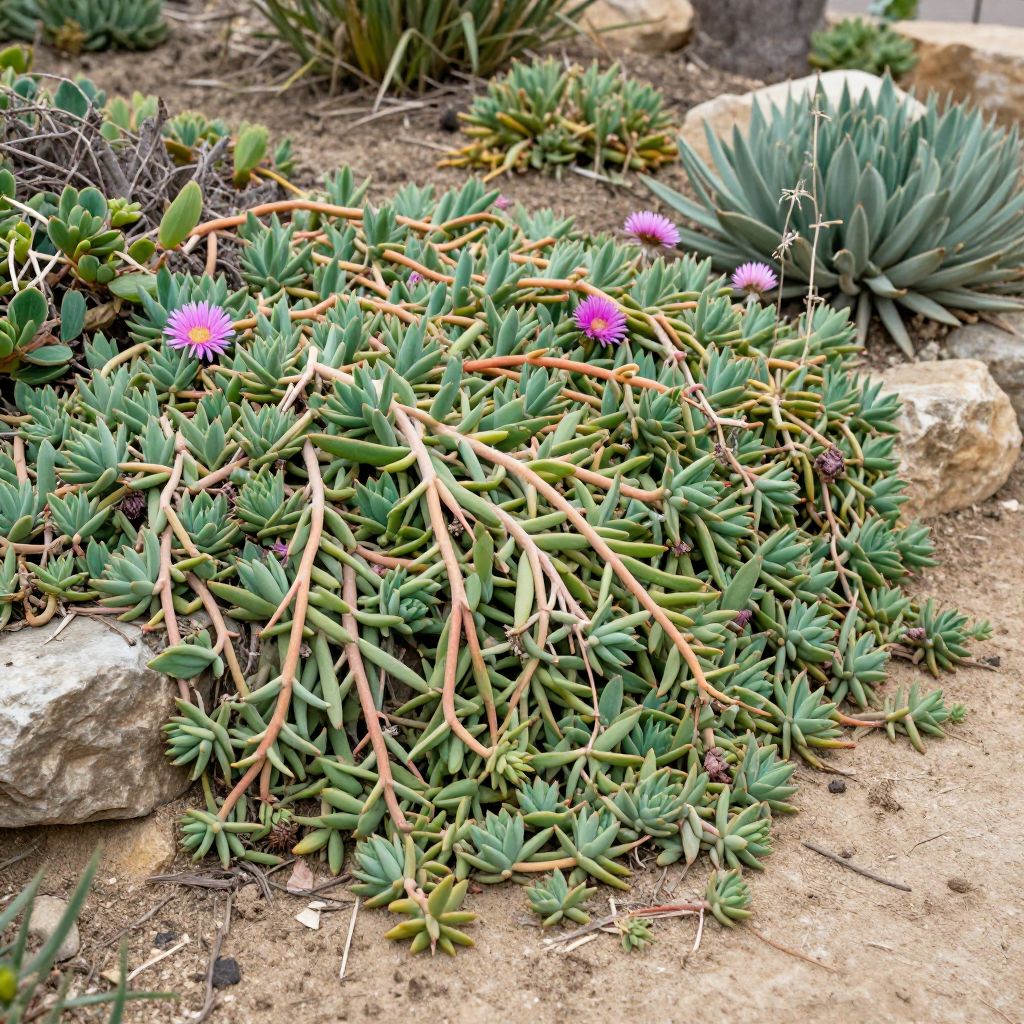
Why is ice plant bad in some gardens? The short answer is that many ice plants spread aggressively, crowd out other plants, and can be difficult to control once established. In the wrong climate or landscape, they can also create maintenance problems and, in some regions, ecological concerns.
That does not mean every ice plant is useless. But if you are wondering whether it is a poor choice for your yard, the answer depends on the species, your local conditions, and what you want the planting to do.
Why is ice plant bad?
Ice plant can be “bad” because some types grow fast, root easily from broken stems, and form dense mats that smother nearby plants. In dry gardens, that vigor can look neat at first, but it often becomes hard to manage, especially where it escapes beds, invades open ground, or outcompetes slower plants.
What makes ice plant a problem in the garden?
It can spread too aggressively
Many people use “ice plant” to describe several succulent groundcovers, especially Carpobrotus species and related plants. These can spread by creeping stems, rooting at nodes, and forming thick carpets that move beyond the original planting area.
Once established, they are not always easy to dig out because even small stem fragments may regrow if left in contact with soil.
It can smother other plants
Ice plant is often planted as a groundcover, but dense mats can block light and take up space that smaller perennials, bulbs, or native plants need. If you want a mixed border, meadow-style planting, or a habitat-friendly garden, this growth habit is often a drawback.
It may be invasive in some regions
In mild coastal climates and other favorable areas, certain ice plants have escaped cultivation and naturalized in dunes, roadsides, and disturbed ground. That matters because invasive plants can reduce biodiversity and be difficult to remove once they spread.
Check your local invasive plant guidance before planting. A plant that behaves well in one region may be a serious problem in another.
It can fail in the wrong soil or moisture conditions
Ice plant is often sold as drought-tolerant, but it still needs the right drainage. In heavy clay or waterlogged soil, roots may rot. In overly rich, moist soil, growth can become floppy and less controlled.
That means the plant may be troublesome both when it spreads too well and when it struggles in poor conditions.
How to tell whether your ice plant is the right kind
“Ice plant” is a common name used for different plants, so identification matters. Some are low, mat-forming succulents with daisy-like flowers; others are used in coastal landscaping and can be much more aggressive.
Before you plant, ask these questions
- What is the botanical name on the label?
- Is it recommended in your region or listed as invasive?
- Will it stay where you plant it, or creep into neighboring areas?
- Does your garden have dry, sunny, well-drained conditions?
- Do you want a low-maintenance groundcover, or a mixed planting with room for other plants?
If the nursery tag is vague and only says “ice plant,” look for the full genus and species before buying.
Common growing conditions that make ice plant behave badly
Too much space and no barrier
When planted in open beds without edging, ice plant can run into paths, lawns, and neighboring plantings. It is especially likely to become a nuisance where there is bare soil for stems to root into.
Warm, dry, mild climates
In climates with long frost-free seasons, some ice plants grow almost continuously. That makes them more likely to spread and harder to contain than in colder regions where winter naturally slows them down.
Overwatering
Excess moisture does not usually stop ice plant from spreading, but it can weaken the planting, encourage rot, and create unattractive patches that need replacement. Overwatered succulents often become leggy, pale, or mushy at the base.
Rich soil
Ice plant does not need heavy feeding. In fertile soil, it may grow faster than intended and become coarse or sprawling. For many succulent groundcovers, average to lean soil is better than highly amended beds.
How to manage ice plant if you already have it
Step 1: Decide whether to keep it or remove it
If the plant is contained, healthy, and appropriate for your region, you may simply need to prune and edge it regularly. If it is escaping, choking nearby plants, or listed as invasive locally, removal is usually the better choice.
Step 2: Remove stems carefully
Use hand pruners, a sharp spade, or a garden fork to lift and cut back growth. Work on dry soil if possible, because wet conditions make it easier for fragments to root elsewhere.
- Cut back long runners first.
- Lift rooted sections with a fork or spade.
- Gather all stem pieces, including small fragments.
- Dispose of material according to local green-waste rules.
Do not compost invasive or persistent stem pieces unless your compost system reliably reaches high temperatures.
Step 3: Check the roots
Dig a little deeper than the visible mat. Some ice plants have shallow but widespread roots, and leaving rooted pieces behind can lead to regrowth. If needed, repeat removal after a few weeks when missed fragments sprout again.
Step 4: Replant the area
After removal, do not leave bare soil exposed for long. Mulch, replant with a better-behaved groundcover, or install a more suitable perennial to reduce regrowth and erosion.
If you want to grow ice plant more responsibly
Choose the right site
Ice plant is best suited to full sun and sharply drained soil. A rock garden, dry border, coastal garden with careful management, or container planting may be more appropriate than an open landscape bed.
Use containment
If you want to keep it, consider physical barriers, edging, or growing it in a raised bed or large container. This is especially helpful where the plant has a history of escaping cultivation.
Trim regularly
Light pruning helps keep the plant from spilling into unwanted areas. Remove wandering stems before they root, and keep the edges tidy so the planting stays defined.
Avoid overfeeding
Do not treat ice plant like a lush bedding annual. Too much fertilizer can encourage soft, excessive growth that is harder to manage and less drought-tolerant.
Better alternatives if you want a low groundcover
If your goal is a tough, low-maintenance groundcover, there may be better choices than ice plant depending on your climate and soil. Look for plants that match your site without becoming invasive or overly aggressive.
- Low, noninvasive sedums for dry, sunny spots
- Native groundcovers suited to your region
- Thyme or other mat-forming herbs in very sunny, well-drained areas
- Small perennials that can be lightly edged and divided over time
Choose plants based on your local rainfall, winter lows, soil type, and how much maintenance you want to do.
Signs your ice plant should be removed
- It is spreading into paths, lawns, or neighboring beds
- It is crowding out desirable plants
- Your local extension service or invasive plant list flags it as a problem
- It keeps returning after repeated pruning
- The site is too wet, and the plant is declining anyway
Common mistakes to avoid
- Planting it without checking whether it is invasive in your area
- Using it in a mixed border where it can overrun slower plants
- Overwatering or planting in poorly drained soil
- Leaving stem fragments on the ground after removal
- Assuming all ice plants are the same
Conclusion
Ice plant is “bad” when it spreads where you do not want it, overwhelms nearby plants, or causes ecological and maintenance problems. If you already have it, assess whether it is contained or escaping, then prune, edge, or remove it as needed. If you are considering planting it, check the exact species and your local guidance first.
For more help choosing the right low-maintenance plants for your site, read about groundcovers for dry sunny gardens and how to improve garden drainage before you decide what to plant next.