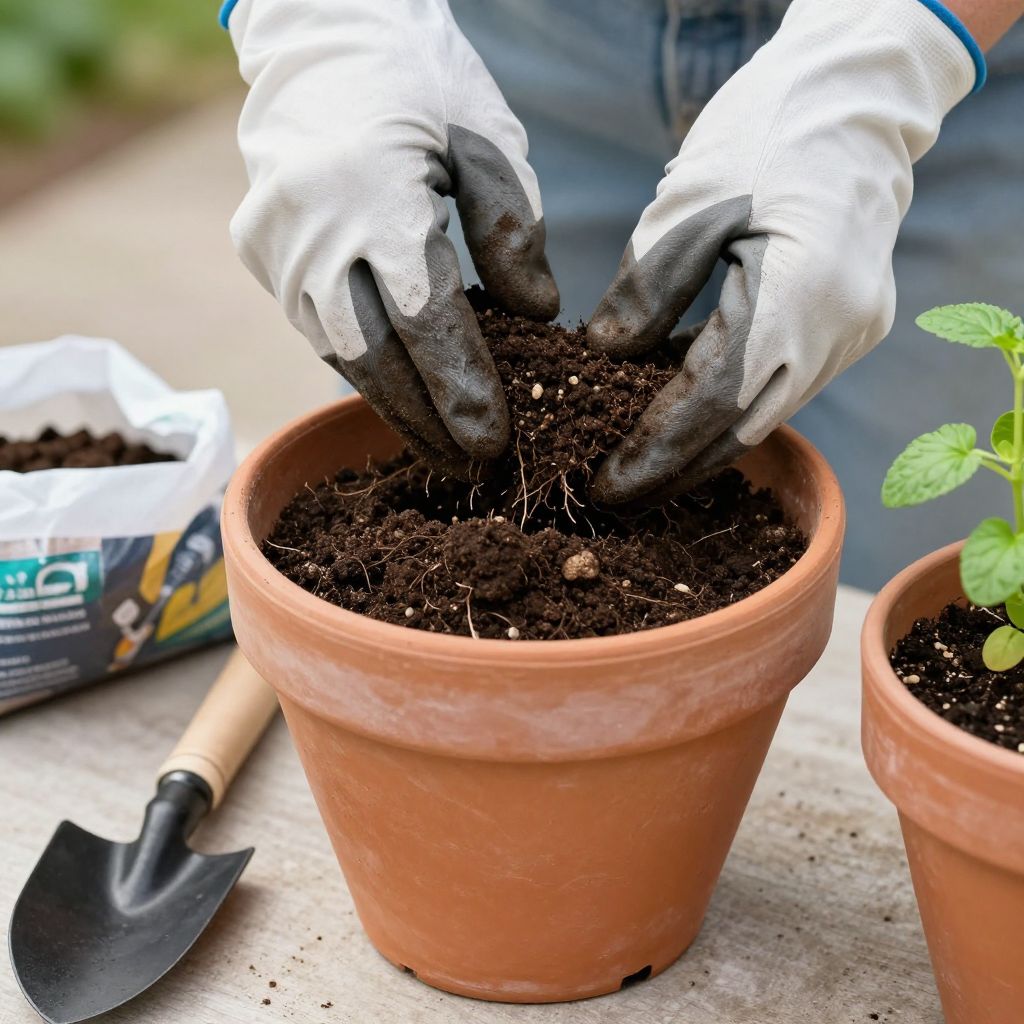
Can I use garden soil in pots? It’s a common question, and the short answer is: usually not by itself. Garden soil is often too heavy for containers, so it can compact, drain poorly, and limit root growth.
You can sometimes use it as part of a container mix, but only if you adjust it for drainage, air space, and moisture control. The right approach depends on what you’re growing, how large the pot is, and whether the container stays indoors or outdoors.
Can I use garden soil in pots?
Yes, but garden soil should rarely be used alone in pots. In containers, roots need a lighter, airier growing medium that drains well and still holds enough moisture. Straight garden soil often becomes dense, soggy, and low in oxygen, which can lead to root rot and weak plant growth.
Why garden soil behaves differently in containers
In the ground, soil is supported by a larger ecosystem and natural drainage. In a pot, that same soil is confined, watered more often, and exposed to temperature swings, so its weaknesses show up quickly.
Common problems with using garden soil in pots
- Poor drainage: Water can sit around roots instead of moving through the pot.
- Compaction: Soil particles pack together, reducing air pockets.
- Slow root growth: Roots struggle to spread in dense media.
- Salt buildup: Fertilizer and tap water salts can accumulate more easily in containers.
- Uneven moisture: The top may dry out while the bottom stays wet.
These issues are especially common in small pots, plastic containers with limited drainage, and indoor planters where evaporation is slower.
When garden soil can work in pots
Garden soil is more likely to work in large outdoor containers if you amend it heavily and the plant prefers a heavier medium. Even then, it should be mixed with materials that improve drainage and structure.
Better candidates for amended garden soil
- Large patio pots and planters
- Outdoor tubs with generous drainage holes
- Temporary containers for short-term planting
- Some tougher ornamentals that tolerate heavier soil
It is usually a poor choice for small pots, seed starting, succulents, cacti, orchids, and most indoor houseplants. Those plants need a much lighter, more controlled mix.
How to improve garden soil for container use
If you want to use garden soil in pots, treat it as one ingredient, not the whole recipe. The goal is to create a mix that drains freely while still holding enough moisture and nutrients.
A practical container mix
A simple starting point is:
- 1 part screened garden soil
- 1 part compost
- 1 part coarse material such as perlite, pumice, or coarse pine bark
This is a general starting ratio, not a universal formula. If your garden soil is clay-heavy, increase the coarse material. If it is sandy, you may need more compost to improve moisture retention.
What to screen out
Before mixing, remove:
- Sticks and roots
- Large stones
- Weed seeds and rhizomes
- Clumps of hard clay
Screening helps prevent uneven texture and reduces the chance of weeds or pests hitchhiking into the pot.
Why potting mix is usually the better choice
Commercial potting mix is designed for containers. It is usually lighter than garden soil, drains better, and resists compaction. For most home gardeners, it is the safest and easiest option.
Potting mix vs. garden soil
- Potting mix: Best for containers, indoor plants, and most vegetables and flowers in pots.
- Garden soil: Best left in the ground unless amended for container use.
- Topsoil: Often too heavy for pots unless specifically blended for containers.
If you are growing herbs, annual flowers, tomatoes, peppers, or houseplants in containers, a quality potting mix is usually the better foundation than straight garden soil.
How to tell if your soil is too heavy for a pot
You do not need lab tests to spot a problem. A few simple observations can tell you whether your mix is too dense.
Warning signs
- Water pools on the surface for a long time
- The pot feels heavy for days after watering
- Leaves yellow even though the soil is wet
- Plants wilt despite moist soil
- Roots look brown, mushy, or smell sour
If you see these symptoms, the plant may be suffering from poor drainage rather than lack of water.
How to plant in a container using garden soil
If you decide to use garden soil in pots, the planting process matters just as much as the mix itself. Good drainage and correct pot size make a big difference.
Step-by-step planting guide
- Choose a pot with at least one drainage hole, preferably several.
- Use a container large enough for the plant’s root system and future growth.
- Mix garden soil with compost and a coarse amendment such as perlite or pumice.
- Moisten the mix lightly before filling the pot so it settles evenly.
- Plant at the same depth the plant was growing before.
- Water thoroughly until excess drains from the bottom.
- Empty any saucer after watering so roots do not sit in standing water.
Do not pack the soil down hard. Gentle settling is fine, but tight packing removes the air pockets roots need.
Drainage is non-negotiable
Even the best soil mix can fail in a pot without proper drainage. Containers trap water more easily than garden beds, so the pot itself must help manage excess moisture.
Drainage tips that really matter
- Always use pots with drainage holes.
- Avoid placing gravel at the bottom as a substitute for drainage holes.
- Use a saucer only if you empty it after watering.
- Elevate outdoor pots slightly so water can escape freely.
Gravel at the bottom does not fix a poorly draining mix. It can actually create a perched water zone that keeps roots wetter for longer.
Watering garden soil in pots
Container soil dries differently from in-ground soil, and garden soil in a pot can swing from too wet to too dry if you are not careful. Check moisture by feeling the soil rather than watering on a fixed schedule.
How to water correctly
- Water when the top inch or two feels dry for many common container plants.
- Water slowly so the mix absorbs moisture evenly.
- Stop when water begins to drain from the bottom.
- Reduce watering during cool, cloudy, or rainy weather.
- Increase watering during hot, windy, or sunny periods.
Plants in porous containers such as terracotta may dry faster than those in plastic or glazed pots. Adjust accordingly.
Sunlight and temperature considerations
Sun exposure affects how quickly container soil dries and how well your plant grows. A pot in full sun can heat up and dry out much faster than the same soil in partial shade.
What to watch for outdoors
- Dark pots can overheat in strong sun.
- Wind increases evaporation and can stress container plants.
- Cold weather can damage roots more quickly in pots than in the ground.
If you garden in a hot climate, choose lighter-colored pots when possible and monitor moisture more often. In cooler climates, containers may need protection from freezing temperatures because roots are less insulated than in garden beds.
Fertilizing plants grown in garden soil containers
Garden soil in pots does not behave like soil in the ground, so nutrients can be used up or washed out faster. Compost helps, but many container plants still need regular feeding during active growth.
General fertilizer guidance
- Use a balanced fertilizer appropriate for the plant type.
- Feed lightly and follow the product label.
- Avoid overfertilizing, which can burn roots in containers.
- Flush the pot occasionally with plain water if salts build up.
Because local conditions vary, feed more often only if the plant is actively growing and showing signs it is using nutrients quickly. Slow growth in cool weather usually means less feeding is needed, not more.
Common mistakes to avoid
The biggest problems with garden soil in pots usually come from trying to treat containers like garden beds. A few simple mistakes can make a healthy plant struggle.
- Using straight garden soil in a small pot
- Choosing a container without drainage holes
- Overwatering because the surface looks dry
- Using heavy clay soil without enough amendment
- Ignoring compacted soil that has gone stale over time
- Reusing old container soil without refreshing it
If a plant has already been potted in heavy soil, repotting into a better mix is often the fastest fix.
How to rescue a plant already planted in garden soil
If your plant is struggling, do not panic. Many container plants can recover if you improve the root environment before serious rot sets in.
Rescue steps
- Check for drainage problems and empty any standing water.
- Gently remove the plant from the pot if the soil stays soggy for days.
- Trim away any black, mushy roots with clean tools.
- Repot into a lighter mix with compost and coarse amendment.
- Keep the plant in bright, indirect light for a few days if it is stressed.
- Water only when the mix begins to dry at the surface.
If the root ball is still firm and healthy, the plant may bounce back quickly once it has better aeration.
Best plants for containers with lighter mixes
Most container plants do best in a potting mix rather than garden soil. Some are especially sensitive to heavy, compacted media.
Plants that usually prefer a lighter container mix
- Herbs such as basil, parsley, and cilantro
- Tomatoes and peppers
- Most annual flowers
- Succulents and cacti
- Houseplants
- Seedlings and young transplants
These plants need oxygen at the roots and consistent moisture control, which is easier to manage in a well-made potting mix.
Final takeaways
You can use garden soil in pots, but it usually needs to be amended and should not be your default choice. For most container gardening, a quality potting mix is safer, lighter, and easier to manage.
If you want the best results, start with a drainage-friendly mix, choose a pot with holes, and adjust watering based on how quickly your container dries. For more container-growing guidance, you may also want to read about choosing the right potting mix and how to improve drainage in containers.