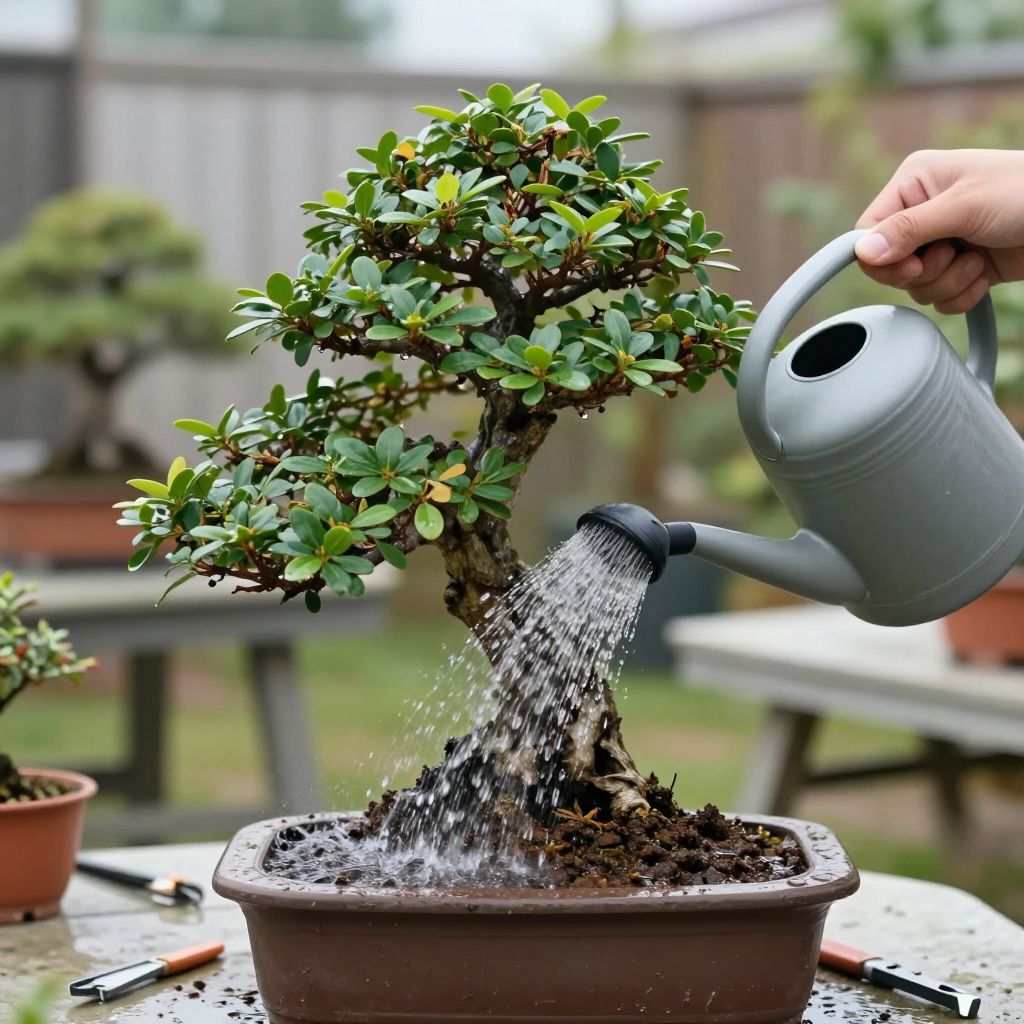
Struggling to water bonsai without washing away the soil or leaving the roots too dry? A bonsai watering can is designed to deliver a gentle, even shower that protects the delicate surface roots and fine potting mix.
Used correctly, it helps you water thoroughly without compacting the soil, exposing roots, or creating runoff. The right can, rose attachment, and watering technique make a big difference for both indoor and outdoor bonsai.
What is a bonsai watering can?
A bonsai watering can is a small or medium watering can fitted with a fine rose that breaks water into soft droplets. Its main job is to wet the soil evenly without disturbing the shallow root system, which is especially important in shallow bonsai pots where drainage is fast and the root ball is small.
How do you use a bonsai watering can correctly?
Water slowly from above until the entire soil surface is evenly moist and water begins to run freely from the drainage holes. The goal is complete saturation, not a light sprinkle. Use a fine rose, keep the can low, and water in passes so the mix absorbs moisture instead of channeling around dry pockets.
Why bonsai need gentle watering
Bonsai grow in shallow containers with limited soil volume, so they dry out faster than garden plants. At the same time, the soil mix is usually coarse and free-draining, which means water passes through quickly. A bonsai watering can helps you control the flow so the roots get moisture without soil erosion.
What makes bonsai different from houseplants?
- The root zone is smaller and closer to the surface.
- The pot dries out faster, especially in warm or windy weather.
- The mix often contains akadama, pumice, lava rock, or similar coarse components.
- Watering must be thorough, but never harsh.
Choosing the right bonsai watering can
Not every watering can suits bonsai. A good one gives you control, a soft spray, and enough capacity to avoid constant refilling without becoming awkward to handle.
Features to look for
- Fine rose head: Small holes create a gentle “rain” effect.
- Removable rose: Useful if you want a stronger stream for cleaning or refilling trays, though not for routine bonsai watering.
- Comfortable handle: Important if you water multiple trees or have shelves at different heights.
- Appropriate size: A small can is easier for indoor bonsai; a larger one may suit a collection outdoors.
- Sturdy spout control: Helps you direct water precisely around trunks, moss, and training wire.
Plastic, metal, or copper?
Material matters less than the quality of the rose and the ease of handling. Lightweight plastic cans are practical for beginners, while metal cans can feel more durable. Choose the one you can hold steadily and pour without jerking, because smooth control matters more than appearance.
How to water bonsai step by step
Use the bonsai watering can in a calm, deliberate way. The aim is to moisten the whole root ball evenly, not just the top layer.
- Check the soil surface. If it feels lighter, looks pale, or the top layer is beginning to dry, inspect more closely.
- Lift the pot if you can. A dry bonsai pot feels noticeably lighter than a freshly watered one.
- Water from above with the rose attached, keeping the can low to the soil.
- Move slowly across the surface so every section gets wet.
- Pause briefly if water starts to run off too quickly, then continue in a second pass.
- Keep watering until water drains from the bottom holes.
- Wait a moment, then water again lightly if the mix was very dry and the first pass ran through too fast.
How much water is enough?
There is no fixed amount that suits every bonsai. The correct amount is whatever fully wets the root zone and produces drainage from the bottom. In hot weather, a small pot may need water daily or even more often, while in cool weather it may stay moist much longer.
Best watering practices for indoor bonsai
Indoor bonsai often dry out unevenly because room temperatures, heating, air conditioning, and low humidity all affect the soil. A bonsai watering can is especially useful indoors because it lets you water gently without flooding a saucer or splashing furniture.
Indoor tips
- Check moisture with your finger or a chopstick, not by the surface alone.
- Water near a sink or tray so excess can drain away freely.
- Do not let the pot sit in standing water unless the species specifically tolerates it.
- If your home is very dry, you may need to check the tree more often, especially near heaters or sunny windows.
Best watering practices for outdoor bonsai
Outdoor bonsai usually face more variable conditions. Wind, sun, rain, and seasonal growth all change how quickly the soil dries, so your watering routine should adapt to the weather rather than follow a rigid schedule.
Outdoor tips
- Water early in the day during warm weather so the tree starts the day hydrated.
- In hot or windy conditions, check moisture more than once a day.
- After rain, still inspect the pot; a sheltered bonsai may stay dry while nearby plants are soaked.
- In cool or dormant periods, reduce watering frequency and avoid keeping the soil constantly wet.
Common mistakes to avoid
Even with the right bonsai watering can, a few habits can cause trouble. Most watering problems come from rushing, watering too lightly, or assuming the surface tells the whole story.
- Using a strong jet: This can wash away soil and expose roots.
- Only misting the surface: Light misting does not water the root ball deeply enough.
- Watering on a fixed schedule: The tree’s needs change with season, pot size, species, and weather.
- Ignoring drainage: Bonsai need free-draining pots and open drainage holes.
- Letting the soil go bone dry repeatedly: This stresses roots and can cause leaf drop or dieback.
How to tell when a bonsai needs water
The best watering routine starts with observation. A bonsai watering can is only part of the system; knowing when to use it is just as important.
Practical moisture checks
- Finger test: Touch the top layer and feel slightly below the surface.
- Chopstick test: Insert a wooden chopstick into the soil for a minute, then check whether it comes out damp.
- Pot weight: Learn the difference between a dry and freshly watered pot.
- Soil color: Many bonsai mixes look lighter when dry, though this is not always reliable on its own.
If the top looks dry but the lower mix is still damp, wait. If the root ball is drying through, water thoroughly rather than giving a token sprinkle.
Seasonal watering considerations
Bonsai watering changes through the year. Your can and technique stay the same, but the timing and frequency often shift with temperature, light, and growth rate.
Spring and summer
Active growth usually means faster water use. Trees in full sun, shallow pots, or windy spots may need very frequent checks. A fine-rose bonsai watering can helps you keep up without blasting the soil away.
Autumn
As growth slows, the soil may stay moist longer. Continue checking regularly, especially after cool nights or rainy spells.
Winter
Many outdoor bonsai need less water while dormant, but they should not be allowed to dry out completely. Indoor heated spaces can still dry pots quickly, even in winter, so do not assume cold weather means no watering.
Water quality and soil drainage
Good watering depends on more than the can itself. If water pools on top or runs straight through without soaking in, the soil structure may need attention.
What to look for in the soil mix
- Open, granular texture that drains freely
- Even moisture absorption after watering
- No sour smell or constantly soggy patches
- Drainage holes that are not blocked by compacted soil or roots
If water beads on the surface or drains too fast, the mix may be hydrophobic or overly dry. Water in two or three slow passes, allowing each pass to soak in before the next. If the problem continues, repotting into a better bonsai mix may be necessary.
Cleaning and maintaining your bonsai watering can
A clean watering can lasts longer and gives a better spray pattern. Mineral deposits, algae, and debris can clog the rose and turn a gentle shower into an uneven stream.
Simple maintenance routine
- Rinse the can after use, especially if you collect hard water deposits.
- Remove and clean the rose periodically.
- Check the holes for grit, moss, or algae.
- Store the can where it will not crack, rust, or collect stagnant water.
If the rose becomes clogged, soak it in water and gently clear the openings with a soft brush or a fine tool. Avoid forcing debris through in a way that enlarges the holes.
When a bonsai watering can is not enough
Sometimes watering issues are really plant health or soil issues. If a bonsai dries out too quickly every day, the pot may be too shallow, the mix may be too coarse, or the tree may need repotting. If it stays wet for too long, drainage may be poor or the roots may be congested.
Watch for these warning signs
- Leaves yellowing after prolonged wet soil
- Wilting despite wet soil, which can indicate root problems
- Water running off the surface without soaking in
- Persistent dryness at the center of the root ball
These symptoms are not fixed by watering more often or less often alone. They usually mean the pot, soil, root health, or placement needs adjustment.
Final tips for better bonsai watering
A bonsai watering can is a simple tool, but it works best when paired with careful observation and a free-draining soil mix. Water thoroughly, check moisture before watering again, and adjust to the season and your growing conditions.
If you want to improve your bonsai care further, look next at soil mix, drainage, and repotting timing, because those choices affect watering as much as the can itself. For more practical bonsai care guidance, you may also want to read about bonsai soil and drainage basics and how to repot a bonsai tree.