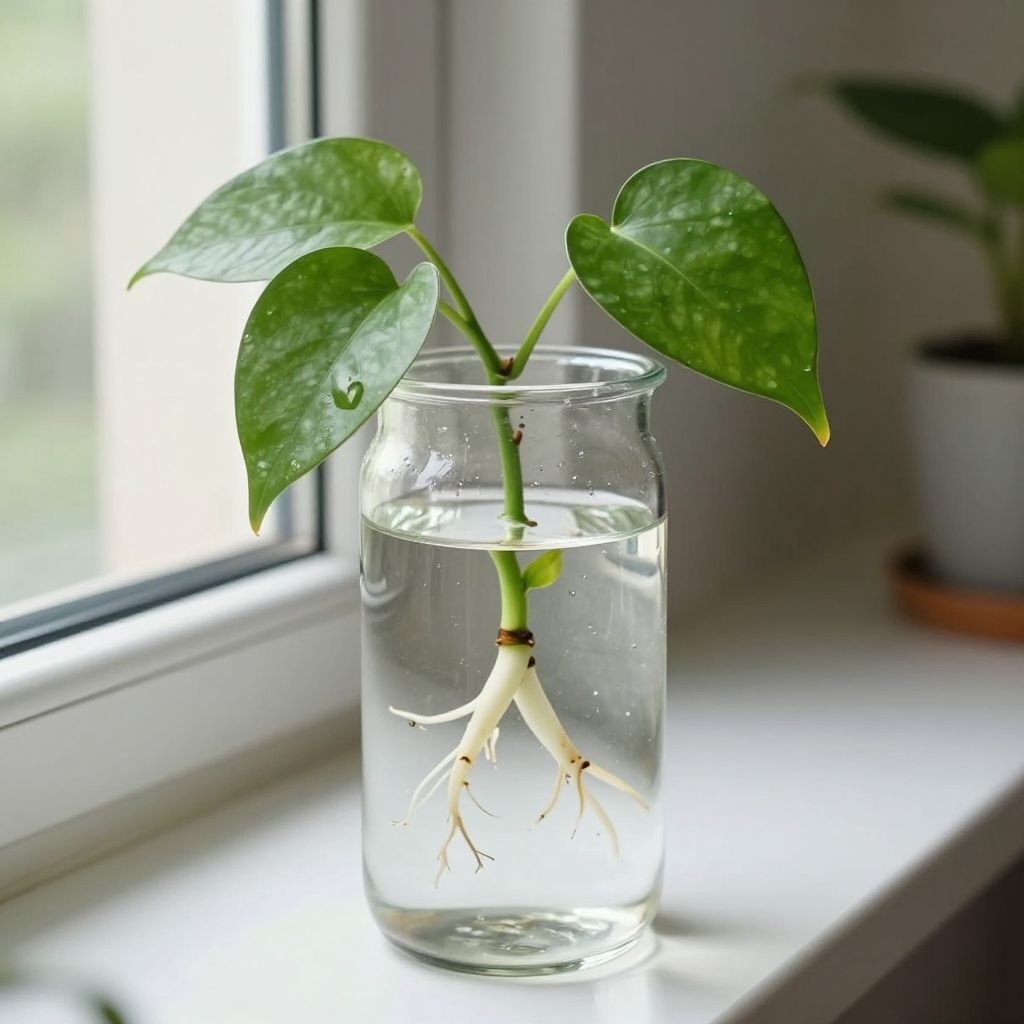
Can pothos grow in water? Yes, pothos (Epipremnum aureum) can live and grow in water for a long time, and many gardeners keep it that way successfully. It’s one of the easiest houseplants to root in water, and established cuttings can continue growing with the right light, clean water, and occasional nutrients.
The key is understanding that water-grown pothos can thrive, but it behaves a little differently than a plant grown in soil. If you want healthy vines, steady leaf growth, and fewer problems, you need to manage light, water quality, and feeding a bit more carefully.
Can pothos grow in water?
Yes. Pothos can grow in water indefinitely if you keep the water clean, provide bright indirect light, and add a very dilute nutrient source occasionally. Cuttings root easily in water, and mature plants can adapt too, but water-grown pothos usually grows more slowly than soil-grown plants and needs closer monitoring.
How pothos grows in water
Pothos is a vining aroid that naturally produces roots along its stems. Those nodes can form water roots quickly, which is why stem cuttings are so easy to propagate in a vase or jar.
In water, the plant relies on dissolved oxygen and nutrients in the water instead of soil. That means the roots can stay healthy, but only if the water stays fresh and the plant gets enough light to support growth.
What to expect from water-grown pothos
- Faster rooting, slower long-term growth than in potting mix.
- Smaller, thinner roots at first, then thicker water-adapted roots over time.
- Less risk of soil pests, but more risk of algae and stagnant water issues.
- Leaves may stay attractive for months or years with proper care.
Best way to start pothos in water
The easiest method is to root a healthy stem cutting. You can also transfer a soil-grown plant to water, but cuttings adapt more smoothly.
- Choose a healthy vine with at least one node, preferably two or more.
- Cut just below a node using clean scissors or pruners.
- Remove any leaves that would sit below the waterline.
- Place the cutting in a clean glass, jar, or vase with room-temperature water.
- Keep at least one node submerged, but not the leaves.
- Set it in bright, indirect light.
Roots often appear within a couple of weeks, though timing varies with temperature and light. Warmer indoor conditions usually speed rooting, while cool rooms slow it down.
Choosing the right container
A clear container lets you watch root development, but it also encourages algae if the jar sits in strong light. Opaque containers reduce algae growth and can be easier to maintain.
- Glass jars are attractive and easy to monitor.
- Small vases work well for single cuttings.
- Wide-mouth containers make cleaning easier.
Whatever you use, clean it well before planting. Soap residue, dirt, and old algae can cause problems quickly in water culture.
Water care: the most important part
Clean water is the difference between a thriving pothos and a struggling one. Stagnant water can lead to rot, odor, and weak roots.
How often to change the water
There is no universal schedule because room temperature, container size, and light level all matter. As a general rule, change the water every 1 to 2 weeks, or sooner if it looks cloudy, smells stale, or develops slime.
When you change the water, rinse the roots gently and wash the container before refilling it. This helps remove bacteria, algae, and debris.
What kind of water to use
- Room-temperature tap water is often fine if your water is not heavily chlorinated or softened.
- Filtered water can be helpful if your tap water is very hard or heavily treated.
- Letting tap water sit out briefly may help dissipate chlorine in some areas, but it does not remove all water-treatment chemicals.
If your local water is known to be harsh, try filtered or distilled water with a nutrient supplement designed for hydroponic or water-grown houseplants.
Does pothos need fertilizer in water?
Yes, eventually. Water alone keeps roots alive, but it does not provide enough nutrition for long-term healthy growth. A pothos kept only in plain water may survive for a while, but it can slowly weaken, yellow, or stop producing new leaves.
Use a very dilute liquid fertilizer made for hydroponics or houseplants, and apply it sparingly. Too much fertilizer can burn water roots faster than soil roots because there is no soil to buffer the excess.
Feeding tips for water-grown pothos
- Feed lightly during active growth, usually spring through early fall indoors.
- Reduce feeding in low-light winter conditions.
- Flush and replace the water regularly to prevent buildup.
- If leaves yellow after feeding, the solution may be too strong.
Less is better when fertilizing pothos in water. If you are unsure, start weaker than the label suggests and watch the plant’s response.
Light, temperature, and placement
Pothos grows best in bright, indirect light. Too little light slows growth and can cause sparse vines, while harsh direct sun can scorch leaves and warm the water too much.
Best indoor light conditions
- Near an east-facing window is often ideal.
- A few feet back from a south- or west-facing window can also work.
- Rotate the container occasionally so the vine grows evenly.
Normal indoor temperatures are usually suitable. Avoid placing the container near heating vents, cold drafts, or windows that become very cold at night.
How to keep water-grown pothos healthy long term
Long-term success comes down to routine maintenance. Water-grown pothos is simple, but it is not truly “set it and forget it.”
Simple care routine
- Check water level every few days and top up as needed.
- Change the water regularly before it turns cloudy.
- Trim yellowing leaves promptly.
- Wipe dust from leaves so they can photosynthesize efficiently.
- Inspect roots for sliminess, browning, or odor.
If roots begin to outgrow the container, you can move the plant to a larger vase or divide the vine into several cuttings. Crowded roots are harder to keep clean and oxygenated.
Common problems with pothos in water
Most issues are easy to fix if you catch them early. Watch the roots and leaves closely, because they often show stress before the plant declines badly.
Yellow leaves
Yellowing may mean old leaves are dropping naturally, but it can also signal poor light, stagnant water, or nutrient deficiency. If several leaves yellow at once, inspect the roots and refresh the water.
Black or mushy roots
This usually points to rot. Remove damaged roots, clean the container, and restart the plant in fresh water. If the base of the stem is soft, take healthy cuttings above the damaged area and reroot them.
Algae growth
Green film on the container or roots is common in bright light. Use an opaque container, reduce direct sun, and clean the vessel more often.
Stunted growth
If the plant lives but barely grows, it may need more light or a small amount of fertilizer. Very low light is one of the most common reasons water-grown pothos stalls.
Can you move pothos from water to soil?
Yes, and many gardeners do this when they want faster growth or a more self-sufficient plant. Water roots can adapt to soil, but the transition should be gradual.
How to transfer it successfully
- Choose a pot with drainage holes.
- Use a light, well-draining potting mix.
- Plant the rooted cutting so the roots are covered but the stem is not buried too deeply.
- Water thoroughly, then keep the mix evenly moist for the first couple of weeks.
- Move the plant into bright, indirect light.
Some water roots die back during the transition and new soil roots form. That is normal as long as the stem stays firm and new growth appears.
When water growing is a good choice
Growing pothos in water is especially useful if you want a low-mess houseplant, a decorative tabletop display, or an easy propagation project. It is also a practical option if you have limited space or want to root cuttings before potting them up.
Still, if you want the fastest growth and easiest long-term feeding, soil is often the better choice. Water culture works beautifully, but it asks for more attention to cleanliness and nutrition than a standard potting mix.
Quick care checklist for pothos in water
- Use healthy cuttings with at least one node.
- Keep leaves out of the water.
- Place the plant in bright, indirect light.
- Change the water every 1 to 2 weeks, or sooner if needed.
- Feed lightly with a diluted nutrient solution if you want long-term growth.
- Watch for yellow leaves, soft stems, and slimy roots.
So, can pothos grow in water? Absolutely. Start with a healthy cutting, keep the water clean, and give it bright indirect light. If you want to keep your plant thriving, check the roots regularly and refresh the water before problems start. For more indoor plant care ideas, you may also enjoy reading about pothos care basics and growing houseplants in water.