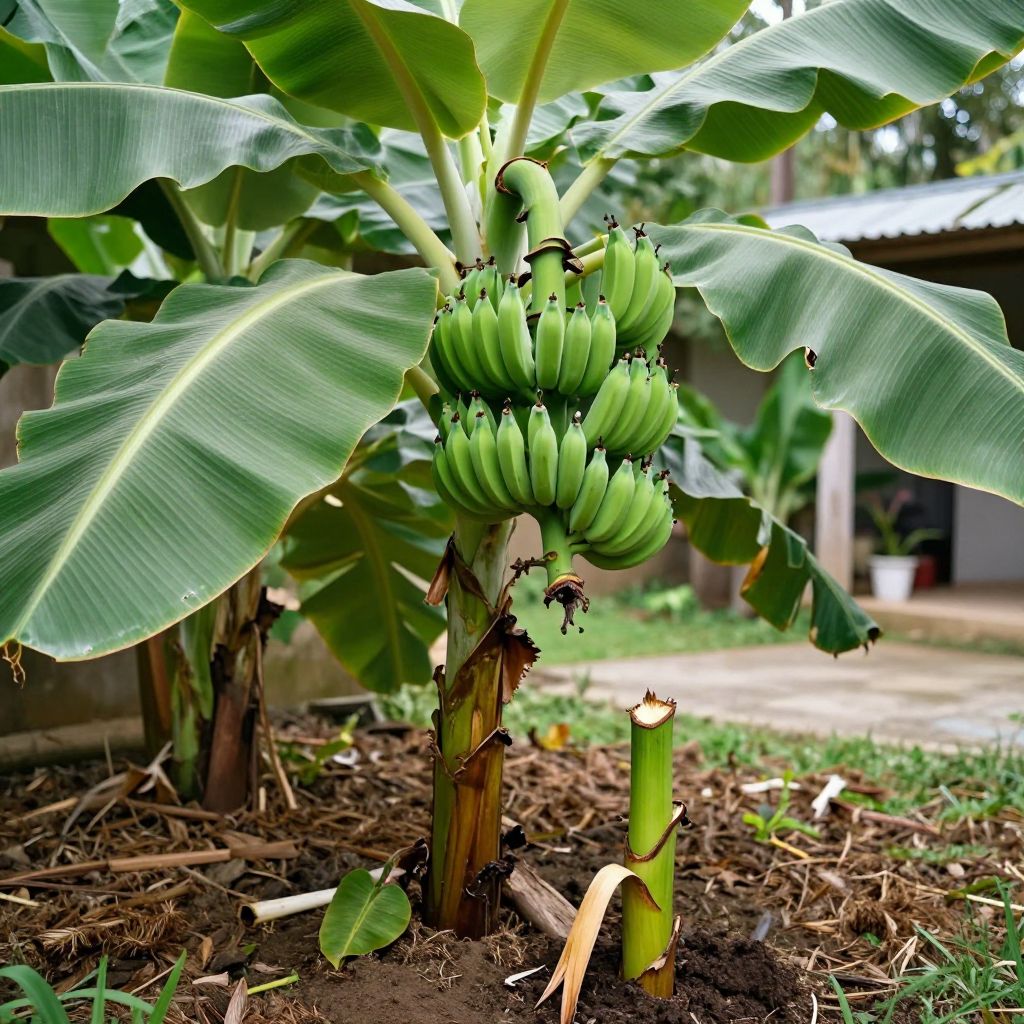
Do banana trees only fruit once? If you’ve watched a banana plant flower, set fruit, and then start declining, it can look like the whole plant is finished. That’s normal for bananas, but the story is a little more specific than many gardeners realize.
The short answer is yes: the main banana pseudostem fruits only once. However, the plant usually doesn’t die out completely because new shoots, called pups or suckers, can replace it and keep the clump productive for years.
Do banana trees only fruit once?
Yes. A banana plant’s individual stem produces one bunch of fruit, then that stem slowly dies back after harvest. The root system and surrounding pups often continue growing, so the plant itself can keep producing new stems and future fruit over time.
Why a banana plant fruits once, then declines
What gardeners call a “banana tree” is usually not a true tree. It is a large herbaceous plant with a pseudostem made from tightly wrapped leaf bases. That stem grows, flowers, fruits, and then its job is done.
After the bunch forms, the plant shifts energy away from stem growth and into ripening fruit. Once the bunch is harvested, the fruiting stem will gradually yellow, weaken, and die back.
The part that keeps the plant going
Bananas often grow as a clump. While one stem fruits, smaller shoots develop from the base and become the next generation of fruiting stems. This is why a banana planting can keep producing if it is managed well.
- One stem = one fruiting cycle
- The clump can produce multiple stems over time
- Healthy pups are the key to long-term production
What to expect after harvest
After you cut the bunch, don’t be surprised if the fruiting stem looks tired. That is normal. The stem will usually be cut down later, but the underground corm and nearby pups should remain alive.
In warm climates, a well-managed banana clump can keep cycling through new stems. In cooler climates or in containers, the plant may slow down, need protection, or be grown mainly for foliage rather than fruit.
Signs the fruiting stem is finishing
- Leaves yellowing and collapsing
- Stem losing firmness
- Little or no new leaf growth from that stem
- Fruit already harvested or nearly ripe
How banana plants keep producing new fruit
Bananas are propagated mainly by division of pups, also called suckers. These shoots emerge from the base and can mature into new fruiting stems if you leave the right ones in place and remove the extras at the right time.
Choosing the right pups
Not every sucker is equally useful. Stronger pups usually come from the base and have a sturdier connection to the mother plant.
- Water suckers are thinner and weaker; they often make poorer fruiting stems.
- Sword suckers have narrower, stronger leaves and are usually better choices for future fruiting.
If you are managing an edible banana clump, keep a simple rotation: one mature fruiting stem, one nearly mature replacement, and one younger backup. This helps prevent overcrowding and competition.
Growing conditions that support fruiting
Bananas need warmth, moisture, rich soil, and plenty of light to grow well enough to flower and fruit. If conditions are poor, the plant may keep making leaves but never reach the size needed for a bunch.
Sunlight
Most bananas do best in full sun, though in very hot climates some afternoon shade can reduce stress. Less light usually means slower growth and fewer chances of fruiting.
Soil and drainage
Bananas like fertile, moisture-retentive soil that still drains well. Heavy, waterlogged soil can lead to root problems, while very sandy soil may dry too quickly and limit growth.
- Add compost or well-rotted organic matter to improve soil structure.
- Keep the planting area evenly moist, not soggy.
- Raise beds or mounds if your site stays wet after rain.
Watering
Bananas are thirsty plants, especially during active growth and fruit development. Water deeply when the top layer of soil begins to dry, adjusting for rainfall, temperature, container size, and soil type.
Dry spells can reduce bunch size and slow pup growth. On the other hand, standing water can suffocate roots and increase disease risk.
Feeding
Because bananas are fast growers, they benefit from regular organic matter and balanced nutrition. Compost, mulch, and steady soil fertility support strong pseudostems and better fruiting potential.
Avoid pushing lush leafy growth with too much nitrogen alone. Excessive nitrogen can produce oversized foliage while delaying flowering or weakening the plant.
Pruning and managing a banana clump
Pruning bananas is less about shaping a tree and more about managing a living clump. The goal is to keep only the strongest stems and prevent the plant from becoming overcrowded.
- Remove dead or damaged leaves as they appear.
- After harvest, cut the spent fruiting stem down near ground level.
- Keep only a few healthy pups around the base.
- Remove weak, crowded, or poorly placed suckers.
Use clean, sharp tools. A pruning saw, loppers, or a sturdy knife may be useful depending on stem size.
Why thinning matters
If too many pups grow together, they compete for water, nutrients, and light. That can lead to smaller bunches, slower growth, and a cluttered planting that is harder to maintain.
How to tell if your banana will fruit again
If the clump is healthy and the climate is suitable, it can fruit again from a new stem. The key question is not whether the original stem will fruit twice, but whether the plant has enough energy and time to raise a replacement stem to maturity.
Look for these positive signs:
- New pups emerging from the base
- Strong leaf growth on the replacement stem
- Good soil moisture and fertility
- No severe pest or disease damage
If your plant is in a container, fruiting again is possible but often more limited. Pots dry out quickly, roots become crowded, and nutrient reserves run down faster than in the ground.
Common reasons bananas fail to fruit
Sometimes a banana plant grows vigorously but never produces a bunch. That usually means one or more growing conditions are off, not that the plant has a special problem with fruiting only once.
Too little warmth
Bananas are tropical or subtropical plants. Cool temperatures slow growth, and repeated cold snaps can prevent flowering or cause dieback.
Not enough light
Shaded plants may survive but often stay too weak to reach fruiting size. If possible, move container plants to brighter conditions or choose a sunnier planting site.
Poor soil fertility
Bananas need steady nutrition. Exhausted soil can leave the plant with plenty of leaves but not enough vigor to flower.
Water stress
Both drought and waterlogging can interfere with fruiting. Aim for consistent moisture with good drainage.
Overcrowding
Too many stems in one clump can reduce the size and quality of future fruiting stems. Thin the clump so the strongest shoots have room to develop.
Pests and diseases to watch for
Healthy banana plants are more likely to fruit well and resprout after harvest. Problems that weaken the plant can delay or reduce future production.
- Aphids and mites can stress new growth.
- Snails and slugs may damage tender leaves in damp conditions.
- Fungal leaf spots can reduce leaf area and slow growth.
- Root rot may occur in poorly drained soil.
If you notice declining leaves, stunted growth, or unusual spotting, correct the growing conditions first. Sanitation, airflow, and drainage often matter more than any quick fix.
Propagation: keeping the banana cycle going
If you want a continuing supply of fruiting stems, propagation is essential. Most home gardeners maintain bananas by dividing healthy pups rather than starting from seed, which is uncommon in edible bananas.
How to separate a pup
Wait until the pup is well rooted and large enough to survive on its own. A small, weak shoot may fail if removed too early.
- Choose a strong sword sucker with its own roots.
- Dig carefully to expose the base.
- Cut or separate it from the mother corm with a clean tool.
- Replant in rich, well-drained soil and water thoroughly.
Keep the new plant shaded briefly if your climate is hot and dry, then gradually increase sun exposure.
Indoor and container bananas
Bananas can be grown in large containers, but their fruiting cycle is more challenging indoors or on patios. The same rule still applies: the stem fruits once, then declines, while a new pup may take over if conditions are good.
For containers, use a very large pot with drainage holes and a rich, airy mix. Keep the plant in the brightest possible location and monitor moisture closely, since pots dry out faster than garden soil.
Container bananas need more frequent attention than in-ground plants, especially for watering, feeding, and root space.
Practical mistakes to avoid
Many banana problems come from well-meaning care that does not match the plant’s growth habit.
- Do not expect the same stem to produce multiple harvests.
- Do not leave too many suckers competing in one clump.
- Do not let the soil stay soggy for long periods.
- Do not ignore the need for warmth and bright light.
- Do not cut healthy pups too early if you want future fruiting stems.
Bottom line: one stem, many harvests over time
So, do banana trees only fruit once? Yes, each individual pseudostem fruits only one time. But a healthy banana clump can keep producing new stems, and those can fruit in turn if you manage the plant well.
If you want better results, focus on strong light, rich soil, steady moisture, and careful pup management. For more plant care reading, you may also want to explore related guidance on banana plant care and how to prune fruit trees.