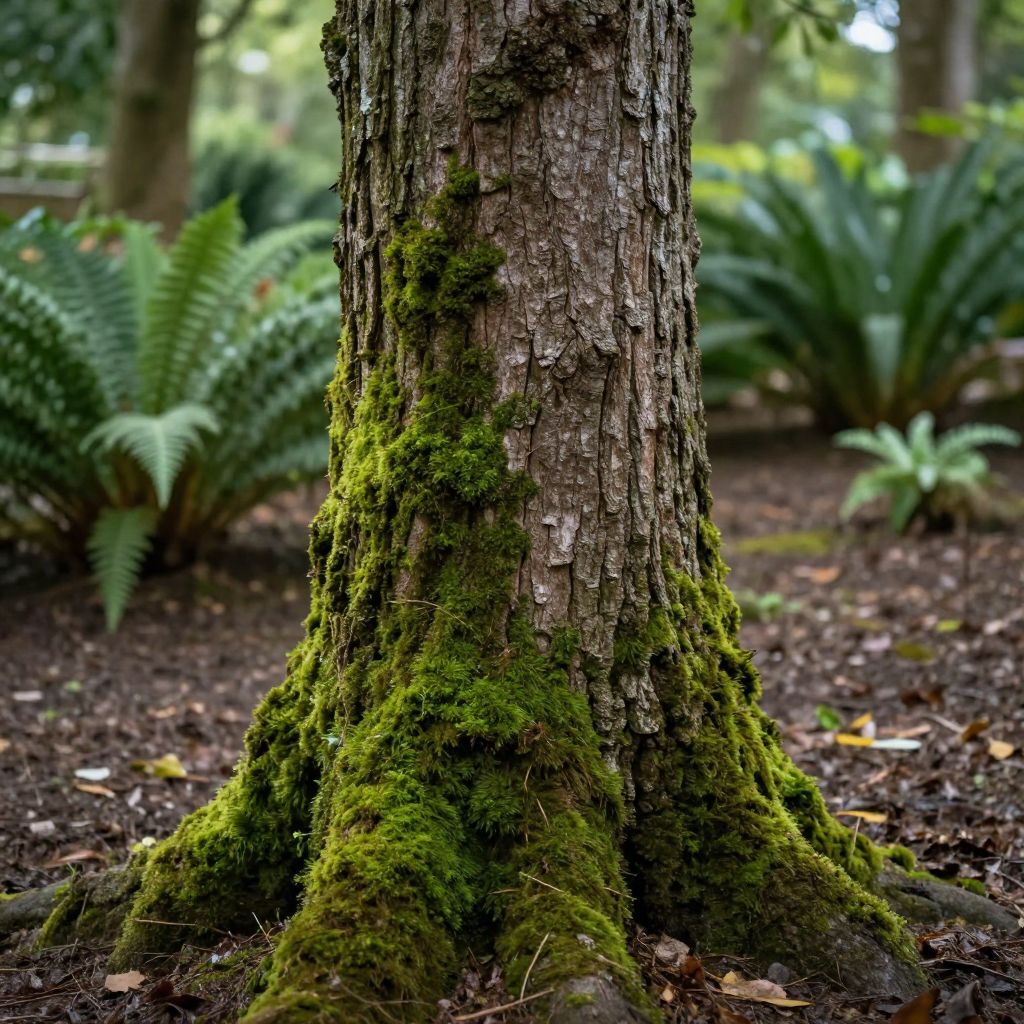
Does moss grow on the north side of trees? Often, yes—but not always. Moss tends to appear where conditions are cooler, shadier, and more consistently moist, which is why the north side of a tree trunk is a common place to find it in the Northern Hemisphere.
That said, moss is not a perfect compass. Tree species, bark texture, rainfall, slope, nearby buildings, and local shade can all change where moss shows up. If you want to use moss as a garden clue, it helps to understand what it really indicates and when it can mislead you.
Does moss grow on the north side of trees?
Yes, moss often grows more heavily on the north side of trees in the Northern Hemisphere because that side usually gets less direct sun and stays damper longer. But this is a pattern, not a rule. In shady, wet, or forested gardens, moss may grow all around the trunk or on the south side too.
Why moss favors one side of a tree
Mosses are non-vascular plants, which means they absorb moisture through their surfaces rather than through roots like most garden plants. They prefer places that stay humid, shaded, and relatively undisturbed. On many trees, the north side offers those conditions more often.
What moss needs to thrive
- Shade or filtered light to reduce drying.
- Steady moisture from rain, mist, dew, or humidity.
- Rough bark that gives the moss a place to cling.
- Low competition from thick lichens, peeling bark, or vigorous algae.
Because the north side usually receives less intense afternoon sun, it dries out more slowly. That slower drying can make moss establishment easier, especially in cool climates or wooded areas.
Why it is not a perfect compass
Many gardeners hear that moss always grows on the north side, but that is too simplistic. A tree growing beside a fence, house, hedge, or slope may have very different light and moisture patterns from one growing in an open yard.
- In dense shade, moss may grow on all sides of the trunk.
- In very dry or windy sites, moss may be sparse even on the north side.
- On sunny sites with irrigation or frequent fog, moss can appear on other sides too.
- Some bark stays too smooth, flaky, or acidic for moss to hold well.
What moss on trees tells you about your garden
Moss is often a sign of a cool, moist microclimate, not a sign of tree health problems. In many cases, it is harmless and simply reflects the conditions around the tree. If you see moss on bark, look at the whole site before deciding whether anything needs to change.
Good signs
- The tree is in a shaded, humid location.
- The bark is intact and not cracking from stress.
- The tree has normal leaf growth and no dieback.
- The moss is thin and patchy rather than thick and smothering.
Possible concerns
- The tree is declining and bark is staying damp for long periods.
- There is poor air circulation around the trunk.
- The site is chronically wet because of drainage problems.
- Moss is mixed with algae, fungi, or decaying bark on a stressed tree.
Moss itself usually does not harm a healthy tree. It does not feed on the tree the way a parasite would. The bigger issue is whether the tree’s environment is too shaded, too damp, or too stagnant for good overall tree health.
How to tell moss from lichen and algae
Gardeners often confuse moss with lichen or algae, especially on older trunks. These growths can overlap, but they are not the same thing, and they do not mean the same thing for your tree.
Simple differences
- Moss looks soft, leafy, and cushion-like.
- Lichen often looks crusty, flaky, or leaf-like and may be gray, green, orange, or yellow.
- Algae usually appears as a green film or stain, especially in damp shade.
If the growth is soft and springy, it is likely moss. If it is flat and crusty, it may be lichen. If it looks like a slimy green coating, algae is more likely.
Should you remove moss from tree bark?
In most cases, no. If the tree is healthy, moss on the bark is usually cosmetic and does not need to be removed. Scrubbing or scraping can damage bark, especially on young trees or thin-barked species.
When removal may be reasonable
- The tree is young and bark needs to stay clean and dry.
- Moss is trapping moisture against damaged bark.
- You are trying to inspect for pests, wounds, or cankers.
- The growth is so dense that it hides structural problems.
If you do remove moss, do it gently. Use a soft brush or your gloved hand on dry bark, and avoid pressure washing, wire brushes, or harsh scraping. Never peel at bark layers that are lifting or loose.
How to encourage moss on trees or in the landscape
If you like the look of moss, you can improve your chances by creating the right conditions. Moss is best treated as a natural groundcover or trunk accent in a shaded, humid area, not as a plant that thrives in hot sun or dry soil.
Best conditions for moss growth
- Morning shade or dappled light
- Consistent moisture without standing water
- Cool temperatures and good humidity
- Low foot traffic and minimal disturbance
- Acidic to neutral conditions, depending on the moss species and site
Practical steps to support moss
- Choose a shaded area with limited afternoon sun.
- Reduce leaf litter only enough to keep the surface visible, not bare.
- Improve humidity by planting nearby shrubs or using natural windbreaks.
- Keep the area evenly moist during dry spells, but do not flood it.
- Avoid fertilizers, lime, and frequent raking in the moss area.
For moss on tree bark, the tree must already have suitable rough bark and a stable, shaded microclimate. Moss is much easier to encourage on rocks, logs, soil, or shaded hardscape than on smooth, fast-drying trunks.
How to care for moss without harming the tree
If moss is already present and you want to keep it, the goal is to protect both the moss and the tree. That means avoiding practices that dry out the bark too much or injure the trunk.
Care tips for a mossy trunk
- Water the root zone during drought, not the trunk itself.
- Mulch around the tree, but keep mulch a few inches away from the trunk.
- Prune nearby plants if they are blocking all airflow.
- Inspect the bark once or twice a year for wounds, insects, or rot.
- Do not apply moss-killing chemicals to bark unless a tree professional recommends it.
Keep mulch off the trunk. Piled mulch can trap excess moisture against bark and create problems that are much more serious than moss.
Common mistakes gardeners make
Because moss is so visible, it is easy to overreact. Most mistakes come from trying to “fix” a harmless natural growth or from assuming moss means the tree is unhealthy.
Mistakes to avoid
- Scrubbing bark aggressively, which can injure living tissue.
- Assuming north-side moss is always accurate for navigation or site diagnosis.
- Overwatering the trunk instead of watering the root zone properly.
- Using bleach or strong cleaners on tree bark.
- Ignoring poor drainage if the whole area stays wet and moss is spreading excessively.
If moss is increasing because the site is wetter than it should be, the real fix is usually better drainage, improved airflow, or more light—not removing the moss alone.
What to do if moss is spreading too much
When moss spreads over bark, patios, or garden beds, it usually points to shade and moisture rather than a moss problem. Start by checking the environment, then make small changes that help the tree and surrounding plants dry more evenly.
Troubleshooting checklist
- Look for blocked sunlight from overgrown shrubs or branches.
- Check whether the soil stays wet after rain.
- See if irrigation is hitting the trunk or nearby bark.
- Inspect for compacted soil that slows drainage.
- Notice whether the tree has dead limbs, thin canopy, or bark damage.
If drainage is poor, aerating the soil lightly around the root zone and adjusting watering habits may help more than any bark treatment. If the tree itself looks stressed, consult a local arborist for a proper diagnosis.
Using moss as a landscape feature
Many gardeners enjoy moss for its soft texture and woodland look. In the right place, moss can be a beautiful low-maintenance groundcover or accent around shade trees, stone paths, and damp garden edges.
Where moss works well
- Under mature trees with filtered light
- On shaded north-facing slopes
- Beside rocks, logs, and old stumps
- In woodland gardens with consistent humidity
Just remember that moss is not a substitute for healthy tree care. A beautiful mossy trunk can be perfectly normal, but a tree with poor vigor, cracked bark, or soggy roots needs attention beyond the moss itself.
Conclusion
So, does moss grow on the north side of trees? Often yes, because that side is usually cooler, shadier, and more moisture-friendly, but it is not a foolproof rule. Use moss as a clue about your garden’s light and moisture, not as a strict compass. If you want, take a close look at one tree in your yard today and note which side stays damp longest.
For more shade-garden ideas and tree-care basics, you may also find it helpful to read about how to improve drainage in wet garden soil and how to prune trees safely without stressing bark.