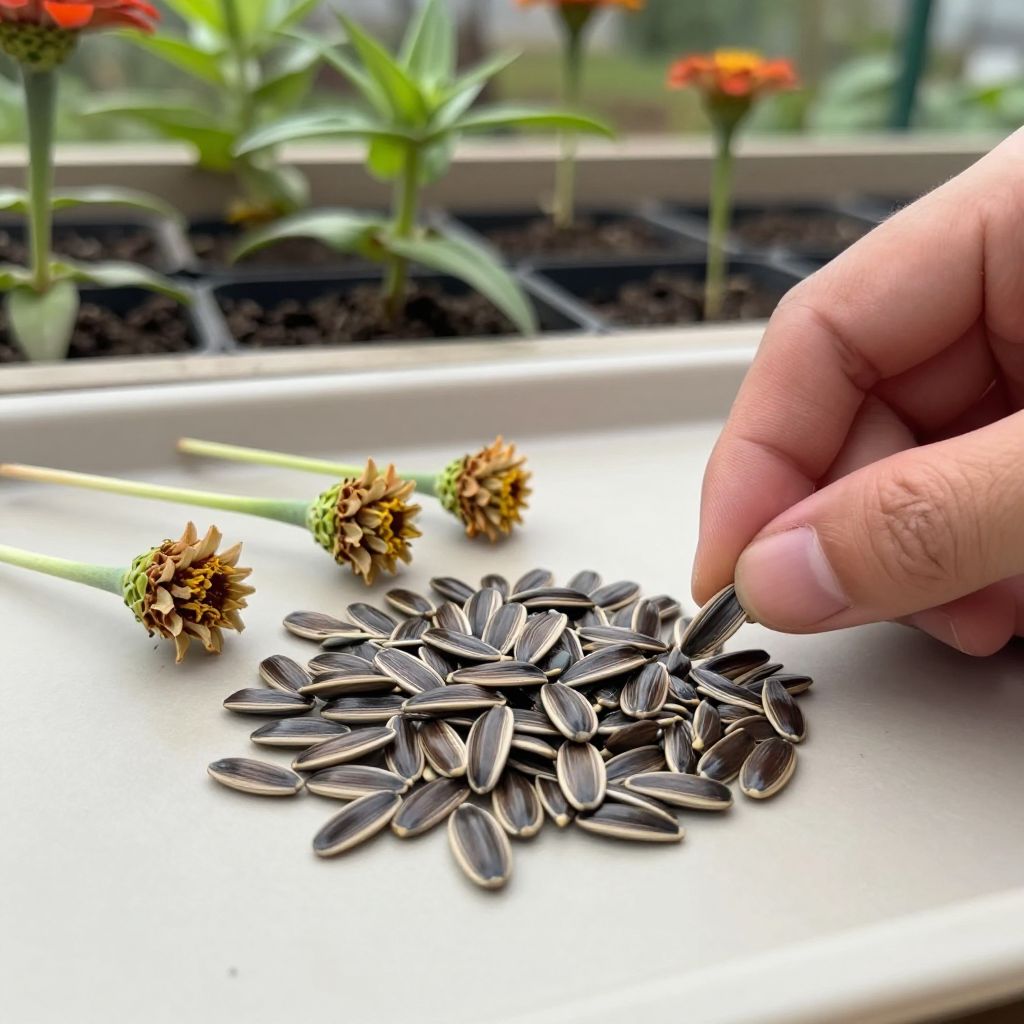
What do good zinnia seeds look like when you’re saving them or buying them? Healthy zinnia seeds are usually plump, dry, and firm, with a dark brown to grayish color and a slightly pointed, arrowhead-like shape. They should feel hard, not soft or shriveled, and they should come from fully mature flower heads.
If you want reliable germination, the seed’s appearance matters, but so does how it was harvested, dried, and stored. Knowing what to look for helps you avoid weak, immature seed and gives your zinnias the best chance to sprout well in warm weather.
What do good zinnia seeds look like?
Good zinnia seeds are dry, firm, and mature, usually with a dark tan, brown, or gray-black color and a narrow, pointed shape. They should come from fully faded flower heads, not fresh blooms, and they should separate cleanly from the dried petals and chaff. Immature seeds are often pale, thin, or papery and usually germinate poorly.
How to identify mature zinnia seeds
Zinnia seeds are easy to recognize once you know the flower structure. What gardeners call “zinnia seeds” are actually the achenes, or single-seeded fruits, produced in the center of the flower head.
Visual signs of good seed
- Color: Usually tan, brown, gray-brown, or nearly black.
- Shape: Narrow, flattened, and often arrowhead- or wedge-shaped.
- Texture: Dry and hard, not soft or flexible.
- Size: Fairly uniform within the same flower head, though some variation is normal.
- Condition: Free of mold, insect damage, and obvious shriveling.
What immature zinnia seeds look like
- Pale green, light tan, or whitish
- Thin, weak, or papery
- Soft or easily crushed
- Attached to flower heads that are still partly fresh
If the flower head still looks colorful or the center is not fully dry, the seeds inside are often not ready yet. Mature zinnia seed heads usually feel crisp and brittle, and the petals have faded to brown or papery straw.
Where to find the best seeds on a zinnia plant
The best seed comes from flowers that were left on the plant until they fully matured. Once a bloom finishes, the petals dry out and the center becomes a seed-filled cone. That cone is where you’ll find the most viable seed.
Choose the right flower heads
- Wait until the bloom is fully spent and dry.
- Look for a brown, cone-like center.
- Gently pull apart the dried head to inspect the seeds.
- Keep only seeds that are firm and well formed.
Seed quality is usually better on healthy plants that had good sunlight, decent airflow, and steady moisture. Plants stressed by disease, severe drought, or heavy pest damage may produce fewer or weaker seeds.
How to tell if zinnia seeds are viable
Appearance gives you a strong clue, but it does not guarantee germination. Good-looking zinnia seeds are more likely to sprout, yet the best test is whether they are fully mature and have been stored properly in a cool, dry place.
Simple viability checks
- Firmness test: Mature seeds feel hard and solid.
- Crush test: A viable seed resists gentle pressure; immature seed may flatten or crumble.
- Float test: Sometimes used, but not fully reliable for zinnias. Some good seeds may float, so don’t discard based on this alone.
If you want a more dependable answer, sow a few seeds in a small tray or pot and watch for sprouting under warm conditions. Zinnias generally germinate best in warm soil, so cold potting mix can make good seed look bad simply because it is slow to sprout.
How to harvest zinnia seeds correctly
Harvesting at the right time is just as important as recognizing good seed. If you pick too early, the seeds may be immature. If you wait too long in wet weather, the seed head can mold or drop seed outdoors.
Step-by-step harvesting
- Choose a healthy, fully faded zinnia bloom.
- Let the flower head dry on the plant if weather is dry.
- Cut the seed head when it is brown and crisp.
- Bring it indoors and spread it on paper in a dry, airy spot.
- After several days, break apart the head and separate the seeds.
Handle seed heads gently so you do not lose the best seed. A paper envelope, labeled jar, or small bag works well for collecting and drying.
Signs you harvested too early
- Seeds are pale or soft
- The flower center is still partly green
- Seeds cling tightly and do not separate easily
- Germination is weak or uneven later
How to store zinnia seeds for better germination
Even good zinnia seeds can lose vigor if they are stored badly. Moisture, heat, and direct sun shorten seed life, so storage matters almost as much as harvest timing.
Best storage practices
- Dry seeds thoroughly before storing.
- Keep them in a paper envelope or breathable container first if they are not fully dry.
- Store in a cool, dark, dry location.
- Label the packet with the flower color and harvest year.
For home gardeners, a dry indoor cupboard is often enough. Avoid humid garages, sunny windowsills, and damp basements unless you know the space stays consistently dry.
Buying zinnia seeds: what to look for on the packet
If you are purchasing seed instead of saving it, the packet should give you clues about quality. Good seed packets usually list the variety name, harvest or packed date, and basic sowing information.
Check for these details
- A clear variety or species name
- A recent packing date if available
- Storage or sowing guidance
- No obvious signs of moisture damage to the packet
Choose seed from a reputable source and avoid packets that look old, faded, or poorly stored. Zinnia seed is often easy to germinate when fresh, but older seed may still work if it has been kept dry and cool.
Common mistakes when judging zinnia seeds
Many gardeners mistake any dry seed for good seed. With zinnias, maturity and storage make a big difference, so a seed can look acceptable and still perform poorly.
Mistakes to avoid
- Saving seed from half-green flower heads
- Mixing in lots of chaff and debris
- Storing seed while it is still damp
- Using moldy or insect-damaged seed heads
- Assuming all dark seeds are viable without checking firmness
Another common issue is confusing seed quality with growing conditions. Zinnias need warmth, full sun, and good drainage. If those conditions are poor, even excellent seed may sprout slowly or fail after germination.
How growing conditions affect seed quality
Healthy parent plants usually produce better seed. Zinnias grown in full sun with decent airflow often set and mature seed more successfully than plants crowded in shade or overly wet soil.
Conditions that support better seed
- Full sun: Helps plants flower and mature seed well
- Well-drained soil: Reduces stress and disease pressure
- Moderate watering: Keeps plants healthy without waterlogging
- Good spacing: Improves airflow and lowers mildew risk
If your zinnias struggled with powdery mildew, leaf spot, or heavy pest damage, inspect the seed heads carefully before saving seed. You can still save from healthy-looking blooms, but discard anything that shows rot or mold.
When to sow zinnia seeds after saving them
Zinnia seeds are usually sown after the danger of cold weather has passed in your area, because zinnias are warm-season annuals. In cooler climates, starting them indoors a few weeks before transplanting can help, but they still need warmth to germinate well.
Practical sowing tips
- Sow in warm soil, not cold ground.
- Plant at the depth recommended on the packet, or shallowly if you are unsure.
- Keep the seed-starting mix evenly moist, not soggy.
- Give seedlings strong light after they emerge.
For outdoor sowing, wait until night temperatures are reliably mild for your region. For indoor sowing, use a warm spot and avoid overwatering, which can cause damping-off and weak seedlings.
Quick troubleshooting guide
If seeds look good but do not sprout
- The seed may be old or poorly stored.
- The soil may be too cold.
- The mix may be too wet or too dry.
- The seeds may have been planted too deeply.
If seed heads are moldy
- Discard the affected heads.
- Improve airflow around plants next season.
- Harvest earlier during dry weather.
- Dry seed indoors promptly after cutting.
If seeds are tiny, pale, or papery
- They were likely immature.
- Try collecting from later blooms next time.
- Leave more flower heads on the plant until fully dry.
Conclusion: the best way to choose good zinnia seeds
Good zinnia seeds are dark, dry, firm, and fully mature, usually taken from a brown, brittle flower head. If you want the best results, save seed from healthy plants, dry it thoroughly, and store it in a cool, dry place. Then sow it in warm conditions and watch for strong, even germination.
If you want to improve your results further, read more about how to save flower seeds and growing zinnias from seed for practical next steps.