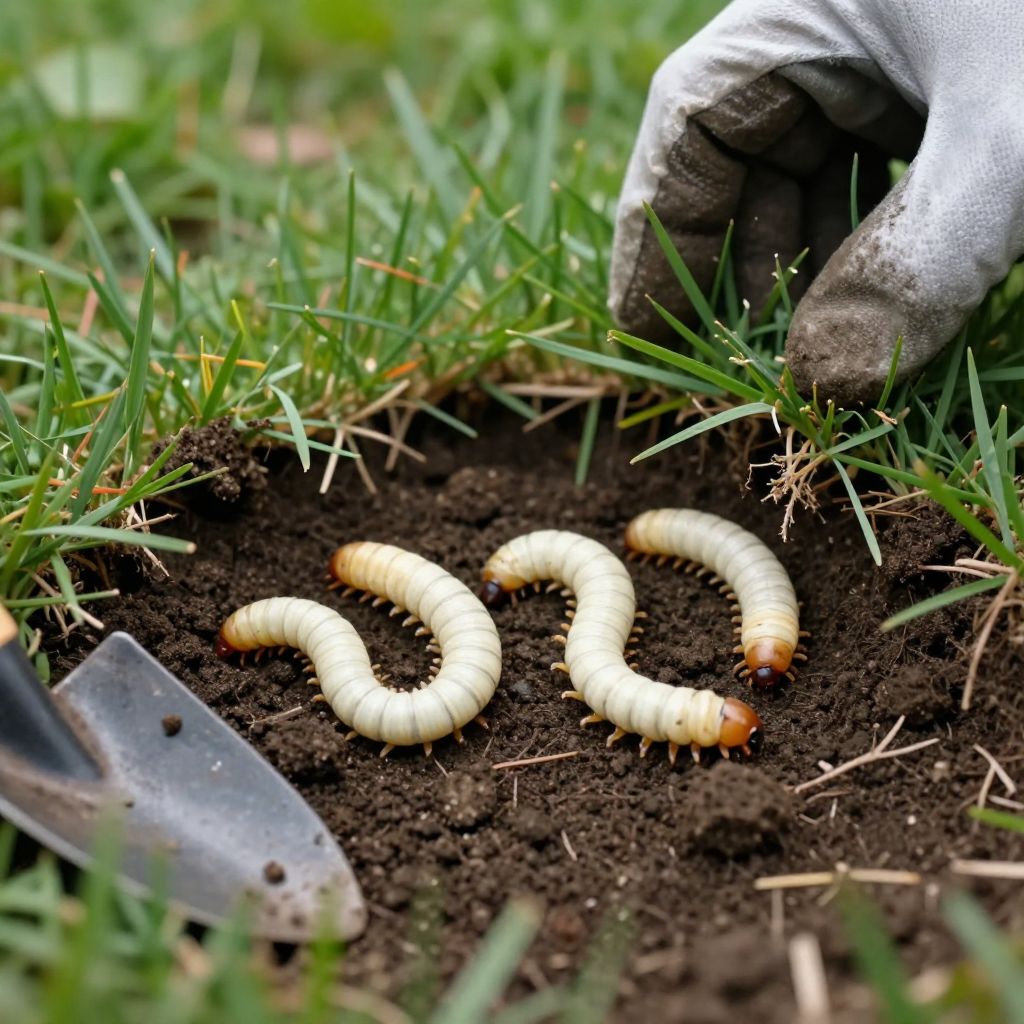
What do grubs look like when you find them in your soil, lawn, or compost? Grubs are the immature stage of certain beetles, and most garden grubs are soft, C-shaped larvae with a pale body and a darker head. Knowing what they look like helps you tell them apart from helpful soil life and decide whether they need control.
If you spot root damage, thinning turf, or birds digging in the lawn, grubs may be part of the problem. The key is to identify them correctly before you act, because not every white larva in the soil is a pest.
What do grubs look like?
Most garden grubs are creamy white to grayish, soft-bodied, and curled into a C shape with a tan or brown head. They usually have three pairs of small legs near the head and a swollen abdomen. Sizes vary from about 1/4 inch to more than 1 inch depending on the beetle species and stage of growth.
How to identify grubs in the garden
Grubs are easiest to identify by shape, color, and where you find them. They live in soil and feed on roots or organic matter, so you may notice them when digging, lifting turf, or turning compost.
Common visual features
- Body shape: Usually C-shaped when disturbed.
- Color: Creamy white, pale yellow, or grayish white.
- Head: Distinctly brown or amber-colored.
- Legs: Three pairs of small legs near the head.
- Body texture: Soft, plump, and segmented.
- Movement: Slow and wriggly, not quick like wireworms or centipedes.
Where you’re likely to find them
- In lawn thatch and the top few inches of soil
- Around the roots of stressed ornamentals or vegetables
- Under sod or near damaged patches of turf
- In compost or mulch if beetles have laid eggs there
Grubs vs. look-alikes
One of the biggest mistakes gardeners make is treating every pale larva as a grub. Some are harmless decomposers, while others are different pests that need different control methods.
Grubs and earthworms
Earthworms are long, segmented, and have no legs or hard head capsule. They are beneficial and should be left alone.
Grubs and caterpillars
Caterpillars are the larvae of moths and butterflies. They often have a softer, more elongated body and may have prolegs along the abdomen, not just three pairs of legs near the head.
Grubs and wireworms
Wireworms are slender, hard-bodied, and yellow to orange-brown. They are not C-shaped and feel much firmer than a grub.
Grubs and root maggots
Root maggots are legless, tapered larvae that resemble tiny white worms. They lack the obvious head capsule and legs typical of beetle grubs.
What kinds of beetle grubs are common in gardens?
Several beetle species produce grubs, and many look similar at first glance. In home gardens and lawns, the most familiar are scarab beetle larvae, including Japanese beetles, June beetles, and chafer beetles.
- Japanese beetle grubs: Creamy white, C-shaped, with a brown head and visible legs.
- June beetle grubs: Often larger, with a similar C shape and a more robust body.
- Chafer grubs: Common in turf, usually similar in appearance to other scarab larvae.
Because these grubs look alike, identification often depends more on the damage pattern and where you found them than on species alone.
What damage do grubs cause?
Grubs damage plants by feeding on roots, which reduces the plant’s ability to take up water and nutrients. In lawns, this can cause patches of turf to yellow, wilt, and lift easily like a loose carpet.
Signs in lawns
- Irregular brown or yellow patches
- Grass that feels spongy or lifts easily
- Increased bird, skunk, raccoon, or mole activity
- Thinning turf even when watering seems adequate
Signs in beds and containers
- Stunted or wilted plants despite moist soil
- Roots chewed or reduced
- Plants that topple easily
- Uneven growth in areas where grubs are concentrated
Not every root problem is caused by grubs. Drought, compaction, poor drainage, disease, and other soil pests can create similar symptoms, so check carefully before treating.
How to check for grubs in your soil
A simple inspection can tell you whether grubs are present and whether they are numerous enough to worry about. The best time to check is when you notice turf damage or suspect root feeding.
- Cut a small flap of turf or dig a 6-inch square sample from the affected area.
- Lift the soil and inspect the top 2 to 4 inches, where grubs are often feeding.
- Count the larvae you find and note their size and color.
- Look for root loss, soil moisture, and any other pests nearby.
- Compare the damaged area with a healthy patch nearby.
If you find only one or two grubs in a healthy lawn, that may not justify treatment. If you find many grubs in a damaged area, control may be worthwhile.
When are grubs most active?
Grub activity changes with the season and your local climate. In many areas, adult beetles lay eggs in warm weather, and the young grubs feed near the soil surface before moving deeper as conditions change.
- Warm months: Eggs hatch and young grubs begin feeding.
- Dry or hot periods: Grubs may move deeper into the soil.
- Cooler weather: Feeding often slows, but grubs may still be present underground.
Because timing varies by region, watch for damage patterns rather than relying only on the calendar. Local extension guidance can help you match grub life cycles to your area.
How to manage grubs in the garden
The best approach is to combine inspection, healthy growing practices, and targeted control only when needed. Strong plants and well-managed soil often tolerate minor grub activity better than stressed plants.
1. Improve plant and lawn health
- Water deeply but only when needed, so roots grow more deeply.
- Avoid overwatering, which can weaken roots and attract some pests.
- Reduce compaction by aerating lawns or loosening heavily packed soil.
- Keep grass and garden plants growing steadily with appropriate care for your soil and climate.
2. Check drainage and thatch
Grubs often become more noticeable where turf is already stressed. Poor drainage, heavy thatch, and shallow-rooted grass can make damage worse and recovery slower.
- Remove excessive thatch if it is building up in the lawn.
- Improve drainage in soggy areas before replanting.
- Topdress with compost only if it suits your soil and turf system.
3. Use physical removal in small areas
If you find a few grubs while digging in beds or containers, hand-picking is often enough. Drop them into a bucket of soapy water or remove them from the planting area immediately.
4. Consider biological or targeted control when needed
For larger infestations, gardeners sometimes use biological controls or other targeted treatments. The right choice depends on the grub species, the plant being protected, and local regulations. Always follow label directions and choose products that fit the pest and site.
Timing matters. Young grubs are usually easier to manage than older, larger larvae, so early detection is important.
How to prevent grub problems
Prevention is easier than repairing a damaged lawn or bed. You can reduce the chances of serious grub damage by keeping the site less attractive to egg-laying beetles and by maintaining vigorous plant growth.
- Monitor lawns and beds regularly during warm months.
- Repair thin turf quickly so pests have fewer weak spots to exploit.
- Avoid leaving stressed, patchy, or overwatered areas unmanaged.
- Use clean compost and mulch from reliable sources.
- Encourage healthy root systems with appropriate soil care.
Common mistakes to avoid
- Treating without confirming the pest. Many soil creatures are not grubs.
- Overwatering damaged turf. This can worsen root stress and disease.
- Ignoring soil conditions. Compaction and poor drainage can mimic grub damage.
- Using broad treatments unnecessarily. Target only when the problem is real and significant.
What to do if you find grubs in compost or mulch
Occasional larvae in compost or mulch are not always a problem. Some are beetle grubs, but others may be harmless decomposers. If the material is still breaking down properly and your plants are not being damaged, you may not need to intervene.
If you suspect beetle grubs are breeding in a mulch pile or compost heap, turn the material regularly, avoid overly wet conditions, and keep finished compost covered or contained so beetles are less likely to lay eggs there.
When to call for help
If you have repeated lawn failure, major root loss, or you cannot tell whether the larvae are grubs or something else, a local extension office, garden center, or turf professional can help with identification. That can save you time and prevent unnecessary treatments.
Take a close look at the larvae you find, note where they were growing, and compare the damage with healthy areas nearby. If you want to keep learning, a good next step is reading more about garden pest identification and lawn care basics so you can spot problems early and respond with confidence.