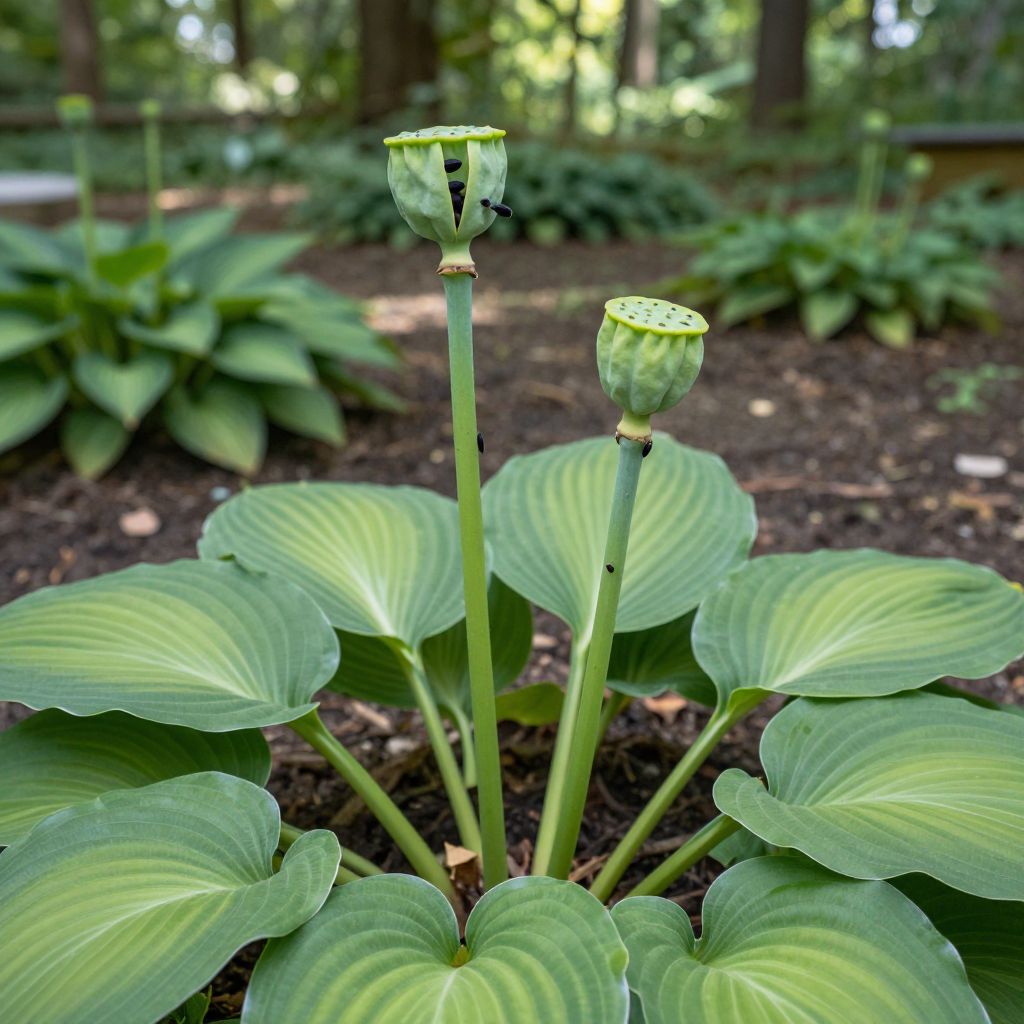
Wondering what do hosta seeds look like when you find them on your plant or in a dried flower stalk? Hosta seeds are small, flat, black to dark brown seeds that sit inside a dry, papery capsule after the flowers fade. They are usually easy to miss until the pods split open.
If you want to collect them or grow hostas from seed, it helps to know what to look for at each stage. The seed pods, the timing, and the plant’s growth habits all matter, and the seeds themselves are much less showy than the flowers that produced them.
What do hosta seeds look like?
Hosta seeds are thin, flat, and usually black or very dark brown, often shaped a bit like tiny teardrops or wedges. They develop inside upright, dry seed pods that form after the flowers fade. When ripe, the pods split open and release the seeds, often with a papery husk attached.
How hosta seeds form after flowering
Hostas bloom on tall stalks called scapes, usually with lavender, white, or pale purple flowers depending on the variety. After pollination, each flower can form a capsule that matures into a seed pod.
The pods start green and fleshy, then dry to tan or brown. As they mature, they become brittle and eventually split along seams, revealing the seeds inside.
What the seed pods look like
- Early stage: green, smooth, and slightly swollen
- Midstage: tan to light brown, drying and narrowing
- Ripe stage: dry, papery, and splitting open
If you are checking a hosta for seeds, look near the top of the flower stalks after the blooms have finished. The seed pods are much more noticeable than the seeds themselves until they open.
How to identify ripe hosta seeds
Ripe hosta seeds are usually shiny or matte black, flat, and about the size of a small lentil or smaller. They may have a narrow wing or papery edge, but not always. If the seed is pale, soft, or plump, it is probably not fully mature yet.
Good ripe seed is dry, hard, and dark. If the pod is still green, the seeds are often immature and less likely to germinate well.
Quick visual checklist
- Seed color: black to very dark brown
- Seed texture: dry and firm
- Seed shape: flat, oval, or slightly pointed
- Pod condition: dry and splitting open
When to harvest hosta seeds
Harvest hosta seeds when the pods begin to dry and split, but before the seeds fall to the ground. In many gardens, this happens late in the season after flowering, though timing varies with climate, weather, and cultivar.
Watch the scapes closely once the flowers fade. If you wait too long, the pods can burst and scatter the seed naturally.
Best harvest timing
- Check the flower stalks after blooming ends.
- Look for pods that have turned tan or brown.
- Snip the stalk when a few pods start to split.
- Bring the stalks indoors and finish drying them in a paper bag.
How to collect and store hosta seeds
To collect hosta seeds, cut the seed stalks and place them in a paper bag or shallow tray in a dry, airy spot. Once the pods open fully, shake out the seeds and remove any chaff or pod fragments.
Store cleaned seeds in a labeled paper envelope or small container in a cool, dry place. If you live in a humid climate, make sure the seeds are fully dry before storing them to reduce mold risk.
Simple collection method
- Use clean scissors or pruners.
- Cut stalks on a dry day if possible.
- Let pods dry for several days indoors.
- Separate seeds from husks and debris.
- Label with the plant name and harvest date.
Do not store damp seeds in plastic. Trapped moisture can encourage mold and ruin viability.
Can you grow hostas from seed?
Yes, you can grow hostas from seed, but seedlings may not look exactly like the parent plant. Many hostas are hybrids, so seed-grown plants can vary in leaf color, size, and form. If you want an exact clone, division is the more reliable method.
Growing hostas from seed is still worthwhile if you enjoy experimenting or want to produce new plants. It just requires patience, because seedlings grow slowly and may take several years to reach landscape size.
What to expect from seed-grown hostas
- Variation in leaf shape and color is common
- Seedlings usually need careful moisture management
- They grow slowly compared with divisions
- Flowering size can take years to reach
How to sow hosta seeds
Hosta seeds need a well-draining seed-starting mix and steady moisture. Sow them shallowly, because they do not need deep planting. A light covering of mix or vermiculite is usually enough to keep them in place.
Use a clean tray or small pots with drainage holes. Keep the medium evenly moist, not soggy, and place the container where temperatures suit your local conditions and the seed type you are growing.
Step-by-step sowing guide
- Fill trays or pots with a fine seed-starting mix.
- Moisten the mix before sowing.
- Place seeds on the surface or cover very lightly.
- Label the container with the hosta name and date.
- Keep the medium evenly moist while seeds germinate.
If you are starting seeds indoors, give them bright light after germination so seedlings do not stretch. Outdoors, protect trays from heavy rain, drying wind, and direct hot sun.
Common mistakes when collecting hosta seeds
One of the biggest mistakes is harvesting too early. Green pods may look promising, but immature seeds often fail to germinate well. Another common problem is letting pods dry too long on the plant, which can cause the seeds to scatter.
It is also easy to confuse hosta seeds with debris. The seeds are small and dark, while the pod pieces are lighter, papery, and irregular.
Problems and fixes
- Pods are green: wait longer before harvesting.
- Seeds are pale or soft: they are likely immature.
- Mold appears in storage: dry seeds more thoroughly and improve airflow.
- No seeds formed: the flowers may not have been pollinated.
Do all hostas produce viable seeds?
Not always. Some hostas set seed more readily than others, and weather, pollination, and plant vigor all affect seed production. In shady gardens with limited pollinators, you may see fewer seed pods than expected.
Also, some gardeners remove flower stalks for appearance or to direct energy back into the clump. If you want seeds, leave a few scapes in place until the pods mature.
How hosta seed production fits into garden care
Seed production does not usually harm a healthy hosta, but it can change the look of the plant late in the season. If you prefer a tidy border, you can deadhead spent flowers and leave only selected stalks for seed collection.
For the best plant health, keep hostas in conditions they like: partial to full shade depending on variety, moist but well-drained soil, and a mulch layer that helps conserve moisture without burying the crown.
Helpful care reminders
- Water at the base during dry spells.
- Use compost to improve soil structure.
- Avoid waterlogged soil around the crown.
- Watch for slugs and snail damage on young growth.
Conclusion: what to do next
If you are trying to identify hosta seeds, look for small, flat, dark seeds inside dry, splitting pods on the flower stalks. Harvest them when they are fully mature, dry them well, and store them carefully if you plan to sow them later.
For more practical hosta care, you may also want to read about hosta care and maintenance or how to divide perennials in the garden.