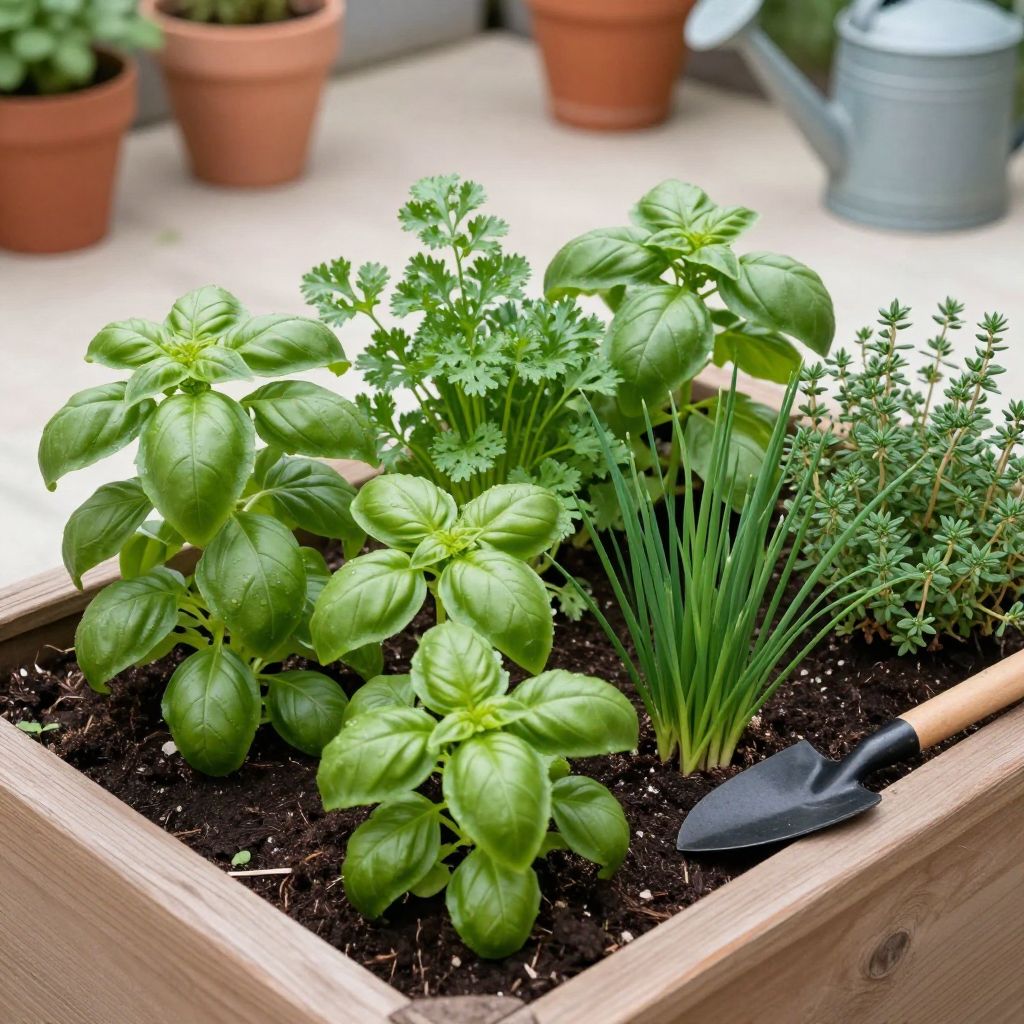
Trying to figure out what herbs grow well together can save you space, simplify care, and create a healthier herb garden. The best combinations share similar needs for sun, water, and soil drainage, so you can group them without one plant struggling while another thrives.
Not every herb is a good neighbor, though. Some prefer drier soil, some need more moisture, and a few spread aggressively or grow too large for a mixed planting. The key is matching growth habits and growing conditions first, then arranging herbs by how you’ll water, harvest, and maintain them.
What herbs grow well together?
Herbs that grow well together usually share the same light, soil, and moisture needs. Mediterranean herbs like rosemary, thyme, oregano, sage, and marjoram pair well in sunny, well-drained spots, while moisture-loving herbs such as parsley, cilantro, chives, and dill do better together in slightly richer, more evenly moist soil.
Best herb combinations for a home garden
1. Mediterranean herbs for dry, sunny beds
This is one of the easiest and most reliable groupings. Rosemary, thyme, oregano, sage, and marjoram all prefer plenty of sun, excellent drainage, and soil that does not stay wet for long.
- Good match: rosemary + thyme + oregano
- Good match: sage + thyme + marjoram
- Good match: oregano + marjoram + thyme
These herbs are often happiest in raised beds, rock gardens, or containers with a gritty potting mix. Avoid rich, water-holding soil, which can lead to weak growth and root problems.
2. Moisture-loving herbs for a more even watering routine
Parsley, cilantro, chives, dill, and sometimes basil do better when the soil stays evenly moist but not soggy. They are a practical group if you can water more regularly and provide at least moderate fertility.
- Good match: parsley + chives
- Good match: cilantro + dill
- Good match: parsley + cilantro + chives
These herbs are useful in kitchen gardens because they can be harvested often and replanted through the season. In hot climates, cilantro and dill may bolt quickly, so give them some afternoon shade if temperatures rise.
3. Basil with other warm-season companions
Basil likes warmth, regular moisture, and fertile soil, so it often works well with parsley or chives if your conditions are not too dry. It is less compatible with woody Mediterranean herbs that prefer leaner, drier ground.
If you grow basil in a container, keep it with herbs that appreciate similar watering. Basil also benefits from pinching, which keeps it bushier and helps prevent early flowering.
4. Mint in its own container
Mint grows vigorously and can quickly take over a bed, so it is best treated as a companion only in a separate pot. If you want to group it with other herbs, keep the pot nearby rather than planting it directly beside slower growers.
Mint can work well on a patio or near the kitchen door, where you can harvest it often. Just remember that its spreading roots make it one of the most aggressive herbs in the garden.
How to choose herbs that belong together
Match sunlight first
Most herbs need full sun, but not all of them want the same intensity or heat. Mediterranean herbs usually want the sunniest, driest position you have, while cilantro and parsley may appreciate a little afternoon relief in hot weather.
If you place shade-tolerant and sun-loving herbs together, one group will usually struggle. When in doubt, group herbs by the amount of direct light they need, then adjust placement for your local climate.
Match soil and drainage second
Drainage is often the deciding factor in whether herbs grow well together. Herbs that dislike wet feet, such as rosemary and thyme, should not be mixed with herbs that prefer more consistent moisture, such as parsley and cilantro.
A simple test is to water the bed and see how quickly the soil drains. If water lingers for hours, choose herbs that tolerate heavier soil or improve drainage before planting.
Group by water needs
One of the most common mistakes is planting herbs with opposite watering needs in the same bed. If you water to suit basil or parsley, rosemary and thyme may decline. If you water to suit rosemary, basil may suffer.
Try to keep herbs with similar moisture preferences together so you are not constantly compromising care.
Container planting: the easiest way to mix herbs well
Containers make herb grouping much easier because you can control soil, drainage, and water more precisely. They are especially useful if your garden soil is heavy clay, very sandy, or simply not ideal for herbs.
Container combinations that usually work
- Rosemary, thyme, and oregano in a large pot with fast-draining mix
- Parsley, chives, and cilantro in a medium container with richer potting soil
- Basil and parsley in a warm, sunny pot with consistent moisture
Choose containers with drainage holes and enough room for mature roots. Herbs planted too tightly compete for moisture and air, and crowded pots dry out unevenly.
Soil mix for mixed herb containers
Use a quality potting mix, then adjust based on the herb group. For dry-loving herbs, add coarse material such as perlite or horticultural grit to improve drainage. For moisture-loving herbs, use a mix that holds water a little better without becoming dense.
Do not use heavy garden soil in pots. It compacts easily and can suffocate roots, especially after repeated watering.
In-ground herb beds: how to organize them
If you are planting herbs directly in the ground, divide the bed into zones rather than mixing everything randomly. This makes watering, pruning, and harvesting much easier over time.
Simple bed layout
- Place sun-loving, drought-tolerant herbs in the driest, highest, or best-drained section.
- Group moisture-loving herbs in richer soil where water stays available a little longer.
- Keep aggressive spreaders like mint in a container or separated area.
- Leave space for air movement between plants to reduce disease.
This approach works well in small gardens because it reduces conflict between plants with different needs. It also makes it easier to mulch and water each section appropriately.
Herbs that are often poor companions
Some herbs can be grown near each other, but they are not ideal long-term companions if their needs differ too much. The problem is usually not “chemical incompatibility,” but mismatched growing conditions.
- Rosemary and parsley: rosemary prefers drier soil than parsley.
- Thyme and basil: thyme likes lean, dry conditions; basil prefers richer, moister soil.
- Mint and most herbs: mint spreads aggressively and can crowd others out.
- Cilantro and rosemary: cilantro wants more moisture and often cooler conditions.
If you must grow mixed herbs in one area, choose the plants with the closest needs and be prepared to separate the more demanding ones into their own pots.
Planting and care tips for mixed herb groupings
Start with healthy transplants or direct sowing where appropriate
Some herbs transplant easily, while others are better sown directly. Parsley, cilantro, dill, and basil can all be direct-sown in suitable weather, though basil is often started indoors in cooler climates. Rosemary and thyme are commonly planted as young transplants because they grow slowly from seed.
Choose healthy plants with firm stems, good leaf color, and no signs of pests or rot.
Water carefully
Water newly planted herbs deeply so roots settle into the soil. After that, adjust based on the group you planted and your weather.
- Dry-loving herbs: water only when the top layer of soil dries out.
- Moisture-loving herbs: keep soil evenly moist, especially during establishment.
- Containers: check more often, since pots dry faster than beds.
Water at the base of the plants rather than overhead when possible. This helps reduce leaf disease and keeps the foliage cleaner for harvesting.
Prune and harvest often
Regular harvesting keeps many herbs productive and compact. Pinch basil above a leaf pair, trim thyme lightly, and harvest parsley and cilantro from the outside stems first.
Never remove too much at once. Taking more than about one-third of a plant can slow recovery, especially on young herbs.
Common problems when herbs are grown together
Yellowing leaves
Yellowing can mean overwatering, poor drainage, or nutrient imbalance. If only one herb in the group is yellowing, it may simply be the wrong plant for that spot.
Check the soil first. If it stays wet, improve drainage or move the herb to a better location.
Leggy or weak growth
Herbs that stretch and flop often need more sun. This is common when taller plants shade smaller ones, or when a mixed planting becomes overcrowded.
Thin crowded herbs and make sure each plant gets enough direct light. In containers, rotate pots occasionally so all sides receive even sun.
Bolting
Cilantro and dill may flower quickly in warm weather, especially if stressed by heat or inconsistent moisture. Once they bolt, leaf quality declines.
Succession sowing helps. Plant a few seeds every couple of weeks during the right season for your climate so you always have younger plants coming on.
Pests and disease
A crowded herb bed can trap humidity and encourage aphids, spider mites, or fungal issues. Good spacing, airflow, and careful watering prevent many problems before they start.
If you notice pests, remove badly affected growth, rinse small infestations with water, and avoid overfeeding, which can encourage soft, pest-prone growth.
Best practices for long-term success
- Group herbs by water needs, not just by appearance.
- Give each plant enough room to reach mature size.
- Use containers for aggressive herbs like mint.
- Keep soil well drained for Mediterranean herbs.
- Use richer, evenly moist soil for parsley, cilantro, and chives.
- Harvest regularly to keep plants compact and productive.
If you are unsure how to combine herbs in your own garden, start small. Plant one dry-loving group and one moisture-loving group in separate containers or bed sections, then observe how they respond through your local weather.
For more practical planning, you may also want to read about herb garden layout ideas and growing herbs in containers to help you match plants to the space you have.