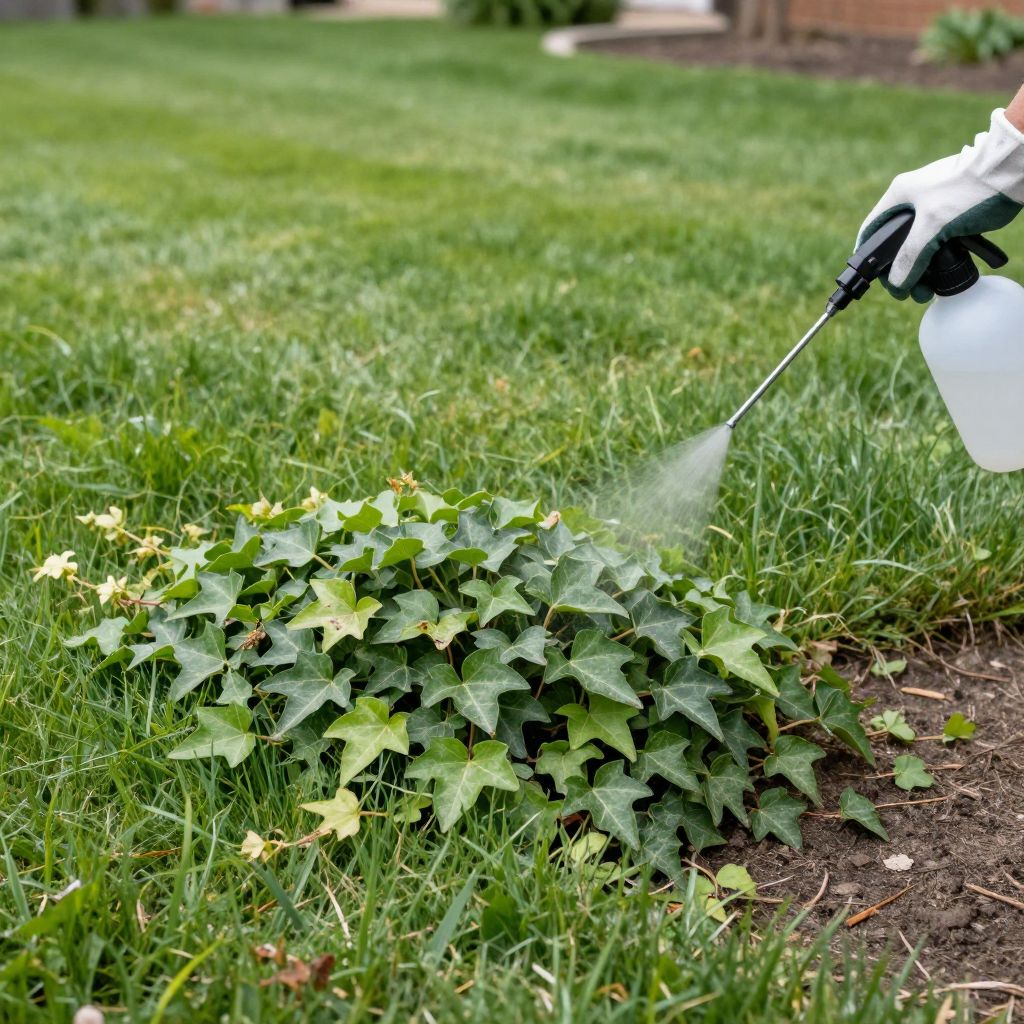
If you’re wondering what kills Creeping Charlie but not grass, the short answer is: a selective broadleaf herbicide, applied correctly, is usually the most reliable option. Creeping Charlie, also called ground ivy (Glechoma hederacea), is a tough perennial broadleaf weed that spreads by stems and roots, so timing and coverage matter.
You can also reduce it with hand-pulling, smothering, and improving lawn conditions, but those methods work best as part of a longer-term plan. The goal is not just to burn off the leaves once, but to weaken the plant and help your grass outcompete it.
What kills Creeping Charlie but not grass?
Products labeled for lawn use that contain selective broadleaf herbicides, such as 2,4-D, dicamba, MCPP, or triclopyr, can kill Creeping Charlie without harming most turf grasses when used as directed. They work best on actively growing weeds in spring or fall, when temperatures are moderate and the plant is taking up herbicide into its leaves and roots.
Why Creeping Charlie is so hard to control
Creeping Charlie is not a simple surface weed. It spreads by creeping stems, can root at nodes, and often thrives in thin, damp, shady turf where grass is already struggling.
That means a quick spray may turn the leaves brown, but new growth can return from surviving stems or nearby patches. If your lawn is thin, compacted, or constantly wet, the weed usually comes back faster than the grass fills in.
Common conditions that favor it
- Shady areas with poor turf density
- Moist or poorly drained soil
- Compacted ground with shallow grass roots
- Low mowing habits that stress grass
- Lawns with thin spots from drought, wear, or disease
Best herbicide options for lawns
For most home lawns, a selective broadleaf herbicide is the main answer. These products target broadleaf weeds like Creeping Charlie while leaving common lawn grasses unharmed when the label is followed carefully.
Active ingredients to look for
- 2,4-D — common in many lawn weed killers
- Dicamba — often paired with other broadleaf herbicides
- MCPP or mecoprop — also common in turf weed control
- Triclopyr — often especially effective on tough broadleaf weeds, including Creeping Charlie
Many products combine two or more of these ingredients for broader control. Always read the label to confirm the product is intended for your type of grass and your weed problem.
What to avoid
- Non-selective herbicides like glyphosate, which kill grass and weeds
- “Weed and feed” products used at the wrong time or on stressed lawns
- Spraying during heat waves, drought stress, or when grass is newly seeded
- Using a product not labeled for your turf species
How to apply herbicide for the best results
Timing and coverage matter as much as the product itself. Creeping Charlie is easiest to control when it is actively growing, usually in spring or early fall, rather than during extreme heat or drought.
- Identify the grass type first. Make sure the product is labeled safe for your lawn species.
- Mow a few days before spraying. This exposes more leaf surface, but do not scalp the lawn.
- Choose a calm, mild day. Aim for moderate temperatures and no rain expected for the label’s rainfast period.
- Spray evenly. Coat the weed leaves thoroughly without soaking the lawn.
- Wait and watch. Creeping Charlie may yellow slowly over 1 to 3 weeks, depending on conditions.
- Repeat if the label allows. Dense patches often need a second treatment later in the season.
Do not spray right before mowing or irrigation. Give the product time to absorb through the leaves, or effectiveness drops sharply.
Spot treatment vs. broadcast spraying
For small patches, spot spraying is usually best. It reduces chemical use and lowers the chance of accidentally affecting nearby ornamentals or desirable groundcovers.
If the infestation is widespread, a broadcast application may be more practical, but only if the product is labeled for that use and your lawn is not stressed.
Non-chemical ways to weaken Creeping Charlie
If you prefer to avoid herbicides, you can still reduce Creeping Charlie, but expect a slower process. These methods work best on small patches or as support for a healthier lawn.
Hand-pulling and digging
- Pull after rain or watering, when the soil is soft.
- Remove as much stem and root material as possible.
- Dispose of pulled plants carefully so fragments do not re-root in moist soil.
Hand-pulling is most useful when the infestation is small. In established patches, it often misses enough rooted stems that regrowth occurs.
Smothering and solarizing small areas
In a garden bed or a tiny lawn patch you plan to renovate, you can smother Creeping Charlie with cardboard and mulch or use clear plastic solarization in hot weather. These methods are not practical for large lawns, but they can work where you want to start over.
Improve the lawn so grass wins
- Raise mowing height to help grass shade the soil
- Aerate compacted soil if needed
- Overseed thin areas with the right grass for your site
- Fix drainage problems and reduce persistent wet spots
- Reduce heavy shade where possible by pruning nearby trees or shrubs
Healthy, dense turf is one of the best long-term defenses against Creeping Charlie. The weed often returns where grass remains thin and weak.
Seasonal timing: when control works best
Spring and early fall are usually the best windows for treatment because Creeping Charlie is actively growing and moving resources through its stems and roots. That makes herbicide uptake more effective and gives grass time to recover afterward.
In hot summer weather, many lawns are already stressed, and spraying can be less effective or risk turf injury. In very cool weather, weed growth slows and control can also be less reliable.
Best conditions for treatment
- Active weed growth
- Moderate temperatures
- Dry leaves at application time
- No strong wind
- No rain soon after spraying
Common mistakes that make Creeping Charlie come back
Many homeowners treat Creeping Charlie once and expect it to disappear. Because the plant spreads aggressively, a single pass often only weakens it.
- Using the wrong product — some weed killers only work on grasses or only on broadleaf weeds in certain settings
- Spraying too late — stressed weeds absorb less herbicide
- Missing the patches — untreated runners can refill the area
- Ignoring lawn health — thin turf invites reinfestation
- Overwatering — soggy soil can favor Creeping Charlie over grass
What if you have Creeping Charlie in a flower bed?
In ornamental beds, the answer is different because you cannot use the same lawn herbicides around many flowers, shrubs, or vegetables. In those areas, hand-pulling, careful digging, and mulching are usually safer choices.
If the weed is growing through groundcovers or near desirable plants, spot treatment with a product specifically labeled for that setting may be possible, but read the label closely and protect nearby plants from drift.
How to tell if treatment is working
Successful control usually shows up as yellowing, curling, or browning leaves over time. Do not expect instant results, especially with older patches.
If the weed looks unchanged after the label’s expected timeframe, check whether the application was too light, the weather was too hot or cold, or the patch was not fully covered. Dense infestations often need repeat attention.
A practical plan for most lawns
If you want the most effective approach, combine weed control with lawn repair. That gives you a better chance of stopping Creeping Charlie from returning.
- Treat active patches with a selective broadleaf herbicide labeled for your grass.
- Wait for the weed to weaken, then rake out dead material if needed.
- Overseed thin turf in the proper season for your region.
- Improve drainage, reduce compaction, and mow at a healthier height.
- Recheck the area and spot-treat any regrowth.
The real key is persistence. Creeping Charlie rarely disappears from one treatment alone, but it can be brought under control when you combine the right product with better lawn care.
If you want to keep improving your lawn after tackling Creeping Charlie, a good next step is to read more about lawn weed control and overseeding strategies so you can thicken the turf and prevent new infestations.