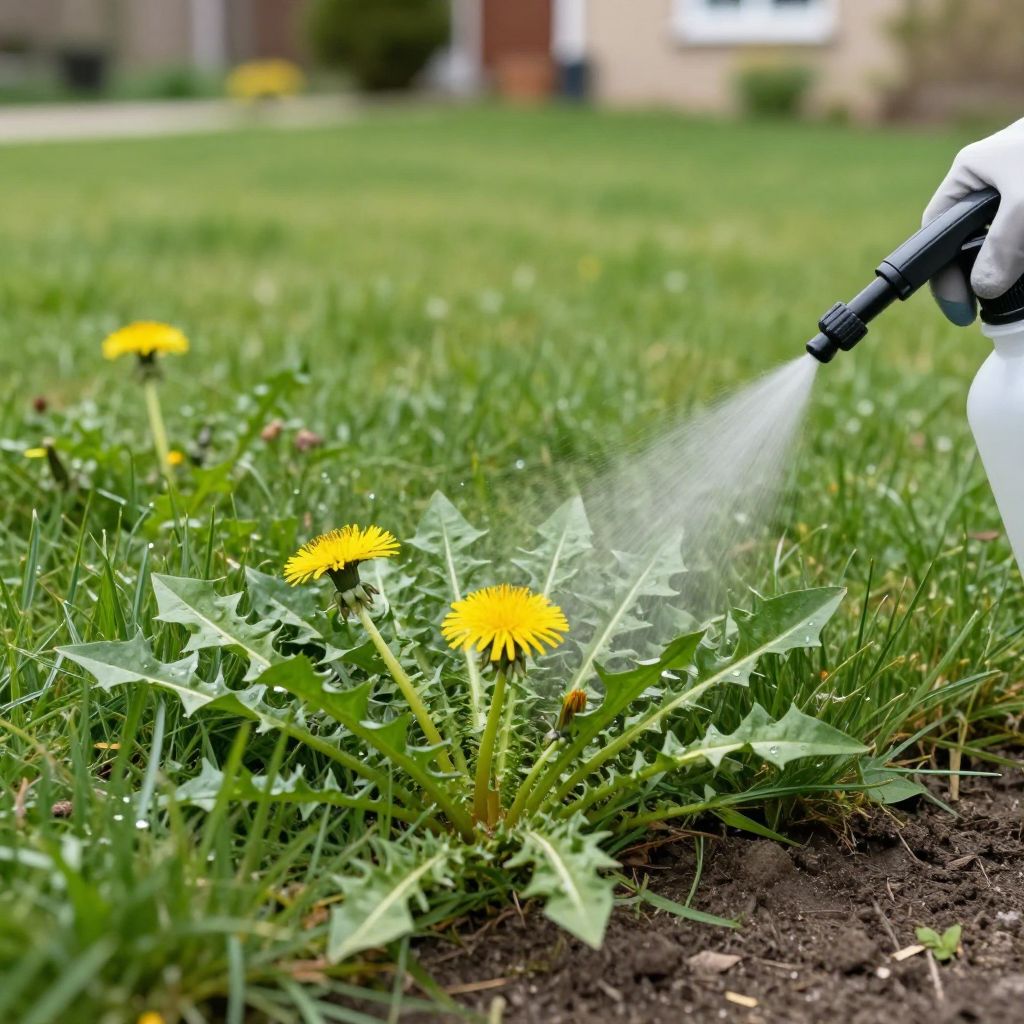
What kills dandelions but not grass? The safest answer is a selective broadleaf herbicide, because dandelions are broadleaf weeds and turfgrasses are narrow-leaf plants. Used correctly, these products target dandelions while leaving most lawns unharmed, but timing, application, and lawn health all matter.
If you prefer to avoid herbicides, you can also weaken dandelions with digging, repeated cutting, and better lawn care. The best approach depends on how many weeds you have, what kind of grass you grow, and whether you want a quick fix or a long-term solution.
What kills dandelions but not grass?
A selective broadleaf weed killer is the standard answer. Products containing ingredients such as 2,4-D, dicamba, MCPP, or triclopyr are formulated to control dandelions and other broadleaf weeds while sparing most established lawn grasses. Always read the label, because not every product is safe for every turf type.
How selective herbicides work in lawns
Dandelions are broadleaf plants with a rosette of toothed leaves and a deep taproot. Lawn grasses are monocots with narrow blades and different growth points, so many broadleaf herbicides affect dandelions far more than grass.
Common lawn-safe weed control ingredients
- 2,4-D — common in many lawn weed killers for broadleaf weeds.
- Dicamba — often combined with other ingredients for tougher weeds.
- MCPP or mecoprop — frequently used in broadleaf weed blends.
- Triclopyr — useful on some stubborn broadleaf weeds and woody growth, depending on the product label.
These ingredients are usually sold in ready-to-spray, hose-end, or concentrate forms. The product label matters more than the ingredient name alone, because rates, lawn species restrictions, and application instructions vary.
When to treat dandelions for the best results
Dandelions are easiest to control when they are actively growing, usually in mild weather when the lawn is not stressed by heat, drought, or frost. Spring and early fall are often the most effective windows, but local climate matters more than the calendar.
Best conditions for spraying
- Temperatures are moderate, not extreme.
- The lawn is actively growing.
- Rain is not expected soon after application.
- The grass is not drought-stressed.
- Dandelions have fresh, healthy leaves to absorb the treatment.
Many herbicides work best when applied to young, actively growing weeds. Older dandelions with thick crowns and deep roots may need a second treatment or a different method.
How to kill dandelions without harming grass
Follow the label exactly. That is the most important rule for protecting your lawn and getting reliable control.
- Identify the grass type. Make sure the product is labeled safe for your turf, especially if you have a less common lawn such as St. Augustinegrass, centipedegrass, bentgrass, or newly seeded areas.
- Choose the right product form. Spot sprays are useful for a few weeds; hose-end or broadcast products suit larger infestations.
- Apply evenly to the leaves. Broadleaf herbicides work through leaf absorption, so good coverage matters.
- Avoid mowing right before or after treatment. Give the weed enough leaf area to absorb the product, and wait as directed before mowing again.
- Keep people and pets off the lawn until the label says it is safe.
- Check results after 1 to 3 weeks. Dandelions may yellow, curl, and decline gradually rather than disappearing overnight.
Spot treatment vs. whole-lawn treatment
Spot treating is usually best when only a few dandelions are present. It reduces chemical use and lowers the risk of accidentally stressing the grass. If weeds are scattered throughout the lawn, a broader treatment may be more practical.
Non-chemical ways to remove dandelions
If you want to avoid herbicides, you can still reduce dandelions effectively, especially when infestations are light. The key is to remove the taproot or prevent seed production before the plant spreads.
Hand digging
- Use a dandelion digger, weeding knife, or narrow trowel.
- Moisten the soil first if it is dry and compacted.
- Loosen the soil around the crown and pull out as much of the taproot as possible.
- Remove plants before they flower and set seed.
Even a small piece of taproot left behind can regrow. That is why shallow pulling often fails, especially in dry or compacted soil.
Repeated cutting or deadheading
Mowing alone will not kill dandelions, but frequent cutting before flowers open can reduce seed spread. This is a control tactic, not a cure, and it works best when combined with better lawn care.
Boiling water and homemade sprays
These methods can burn dandelion leaves, but they usually also damage nearby grass. They are not a good choice if your goal is to kill dandelions but not grass.
Why dandelions keep coming back
Many lawns have recurring dandelions because the turf is thin, stressed, or open to new seed. Dandelions thrive where grass struggles, especially in compacted soil, low fertility, poor drainage, or areas with too much shade for the grass species growing there.
Common reasons control fails
- The wrong product was used for the grass type.
- The herbicide was applied too late, when weeds were mature.
- Weather was too hot, cold, windy, or rainy.
- The lawn was mowed too soon before treatment.
- Soil compaction or thin turf allowed new weeds to establish.
If dandelions return year after year, the problem is often the lawn itself. A thicker, healthier lawn is one of the best long-term weed controls.
How to make your lawn less friendly to dandelions
Weed control works better when the grass is vigorous. Improving turf density helps shade the soil, crowd out seedlings, and reduce the bare spots where dandelions germinate.
Helpful lawn-care habits
- Mow at the proper height for your grass species; cutting too short weakens turf.
- Water deeply but not constantly, so roots grow deeper and grass becomes more resilient.
- Aerate compacted soil if water runs off or roots seem shallow.
- Overseed thin areas with the right grass for your climate.
- Topdress or improve poor soil only as needed, based on local conditions.
- Keep mower blades sharp so grass recovers faster.
Healthy grass does not eliminate every weed, but it makes dandelions much less likely to take hold. That is especially important in spring, when dandelions are actively flowering and spreading seed.
What to avoid when treating dandelions
Some common mistakes can damage the lawn or make the weed problem worse. A careful approach saves time and prevents patchy turf.
- Do not spray on windy days. Drift can harm flowers, shrubs, vegetables, and nearby ornamentals.
- Do not use non-selective weed killers if you want to keep the grass.
- Do not apply to drought-stressed turf unless the label specifically allows it.
- Do not ignore label restrictions for newly seeded lawns or certain grass species.
- Do not expect one treatment to fix a neglected lawn. Some dandelions need repeat control and better turf care.
Seasonal tips for better dandelion control
In cool climates, early spring and early fall are often the most useful times to treat dandelions because the weeds are actively growing and the lawn is less stressed. In warmer regions, look for mild periods when turf is growing well and temperatures are not extreme.
New lawns and recently seeded areas
Young grass is more sensitive than established turf. Many herbicides should not be used on newly seeded lawns until the grass has matured enough to tolerate them. If you have recently seeded, focus on hand removal and mowing until the lawn is established.
Lawns with mixed grasses
Some lawns contain more than one grass species or have patches of different turf. In those cases, choose the most restrictive label guidance and test carefully on a small area if the product allows it.
When to call a professional
If dandelions cover large areas, if your lawn contains a sensitive grass type, or if you are unsure which product is safe, a local lawn professional or extension service can help identify the turf and recommend a suitable control option. That can prevent costly mistakes.
Bottom line
The best thing that kills dandelions but not grass is a selective broadleaf herbicide used exactly as labeled. For fewer weeds over time, combine targeted treatment with better mowing, watering, and lawn density. Start by identifying your grass, then choose the safest control method for your yard.
If you want to keep improving your lawn naturally, the next useful step is learning how to thicken thin turf and prevent new weeds from germinating through better mowing and overseeding practices.