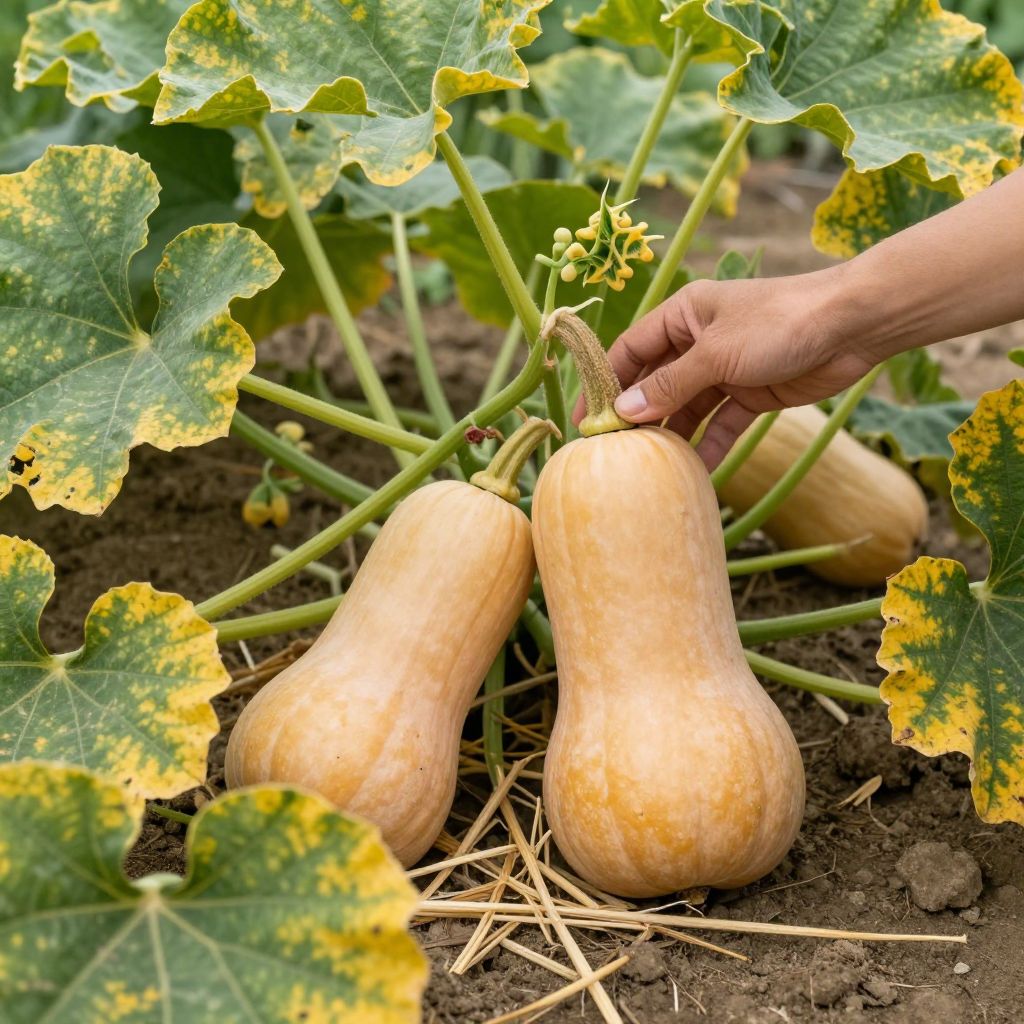
Wondering when is butternut squash ready to pick? The answer depends on the variety, your local season, and how well the fruit has matured on the vine. In general, butternut squash is ready when the skin is hard, the color is deep tan, and the stem has begun to dry and cork over.
Harvesting at the right time matters because squash picked too early won’t develop full sweetness or store well. Pick too late, and frost, rot, or splitting can reduce quality. Here’s how to tell when your squash is truly ready.
When Is Butternut Squash Ready To Pick?
Butternut squash is ready to pick when the rind is hard enough that you can’t easily pierce it with a fingernail, the fruit has turned a uniform tan or buff color, and the stem is dry, woody, and starting to cork. Most fruits need to mature fully on the vine before harvesting for best flavor and storage.
How to Tell Your Butternut Squash Is Mature
1. Check the skin hardness
The skin should feel firm and resistant. Try pressing it with your fingernail; if it dents easily, the squash likely needs more time.
A mature butternut squash has a tough rind that protects it during storage. Soft skin usually means the flesh is still developing and the squash will not keep as long.
2. Look at the color
Most butternut squash turn a rich tan, beige, or buff color when ripe. The green striping or mottling near the neck should fade as the fruit matures.
Color alone is not always enough, though. Some fruit can look tan before it is fully mature, especially in cool or cloudy weather, so combine color with the other signs.
3. Inspect the stem
The stem is one of the best clues. A ready squash usually has a dry, brown, corky stem, and the area where it joins the fruit may look hardened.
Do not harvest by twisting or pulling the stem off. A short stem attached to the squash helps reduce rot in storage. Use pruners or a sharp knife to cut cleanly.
4. Tap and compare size
Fully mature butternut squash often feel heavy for their size. If you tap the skin, the sound may be dull rather than hollow, but this is only a rough clue.
Size can help, but it is not a reliable maturity test by itself. Different varieties produce different lengths and weights, so compare the fruit to the expected size for the seed packet or plant label.
Seasonal Timing: How Long Butternut Squash Takes to Mature
Most butternut squash need about 75 to 110 days from sowing to harvest, depending on the variety and growing conditions. Warm weather, fertile soil, and steady moisture help plants mature on time.
If your season is short, use the days-to-maturity listed for your variety as a guide and count backward from your first expected frost. In cooler climates, fruit may need extra time under good growing conditions to finish ripening.
Why timing varies so much
- Variety: Some types mature faster than others.
- Temperature: Warm days and warm soil speed growth.
- Sunlight: More sun usually means better fruit development.
- Water and nutrients: Stress can slow ripening.
- Weather: Cloudy, cool, or rainy periods can delay maturity.
Growing Conditions That Help Butternut Squash Ripen Properly
Sunlight
Give butternut squash full sun, ideally at least 6 to 8 hours of direct light daily. Less sun can lead to fewer flowers, slower fruit fill, and paler, less mature squash at harvest time.
Soil and drainage
Butternut squash grows best in fertile, well-drained soil rich in organic matter. A compost-amended bed helps roots grow deeply and supports steady fruit development.
Heavy, waterlogged soil can slow growth and increase disease. If your soil stays wet after rain, consider planting on raised mounds or raised beds for better drainage.
Watering
Water deeply and consistently, especially while vines are flowering and fruit is filling out. Irregular watering can cause poor fruit development, blossom-end problems, or split squash.
Try to keep moisture even rather than alternating between very dry and very wet soil. Water at the base of the plant to keep foliage drier and reduce disease pressure.
Feeding
Compost is often enough for many home gardens if the soil is already decent. Too much nitrogen can produce lots of leaves and fewer mature fruits, so avoid overfeeding once vines start setting squash.
How to Harvest Butternut Squash the Right Way
- Choose a dry day if possible.
- Check the skin, color, and stem for maturity.
- Use clean pruners, loppers, or a sharp knife.
- Cut the stem, leaving about 1 to 2 inches attached to the fruit.
- Handle the squash gently to avoid bruising or stem damage.
If frost is forecast and your squash is close to ready, harvest before the frost hits. Light frost can damage leaves, and a hard frost can ruin fruit still on the vine.
What If the Squash Is Not Fully Mature Yet?
If the fruit is still green, soft, or thin-skinned, leave it on the vine as long as the weather allows. The plant may still finish ripening the squash if conditions stay warm.
If cold weather is coming and the squash is close to mature, you can harvest it slightly early and let it cure indoors. It will not sweeten much after harvest, but it may still store reasonably well if it is nearly mature.
Signs the squash is too immature
- Skin dents easily with a fingernail
- Stem is still green and soft
- Color is patchy or mostly green
- Fruit feels light or spongy
- Seeds are small and undeveloped
Curing Butternut Squash After Harvest
Curing helps toughen the skin and improve storage life. Place harvested squash in a warm, dry, well-ventilated spot for about 7 to 14 days, if your weather and storage space allow.
A good curing area is around 80 to 85°F if you can manage it, though home gardeners often use the warmest dry indoor space available. Keep fruit out of direct rain and protect it from frost.
Why curing matters
- Helps small surface wounds dry over
- Improves storage life
- Allows the rind to harden further
- Reduces the chance of rot during storage
Common Problems That Affect Harvest Timing
Powdery mildew
Powdery mildew can weaken vines before fruit fully matures. If leaves are heavily affected, the plant may stop feeding the squash well, so watch fruit closely and harvest as soon as it is ready.
Squash vine borers and other pests
Vine damage from pests can shorten the season and interrupt ripening. If a vine begins to collapse, inspect the fruit carefully; a nearly mature squash may still be worth harvesting early and curing.
Early frost or cold nights
Cool weather slows ripening, and frost can end the season quickly. If temperatures are dropping, prioritize fruit that is closest to mature and leave only the smallest, clearly immature squash on the vine if conditions remain safe.
Storage Tips for Picked Butternut Squash
After curing, store butternut squash in a cool, dry place with good airflow. A basement, pantry, or spare room often works well if temperatures stay moderate and humidity is not too high.
Avoid stacking fruit tightly, and check stored squash regularly for soft spots or mold. Any damaged fruit should be used first, since it will not keep as long as sound squash.
Best storage habits
- Keep fruit dry
- Store at cool room temperature or slightly cooler
- Leave space between squash for airflow
- Use fruit with cuts or bruises sooner
Quick Harvest Checklist
- Skin is hard and cannot be easily scratched
- Fruit is fully tan or buff colored
- Stem is dry, woody, and corky
- Squash feels heavy and solid
- Weather is dry, or frost is approaching
Final Thoughts
If you’re asking when is butternut squash ready to pick, use the skin, stem, color, and timing together rather than relying on size alone. When the rind is hard, the stem is dry, and the fruit has reached mature color, it is usually ready for harvest.
For more help with your fall harvest, you may also want to read about how to cure winter squash for storage and growing squash in a home vegetable garden.