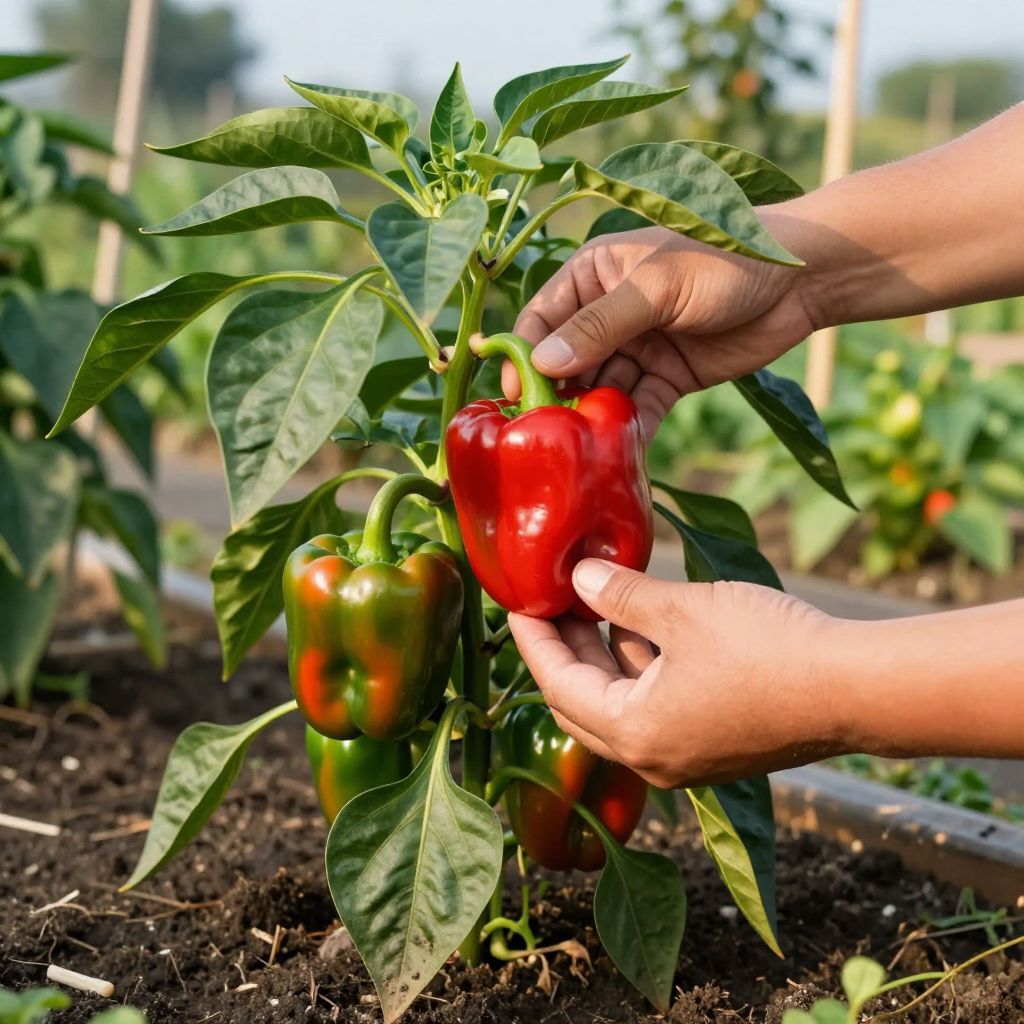
If you’re wondering when to pick bell peppers, the best answer is: harvest them once they’ve reached full size, feel firm, and have developed their mature color if you want the sweetest flavor. You can also pick them earlier while still green, as long as the fruit is well-formed and firm.
The right timing depends on the variety, weather, and how you plan to use the peppers. Picking at the right stage encourages more fruiting, avoids overripe peppers, and helps you get the best texture and flavor from each plant.
When to pick bell peppers?
Pick bell peppers when they are full-sized, glossy, and firm, with thick walls and a healthy green sheen or their mature color. For the mildest, sweetest flavor, wait until they fully ripen from green to red, yellow, orange, or another mature color. Harvest with scissors or pruners to avoid damaging the plant.
How to tell a bell pepper is ready
Bell peppers do not need to be a specific color to be edible, but they do need to be mature enough to have good size and texture. A pepper that is too small or thin-walled will usually taste grassy and underdeveloped.
Signs of harvest readiness
- Size: The pepper has reached the expected size for its variety.
- Shape: It looks fully formed, with broad shoulders and thick walls.
- Texture: The skin feels firm and taut, not soft or wrinkled.
- Color: Green peppers are ready when mature green; fully ripe peppers change to red, yellow, orange, or another final color.
- Gloss: The skin is shiny and healthy-looking.
If you gently press the fruit, it should feel solid. A soft or dull pepper may be overripe, stressed, or beginning to decline on the plant.
Green vs. fully ripened bell peppers
Many gardeners harvest bell peppers while green because they mature sooner and the plant can often keep producing. Green peppers have a crisper, slightly more bitter flavor. Fully ripened peppers are usually sweeter, richer tasting, and higher in color intensity.
If your growing season is short, picking green peppers can be the practical choice. If you have warm weather and enough time, letting some fruits ripen fully often gives you the best flavor.
Seasonal timing: how long bell peppers take to mature
Bell peppers usually need a long, warm growing season. From transplanting, many varieties take roughly 60 to 90 days or more to reach harvestable size, and longer to fully color up. Exact timing depends on the variety, temperature, sunlight, and how early the plant was started.
What affects harvest timing
- Temperature: Warm days and nights speed growth; cool weather slows ripening.
- Sunlight: Full sun helps plants produce larger, sweeter fruit.
- Plant age: Younger plants may flower later and set fewer peppers at first.
- Weather stress: Heat waves, drought, or cold snaps can delay ripening.
- Variety: Some bell peppers mature faster than others.
In cooler climates, peppers may stay green longer and never fully color before frost. In warmer regions, fruit often ripens more reliably on the plant.
How to harvest bell peppers correctly
Use clean scissors, pruners, or a sharp knife to cut the pepper from the plant, leaving a short piece of stem attached. Pulling peppers by hand can break branches or tear the stem, especially when the fruit is heavy.
Step-by-step harvesting method
- Inspect the pepper for size, firmness, and color.
- Hold the fruit gently with one hand.
- Cut the stem about 1/2 inch above the pepper.
- Place harvested peppers in a shallow basket or container.
- Check nearby fruit, since peppers often ripen in waves.
Harvest in the cool part of the day if possible. Morning picking can help the fruit stay crisp and reduce stress on the plant.
How often to pick
Check plants every few days once they start producing. Frequent harvesting encourages the plant to keep flowering and setting more fruit. Leaving overripe peppers on the plant can slow new production.
What happens if you pick too early or too late?
Picking too early usually gives you smaller fruit with thinner walls and a less developed flavor. Picking too late can lead to softer peppers, reduced production, and a greater chance of pest or disease damage.
Too early
- Fruit may be small and pale.
- Flavor can be flat or grassy.
- The pepper may not have fully thickened walls.
Too late
- Fruit may start to wrinkle or soften.
- Insects, birds, or rot may damage it.
- The plant may slow down on new fruit production.
If you’re unsure, it is usually better to wait a little longer for size and firmness, especially if the pepper is still developing. But once a pepper is fully sized and firm, you can harvest it even if it is still green.
How to encourage more peppers before harvest
Healthy plants produce more harvestable fruit. Bell peppers do best in rich, well-drained soil, steady moisture, and plenty of sun. Stress can cause blossoms to drop or fruit to stall before it matures.
Growing conditions that support good harvests
- Sun: Aim for full sun, ideally 6 to 8 hours or more where your climate allows.
- Soil: Use fertile, well-drained soil with added compost.
- Water: Keep moisture even; avoid letting plants dry out completely.
- Mulch: Mulch helps stabilize soil moisture and reduce stress.
- Support: Stakes or cages can keep fruit off the ground and prevent branch breakage.
Uneven watering is one of the most common reasons peppers stall or develop poor fruit quality. Deep, consistent watering is better than frequent light sprinkling.
Pruning and plant care
Light pruning can improve airflow and make harvesting easier, but avoid heavy cutting. Remove damaged leaves, broken stems, and any fruit that is rotting or badly misshapen. If the plant is overloaded, it may benefit from removing a few small fruits so the remaining peppers can size up.
Common problems that affect harvest timing
Several garden issues can delay ripening or reduce pepper quality. Catching them early helps you decide whether to wait longer or harvest sooner.
Pests
- Aphids: Can weaken new growth and distort leaves.
- Thrips: May scar fruit and flowers.
- Cutworms or caterpillars: Can damage stems or fruit.
Check leaf undersides and fruit regularly. If pests are present, remove affected parts when possible and use appropriate non-chemical controls suited to your garden.
Diseases and rot
- Blossom-end rot: Appears as a dark, sunken area at the blossom end, often linked to inconsistent watering.
- Fungal leaf spots: Can reduce plant vigor and slow fruit development.
- Soft rot: May develop in damaged or overly wet fruit.
If a pepper shows soft spots, mold, or severe discoloration, harvest and discard it promptly so the problem does not spread.
Weather stress
Cool nights, prolonged heat, or sudden temperature swings can slow ripening. If the weather turns unfavorable late in the season, it may be smarter to harvest mature green peppers rather than wait for full color that may never come.
Can you ripen bell peppers off the plant?
Yes, bell peppers can continue to color after harvest if they were already mature enough. Place them in a warm indoor spot out of direct sun, and they may shift color gradually. However, they will not improve much in sweetness unless they were already close to full maturity.
This is useful at the end of the season when frost is approaching. Pick any full-sized peppers that are still firm, even if they are green, to avoid losing them to cold damage.
End-of-season harvesting tips
As temperatures drop, pepper plants slow down quickly. Once nights become cool and frost is near, harvest all mature fruit and any peppers that are full-sized but still green.
What to do before frost
- Pick all peppers that are full-sized and firm.
- Remove damaged or diseased fruit.
- Use row cover or temporary protection only if the weather is turning cool but not freezing.
- Do not leave ripe fruit on the plant if cold weather is coming.
If you garden in a short-season climate, choosing faster-maturing varieties and starting plants early indoors can help you reach harvest before cold weather arrives.
Quick harvest checklist
- The pepper is full-sized for its variety.
- The skin is glossy and firm.
- The fruit has thick walls and a solid feel.
- You want it now for a crisp green harvest, or you’re waiting for full color and sweeter flavor.
- You can cut it cleanly without damaging the plant.
Final thoughts
When to pick bell peppers comes down to size, firmness, and your flavor preference. Harvest green peppers once they are fully developed, or wait for full color if you want sweeter, richer fruit. Check plants often, cut fruit cleanly, and keep the plant healthy so it can keep producing.
If you want to improve next season’s harvest, consider reading more about growing bell peppers from planting to harvest and common vegetable garden pest control.