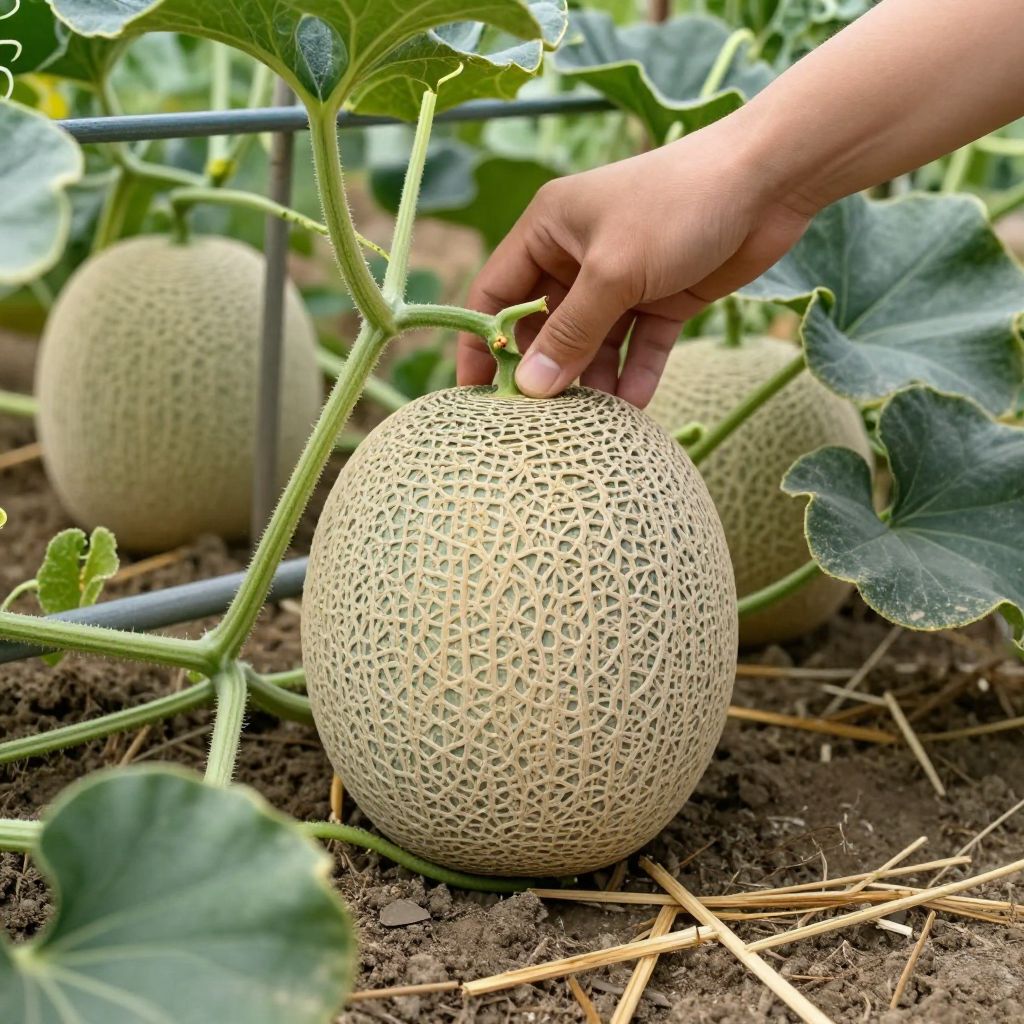
Wondering when to pick cantaloupe so it’s sweet, fragrant, and not mushy? The best harvest time depends on ripeness signs, not the calendar alone. Cantaloupes usually finish ripening in warm weather, and the fruit should slip from the vine, smell sweet, and show a full netted rind with a tan or cream background.
Pick too early and the melon may stay bland; wait too long and it can soften or split. Below, you’ll learn the most reliable ripeness checks, how growing conditions affect harvest timing, and what to do if your vines are behind schedule.
When To Pick Cantaloupe?
Pick cantaloupe when the fruit has a strong sweet aroma, the stem begins to crack or “slip” at the attachment point, and the rind changes from greenish to a creamy tan under the netting. The melon should also feel heavy for its size and yield slightly at the blossom end, but not feel soft all over.
How To Tell Cantaloupe Is Ripe
Check the stem first
The most dependable sign is the slip stage. A ripe cantaloupe often separates cleanly from the vine with gentle pressure, leaving a smooth scar where the stem attached. If you must tug hard, it is usually not ready yet.
Look at the rind color
Many cantaloupes shift from a greenish background to a buff, tan, or golden tone as they ripen. The netting stays prominent, but the color beneath it becomes less green. This is one of the easiest clues to use in the garden.
Smell the blossom end
Ripe cantaloupe usually gives off a noticeable sweet, musky fragrance near the blossom end, opposite the stem. If there is little to no aroma, the fruit may need more time on the vine.
Feel the fruit gently
A ripe melon should feel heavy for its size and may give just a little when pressed at the blossom end. Avoid squeezing hard, which can bruise the fruit and make it spoil faster.
Know what not to rely on
- Size alone is not a reliable ripeness test. Some melons are naturally smaller or larger depending on variety and growing conditions.
- Days from planting can help, but weather changes ripening speed.
- Skin color on its own can be misleading if the variety is unfamiliar.
Seasonal Timing: How Long Cantaloupe Takes to Mature
Cantaloupe typically needs a warm, frost-free growing season and often matures in about 70 to 100 days from planting, depending on variety and conditions. Cool nights, cloudy weather, and poor pollination can slow fruit development, while hot, sunny weather can speed it up.
What affects harvest timing
- Temperature: Warm days and nights help fruit size up and sweeten.
- Sunlight: Full sun improves sugar development.
- Water consistency: Irregular watering can delay ripening or reduce flavor.
- Plant load: Too many fruits on one vine can slow maturity.
- Pollination: Poor pollination may produce misshapen or underdeveloped melons.
Outdoor vs. container-grown plants
In containers, cantaloupe may ripen a bit sooner or later depending on pot size, watering, and heat exposure. Container plants dry out faster, so stress can affect fruit quality. Outdoors in garden beds, vines usually have more stable moisture and root space, which can support more even ripening.
Best Growing Conditions For Sweet Cantaloupe
If you want good flavor at harvest, start with strong growing conditions. Cantaloupe performs best in full sun, fertile soil, and warm weather. A stressed plant may still produce a melon, but it may not be as sweet or aromatic.
Soil and drainage
Use loose, well-drained soil enriched with compost. Cantaloupe roots dislike waterlogged ground, so raised beds or mounded rows can help in heavy soil. Good drainage is especially important because soggy roots can weaken the vine and reduce fruit quality.
Watering for better ripening
Keep soil evenly moist while vines are growing and fruit is developing. Once melons are near maturity, avoid dramatic swings between dry and soaked soil. Sudden changes can cause cracking, poor flavor, or uneven ripening.
Mulch and weed control
A layer of straw, shredded leaves, or similar mulch helps conserve moisture and keeps fruit cleaner. Keep weeds down so vines are not competing for water and nutrients during fruit fill.
How To Harvest Cantaloupe Without Damaging It
Harvest in the cool part of the day if possible, and handle fruit gently. Ripe cantaloupe can bruise easily, especially if it is fully slipped from the vine. Use clean pruners or a knife if the stem does not release cleanly.
- Inspect the melon for aroma, color, and stem looseness.
- Lift the fruit slightly and check whether it separates easily.
- If it is ready, cut or twist carefully rather than yanking.
- Place harvested melons in a shaded, cool spot right away.
If the stem is still firmly attached, leave the melon on the vine and check again in a day or two. Harvesting too early is one of the most common reasons homegrown cantaloupe disappoints.
What To Do If Your Cantaloupe Is Not Ripening
Fruit is large but still green
Large size does not always mean maturity. If the rind is still green and there is no fragrance, give the melon more time. Keep the plant watered consistently and avoid removing too much foliage, since leaves feed the fruit.
The vine is healthy but fruit stays small
Small fruit can result from poor pollination, too much shade, or a plant carrying too many melons. If the vine has several fruits, consider limiting the plant to the strongest few so it can direct energy into ripening them.
Melons taste bland
Bland flavor often comes from picking too early, insufficient sun, or uneven watering. Next season, choose a sunny site, improve soil with compost, and watch for ripeness signs instead of harvesting by size alone.
Common Pests And Diseases That Affect Harvest Timing
Healthy vines ripen fruit more reliably. Pests and disease can slow growth, weaken the plant, or shorten the harvest window.
Common pest issues
- Aphids: Can cluster on new growth and weaken vines.
- Squash bugs: May cause wilting and reduced vigor.
- Cucumber beetles: Can damage leaves and spread disease.
Common disease issues
- Powdery mildew: White coating on leaves that reduces plant energy.
- Downy mildew: Can cause yellowing and decline in humid conditions.
- Fungal root problems: More likely in poorly drained soil.
To reduce problems, water at the soil level, give vines enough space for air movement, and remove badly affected leaves when appropriate. Healthy foliage helps fruit finish ripening properly.
Practical Tips For Better Harvests Next Time
- Plant in full sun where the soil warms quickly in spring.
- Work compost into the bed before planting.
- Use a trellis only if you can support developing fruit.
- Encourage pollinators by avoiding broad-spectrum insecticides during bloom.
- Check fruits every day once they begin to size up.
Should you let cantaloupe ripen off the vine?
Cantaloupe can soften a little after picking, but it does not become significantly sweeter off the vine. For the best flavor, wait until it is truly ripe before harvest. If you pick slightly early, let it sit at room temperature for a short time, but don’t expect major improvement.
Conclusion: The Simple Harvest Rule
The easiest answer to when to pick cantaloupe is this: harvest when the fruit smells sweet, the rind turns tan or creamy under the netting, and the stem begins to slip. Check your vines daily near maturity, and pick at the first clear signs of ripeness for the best flavor and texture.
If you want to improve next season’s harvest, consider reading more about how to grow melons in a home garden and common vegetable garden pests and diseases for practical ways to keep your vines healthy from planting to picking.