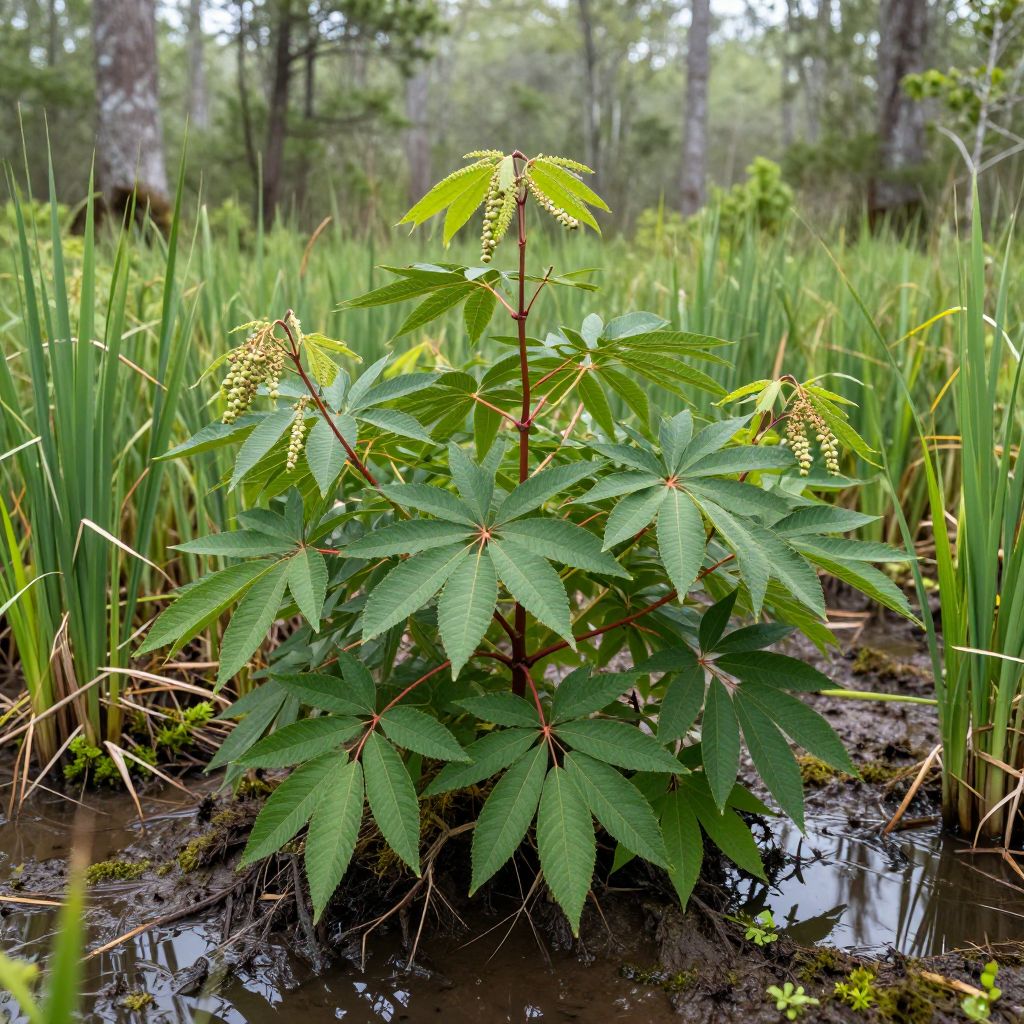
Wondering where does poison sumac grow, and how to recognize the places it is most likely to appear? This plant is not a landscape or garden plant you should intentionally grow, but it does occur naturally in wet, wooded areas. Knowing its preferred habitat helps you avoid accidental contact and manage your property safely.
Poison sumac (Toxicodendron vernix) is most commonly found in swampy, acidic, poorly drained sites, especially in the eastern United States. If you garden near wetlands, ditch lines, stream edges, or low spots that stay soggy, learning its growing conditions is the best way to spot and avoid it.
Where does poison sumac grow?
Poison sumac grows in wet, acidic, low-oxygen soils where water lingers after rain. Look for it in swamps, bogs, marsh edges, wet thickets, floodplains, pond margins, and wooded depressions. It is most common in the eastern U.S., especially in the Southeast, Mid-Atlantic, and parts of the Great Lakes region.
Best habitats to look for poison sumac
Wetlands and swamp edges
Poison sumac is strongly associated with saturated ground. If a site stays muddy, spongy, or flooded seasonally, it is a more likely habitat than a dry woodland border.
- Swamps and marshes
- Boggy depressions
- Streambanks and creek edges
- Floodplains and drainage swales
- Pond and lake margins with soft, wet soil
Wooded low spots
You may also find it in partially shaded woods where water collects. These spots often have leaf litter, standing moisture, and compacted soil that drains slowly.
Soil conditions that favor growth
Poison sumac prefers acidic, poorly drained soil. It does not need rich garden soil, and it is not a plant that thrives in typical dry landscape beds. If your property has clay soil and a high water table, the habitat becomes more suitable.
How to identify poison sumac in the landscape
Correct identification matters because poison sumac can cause severe skin irritation in sensitive people. The plant is usually a shrub or small tree, often taller and more open than poison ivy.
Key visual clues
- Leaves arranged in pairs along a central stem, with multiple leaflets
- Leaflets are smooth-edged, pointed, and glossy
- Stems may be reddish in young growth
- Clusters of pale berries may hang from the plant
- It often grows in wet, shaded, or partially shaded sites
Do not rely on one trait alone. Habitat, leaf arrangement, and berry clusters together give a safer identification than leaf color or size by themselves.
What it is often confused with
People sometimes mistake poison sumac for staghorn sumac or other non-poisonous sumacs. The easiest rule is to check the habitat: poison sumac usually grows in wetland-type conditions, while many harmless sumacs prefer drier slopes and roadsides.
Can you grow poison sumac in a garden?
For home gardeners, the practical answer is no. Poison sumac is not a plant to add to a designed landscape, wildlife garden, or native planting near regular foot traffic. Even if it grows naturally in your region, it is best left alone and managed only if it creates a safety issue.
If you are planning a native planting, choose non-toxic species that fit the same moisture conditions instead. That gives you the ecological benefit without the exposure risk.
Safer alternatives for wet areas
- Winterberry holly (Ilex verticillata)
- Red twig dogwood (Cornus sericea)
- Buttonbush (Cephalanthus occidentalis)
- Sweetspire (Itea virginica)
- Joe-Pye weed (Eutrochium spp.)
These plants can suit damp soils without creating the same contact hazard.
Growing conditions that make poison sumac more likely
If you are trying to determine whether your property could support poison sumac, focus on the site conditions rather than the plant itself. It tends to appear where the environment stays consistently wet and undisturbed.
Common site features
- Low-lying ground that collects runoff
- Soil that stays wet long after rain
- Partial shade or open woodland light
- Acidic soil with lots of organic matter
- Natural drainage lines or seasonal wet spots
Why these conditions matter
Plants adapted to wet habitats can tolerate low oxygen around the roots. In contrast, most garden shrubs decline in waterlogged soil. That is why poison sumac often appears where many ornamental plants would struggle.
How to manage poison sumac on your property
If poison sumac is growing near a path, fence line, or work area, the goal is usually avoidance or careful removal by trained professionals. Because the oil that causes the rash can remain on stems, roots, tools, and clothing, this is not a casual hand-pulling job.
First steps for homeowners
- Confirm the plant using habitat and leaf structure, not guesswork.
- Keep people and pets away from the area.
- Mark the location so you do not brush against it during mowing or trimming.
- Plan removal only if it is in a high-traffic or high-risk spot.
- Use gloves, long sleeves, and washable work clothes if you must approach it.
Do not burn poison sumac. Smoke can carry irritating compounds and create a serious exposure risk. Also avoid shredding or string-trimming it, which can spread contaminated sap onto equipment and clothing.
When to call for help
Consider a professional if the plant is large, hard to reach, growing in standing water, or mixed into dense brush. A trained crew can remove it more safely and help prevent regrowth in a way that fits your site.
How to reduce the chance of poison sumac returning
Poison sumac is more likely to persist in undisturbed wet habitat. You may not be able to change the whole site, but you can make the area less inviting around yards, paths, and managed edges.
Practical prevention steps
- Improve drainage where feasible using grading or swales designed for your site
- Reduce dense brush near activity areas so unwanted seedlings are easier to spot
- Mulch and plant competitive, non-toxic species in managed borders
- Inspect low spots after heavy rain and again in midsummer
- Remove young plants early before they become woody and harder to manage
Prevention works best when you combine observation with habitat management. If a damp corner of the yard repeatedly supports unwanted growth, treat it as a monitoring area every season.
Common mistakes to avoid
Misidentifying harmless sumac
Not every sumac is poisonous. Many gardeners panic when they see a sumac-like plant near the property line. Check the habitat first, then compare leaf arrangement and growth form carefully.
Touching it without protection
Even brief contact can be a problem for sensitive people. If you suspect a plant is poison sumac, avoid brushing against leaves, stems, or fallen debris.
Using the wrong removal method
Mowing, trimming, or burning are poor choices. These methods can spread contamination and increase exposure risk rather than solve the problem.
Ignoring wet-site clues
If you are searching a property edge, focus on the soggiest places first. Poison sumac is far less likely in dry, sunny garden beds than in swampy or flooded ground.
Seasonal notes for spotting poison sumac
Seasonal changes can make identification easier. In spring and summer, new leaves and berry clusters are often the most useful clues. In fall, foliage color may change, but habitat remains the most reliable indicator.
In winter, leafless stems can be harder to identify. If you need to assess a site then, rely on location, branching pattern, and any remaining fruit clusters or old stems. When in doubt, wait for clearer growth or seek expert confirmation before disturbing the plant.
Quick checklist for gardeners
- Check wet, shaded, low-lying areas first
- Assume higher risk near swamps, bogs, and stream edges
- Do not touch or burn suspected plants
- Use protective clothing if you must work nearby
- Choose safer native shrubs for damp landscape spots
Conclusion
So, where does poison sumac grow? It grows where the soil stays wet, acidic, and poorly drained, especially in swampy and wooded lowland habitats in eastern North America. If you manage a property with those conditions, learn the plant’s look-alikes, mark any suspicious patches, and keep a safe distance while you plan the best control approach.
If you want to build a safer planting plan for damp areas, consider reading more about native shrubs for wet soil and how to identify poison ivy, poison oak, and poison sumac.