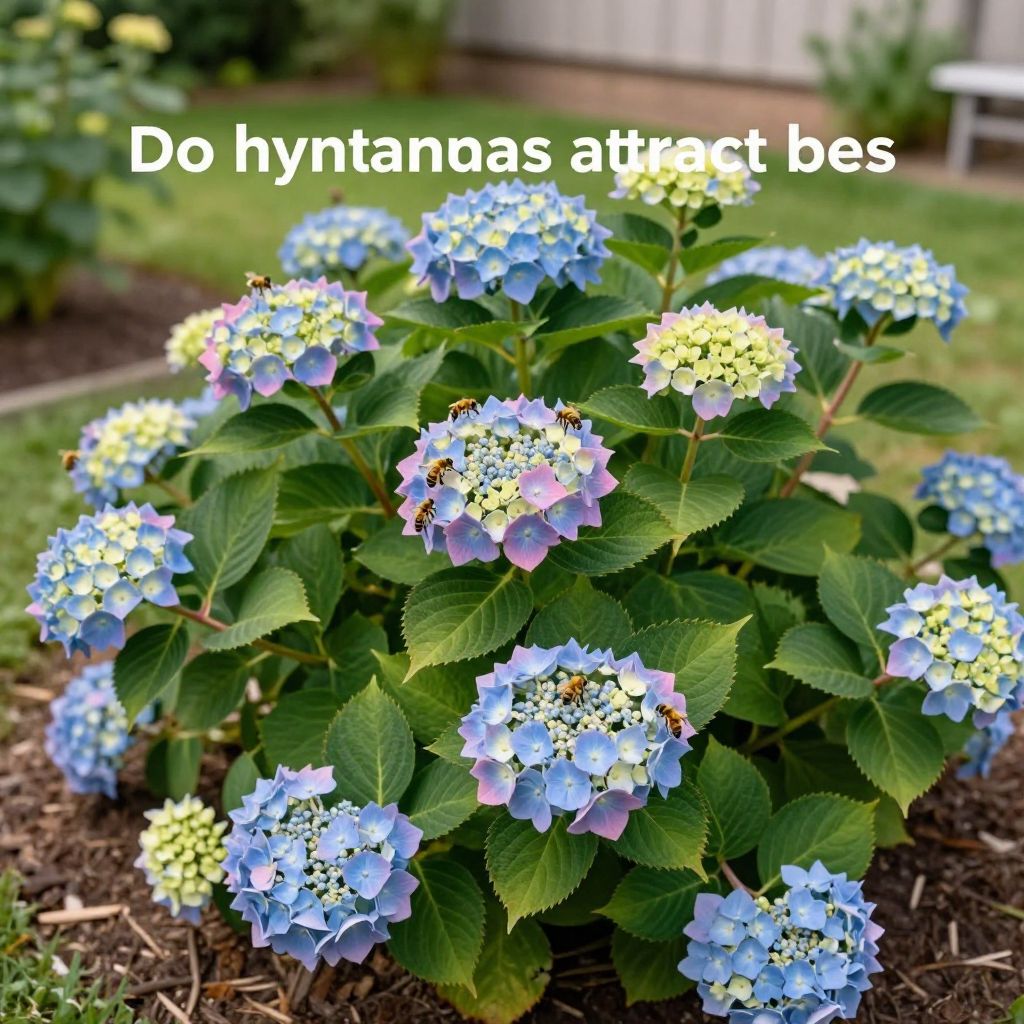
Do hydrangeas attract bees? If you’re planting for pollinators, or trying to avoid too many buzzing visitors near a patio or doorway, this is a smart question. The answer depends on the type of hydrangea, the flower form, and how much nectar and pollen the blooms actually offer.
Some hydrangeas can attract bees, especially varieties with more open, fertile flowers. Others are much less appealing to bees because their showy petals are mostly sterile and don’t provide easy access to pollen or nectar. Knowing which hydrangeas you have helps you choose the right plant for your garden goals.
Do hydrangeas attract bees?
Yes, some hydrangeas attract bees, but not all do. Bee activity is usually strongest on hydrangeas with open, lacecap, or fertile flowers, where pollen is easy to reach. Big, mophead hydrangeas often draw fewer bees because many of their showy blooms are sterile and offer less reward.
Why some hydrangeas attract more bees than others
Hydrangeas are not all the same from a pollinator’s point of view. The flower structure makes a big difference in whether bees visit them regularly.
Open flowers are easier for bees to use
Bees prefer flowers they can land on and gather pollen from efficiently. Hydrangeas with visible fertile florets, such as many lacecap types, are generally more attractive than tightly packed mophead blooms.
Sterile blooms are showy, but less useful to pollinators
Many popular garden hydrangeas have large decorative petals that are sterile, meaning they do not produce much pollen or nectar. These flowers may still get occasional bee visits, but they are usually not a major pollinator plant compared with herbs, native wildflowers, or shrubs with more accessible blooms.
Flower age matters too
Even on the same plant, bee activity can change as flowers mature. Fresh, fertile blooms tend to be more attractive than aging flowers that are fading, drying, or past peak bloom.
Which hydrangeas are most likely to attract bees?
If you want a hydrangea that supports pollinators, look for types with more open flower heads and fertile florets. These are generally the best bets for bee activity in the garden.
- Lacecap hydrangeas with a ring of showy outer flowers and a center of fertile florets
- Panicle hydrangeas with looser flower clusters that can be more accessible
- Species-type hydrangeas that retain more natural flower structure
By contrast, many mophead forms are bred mainly for large decorative blooms, so they may be less useful to bees even though they are beautiful in the landscape.
How to make hydrangeas more pollinator-friendly
You can’t turn every hydrangea into a bee magnet, but you can make the planting more attractive to pollinators by improving growing conditions and choosing the right cultivar type.
- Choose open-flowered varieties if bee support is a priority.
- Plant in full sun to part shade based on the hydrangea type and your climate.
- Avoid overfertilizing, which can push leafy growth at the expense of flowers.
- Water consistently so the plant can produce healthy blooms.
- Leave flowers on the plant during bloom time so bees have access to them.
For best results, combine hydrangeas with other pollinator plants nearby. A mixed border with salvia, catmint, thyme, echinacea, or native flowering shrubs usually supports far more bee activity than hydrangeas alone.
Best growing conditions for healthy hydrangeas
Healthy hydrangeas bloom better, and better blooms generally mean better chances of attracting bees. The exact needs vary by species and climate, but a few basics apply to most garden hydrangeas.
Sunlight
Many hydrangeas bloom best with morning sun and afternoon shade, especially in hot climates. In cooler regions, some types can take more sun. Too much shade often reduces flowering, which also reduces bee visits.
Soil
Hydrangeas prefer soil that holds moisture but drains well. Rich, organic soil helps support steady growth and flower production. Adding compost can improve structure and moisture retention, especially in sandy or compacted soils.
Drainage
Poor drainage is a common reason hydrangeas struggle. If roots stay soggy, the plant may decline, bloom poorly, and become more vulnerable to disease. If your soil stays wet after rain, consider planting on a slight mound or improving drainage before planting.
Watering
Hydrangeas like consistent moisture, especially during establishment and bloom development. Water deeply when the top layer of soil begins to dry, rather than giving frequent shallow sprinkles. In hot weather, container-grown hydrangeas may need closer monitoring than in-ground plants.
Pruning and bee-friendly bloom production
Pruning affects when and how hydrangeas bloom, which in turn affects bee visits. If you prune at the wrong time, you may remove flower buds and reduce the number of blooms available to pollinators.
Know your hydrangea type before pruning
Different hydrangeas bloom on different wood. Some bloom on old wood, some on new wood, and some on both. If you are unsure which kind you have, prune lightly until you can identify it confidently.
- Old-wood bloomers can lose next season’s flowers if pruned too hard at the wrong time.
- New-wood bloomers are usually more forgiving and can be pruned in late winter or early spring in many climates.
- Light cleanup pruning is safer than severe cutting for most home gardeners.
To keep flowers coming, remove only dead stems, weak growth, and spent blooms if needed for appearance. Avoid heavy pruning unless you know the plant’s bloom habit.
Common problems that reduce bee visits
If your hydrangeas are blooming but not attracting many bees, the issue may be plant structure, weather, or overall garden conditions rather than a lack of pollinator interest.
Too much fertilizer
High-nitrogen fertilizer can produce lush leaves with fewer flowers. If your hydrangea is leafy but not blooming well, reduce feeding and focus on balanced soil health instead.
Too much shade
Deep shade can weaken flowering. If the plant gets very little direct light, consider whether nearby branches or structures can be thinned to improve light levels.
Weather conditions
Cool, wet, windy, or very hot weather can reduce bee activity even when flowers are present. A lack of bees on a given day does not always mean the plant is unattractive to them.
Few nearby pollinator plants
Bees tend to move through a landscape where multiple nectar and pollen sources are available. A single hydrangea in isolation may get less attention than one growing in a diverse planting.
Pests and diseases to watch for
Hydrangeas are usually manageable shrubs, but stress from pests or disease can reduce bloom quality and make the plant less appealing to bees.
- Aphids can distort tender growth and attract ants.
- Spider mites may appear in hot, dry conditions and cause stippling on leaves.
- Powdery mildew can show up in humid, crowded plantings with poor air circulation.
- Leaf spots may develop when foliage stays wet for long periods.
Good spacing, morning watering, and removing badly damaged leaves can help reduce problems. If a plant is heavily stressed, it may bloom less and attract fewer bees.
How to plant hydrangeas for the best results
Good planting gives hydrangeas the root space and soil conditions they need to flower well. That supports both plant health and pollinator value.
- Choose a site with the right light for your hydrangea type and climate.
- Dig a hole as wide as the root ball and only as deep as the container or root mass.
- Loosen compacted soil and mix in compost if the soil is poor.
- Set the plant so the crown sits at the same level it was growing before.
- Water thoroughly after planting and keep the soil evenly moist while the plant establishes.
- Add mulch, but keep it a few inches away from the stems.
Mulch helps conserve moisture and reduce stress, but it should never be piled against the base of the plant. A 2- to 3-inch layer is usually enough in home gardens.
Should you plant hydrangeas if you want bees?
Hydrangeas can be part of a pollinator-friendly garden, but they are usually not the strongest bee plant. If you want reliable bee activity, use hydrangeas as one layer in a broader planting that includes more nectar-rich flowers.
They are a good choice if you want a shrub that offers seasonal interest, long bloom time, and occasional bee visits without overwhelming the garden with insects. If your goal is maximum pollinator support, pair them with more bee-friendly plants rather than relying on hydrangeas alone.
Simple care checklist for bee-friendly hydrangeas
- Choose open-flowered or lacecap forms when possible.
- Plant where the shrub gets appropriate light for its type.
- Keep soil evenly moist, especially during dry spells.
- Use compost to improve soil structure and fertility.
- Avoid overpruning and heavy nitrogen feeding.
- Watch for pests and disease that can weaken flowering.
- Grow other pollinator plants nearby for better bee support.
Conclusion
So, do hydrangeas attract bees? Yes, some do, especially hydrangeas with open, fertile flowers, but many ornamental types attract only modest bee activity. If you want the best chance of seeing bees, choose a more open-flowered hydrangea, grow it in healthy conditions, and pair it with other pollinator-friendly plants. For more garden planning ideas, you may also want to read about choosing shrubs for pollinators and how to improve garden soil with compost.