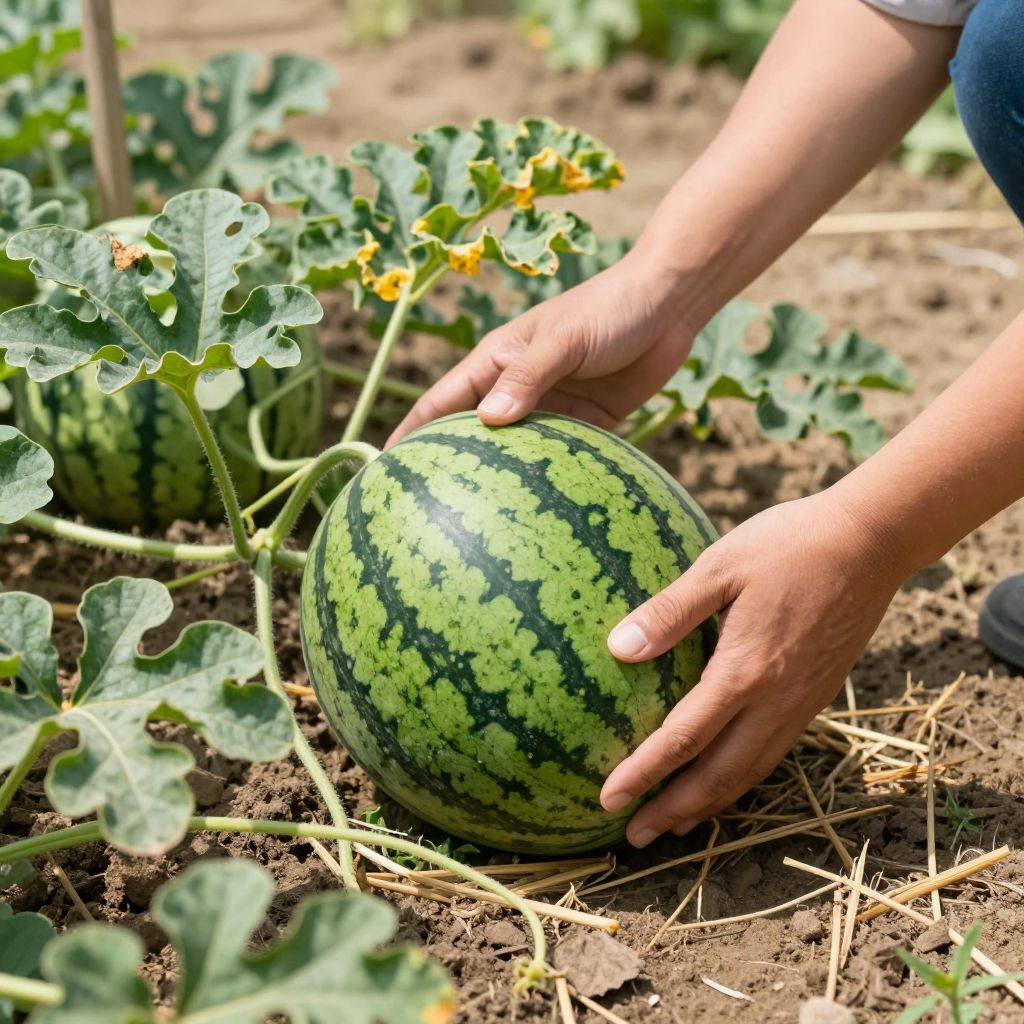
Wondering when to harvest Sugar Baby watermelon so you catch it at peak sweetness instead of picking too early? This compact watermelon can be tricky because it often looks “ripe” before it truly is. The good news is that a few reliable signs—especially the tendril, rind, and ground spot—will tell you when it’s ready.
With the right timing, you’ll get firm, juicy flesh and better flavor. If you harvest too soon, the melon may be pale, watery, and bland; too late, and it can become mealy or split on the vine.
When to harvest Sugar Baby watermelon?
Harvest Sugar Baby watermelon when the curly tendril nearest the fruit turns brown and dries, the underside spot changes from white to creamy yellow, and the rind becomes dull rather than shiny. Most fruit ripens about 70 to 90 days after planting, but weather, sunlight, and plant health can shift that timing.
How to tell Sugar Baby watermelon is ripe
1. Check the curly tendril near the fruit
Look at the small curly tendril on the vine closest to the watermelon stem. When that tendril turns brown and dries up, it is one of the best signs that the melon is close to ready.
If the tendril is still green, the fruit usually needs more time. If it is dry but the fruit still looks immature, use the other signs below before harvesting.
2. Inspect the ground spot
Every watermelon develops a “field spot” where it rests on the soil. On Sugar Baby watermelon, this spot should change from pale white or light green to creamy yellow or buttery yellow when ripe.
A white ground spot usually means the fruit is still developing. A rich yellow spot is a strong indicator that it has finished ripening on the vine.
3. Look at the rind finish
Unripe Sugar Baby watermelons often have a glossy, bright green rind. As they mature, the skin becomes duller and less reflective. This change is subtle, so compare the fruit to earlier photos or to nearby melons if you have several on the vine.
The rind should also feel firm and tough. You should not be able to press into it with your thumb.
4. Check the stem and fruit attachment
The stem nearest the fruit may begin to dry and brown as harvest time approaches. Do not rely on a loose stem alone, though, because stems can dry from heat or stress before the fruit is fully ripe.
Use the stem condition as a supporting clue, not the only one.
5. Use the days-to-maturity window as a guide
Sugar Baby watermelon is typically a small, early-season type, but the exact harvest window depends on your climate, planting date, and growing conditions. Count from sowing or transplanting, then start checking fruit closely as you near the expected maturity range.
Do not harvest by calendar alone. Warm weather, cool nights, soil fertility, and water stress can all change ripening speed.
Best time of day to harvest
Pick watermelons in the morning if possible, after the vines have cooled and before the day’s heat builds. Morning harvest can help reduce stress on the plant and makes it easier to handle the fruit without bruising it.
Choose a dry day if you can. Wet fruit is more slippery, and damp vines can be easier to damage while cutting.
How to harvest Sugar Baby watermelon safely
- Support the fruit with one hand or a small cushion if it is resting awkwardly.
- Use clean pruning shears, garden snips, or a sharp knife.
- Cut the stem, leaving about 1 to 2 inches attached to the fruit.
- Lift the melon carefully rather than tugging it free.
- Set it down gently to avoid bruising the rind.
Leaving a short stem helps reduce the chance of rot at the stem end. Pulling the fruit off by hand can tear the vine and damage nearby developing melons.
What happens if you harvest too early or too late?
If you harvest too early
Early-picked Sugar Baby watermelon may have pale flesh, weak sweetness, and a softer, less crisp texture. Once harvested, watermelon does not become sweeter in the way some fruits do, so timing matters.
If you are unsure, wait a few more days and check again. Watermelons can often stay on the vine a little longer without harm if the plant is healthy.
If you harvest too late
Overripe fruit may develop a mealy texture, lose flavor, or begin to crack, especially after heavy rain or irregular watering. In hot weather, overripe melons can also become dull and less refreshing.
If you notice splitting, soft spots, or a sour smell, harvest immediately and inspect the fruit. Damage can spread quickly in warm conditions.
Growing conditions that affect harvest timing
Healthy plants ripen fruit more predictably. If your Sugar Baby watermelon is slow to mature, the issue may be growing conditions rather than the variety itself.
Sunlight
Watermelons need full sun to ripen well. Aim for at least 6 to 8 hours of direct sunlight daily, and more is often better in cooler climates.
Shaded plants may produce fruit that takes longer to mature and tastes less sweet.
Soil and drainage
Watermelons prefer loose, well-drained soil. Heavy, compacted, or waterlogged soil can slow root growth and delay ripening.
If your soil holds water after rain, consider raised beds, mounded rows, or added organic matter to improve drainage before planting next season.
Watering
Consistent moisture helps vines grow steadily, but too much water near harvest can dilute flavor and increase splitting risk. Water deeply when needed, then let the soil dry slightly between waterings.
Avoid soaking the foliage late in the day. Wet leaves can encourage disease, especially in humid weather.
Fertilizer and vine growth
Too much nitrogen can push leafy growth at the expense of fruit ripening. If the vines are lush but the melons are slow to mature, excess nitrogen may be part of the problem.
Balanced feeding and healthy soil are usually better than heavy fertilizing. Compost worked into the bed before planting often supports steady growth without overstimulation.
Common mistakes when deciding harvest time
- Picking by size alone: Sugar Baby watermelon can look full-sized before it is ripe.
- Relying on a hollow sound only: The “thump” test is inconsistent and should not be your only clue.
- Ignoring the field spot: The underside color is one of the most dependable signs.
- Harvesting after a rainstorm without checking: Sudden water uptake can cause cracking in ripe fruit.
- Pulling the fruit off the vine: This can damage the melon and the plant.
If you are new to watermelons, use at least two or three ripeness signs together before cutting the fruit. One sign alone can be misleading.
Pests and diseases that can interfere with harvest
Problems in late season can affect both fruit quality and timing. Keep an eye out for insect damage, fungal leaf spots, and vine decline, especially in humid or overcrowded plantings.
Watch for these issues
- Squash bugs or cucumber beetles: They can weaken vines and reduce fruit quality.
- Powdery mildew: White coating on leaves may shorten the plant’s productive life.
- Fungal rot on fruit: Often worsened by wet soil and poor airflow.
- Cracking or splitting: Can happen after uneven watering or heavy rain near maturity.
Remove badly damaged fruit, keep weeds down, and avoid crowding vines. Good airflow helps fruit finish ripening cleanly.
Can you ripen Sugar Baby watermelon after picking?
No, not in the way many gardeners hope. Once harvested, watermelon may soften slightly, but it will not become significantly sweeter. That is why learning when to harvest Sugar Baby watermelon on the vine is so important.
If you must pick a melon a little early because of frost, pests, or vine decline, let it sit at room temperature for a short time before cutting. This will not add sweetness, but it may improve handling and serving temperature.
Practical harvest checklist
Before you cut the fruit, run through this quick checklist:
- The tendril nearest the fruit is brown and dry.
- The ground spot is creamy yellow, not white.
- The rind looks dull, not shiny.
- The fruit feels firm and heavy for its size.
- The vine is still healthy enough to support ripening.
If most of these signs match, the melon is likely ready. If only one sign is present, wait and check again in a day or two.
After harvest: handling and storage
After cutting, move the melon out of direct sun and into a cool, shaded place. Handle it gently to avoid bruising, especially if the rind is thin or the fruit has been resting on rough soil.
Whole watermelons keep best in a cool area, but storage life depends on how ripe they were at harvest and how carefully they were handled. Once cut, refrigerate the pieces promptly.
Final tip for better harvests next season
Keep notes on planting date, flowering, and the day each melon ripens. Over time, you will learn how your local weather affects harvest timing, and you will get better at judging when to harvest Sugar Baby watermelon with confidence.
If you want to improve next season’s crop, review your bed’s sunlight, drainage, and watering habits before planting again. For more help with melon care, look for related guides on growing watermelons in home gardens and improving soil for warm-season crops.