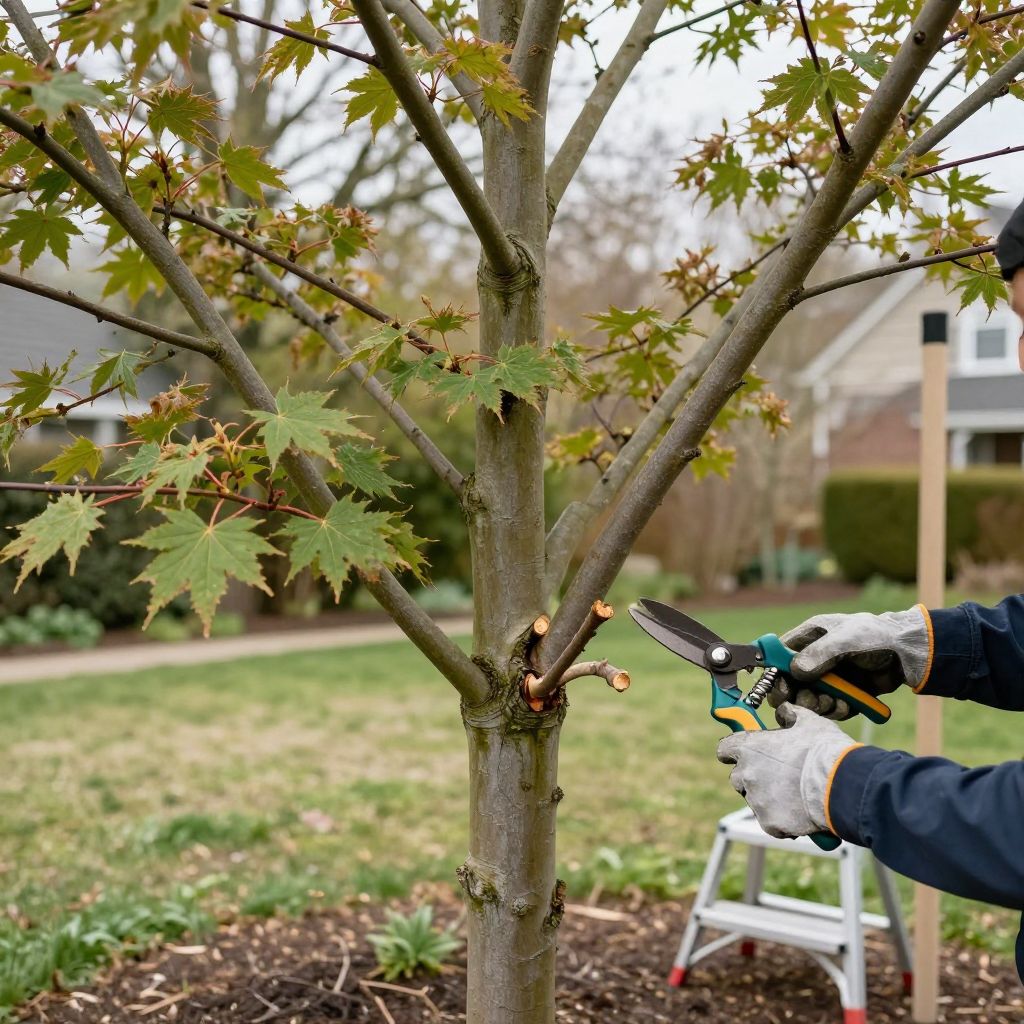
Wondering when to prune maple trees without stressing them or causing messy sap flow? The short answer is that timing depends on the tree’s condition and your goal. In general, the safest time for major pruning is late winter to early spring before strong growth starts, while light corrective pruning can often wait until summer after the leaves are fully out.
Maples are worth pruning carefully because they can bleed sap heavily if cut at the wrong time. A few well-placed cuts are usually all you need to keep the tree healthy, well-shaped, and safe around your home.
When to prune maple trees?
The best time to prune maple trees is usually during late winter or very early spring, before buds swell and sap rises strongly. For most maples, avoid heavy pruning in late winter if the tree is already active in your climate; if you want to reduce sap bleeding, midsummer after full leaf-out is often better for minor pruning.
Why timing matters for maple pruning
Maples are known for “bleeding” sap from fresh cuts, especially in late winter and early spring. This is usually not harmful to a healthy tree, but it can be messy and may signal that the tree is under stress if pruning is excessive.
Timing also affects how quickly the tree seals wounds and how much new growth it pushes after pruning. Pruning at the right time helps you shape the tree with less stress and fewer problems.
Best pruning windows by season
- Late winter to early spring: Best for structural pruning before growth begins, especially on dormant trees.
- Mid- to late summer: Good for light pruning, removing water sprouts, or correcting shape after the tree has leafed out.
- Fall: Usually not ideal, since cuts may heal more slowly as the tree prepares for dormancy.
- During active sap flow: Avoid major pruning if you want to minimize bleeding.
How to choose the right time based on your maple
Not all maples behave exactly the same. Sugar maple, red maple, silver maple, and Japanese maple can all be pruned, but the best timing depends on how fast they grow, how mature they are, and what shape you want to maintain.
Young maples
Young trees benefit from light, regular training cuts when they are dormant or just before spring growth begins. The goal is to build a strong central structure early, not to remove a large amount of wood at once.
Mature maples
Older trees usually need less pruning. Focus on dead, damaged, crossing, or rubbing branches, and spread major work over several seasons if the canopy is large.
Japanese maples
Japanese maples are often pruned more for form than for size. Light pruning in summer is commonly used to preserve shape, reduce crowding, and avoid excessive sap bleeding.
What to prune on a maple tree
Good pruning is selective. You are not trying to “thin” the tree randomly; you are improving structure, airflow, and safety while preserving the natural form.
Remove these branches first
- Dead branches
- Broken or storm-damaged limbs
- Branches that rub against each other
- Crossing branches that crowd the canopy
- Water sprouts or weak upright shoots
- Suckers growing from the base or trunk
Be cautious with these cuts
- Large limbs close to the trunk
- More than about one-quarter of the canopy in a single season
- Topping cuts that flatten the crown
- Flush cuts that remove the branch collar
Avoid removing too much at once. Heavy pruning can trigger weak regrowth, reduce energy reserves, and make the tree more vulnerable to pests and disease.
Step-by-step pruning tips for maple trees
Use clean, sharp tools and make deliberate cuts. If you are unsure whether a branch should come off, step back and look at the whole tree first.
- Inspect the tree. Look for dead wood, damage, crowded limbs, and branches that interfere with structures or walkways.
- Start with the smallest problems. Remove dead, diseased, or broken branches before making shape cuts.
- Prune to a branch collar. Cut just outside the swollen area where the branch joins the trunk or larger limb.
- Use the three-cut method for large limbs. Make an undercut first, then a top cut farther out, then finish with the final cut at the collar to prevent bark tearing.
- Step back often. Check the tree’s overall balance after each few cuts.
- Clean your tools. Wipe blades between trees, and especially after cutting diseased wood.
Tools that help
- Hand pruners for small twigs and shoots
- Loppers for medium branches
- A pruning saw for larger limbs
- Gloves and eye protection
Common mistakes to avoid
Most pruning problems come from cutting at the wrong time or cutting too much. A careful approach keeps the tree healthy and avoids unnecessary regrowth.
- Pruning during heavy sap flow if you want to minimize bleeding
- Topping the tree instead of making selective cuts
- Leaving stubs that dry out and decay
- Removing too much canopy in one season
- Using dull or dirty tools that tear bark
- Ignoring the branch collar and making flush cuts
What if your maple is bleeding sap?
Sap bleeding after pruning is common in maples and usually looks worse than it is. The tree is often fine, especially if the cuts were small and the tree is otherwise healthy.
If you want to reduce bleeding next time, shift major pruning to summer after the leaves have fully expanded. For now, avoid making extra cuts just to “fix” the sap flow, because that can create more wounds.
How much pruning does a maple need?
Most healthy maples need only light to moderate pruning. In many cases, removing a few problem branches is enough. If a tree has been neglected for years, spread the work over multiple seasons instead of trying to correct everything at once.
A useful rule is to keep pruning conservative. If you are taking off more than a small portion of the canopy, pause and reconsider whether the job should be divided into stages or handled by an arborist.
When to call a professional
Some maple pruning jobs are best left to a certified arborist, especially when the tree is large or close to buildings, power lines, or driveways. Safety matters as much as tree health.
Get help if you notice:
- Large limbs overhanging roofs or utility lines
- Split trunks or major structural defects
- Extensive deadwood in the canopy
- Signs of decay at the base or branch unions
- Branches that require climbing or a ladder to reach safely
Aftercare following pruning
After pruning, keep the tree under normal care rather than overcorrecting with extra water or fertilizer. A healthy root zone and stable growing conditions help the tree recover well.
- Water deeply during dry spells, especially for young trees.
- Mulch around the root zone, but keep mulch a few inches away from the trunk.
- Watch for new sprouts or weak regrowth and remove them if needed.
- Check for signs of stress such as leaf scorch, dieback, or unusual wilting.
If the tree is planted in compacted soil or poor drainage, address those issues separately. Pruning cannot fix root stress, and a stressed maple is more likely to respond poorly to heavy cutting.
Quick seasonal guide for maple pruning
- Late winter: Best for many structural cuts if the tree is still fully dormant.
- Early spring: Use caution because sap flow may be strong.
- Summer: Good for light shaping and reducing unwanted shoots.
- Fall: Usually best to avoid unless removing broken or hazardous wood.
Conclusion
When to prune maple trees comes down to timing, tree age, and the size of the job. For most homeowners, late winter to early spring works well for structural pruning, while summer is often better for light corrective cuts that reduce sap bleeding. Start with dead or damaged wood, make clean cuts, and avoid overpruning.
If you are planning your next yard project, it can also help to read more about general tree pruning basics and how to care for young landscape trees after planting.