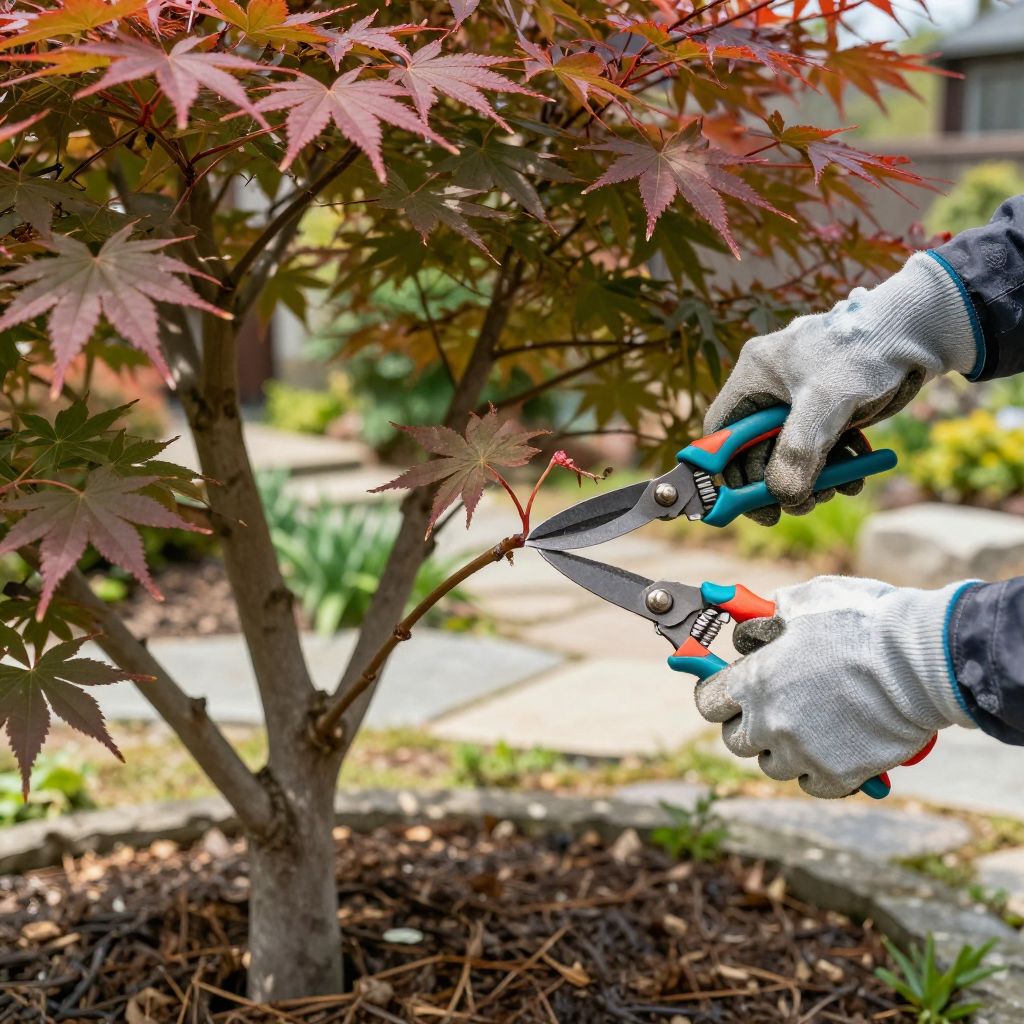
Wondering when to trim Japanese maple without damaging its shape or stressing the tree? The short answer is that light pruning is best in late winter or midsummer, but the safest timing depends on your climate, the tree’s age, and how much work it needs. Japanese maples respond best to careful, minimal cuts rather than hard pruning.
With the right timing and technique, you can improve structure, remove dead growth, and keep the canopy elegant. The goal is not to force the tree into a new shape, but to guide it gently while preserving its natural form.
When to trim Japanese maple?
The best time to trim a Japanese maple is usually during dormancy in late winter or very early spring before buds open, or in midsummer after the first flush of growth hardens off. Avoid heavy pruning in early spring when sap is flowing strongly, and never remove more than a small amount at once unless you are correcting dead, damaged, or crossing branches.
Why timing matters for Japanese maple pruning
Japanese maples (Acer palmatum) are known for delicate branching and attractive foliage, so pruning timing affects both appearance and plant health. A poorly timed cut can lead to excessive sap bleeding, sunscald on previously shaded branches, or a tree that looks sparse for the rest of the season.
These trees are generally slow-growing and best treated as light-pruning plants. If you understand the season and the tree’s growth cycle, you can trim with far less risk.
Best pruning windows
- Late winter to very early spring: Good for structural pruning, deadwood removal, and shaping before leaves emerge.
- Midsummer: Good for minor touch-ups after the first flush of growth has matured.
- After leaf drop in autumn: Useful for inspection, but avoid major cuts if cold weather is close.
Times to avoid pruning
- Early spring sap flow: Heavy bleeding can happen, especially if you make large cuts.
- Late fall into winter in very cold climates: Fresh cuts may be more vulnerable to winter injury.
- Hot, dry spells: Stress is higher, and exposed branches may scorch.
How much should you trim?
For most Japanese maples, less is more. Remove only what is necessary to improve structure, health, or clearance. A good rule is to prune lightly and step back often to reassess the tree’s natural outline.
- Remove dead, broken, or diseased branches first.
- Take out branches that rub or cross each other.
- Thin crowded areas to improve light and airflow.
- Shorten shoots only when needed to maintain shape or size.
If the tree has become too large for its space, spread major reductions over several seasons rather than cutting it back hard in one year.
Step-by-step pruning tips for Japanese maple
Use clean, sharp tools and make deliberate cuts. Japanese maples heal best when wounds are small and precise.
- Start with dead or damaged wood. Cut back to healthy tissue or to the branch collar where appropriate.
- Remove crossing branches. Choose the branch that best supports the tree’s shape and remove the other.
- Thin for structure. Open the canopy slightly so light can move through the tree.
- Shorten long, awkward shoots. Cut back to a side branch or bud rather than leaving stubs.
- Step back frequently. Check the silhouette from several angles before making more cuts.
Make cuts the right way
Cut just outside the branch collar, not flush against the trunk. Avoid leaving long stubs, which can die back and look messy. For small twigs, use hand pruners; for larger limbs, use loppers or a pruning saw.
Do not top a Japanese maple. Topping destroys the natural structure and often leads to weak, unattractive regrowth.
Pruning young vs. mature Japanese maples
Young trees benefit from gentle training, while mature trees usually need only maintenance pruning. The approach is different because the goal changes from building structure to preserving form.
Young trees
When a Japanese maple is young, focus on selecting a strong framework. Remove competing leaders, low branches that interfere with the design, and any shoots that grow inward toward the center.
Keep pruning light so the tree can build energy and a balanced canopy.
Mature trees
Mature Japanese maples usually need only selective thinning, deadwood removal, and the occasional branch reduction. Large cuts on older trees are more noticeable and slower to close, so avoid unnecessary removal.
What to watch for before you trim
Before pruning, inspect the tree closely. The right timing is not just about the calendar; it also depends on the tree’s condition and your local weather.
- Bud stage: If buds are swelling but not open, late winter pruning may be appropriate.
- Leaf condition: If the tree is actively growing and the foliage is fully expanded, limit pruning to light corrections.
- Weather forecast: Avoid pruning right before a hard freeze or during extreme heat.
- Tree stress: If the tree is newly planted, drought-stressed, or recovering from damage, prune only what is necessary.
Common mistakes to avoid
Japanese maple pruning mistakes are usually caused by cutting too much or cutting at the wrong time. A cautious approach keeps the tree attractive and reduces stress.
- Pruning too heavily: Removing too much foliage can expose branches to sunburn and weaken the tree.
- Making random cuts: Every cut should have a purpose.
- Ignoring branch structure: Crowded, rubbing, or inward-growing branches should be addressed first.
- Leaving stubs: These can die back and invite problems.
- Using dirty tools: Clean blades help reduce disease spread.
How pruning affects tree health and appearance
Proper pruning does more than improve shape. It can reduce branch congestion, improve airflow, and help you spot pests or disease earlier. It also preserves the layered, graceful look that makes Japanese maples so desirable in the landscape.
That said, pruning is not a cure for poor site conditions. If the tree is struggling, check drainage, sun exposure, and watering habits before making major cuts.
Signs your Japanese maple may need only minimal pruning
- Branches have a balanced, natural outline.
- There are no dead or rubbing limbs.
- The canopy has good light penetration.
- The tree is growing steadily without obvious stress.
Signs pruning is useful now
- Broken limbs after wind or snow.
- Branches crossing in the center of the canopy.
- Low growth blocking a path or view.
- Dead twigs that remain leafless while the rest of the tree leafs out.
Best tools for trimming Japanese maple
Use tools that make clean cuts without crushing stems. Sharp blades matter more than expensive equipment.
- Hand pruners: For small shoots and twigs.
- Loppers: For slightly thicker branches you can reach safely.
- Pruning saw: For larger limbs that are too thick for loppers.
- Rubbing alcohol or disinfectant: For cleaning blades between cuts if disease is suspected.
Keep tools sharp and dry. Dull blades tear bark and make healing slower.
What if your Japanese maple bleeds sap?
Sap bleeding can happen when pruning is done during active spring growth. It usually looks alarming, but it is often temporary. The best response is prevention: wait for a better pruning window whenever possible.
If bleeding occurs after a small cut, the tree will usually recover. Focus on avoiding more cuts during that period, and do not apply random sealants unless a local arborist recommends them for a specific reason.
Can you shape a Japanese maple into a specific form?
You can guide the tree, but you should work with its natural habit rather than against it. Japanese maples look best when their branching remains airy and layered.
If you want a more refined shape, prune gradually over several seasons. This is especially important if the tree is used as a focal point in a small garden, courtyard, or container planting.
Aftercare following pruning
After trimming, give the tree steady but not excessive care. The goal is to reduce stress and help it recover smoothly.
- Water deeply during dry spells, especially for newly planted trees.
- Mulch lightly around the root zone, keeping mulch away from the trunk.
- Watch for sunscald on branches that were newly exposed.
- Check for new dead tips or wound dieback over the following weeks.
If the tree is in a windy or very sunny site, consider whether nearby plants or a little afternoon shade could reduce stress after pruning.
Quick answer: the best timing by situation
- For shaping: Late winter or very early spring, before bud break.
- For light touch-ups: Midsummer after growth hardens.
- For damage removal: Any time, if needed for safety or health.
- For major reduction: Spread the work over multiple seasons.
Conclusion
When to trim Japanese maple comes down to timing, restraint, and the tree’s condition. In most cases, prune lightly in late winter or midsummer, remove only what is necessary, and let the tree keep its natural form. If you are unsure, start with dead or crossing branches and save major shaping for another season.
For more help with tree care and garden structure, you may also want to read related guidance on pruning ornamental trees and choosing the right mulch for landscape shrubs.