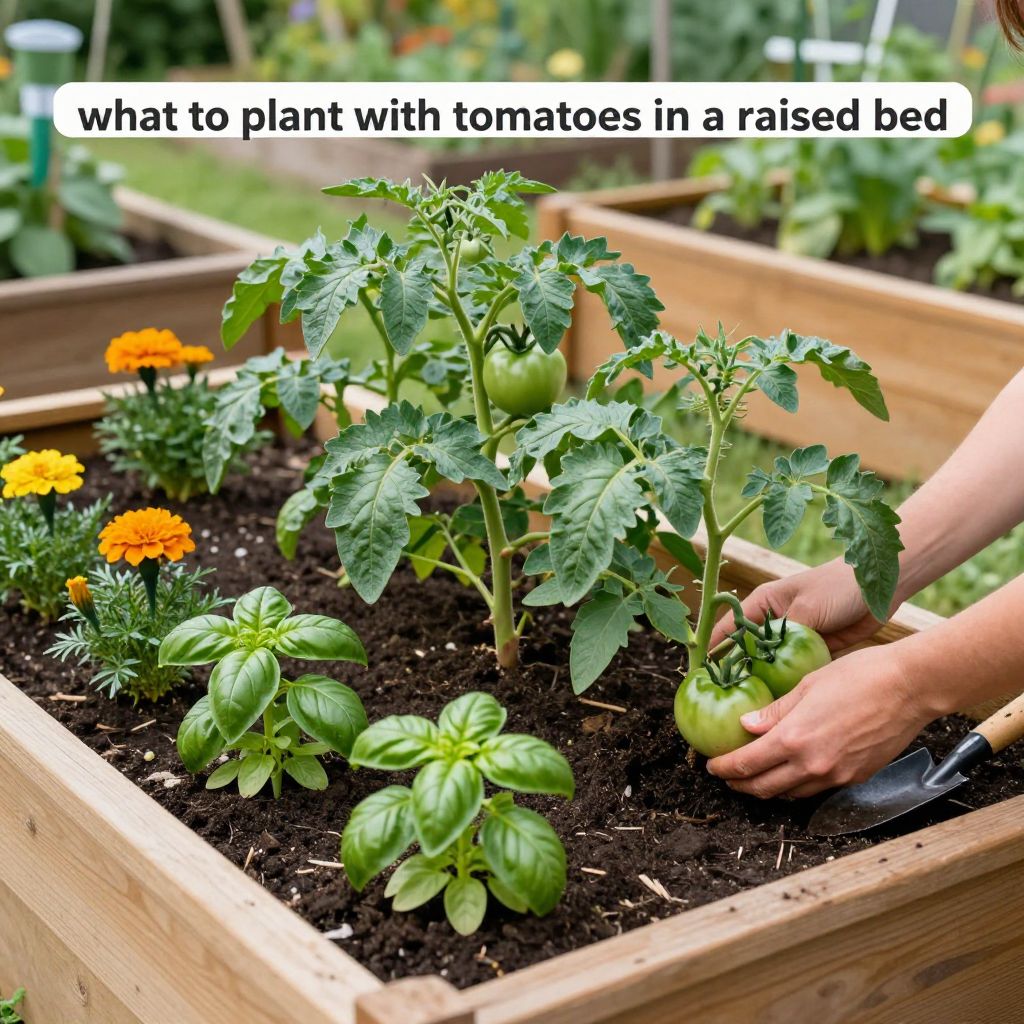
Trying to figure out what to plant with tomatoes in a raised bed? The best companions are plants that fit tomatoes’ sun, spacing, and water needs without competing too heavily for root space or airflow. Good choices can help you use the bed efficiently, reduce pest pressure, and make harvesting easier.
The key is to pair tomatoes with crops that stay relatively compact, mature at a similar pace, and tolerate the same warm, sunny conditions. In a raised bed, the limited space makes plant selection especially important, so companion planting should support healthy growth rather than crowd the bed.
What to plant with tomatoes in raised bed?
Plant tomatoes with compact herbs, shallow-rooted greens, alliums, and a few beneficial flowers. Good companions include basil, parsley, lettuce, spinach, scallions, garlic, onions, marigolds, nasturtiums, and carrots. Choose plants that won’t shade tomatoes, compete aggressively for nutrients, or reduce airflow around the stems.
Best companion plants for tomatoes in a raised bed
Herbs that work well
Herbs are some of the easiest and most useful companions for tomatoes because many stay small and fit neatly along the bed edges.
- Basil – A classic companion for tomatoes. It grows well in similar conditions and can be tucked near the base, as long as it does not crowd the stem.
- Parsley – Compact and useful as a border plant or filler between tomatoes when spaced well.
- Chives – Their upright growth takes little room, and they fit nicely around the edge of the bed.
- Oregano – Best kept contained, since it can spread. Plant it where it won’t smother neighboring crops.
These herbs are especially helpful in raised beds because they can be harvested regularly without disturbing tomato roots much.
Leafy greens and quick crops
Fast-growing greens can be planted early in the season before tomato plants fill out, or in partial shade beneath taller tomato foliage later on.
- Lettuce – Shallow-rooted and quick to harvest. It works well at the bed edges or between young tomato plants.
- Spinach – Best in cooler parts of the season, so it often pairs well with tomatoes early on.
- Arugula – A good short-term crop that can be harvested before tomatoes become large.
- Swiss chard – Tolerates some shade and can work if your raised bed is large enough.
These crops help you make use of open space while tomatoes are still small. Once the tomato canopy thickens, they may need to be harvested or removed if light becomes limited.
Alliums and root crops
Alliums and some root vegetables can fit well in a tomato bed because they use space differently from tomatoes.
- Scallions – Small, upright, and easy to tuck between plants.
- Garlic – Often grown as a companion in beds, especially if planted where it won’t interfere with tomato roots.
- Onions – Useful if spaced carefully and not planted too close to tomato stems.
- Carrots – A good option in deeper raised beds, where roots can develop without obstruction.
- Radishes – Quick to mature and useful as a short-term filler crop.
In raised beds, root crops are most successful when the soil is loose, stone-free, and at least moderately deep. Avoid planting them where tomato roots are already dense.
Flowers that support the bed
Some flowers add color and can help attract beneficial insects or distract from pests, but they should still stay compact enough for a raised bed.
- Marigolds – Popular near tomatoes because they are compact and easy to place around bed edges.
- Nasturtiums – Trailing varieties can spill over the side of the bed, which works well if they do not smother nearby plants.
- Calendula – A useful pollinator-friendly flower that can fit in a mixed planting.
Choose smaller varieties and avoid flowers that become tall, bushy, or invasive in a tight raised bed.
What not to plant with tomatoes in a raised bed
Not every plant is a good fit for tomatoes. The main problems are crowding, shading, shared disease pressure, or very different water and nutrient needs.
- Potatoes – They share several diseases with tomatoes, including blight issues, so keeping them apart is usually wise.
- Large brassicas such as cabbage or broccoli – These can take up too much space and may compete strongly in a small bed.
- Fennel – Generally a poor companion for many garden vegetables and best kept in its own area.
- Very vigorous vines – Plants that spread quickly can smother tomato stems and reduce airflow.
If your raised bed is small, avoid mixing tomatoes with anything that needs a lot of room to spread at maturity. Tomatoes already need enough space for staking, pruning, and airflow.
How to arrange tomatoes and companion plants in a raised bed
Plan for airflow first
Tomatoes need room around their stems to dry quickly after rain or watering. In a raised bed, tight spacing can quickly lead to disease problems if leaves stay damp.
Place taller tomato varieties where they will not shade smaller crops for the entire day. Keep companions at the edges or in gaps that still allow air to move through the bed.
Use the edges for smaller plants
The outer edges of the bed are ideal for low-growing plants such as lettuce, scallions, marigolds, or trailing nasturtiums. This keeps the center open for tomato support cages or stakes.
Match growth speed to the season
Early in the season, you can use the space between young tomato transplants for quick crops like radishes or lettuce. As tomato plants grow larger, remove or harvest those companions before they become crowded.
Keep root competition in mind
Tomatoes are heavy feeders. In a raised bed, they do best when the soil is rich, but too many neighboring plants can still compete for water and nutrients. Leave enough room for each tomato to develop a strong root system.
A good rule: if you have to bend or squeeze foliage to pass through the bed, it is probably too crowded.
Raised bed soil, compost, and watering for mixed plantings
Companion planting works best when the bed itself is in good condition. Tomatoes and their neighbors all benefit from loose, fertile soil with reliable drainage.
Soil and compost
Use a well-draining raised bed mix enriched with compost. Tomatoes prefer fertile soil, but overly rich, nitrogen-heavy soil can push leafy growth at the expense of fruiting.
- Mix in compost before planting to improve structure and moisture retention.
- Avoid packing the soil too tightly, especially around root crops.
- If the bed drains slowly, improve it before planting rather than trying to fix it later.
Watering
Tomatoes need consistent moisture, and companion plants should be chosen with that in mind. Raised beds dry out faster than in-ground gardens, especially in hot or windy weather.
- Water deeply at the soil level rather than wetting the leaves.
- Check moisture regularly because mixed plantings can dry unevenly.
- Mulch lightly if needed, but keep mulch away from the tomato stem.
If you are growing basil, lettuce, or herbs with tomatoes, watch for signs that one plant is drying faster than the others. In a raised bed, small differences in root depth can change how often each crop needs water.
Pruning, staking, and maintenance in a mixed tomato bed
Tomatoes grow best in raised beds when they are supported and kept tidy. Companion plants should not interfere with pruning or harvesting.
- Stake or cage tomatoes early so you do not damage nearby plants later.
- Remove lower leaves that touch the soil to reduce disease risk.
- Prune gently so light and airflow reach the companion plants below.
- Harvest quick crops before tomato vines become too dense.
Indeterminate tomatoes usually need more vertical support and more careful spacing than determinate types. If your bed is small, compact or determinate varieties may be easier to mix with companions.
Common problems when companion planting tomatoes in raised beds
Too much crowding
This is the most common mistake. Crowding reduces airflow, increases humidity, and makes it harder to spot pests or disease early.
Fix: remove a companion plant or two, especially if tomato leaves are touching neighboring foliage all day.
Shading
Tall companions or poorly placed tomatoes can shade smaller crops, causing weak growth and poor yields.
Fix: keep taller plants on the north side of the bed if you are in the Northern Hemisphere, so they do not block sunlight from shorter crops.
Pests and disease spread
Mixed plantings can still be healthy, but if you choose the wrong companions, pests and diseases can spread more easily. Shared problems are especially likely when plants are too close together or leaves remain wet.
Fix: space plants properly, water at the soil line, and remove damaged leaves promptly.
Uneven watering
Tomatoes may need more consistent moisture than herbs or some root crops. In a raised bed, that can make one crop look stressed while another seems fine.
Fix: group plants with similar moisture needs together and monitor the bed closely during hot weather.
Simple planting plan for a raised bed with tomatoes
If you want a straightforward layout, start with a few tomato plants and fill the remaining space with compact companions.
- Place tomato cages or stakes first so you know how much room is left.
- Plant tomatoes with enough space for full-size growth and airflow.
- Fill edges with basil, parsley, scallions, marigolds, or lettuce.
- Use quick crops like radishes or arugula only where they can be harvested before the tomatoes dominate the bed.
- Check the bed weekly and remove anything that starts to crowd the tomatoes.
This approach gives you a productive mixed bed without turning it into a tangle of competing plants.
Conclusion
The best answer to what to plant with tomatoes in raised bed is: choose compact, compatible plants that support airflow, fit the season, and do not compete too aggressively. Basil, parsley, lettuce, scallions, carrots, marigolds, and nasturtiums are all practical options when spaced well.
Before you plant, sketch your bed layout, leave room for tomato support, and match each companion to your local climate and bed size. For more help planning a productive vegetable space, you may also want to read about raised bed soil preparation and how to grow basil alongside vegetables.