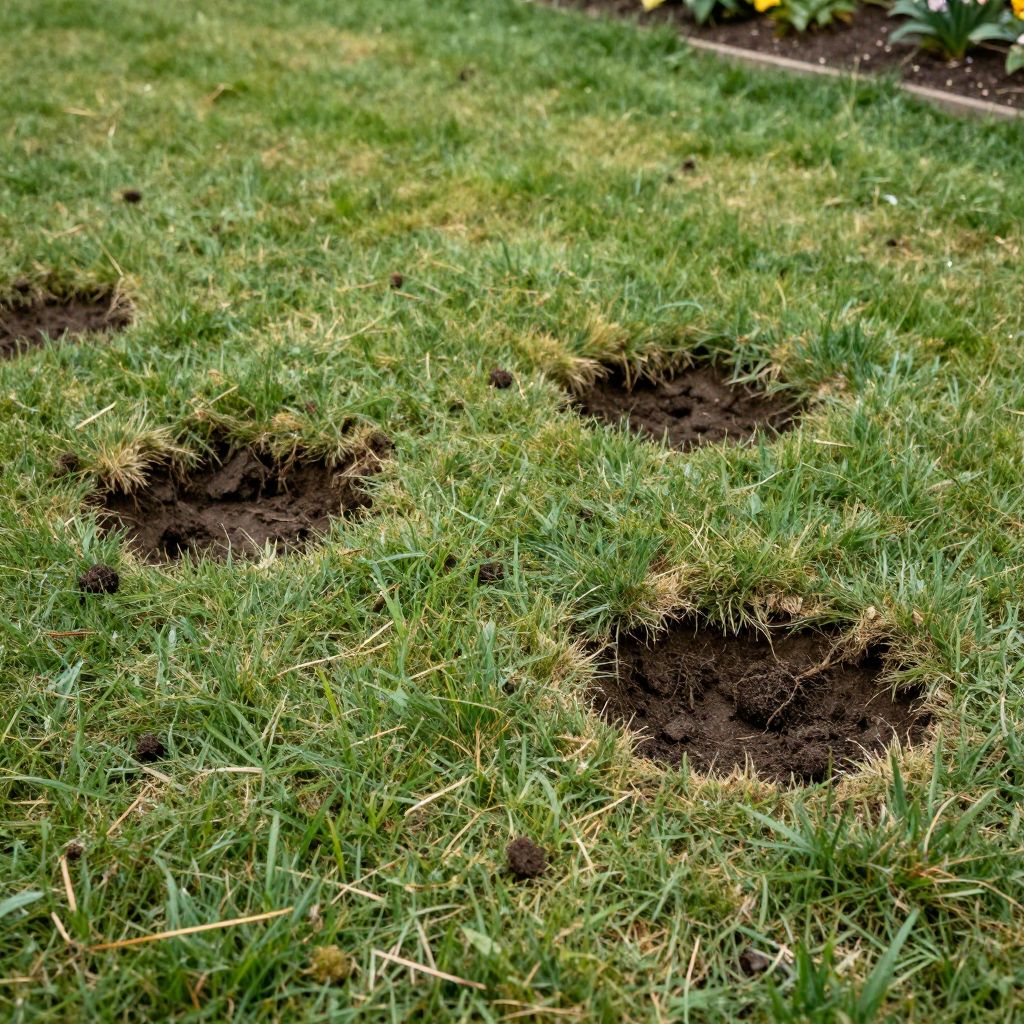
What is digging holes in my yard? It’s usually a sign that an animal, insect, or even a lawn maintenance issue is active in your landscape. The shape, size, depth, and location of the holes are the best clues for identifying the cause.
Once you know what made the holes, you can decide whether to leave them alone, repair the damage, or prevent more from appearing. The key is to inspect the pattern carefully before treating the yard or filling anything in.
What Is Digging Holes In My Yard?
Most yard holes are caused by wildlife such as squirrels, skunks, raccoons, moles, voles, armadillos, or birds searching for insects, grubs, or buried food. In some cases, the culprit is a pet, irrigation leak, or settling soil. The hole’s size, shape, and the surrounding soil usually point to the answer.
How to Identify the Cause by the Hole
Small, shallow holes
Little holes about 1 to 2 inches wide are often made by birds pecking for insects, squirrels burying or retrieving nuts, or insects emerging from the soil. If the holes are scattered and shallow, the damage is often cosmetic rather than structural.
- Birds: tiny peck marks or small divots in turf
- Squirrels: shallow holes with loose soil nearby
- Insects: pinholes or small exit holes, sometimes with mounds
Medium holes with loose soil
Holes around 2 to 4 inches across may indicate skunks, raccoons, armadillos, or pets. These animals often dig for grubs, beetle larvae, earthworms, or buried food. If the turf is flipped or torn, the animal is usually foraging rather than nesting.
- Skunks: cone-shaped holes, often at night, with scooped-up turf
- Raccoons: rough, torn patches where sod is peeled back
- Dogs: repeated digging near fences, play areas, or scent-marked spots
- Armadillos: shallow pits or snout holes in loose soil
Tunnels, ridges, or raised runs
If you see raised ridges, surface tunnels, or collapsed openings, the issue may be moles or voles. Moles create underground tunnels and volcano-like mounds, while voles make small openings and surface runways through grass or mulch.
- Moles: raised tunnels and round soil mounds
- Voles: narrow runways in grass, with small entrance holes near cover
Holes near plants, roots, or mulch
When digging is concentrated around shrubs, trees, or mulched beds, the cause may be rodents, insects, or moisture-seeking animals. Fresh mulch can also attract animals looking for shelter or grubs, especially in warm, damp weather.
Common Yard Diggers and What They Leave Behind
Squirrels
Squirrels usually make shallow holes while burying nuts or digging them back up. The holes are often small, scattered, and not very deep. You may notice the same spots being disturbed repeatedly in fall and spring.
Skunks
Skunks are classic grub hunters. They leave small cone-shaped holes or lifted patches of turf where they have rooted through the lawn at night. If you see this pattern, check for a grub infestation before assuming the skunk is the only problem.
Raccoons
Raccoons tend to make messier damage than skunks. They may tear sod, flip sections of lawn, or dig in mulch beds while searching for insects and worms. Their holes are often more irregular and destructive.
Moles and voles
Moles are not usually making visible “holes” in the same way other animals do, but their tunnels and mounds can make the yard look pitted or uneven. Voles can create small openings near dense grass, shrubs, or groundcover, especially where cover is thick.
Insects and grubs
If the holes are tiny, numerous, or paired with thinning turf, insects may be involved. Birds, skunks, and raccoons may then dig after the insects themselves. In lawns, grub activity often leads to secondary digging by wildlife.
Pets
Dogs often dig for entertainment, scent, comfort, or escape routes. Their holes are usually deeper and more irregular than wildlife holes, and they often appear in the same favorite spots.
What to Check Before You Fix the Damage
Before filling holes, look for the pattern and the surrounding clues. A quick inspection can save you from treating the wrong problem.
- Measure the hole. Note width, depth, and whether it is a single hole or part of a larger pattern.
- Check for tracks or droppings. Prints, scat, or disturbed mulch can identify the visitor.
- Look at the time of day. Night digging often points to skunks, raccoons, or armadillos.
- Inspect nearby plants. Chewed stems, missing bulbs, or damaged roots can narrow the cause.
- Test the soil. Very soft, moist soil is easier for animals to dig and may also signal drainage issues.
How to Repair Yard Holes Safely
Once you identify the likely cause, repair the area based on the size of the hole and the type of damage. For small holes, simply level the soil and overseed if the grass was disturbed. For larger holes, you may need to replace turf or amend the soil first.
For small surface holes
- Rake loose soil back into the hole.
- Press the area lightly so it settles without compacting too hard.
- Add a thin layer of topsoil if needed.
- Overseed bare spots if grass is missing.
For deeper or larger holes
- Remove loose debris and any damaged turf.
- Fill with a soil mix that matches the surrounding area as closely as possible.
- Firm the soil in layers to reduce sinking later.
- Replace sod or seed once the area is level.
Avoid overfilling with loose soil alone. It often settles unevenly and can create a bump or dip later.
For mulch beds
Rake mulch back into place, then check whether the bed is too thick. Deep mulch can hide pests and encourage digging. A moderate layer is usually enough for weed suppression and moisture retention, depending on the plant and climate.
How to Prevent More Digging
Prevention works best when you match the fix to the cause. If you only patch the holes without addressing the attraction, the digging may return.
Reduce food sources
- Pick up fallen fruit, nuts, and birdseed.
- Keep pet food indoors.
- Store compost properly and avoid adding meat or oily scraps to open piles.
- Manage lawn grubs if they are confirmed to be present.
Make the yard less attractive
- Trim dense groundcover and brush where animals hide.
- Keep mulch from piling against trunks and stems.
- Repair leaky irrigation that keeps soil soft and easy to dig.
- Use fencing or exclusion where pets or larger wildlife are the issue.
Protect vulnerable areas
Newly planted beds, bulb plantings, and freshly seeded lawns are especially vulnerable. Temporary netting, edging, or low fencing can help while plants establish and the soil settles.
When the Holes Point to a Bigger Problem
Some digging is a nuisance, but other patterns deserve closer attention. If the lawn is collapsing, roots are exposed, or the damage keeps spreading, there may be a pest population or drainage issue that needs more than a quick repair.
- Repeated nightly digging may mean an active wildlife food source is present.
- Widespread turf damage can suggest grubs or another soil pest problem.
- Soft, sinking ground may indicate poor drainage or a buried leak.
- Holes near foundations or walkways should be checked promptly for safety.
If you suspect burrowing animals, large colonies, or structural soil issues, it may be worth contacting a local extension service, wildlife professional, or landscape contractor for help identifying the source.
Common Mistakes to Avoid
- Filling holes before identifying the cause. You may hide the symptom but not solve the problem.
- Using too much fertilizer or pesticide. More is not better, and it can harm turf, soil life, or nearby plants.
- Ignoring soil moisture. Very wet or very dry soil changes how animals dig and how repairs settle.
- Assuming all holes are from one pest. Different animals can use the same yard for different reasons.
Quick Field Guide: Hole Clues at a Glance
- Small shallow holes: squirrels, birds, insects
- Cone-shaped holes in turf: skunks
- Torn sod or flipped patches: raccoons
- Raised tunnels or mounds: moles
- Small openings near grass or shrubs: voles
- Deep, repeated holes in one area: dogs or other pets
Start by measuring the hole, looking for tracks or disturbed soil, and checking whether the damage is shallow, tunneled, or clustered. Then repair the area and remove whatever is attracting the digger so the problem does not keep coming back.