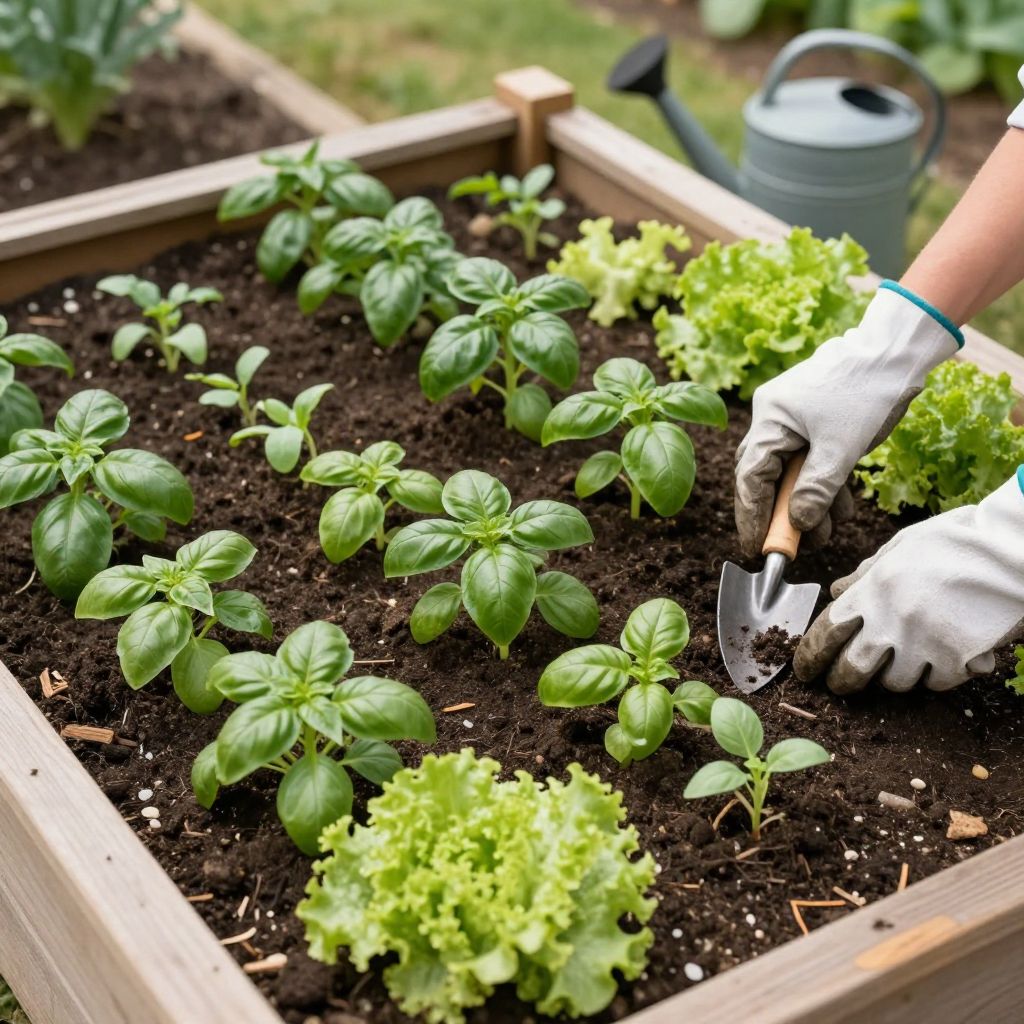
What vegetables can be planted together depends on how each crop grows, how much space it needs, and whether its roots, leaves, or timing will compete with its neighbors. Good companion planting helps you use garden space efficiently, reduce pest pressure, and harvest more steadily.
The best combinations match plants with similar light, water, and soil needs while avoiding heavy competition. A few thoughtful pairings can make a small vegetable bed more productive, but overcrowding or mixing incompatible crops can quickly reduce yields.
What vegetables can be planted together?
Vegetables that can be planted together are crops with compatible growth habits, root depth, spacing, and seasonal needs. Good examples include tomatoes with basil, carrots with onions, lettuce with radishes, and beans with corn or cucumbers if space is managed well. The key is pairing plants that won’t shade, crowd, or outcompete each other.
How companion planting works in a vegetable garden
Companion planting is less about “magic” and more about practical garden design. You are trying to combine plants that make efficient use of sunlight, soil, and time.
What makes a good pairing
- Different root zones so plants do not compete heavily underground.
- Similar water needs so one crop is not kept too dry or too wet.
- Compatible heights so tall plants do not shade sun-loving neighbors.
- Staggered harvest times so quick crops can finish before larger plants need the space.
- Shared pest benefits when one plant helps confuse or deter pests near another.
What companion planting cannot do
It will not fix poor soil, low light, or overcrowding. If your bed is too small or your drainage is poor, plant combinations will not solve those problems.
Best vegetables to plant together
Tomatoes, basil, and lettuce
Tomatoes and basil are a classic pairing because basil stays low while tomatoes grow upward. Lettuce can fit beneath young tomato plants early in the season before the canopy fills in.
- Give tomatoes strong support with cages or stakes.
- Keep basil at the edge or between tomato plants where it still gets light.
- Harvest lettuce early before tomato shade becomes too dense.
Carrots and onions
Carrots and onions are often grown together because their growth habits differ and they can share bed space well. The strong scent of onions may also help make the bed less attractive to some pests.
- Sow carrots in loose, stone-free soil.
- Plant onions or scallions in rows beside or between carrot rows.
- Thin carrots carefully so roots have room to size up.
Lettuce and radishes
This is one of the easiest combinations for beginners. Radishes mature quickly, while lettuce can keep growing after the radishes are harvested.
- Sow radish seeds with lettuce seeds in the same bed or row.
- Harvest radishes first, usually well before lettuce needs the whole space.
- Use the freed-up gaps to reduce crowding around lettuce plants.
Beans and corn
Beans and corn can work together in a traditional “three sisters” style planting, especially when paired with a climbing crop and sometimes squash. Corn provides support for pole beans, while beans add nitrogen to the soil through their root nodules.
- Use pole beans, not bush beans, if you want them to climb corn.
- Plant corn in a block for better pollination rather than a single row.
- Do not let beans overwhelm young corn before stalks are sturdy.
Cucumbers and dill
Cucumbers and dill can share space if you manage spread carefully. Dill may attract beneficial insects, and cucumbers can trail along the ground or climb a trellis.
- Train cucumbers vertically if possible to save space.
- Allow dill enough room to flower without shading cucumber vines too much.
- Watch soil moisture closely because cucumbers dislike drying out.
Peppers and basil
Peppers and basil are a useful warm-season pairing because both prefer full sun and evenly moist, well-drained soil. Basil stays compact and can be tucked around pepper plants without much competition.
- Space pepper plants so air can move around them.
- Pinch basil lightly if it starts to flower too early.
- Mulch to keep soil moisture steadier in hot weather.
Vegetables that should not be planted together
Some vegetables can technically grow near each other but perform poorly when crowded or matched with the wrong neighbor. Avoid combinations that create heavy shade, intense root competition, or different watering needs.
Common problem pairings
- Potatoes and tomatoes — both are nightshades and can share disease problems such as blight.
- Fennel and most vegetables — fennel is often a poor neighbor and can inhibit nearby crops.
- Beans and onions — alliums can interfere with bean growth in close planting.
- Broccoli and tomatoes — both are heavy feeders and may compete strongly in a small bed.
- Large squash and low, slow-growing crops — sprawling vines can smother smaller plants.
If you are unsure about a pairing, ask two questions: will one plant shade the other, and do they need the same space for the same length of time? If the answer is yes to either, choose a different combination.
How to plan a mixed vegetable bed
1. Group crops by sun and water needs
Start with crops that want similar conditions. Most fruiting vegetables, such as tomatoes, peppers, and cucumbers, need full sun and regular moisture. Leafy crops like lettuce and spinach prefer cooler conditions and may bolt in heat.
2. Match plant height and spread
Put tall crops on the north side of the bed if you are in the Northern Hemisphere, so they do not shade shorter plants. In the Southern Hemisphere, place tall crops on the south side for the same reason.
3. Use quick crops to fill gaps
Fast growers like radishes, baby lettuce, and scallions are useful between slower crops. They make efficient use of space while larger vegetables are still small.
4. Leave room for airflow
Good air circulation helps reduce fungal disease. Even when companion planting works well, plants should not be packed so tightly that leaves stay damp after rain or watering.
Soil, compost, and drainage for mixed plantings
Companion planting works best in healthy soil. Most vegetables prefer loose, fertile soil with good drainage and a steady supply of organic matter.
- Work in compost before planting to improve soil structure.
- Avoid planting in waterlogged beds, especially for roots like carrots and onions.
- Use mulch to reduce evaporation and keep soil temperature more even.
If your soil is heavy clay, raised beds can make mixed planting much easier. If your soil is very sandy, compost helps it hold moisture long enough for neighboring crops to benefit.
Watering and feeding companion crops
One of the biggest mistakes in mixed beds is pairing vegetables with very different moisture needs. For example, lettuce and cucumbers both like consistent water, while drought-tolerant herbs may not.
Practical watering tips
- Water deeply rather than giving frequent shallow sprinkles.
- Water at the base of plants to keep foliage drier.
- Check soil moisture by feeling a few inches below the surface.
- Adjust more often during hot, windy, or dry weather.
Feed the whole bed according to the needs of the most demanding crop, but do not overfertilize. Too much nitrogen can produce lush leaves with fewer fruits or roots, especially in tomatoes and peppers.
Pests and diseases in mixed vegetable plantings
Companion planting may help reduce pest pressure, but it is not a substitute for observation. Mixed beds can still develop aphids, caterpillars, fungal leaf spots, or root problems.
What to watch for
- Chewed leaves or frass, which can signal caterpillars.
- Sticky leaves or curled new growth, often linked to aphids.
- Yellowing or wilting despite moist soil, which may suggest root trouble.
- Powdery or spotted foliage in crowded, humid beds.
How to reduce problems
- Remove diseased leaves promptly.
- Rotate crops each year if possible, especially tomatoes, peppers, potatoes, and brassicas.
- Use trellises and spacing to improve airflow.
- Inspect undersides of leaves regularly.
Seasonal timing matters
Even good companions may not belong in the ground at the same time. Cool-season crops and warm-season crops often need different planting windows, especially in climates with hot summers or early frosts.
Use succession planting
Quick crops can be planted before or between slower ones. For example, you might sow radishes beside carrots early in the season, then replant the harvested space with another crop later.
Adapt to your local climate
If your spring is short, prioritize crops that mature quickly. If summers are long and hot, use shade from taller crops to protect tender greens. Local frost dates, rainfall, and daytime heat all affect which vegetables can be planted together successfully.
Simple companion planting examples for beginners
- Tomatoes + basil + lettuce for a layered bed with early and late harvests.
- Carrots + onions for efficient use of narrow rows.
- Lettuce + radishes for fast turnover and easy spacing.
- Peppers + basil for a compact warm-season bed.
- Beans + corn for a larger space with vertical growth.
Mistakes to avoid
- Planting too densely and assuming companions can “share” the same space indefinitely.
- Mixing crops with very different water needs in the same small bed.
- Ignoring mature size and only planning for seedlings.
- Putting tall crops where they block light from shorter vegetables.
- Skipping crop rotation and repeating the same families in the same spot each year.
Conclusion
When you ask what vegetables can be planted together, the best answer is: choose crops with similar needs, different growth habits, and enough room to mature. Start with one or two simple combinations, observe how they perform in your climate, and adjust spacing and timing as you learn.
If you want to plan your beds more confidently, you may also find it helpful to read more about how to start a vegetable garden and companion planting basics.