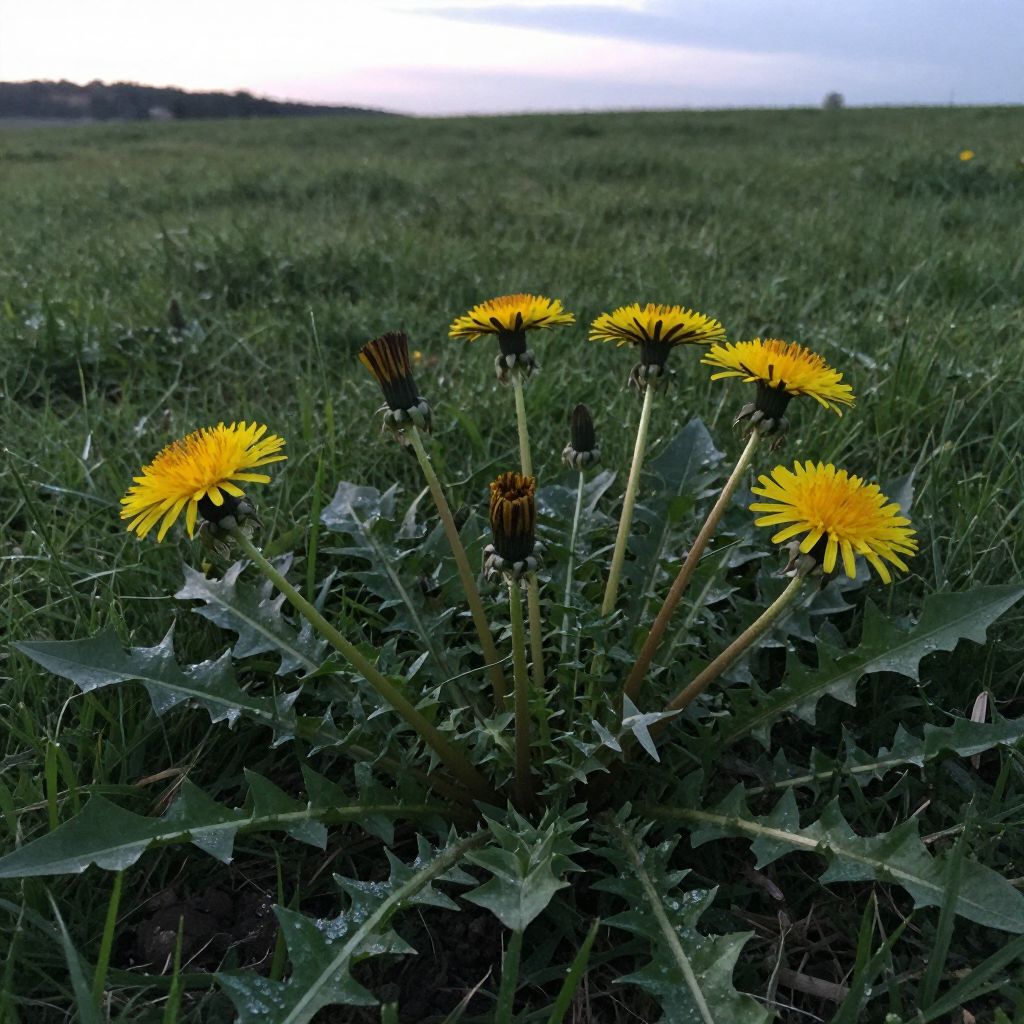
Do dandelions close at night? Yes, the yellow flowers usually fold up in the evening and reopen in the morning. This is a normal response to light and temperature, not a sign that the plant is unhealthy.
If you’ve noticed the blooms shutting during cloudy weather or at dusk, you’re seeing a natural movement called nyctinasty. Understanding this habit can help you tell healthy dandelions from stressed ones and manage them more effectively in lawns, beds, and wild corners.
Do dandelions close at night?
Yes. Dandelion flowers (Taraxacum spp.) commonly close at night and open again in daylight. The petals fold inward when light fades, often in cool or damp conditions, and the flower head may stay closed longer on overcast days. This is normal behavior and usually means the plant is responding to its environment.
Why dandelions open and close
Dandelions are built to protect their pollen and reproductive parts. The flower head opens when conditions favor pollinators and closes when light drops, which helps shield the center from moisture, cold, and nighttime stress.
What triggers the movement
- Light levels: Flowers open in bright light and close as evenings get darker.
- Temperature: Cool weather can keep blooms partly closed or slower to open.
- Moisture: Rain, heavy dew, and very humid conditions may delay opening.
- Plant rhythm: Dandelions follow a daily cycle even when pollinators are absent.
This opening-and-closing habit is common in many daisy family plants. It does not mean the plant is dying, and it does not require treatment.
How to tell normal closing from a problem
A healthy dandelion flower closes in the evening but looks firm and bright again the next day. If the bloom stays shut all day, turns brown, or collapses early, something else may be going on.
Normal signs
- Flower closes near dusk and reopens by morning.
- Leaves remain green or only lightly weathered.
- Flower head stays upright and intact.
Possible stress signs
- Flowers stay closed on sunny days.
- Petals look ragged, brown, or wilted.
- Leaves are yellowing, spotted, or badly chewed.
- The plant is growing in compacted, very dry, or waterlogged soil.
If you see stress signs, check the growing site before assuming the closing itself is the issue.
Growing conditions dandelions prefer
Dandelions are famously adaptable, which is one reason they appear in lawns, gardens, cracks, and disturbed soil. They grow best in full sun but can tolerate partial shade, especially in cooler climates.
Soil and drainage
These plants handle many soil types, but they do best in loose, well-drained soil where the taproot can grow deep. Heavy clay, compacted turf, and standing water can weaken the plant and make leaves and flowers less vigorous.
- Best soil texture: Loamy or friable soil
- Drainage: Good drainage is important
- pH: Dandelions tolerate a wide range, so focus more on soil structure than on exact numbers
Sunlight
More sun usually means stronger flowering. In shadier spots, dandelions may still survive, but the blooms can be smaller and may open less reliably on cool days.
Watering
Established dandelions are fairly drought-tolerant because of their deep taproot. Young plants and seedlings need more consistent moisture until roots are established. Avoid soggy soil, which can reduce root health.
What to do if you want to manage dandelions
Because dandelions are perennial weeds in many lawns and beds, the goal is usually control rather than encouragement. The best approach depends on whether you want to remove them, reduce flowering, or simply keep them from spreading.
For lawn control
- Pull young plants when the soil is moist so the taproot comes out more easily.
- Use a weeding tool that reaches several inches into the soil.
- Fill bare spots in turf so new seedlings have less room to germinate.
- Mow regularly, but avoid cutting so short that the grass weakens.
- Improve lawn density with proper overseeding, watering, and soil care.
Important: If you leave the taproot in the ground, the plant may regrow. Partial removal often leads to more dandelions, not fewer.
For garden beds
Mulch helps suppress seedlings, but it works best when applied over weed-free soil. A 2- to 3-inch layer of mulch can reduce new germination and make hand-pulling easier.
- Pull or dig out plants before they set seed.
- Refresh mulch as it breaks down.
- Watch edges, paths, and fence lines where seeds often land.
Seasonal behavior: when dandelions are most noticeable
Dandelions often flower in spring and may bloom again later in the season, depending on climate and moisture. In cool, bright weather, the flowers may open widely. In hot or cloudy conditions, they may stay closed longer or produce fewer blooms.
Spring
Spring is when many gardeners first notice the bright yellow flowers. Growth is often strongest when the soil is moist and temperatures are mild.
Summer
Heat can shorten bloom time and make flowers close earlier in the day. Drier soil may also reduce flowering.
Fall
In mild climates, dandelions can continue flowering into fall. Cooler nights may make the closing behavior more obvious.
Common problems that can affect flowers
While closing at night is normal, a few issues can interfere with healthy blooming. Most are related to site conditions rather than disease.
Compacted soil
Compacted ground can restrict root growth and reduce overall plant vigor. Loosen surrounding soil when possible and reduce repeated foot traffic in the area.
Too much shade
Deep shade may limit flowering. If the plant is in turf under trees, thinning the canopy or improving light may help, though dandelions will still often persist.
Excess moisture
Waterlogged soil can stress the root system. If the area stays wet, improve drainage or avoid planting in that spot.
Insect feeding
Chewed leaves or damaged flower heads can come from common lawn and garden insects. In most cases, healthy plants recover, but severe damage may reduce blooming.
Should you encourage dandelions?
Some gardeners leave dandelions for early pollinators and edible greens, while others remove them to protect lawns and borders. Either choice is fine if you manage them intentionally.
If you leave them
- Deadhead spent flowers if you want to reduce self-seeding.
- Let a few plants bloom in low-traffic areas for pollinators.
- Keep them away from areas treated with lawn chemicals or contaminated runoff.
If you remove them
- Dig out the full taproot.
- Remove flower heads before seed fluff forms.
- Monitor nearby areas, because seeds travel easily on the wind.
Tools that help with dandelion care and control
Simple tools make a big difference, especially if you are trying to remove plants cleanly before they spread.
- Dandelion fork or weeding tool: Useful for lifting the taproot.
- Hand trowel: Good for garden beds and looser soil.
- Mulch: Helps suppress new seedlings in beds.
- Mower: Helps reduce flowering in lawns when used consistently.
Quick troubleshooting guide
If you are wondering whether a dandelion’s closed flower is normal, use this simple check.
- Closes at dusk, opens by morning: Normal.
- Stays closed on a cloudy day: Often normal, especially in cool weather.
- Stays closed for several sunny days: Check for stress, damage, or poor growing conditions.
- Flower browns quickly: It may be aging, damaged, or pollinated and finishing its cycle.
When in doubt, look at the whole plant, not just the flower head. Leaf health, soil conditions, and site exposure tell you much more than the closing behavior alone.
Conclusion
So, do dandelions close at night? Yes, and it is a normal part of how the flowers respond to light, temperature, and moisture. If you want to keep them healthy, give them sun and decent drainage; if you want to control them, remove the taproot and prevent seed set. Check your lawn or bed at dawn and dusk to see the pattern for yourself.
If you want to keep learning about weed control and lawn care, look for related guidance on improving soil structure, reducing compaction, and managing broadleaf weeds in your garden beds and turf.