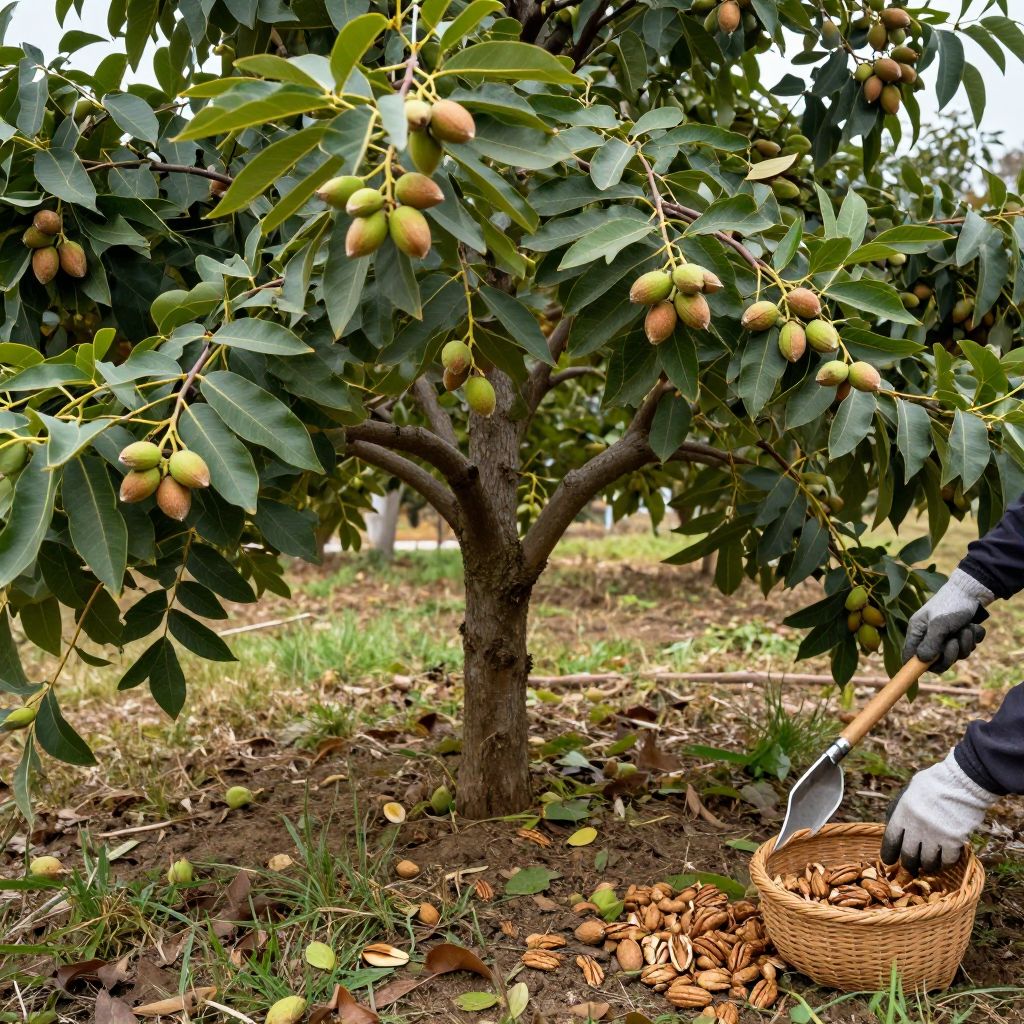
When is pecan season? If you grow pecan trees or want to harvest nuts at the right time, the answer depends on your climate and the tree’s variety, but pecans are usually ready from late September through November in many growing regions. The best harvest time is when the shucks split naturally and nuts begin to drop.
Knowing the season helps you avoid harvesting too early, when kernels are immature and hard to remove, or too late, when nuts are lost to wildlife, moisture, and mold. A few simple checks will tell you when your tree is ready.
When is pecan season?
Pecan season typically runs from late summer into fall, with harvest timing most often falling between September and November. In warmer southern climates, some trees begin dropping nuts earlier, while cooler areas may see harvest extend into late fall. The key sign is not the calendar alone, but the tree’s shucks splitting and nuts falling naturally.
How to tell when pecans are ready to harvest
Use the tree’s signs, not just the date. Pecans are ready when the outer husk, or shuck, opens cleanly and the nut inside is mature enough to separate from the tree with little effort.
Ripeness signs to watch for
- Shucks split open along the seams.
- Nuts begin dropping to the ground on their own.
- The shell inside feels hard and fully formed.
- The kernel fills the shell well when cracked.
- Leaves may begin yellowing, but leaf color alone is not a reliable harvest sign.
If you shake a limb gently and mature nuts fall easily, that is usually a good sign harvest is underway. If the shucks are still tightly closed, wait a bit longer.
Why timing matters
Harvesting too early can leave you with lightweight nuts, poor kernel fill, and more shrinkage during drying. Waiting too long can mean more losses to squirrels, crows, insects, wet weather, and nuts that darken or mold on the ground.
What affects pecan season in your area?
Pecan timing varies because trees respond to temperature, rainfall, variety, and local growing conditions. A tree in a warm, long-season region may finish earlier than one in a cooler or higher-elevation site. Even two trees in the same yard can ripen at slightly different times.
Climate and regional differences
- Warm southern regions: often earlier harvests, sometimes starting in late September.
- Transition climates: harvest commonly lands in October.
- Cooler areas: nuts may not finish until late October or November.
Weather also matters. A dry fall can speed up nut drop, while a wet, cool season may slow ripening and increase disease pressure.
Tree age and crop load
Young pecan trees may bear lightly and ripen unevenly. Mature trees with heavy crops can also mature in stages, so you may need to harvest the same tree several times over a few weeks.
How to harvest pecans the right way
Once the shucks split and nuts start dropping, harvest regularly. The longer nuts sit on the ground, the more likely they are to be damaged by moisture or wildlife.
- Check the tree and ground every few days during peak season.
- Collect fallen nuts before rain if possible.
- Remove leaves, twigs, and shuck pieces from the harvest.
- Spread nuts in a single layer to dry.
- Store only clean, sound nuts after drying.
Tools that help
- Nut gatherer or rolling picker for large harvests
- Rake for clearing debris under the canopy
- Mesh bags or shallow crates for airflow
- Gloves if you are collecting from rough ground or thorny undergrowth
For home growers, a nut gatherer can save a lot of time, especially under large trees. For small harvests, hand-picking every few days is often enough.
Drying and storing pecans after harvest
Freshly harvested pecans need drying before long-term storage. Even if the nuts look dry on the outside, the kernels inside still hold moisture that can shorten storage life if you pack them away too soon.
Simple curing steps
- Spread pecans in a thin layer in a dry, airy place.
- Avoid direct sun for long periods, which can overheat the nuts.
- Allow airflow around the nuts for several days to a couple of weeks, depending on humidity.
- Test a few nuts by cracking them; the kernel should be firm and not rubbery.
After drying, store pecans in a cool, dry place. For longer keeping, refrigeration or freezing helps preserve quality, especially in warm climates where nuts can go rancid faster.
Common storage mistakes
- Storing nuts while they are still damp
- Leaving them in sealed containers too soon
- Keeping them in warm rooms or garages
- Mixing damaged nuts with sound ones
Growing pecan trees for a better harvest
If you want a dependable pecan season in future years, tree care matters as much as harvest timing. Pecan trees are large, long-lived nut trees that do best with full sun, deep soil, and enough space to develop a broad canopy.
Site and soil needs
- Sunlight: full sun is essential for good nut production.
- Soil: deep, fertile, well-drained soil is best.
- Drainage: avoid sites where water stands after rain.
- Space: pecans need room for a large root system and canopy.
Pecan trees dislike compacted or shallow soil. If your yard has heavy clay or poor drainage, improve the site before planting or choose a better location, because root stress can reduce nut quality and yield for years.
Watering and nutrition
Young trees need regular watering to establish roots, especially during hot, dry weather. Mature trees usually need less frequent watering, but prolonged drought can reduce nut fill and cause premature drop.
Compost can help improve soil structure around young trees, but avoid piling it against the trunk. A mulch ring around the root zone can conserve moisture and reduce competition from grass, as long as it stays a few inches away from the bark.
Pruning for healthier nut production
Prune pecan trees to remove dead, damaged, or crossing branches and to improve light penetration. Good airflow helps reduce disease pressure and supports better nut development.
- Prune during the dormant season when the tree is not actively growing.
- Remove branches that rub or crowd the center of the tree.
- Do not overprune, since excessive cutting can weaken the tree.
Common pests and diseases that affect pecan season
Pecan harvest can be reduced by pests and diseases that damage leaves, shucks, or developing nuts. Problems often show up before harvest, so early observation is important.
Common issues to watch for
- Pecan scab: causes dark lesions on leaves, shucks, and nuts, especially in humid weather.
- Insect feeding: can damage shucks or reduce kernel quality.
- Squirrels and birds: often take a large share of the crop if harvest is delayed.
- Nut drop from stress: drought, poor pollination, or nutrient imbalance can reduce the crop.
If you notice blackened shucks, spotted leaves, or poor nut fill, check whether the tree has enough sun, airflow, and moisture. In many home landscapes, reducing stress and cleaning up fallen debris can help limit repeat problems.
Can you grow pecans from seed?
You can grow pecans from seed, but seedlings do not always produce nuts like the parent tree, and they may take many years to bear. For reliable harvests, grafted trees are usually the better choice for home orchards.
If you do start from seed, use fresh nuts from a healthy tree and plant them in suitable soil with good drainage. Keep in mind that seed-grown trees are best for experimentation or rootstock use, not predictable nut production.
Seasonal care calendar for pecan growers
Instead of relying on one fixed date, use the season as a guide for tree care throughout the year.
- Late winter to early spring: prune as needed and prepare for new growth.
- Spring: watch for leaf emergence, pest activity, and soil moisture needs.
- Summer: maintain even watering during dry spells and monitor for leaf or nut stress.
- Late summer to fall: watch for shuck splitting and begin harvest.
- After harvest: clean up fallen debris and assess tree health for next season.
Conclusion: watch the tree, not just the calendar
When is pecan season? In most places, it is a fall harvest window that usually runs from September through November, but the exact timing depends on your climate and tree. Watch for shucks splitting, nuts dropping, and good kernel fill, then harvest promptly and dry the nuts well for the best results.
If you are planning or improving a pecan tree, it also helps to read more about fruit tree pruning basics and how to improve garden soil drainage.